Using a lagging smartphone that takes ages to launch simple apps or freezes right in the middle of typing is a major test of patience. Over time, it is completely normal for mobile devices to exhibit signs of sluggishness, but this does not mean your phone is obsolete or needs immediate replacement. In most cases, the root cause lies in accumulated software bugs, unoptimized system memory, and excessive background processes. In this definitive guide, you will discover 15 proven solutions that actually work to fix a slow phone, applicable for both Android and iPhone (iOS) systems.
To speed up your phone today, we must address the real factors draining your processor and physical RAM. Unlike miracle cleanup utility apps that often install bloatware and make your phone slower, the methods detailed here are recommended by system developers and hardware manufacturers. Before diving into the step-by-step solutions, look at the comparison table below to understand the main causes of phone lag and the impact of resolving them:
| Root Cause of Sluggishness | How It Affects Performance | Expected Solution Impact |
|---|---|---|
| Near-Full Storage | Prevents the OS from creating swap files and processing temp data. | Very High (Clearing space restores peak speed). |
| Background System Activity | Applications consumption of CPU cycles and memory without you knowing. | High (Suspending background apps restores fluidity). |
| Rich Graphics & Transitions | Demands high GPU resources to render visual movements and effects. | Medium (Turning off animations makes responses instant). |
| Outdated System Software | Known operating system bugs causing CPU resource leaks. | High (System updates fix known performance glitches). |
| Live Wallpapers & Widgets | Continuous background CPU and RAM allocation for display items. | Medium (Using static layouts frees up memory resources). |
1. Rebooting Your Phone Correctly (The Most Ignored Simple Step)
Though it sounds incredibly simple, restarting your phone is one of the most effective ways to resolve temporary sluggishness. When a smartphone runs continuously for hundreds of hours, minor code leaks from various apps accumulate in the system's RAM. These lingering tasks continue to run in the background, even if you closed the apps visually.
When you restart your phone, the operating system undergoes a deep reset:
- The device's RAM is completely emptied and cleared out.
- Stuck software loops are forced to stop instantly.
- System cache files are realigned and organized safely.
- Wireless connections (Wi-Fi, Bluetooth, mobile data) are reset, which often optimizes internet speeds.
We recommend making it a habit to restart your device at least once a week. Many modern phones feature a setting that lets you schedule auto-restarts at night (for instance, every Sunday at 3:00 AM), ensuring you start your week with an optimized, lag-free experience.
2. Managing Heavy Background Application Processes
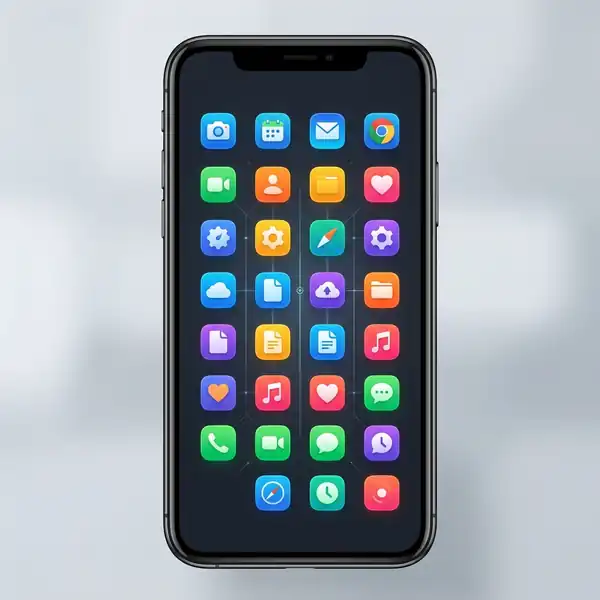
On both Android and iOS, apps you open are kept in a suspended state so you can return to them quickly. However, many apps continuously fetch data, update feeds, and poll GPS coordinates in the background, which consumes vital RAM needed for interface fluidity.
On Android devices, you can manually restrict background actions for heavy apps:
- Go to Settings > Apps (or Manage Apps).
- Select a resource-heavy app (like social media or games).
- Tap on Battery or Background Activity.
- Select Restricted or toggle off "Allow background activity."
On iPhone, you can manage this settings options globally. Go to Settings > General > Background App Refresh. You can turn this setting off entirely or selectively toggle permissions for individual apps. Disabling updates for non-essential applications frees up significant RAM, keeps your processor cool, and extends your battery life.
DomineTec Tip: Avoid installing third-party "task killer" or memory-boosting apps on Android. Modern mobile operating systems are optimized to manage RAM on their own, and these third-party utilities often run in conflict with the system kernel, actually draining more RAM and battery power.
3. Disabling UI Transition Animations and Visual Effects
Modern mobile OS platforms rely on fluid visual animations to open menus, slide between screens, and exit apps. While these transitions make UI interactions look beautiful, they demand GPU rendering power. On older or budget hardware, these animations can cause visible frame drops and lagging.
To disable animations on Android and make responses feel instantaneous, activate Developer Options:
- Go to Settings > About Phone and tap Build Number 7 times until you see a prompt saying developer mode is active.
- Return to the main settings page and select the new Developer Options menu.
- Find these three items: Window animation scale, Transition animation scale, and Animator duration scale.
- Change them from 1x to 0.5x or turn them to Animation off completely.
On iPhone, simplifying graphics is quick and simple: go to Settings > Accessibility > Motion and toggle on **Reduce Motion**. This replaces slide-open transitions with a clean, low-resource crossfade effect, reducing GPU strain and making the system feel much snappier.
4. Optimizing Your Local Storage to Restore Swap Speed
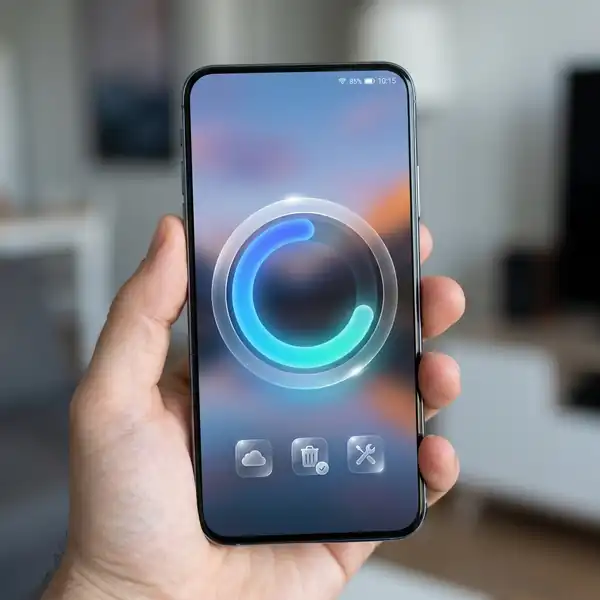
Many users don't realize that having an almost full storage drive directly slows down their phone. Operating systems need about 10% to 15% of free space to generate cache, write virtual memory (swap files), and handle downloads. Once storage drops below this threshold, the phone starts to stutter.
To free up space safely without losing your personal photo library, follow the detailed checklist in our guide on how to free up space on your phone without deleting photos. Furthermore, look for large files, such as downloaded movies or podcasts inside media apps, which you watched once and forgot to delete. Removing these can instantly clear gigabytes of valuable space.
On Android, use native optimization tools like Device Care (on Samsung devices). On iOS, check the iPhone Storage section under Settings to review and delete large cached media files from offline applications.
5. Keeping System and Applications Updated
Some users avoid updating their apps or operating system because they believe updates slow down older hardware. In reality, most system updates focus on fixing security vulnerabilities and coding errors that cause memory leaks.
A memory leak happens when an app consumes RAM but fails to release it back to the system once its task is finished, slowing down the entire phone. Developers constantly fix these issues via updates on the App Store and Google Play Store. Keeping apps updated is crucial to maintaining peak performance.
The same applies to system updates. Phone makers send out monthly security patches to improve stability. Go to *Settings > System Update* to verify if a software upgrade is available. Perform system updates while connected to Wi-Fi with your phone plugged into a charger or with battery power above 50%.
6. Opting for "Lite" Apps and Progressive Web Versions
If you own an entry-level smartphone with limited RAM (1 GB, 2 GB, or 3 GB), running full-featured apps like Facebook, Instagram, and Uber can instantly overload your hardware. These apps require high memory footprints and graphical processing power.
To work around this limitation, look for **Lite** app variants. Apps like *Facebook Lite* and *Messenger Lite* are specifically compiled to run smoothly on low-spec hardware and slow mobile connections, requiring only a fraction of the space and resources of their standard counterparts.
Another fantastic option is using progressive web apps (PWAs) through Google Chrome or Safari. By navigating to a site like Instagram on your browser and choosing "Add to Home Screen," you get an app-like shortcut that consumes zero local installation storage and stops running completely the moment you close the browser tab.
7. Scanning for Malicious Software and Adware

If your phone suddenly became extremely slow, began showing random pop-up advertisements on your lock screen, or if you noticed your battery draining rapidly overnight, your device might be infected with malicious adware.
Adware infections usually happen when you click on suspicious links or download apps from unofficial websites instead of the Google Play Store or Apple App Store. To clean your phone from these threats:
- Perform a deep malware scan using a trusted mobile security tool like Avast or Kaspersky.
- Check your installed applications list under Settings and uninstall any unknown tools or blank-named apps immediately.
- If you suspect your privacy might be at risk due to hidden tracker tools, check our guide on how to know if your phone is being tracked to run a manual security diagnostic.
8. Clearing Browser Tabs and Unclosed Web Sessions
A very common, yet silent cause of device slowdowns is browser tab overload. Many users search for topics on Safari, Chrome, or Microsoft Edge and leave tabs open indefinitely, accumulating hundreds of active browser instances over time. Keeping all these pages in suspended states still forces the browser engine to consume virtual memory and page file allocations.
To clear this hidden bottleneck, open your browser, tap the tab layout button, and select "Close all tabs" to wipe the memory clean. You can also configure Safari to automate this process by going to *Settings > Safari > Close Tabs* and selecting to close them automatically after one day, one week, or one month. Cleaning up your web browser history and cookies regularly alongside closing unused tabs ensures web surfing stays fast and responsive.
9. Minimizing Screen Widgets and Animated Wallpaper Theme Layouts
Home screen widgets for local weather updates, stock portfolios, email feeds, and calendar agendas offer great convenience. However, every single widget you place on your screen behaves like a miniature app running in real-time, checking servers for updates and using up valuable system RAM and processor cycles.
The same logic applies to interactive or animated wallpapers and heavy third-party launchers. If your phone stutters when you return to the home screen or lags when swiping, it is time to simplify your layout. Remove non-essential widgets, set a flat, static wallpaper, and use the default system launcher. Minimizing the graphics processing workload of the home screen leaves much more system RAM available to run your apps and games smoothly.
10. Limiting Automatic App Updates and Background Synchronizations
Both iOS and Android have automatic background updates enabled by default. While this is convenient, it means your phone might start downloading and installing heavy updates right when you are in the middle of a gaming session, a work call, or a critical video stream, resulting in sudden, unexplained lagging.
To control this, configure app updates to occur manually. On Android, open the Google Play Store, go to Settings, and set "Auto-update apps" to "Don't auto-update" or limit them to Wi-Fi only. On iOS, go to *Settings > App Store* and turn off automatic "App Updates." You should also review your account synchronization settings (like email auto-sync) and set them to fetch data hourly instead of pushing it continuously. This saves CPU resources and helps maintain a fast, cool device.
Additionally, you should disable unnecessary location services. Many applications track your physical location in the background for advertising or analytics purposes, even when they are not open. This continuous GPS monitoring uses immense processing power, causing lag spikes and heavy battery drain. Navigate to *Settings > Privacy > Location Services* on your iPhone, or *Settings > Location* on Android, and set permissions to "Only while using the app" or "Never" for apps that do not require navigation to function correctly.
Summary and Final Recommendations
A slow smartphone is not a permanent sentence to buy a new one. By cleaning caches, limiting background applications, disabling graphic transitions, and keeping your storage free from junk files, you can extend your current device's life by years. If you use an older iPhone and find that these solutions still leave your phone sluggish, take a look at our analysis on is buying a used iPhone worth it to evaluate performance and upgrade options.