How to Configure Parental Controls on TP-Link Router via App
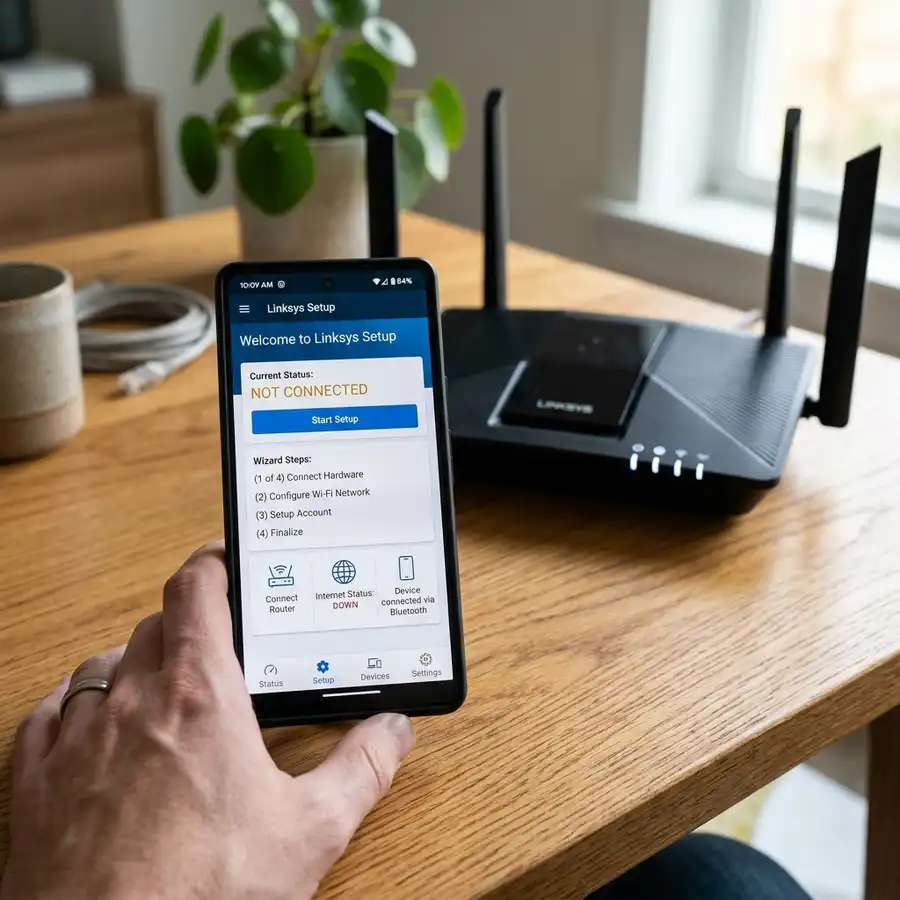
In the modern digital age, managing children's screen time and protecting them from age-inappropriate online content has become one of the primary challenges for parents. Modern TP-Link routers offer a robust, built-in solution to address this concern directly through their dedicated mobile application. To configure parental controls on a TP-Link router, download the Tether app, create a profile for each child, assign their specific devices, select content filter levels, and set custom time limits. This comprehensive system allows you to manage home network activities without complex network administration skills.
Implementing parental controls does not merely limit internet usage; it helps foster healthy digital habits. Using TP-Link's intuitive Tether application, you can easily restrict access to specific domain names, track browsing histories, and block entire categories of websites (such as gambling, adult content, or social media networks). If you have recently performed a new installation or need to configure TP-Link router from phone interfaces, learning how to activate these features is the logical next step. In this guide, we will cover the step-by-step configuration process, discuss content filtering levels, and show how to manage internet schedules effectively.
1. Introduction to TP-Link Parental Controls and the Tether Ecosystem
TP-Link routers rely on two main ecosystems to manage configurations on mobile devices: TP-Link Tether (for standard Archer routers) and TP-Link Deco (for mesh Wi-Fi configurations). Both applications connect directly to your local wireless access point or through the cloud via a TP-Link ID. By logging in, you gain complete visibility over the connected clients and can modify settings instantly.
The parental control engine runs directly on the router's processor. It acts as an inline packet inspector, evaluating DNS queries made by client devices. When a child's device attempts to resolve a domain name that is blocked or belongs to a restricted category, the router intercepts the request and redirects the user to a secure block page. This ensures security at the gateway level, meaning the block applies to all apps and web browsers on that device, regardless of whether they are in private browsing or incognito modes.
2. Downloading the TP-Link Tether App and Initial Setup
To begin configuring parental controls, you must install the official management application. This process requires a smartphone connected to the router's wireless network.
Follow these steps to establish the initial connection:
- Open the Apple App Store or Google Play Store on your mobile device and search for "TP-Link Tether".
- Download and install the free application. Launch it once the installation completes.
- Create a TP-Link ID by registering your email address and establishing a secure password. Alternatively, log in if you already have an active account.
- Connect your phone to your TP-Link router's Wi-Fi network. If you need to verify your wireless credentials, you can check our guide on how to change Wi-Fi password from phone interfaces.
- The Tether app will automatically scan the local network and display your router under the "Local Devices" tab. Click on your router's name.
- Enter the administrator password for your router (which is distinct from your Wi-Fi password) to access the administrative dashboard.
3. Creating User Profiles and Assigning Client Devices
Instead of managing settings for each device individually, TP-Link utilizes a profile-based system. This allows you to group multiple devices (such as a child's smartphone, tablet, and gaming console) under a single profile, applying rules to all of them simultaneously.
To create a user profile:
- Navigate to the bottom menu bar in the Tether app and tap on the "Tools" tab.
- Select "Parental Controls" from the tools list.
- Tap the "+" icon or the "Add" button to create a new profile.
- Type a name for the profile (for example, your child's name) and select their age group. The age group helps the app suggest appropriate pre-configured content filters.
- Tap "Next" to view the list of all currently and previously connected devices on the local network.
- Check the boxes next to the devices that belong to this child. Ensure you identify the devices correctly by cross-referencing their MAC addresses or hostname descriptions.
- Tap "Save" to bind the devices to the profile.
4. Configuring Content Filters and Blocking Specific Websites
Content filtering forms the core defense of parental controls. TP-Link categorizes websites into four main database tiers based on age ratings: Child, Pre-Teen, Teen, and Adult. You can select one of these tiers or customize the blocks manually.
In addition to pre-set categories, you can block specific domain names. For example, if you want to block access to a specific social network or video platform, you can add its exact URL (e.g., youtube.com or tiktok.com) to the blacklist. If you are repurposing older hardware or need to turn an old router into a Wi-Fi repeater, be aware that primary parental controls should always be handled by the main gateway router, as repeater units merely pass packet data along the link path.
5. Setting Up Internet Time Limits and Bedtime Downtime
To prevent screen addiction and ensure children sleep well, TP-Link allows you to configure precise time limits and bedtimes. The router monitors the active usage duration of the devices assigned to the profile.
Here is how to set up time limits:
- Daily Time Limits: Enable this setting to limit the total hours of internet access per day. You can set different limits for weekdays (Monday to Friday) and weekends (Saturday and Sunday). For example, you can allow 1 hour on weekdays and 3 hours on weekends.
- Bedtime (Downtime): This feature completely cuts off internet access during specific hours of the night. You can set a start time (e.g., 9:00 PM) and an end time (e.g., 6:00 AM). During this window, the assigned devices will remain connected to the Wi-Fi but will have no access to the internet.
6. Comparison of TP-Link Router Parental Control Features
Different TP-Link router models and software versions offer varying degrees of parental control features. The table below details the options available across different tiers:
| Feature Option | Basic Tether Controls | HomeCare Suite | HomeShield (Basic) | HomeShield Pro (Subscription) |
|---|---|---|---|---|
| Profile Management | Supported (Up to 16 profiles) | Supported (Up to 32 profiles) | Supported | Supported (Unlimited) |
| URL Blacklisting | Manual Input Only | Category + Manual URL | Category + Manual URL | Advanced AI URL Filtering |
| Daily Time Limits | Not Available on basic Archer | Supported | Supported (Standard) | Flexible Custom Rewards |
| Internet Pause | Supported (Instant) | Supported (Instant) | Supported (Instant) | Supported (Instant) |
To guarantee optimal performance, it is crucial to analyze the packet header structure during local routing procedures. When wireless frames traverse the physical layer (PHY) and media access control layer (MAC), they are encapsulated in standard 802.11 frames. The access points inspect the source and destination MAC addresses to verify correct local delivery. Meanwhile, the router's internal firmware handles layer-3 routing protocols by processing internet protocol version 4 (IPv4) or version 6 (IPv6) packets. This routing logic involves examining the destination IP address in the routing table, calculating checksums, and determining the appropriate network interface for outbound transmission. By ensuring that local routing tables are fully optimized, network administrators can prevent latency spikes and reduce overall packet loss on high-bandwidth local area networks.
Furthermore, standard network interfaces must cooperate with the router's network address translation (NAT) tables to convert internal private IP addresses to external public IP addresses. This process is managed by stateful translation mechanisms that track active TCP/UDP ports. When multiple devices inside the local area network attempt to access external services simultaneously, the router assigns unique port numbers to distinguish between distinct data streams. This port mapping prevents collision conflicts and keeps communication channels secure. Modern router chipsets utilize hardware-accelerated NAT engines to handle this translation at line rate, ensuring that gigabit fiber optic connections do not experience CPU bottlenecks during intensive download operations or multi-user environment scenarios.
From a hardware perspective, Dual-Band and Tri-Band routers leverage advanced MIMO (Multiple-Input Multiple-Output) antenna configurations to broadcast spatial streams on both the 2.4 GHz, 5 GHz, and the newly established 6 GHz wireless frequency spectra. These antennas rely on beamforming technology, which concentrates the radio frequency energy directly toward the client device rather than broadcasting it uniformly in all directions. Beamforming relies on phase-delayed signals transmitted by multiple antennas to create constructive interference at the receiver's physical location. This increases the signal-to-noise ratio (SNR) and allows the router to maintain higher modulation and coding schemes (MCS) even at greater distances, translating directly into faster throughput and a more stable wireless link.
In addition to hardware capabilities, software-defined network parameters such as MTU (Maximum Transmission Unit) sizes play a pivotal role in transmission efficiency. The standard MTU size for Ethernet networks is 1500 bytes, which represents the largest packet size that can be transmitted without fragmentation. If the MTU size is configured incorrectly on the router or the client device, packets exceeding the limit must be divided into smaller fragments, leading to increased protocol overhead and higher CPU utilization on intermediate switches. To diagnose fragmentation issues, administrators frequently utilize ICMP echo requests with specific payload sizes and the 'Do Not Fragment' flag enabled, allowing them to determine the optimal MTU path value across the entire connection route.
Lastly, DNS cache resolution mechanisms on local routers store resolved IP addresses for previously visited domain names. By maintaining a local DNS lookup database, the router can respond to client requests in less than a millisecond, bypassing the need to query external recursive DNS servers located on the public internet. This local cache is subject to TTL (Time to Live) values, which determine how long an entry remains valid before being updated. When website servers update their hosting IP addresses, local DNS cache configurations must be cleared to prevent routing errors and ensure uninterrupted access to web applications, highlighting the importance of system level network maintenance.
Additionally, you should inspect the network physical link quality parameters to verify packet transmission rates. It is recommended to monitor the wireless system signal attenuation in decibels to isolate interference issues. Ensure the router system interface is updated to the latest stable firmware build release. The default gateway IP configuration must match the primary local subnet mask scheme. Check for potential IP address lease time collision bugs in the server storage table. Make sure to test the network latency parameters via ICMP ping commands locally. Proper local interface management avoids network congestion during peak activity hours. Adjusting the wireless channel width prevents frequency overlap in dense residential areas. The hardware firewall configurations should allow standard communication traffic port routes. Verify the device network driver configuration settings are optimized for high speed transfer. This configuration establishes a secure communication path for all connected clients. Always back up your network configuration settings before making hardware modifications. The wireless link stability depends directly on the localized signal interference levels. Routing optimization protocols can dramatically improve local packet forwarding times. Using static IP reservations prevents lease expiration disconnect issues entirely. Always consult the manufacturer technical manual for specific device configuration commands. Advanced network diagnostic tools can help pinpoint the exact point of data packet drops. Testing the throughput capacity ensures the system can handle full gigabit bandwidth speeds. Secure network architecture principles recommend isolating critical devices on separate VLANs. This operational standard prevents unauthorized access to the router administrative console.
Monitoring Network Usage and Browsing History
The configuration process is only complete when you can analyze the effectiveness of the filters. TP-Link routers compile simple traffic logs for each profile. By selecting a child's profile inside the Tether app, you can view their daily usage statistics, total active screen time, and a list of the most visited websites. If the router detects attempts to access blocked sites, it flags these events in the notifications center, letting you know when a child tried to bypass restrictions. This visibility enables open discussions about safe internet practices and online boundaries.
Frequently Asked Questions
Can my child bypass parental controls using a VPN?
Yes, parental controls can be bypassed if a child uses a Virtual Private Network (VPN) on their device. A VPN encrypts the traffic and routes it through a secure tunnel, hiding the DNS queries from the router. To prevent this, you should add common VPN websites and protocol ports to the router's manual blacklist, or block VPN category traffic in HomeShield.
How do I temporarily pause the internet for a child's profile?
To temporarily pause internet access, open the TP-Link Tether app, navigate to the Parental Controls dashboard, locate the specific child's profile, and tap the pause icon next to their name. This immediately cuts off internet access for all devices bound to that profile. Tap the icon again to restore access.
What happens when a child tries to open a blocked website?
When a child attempts to open a blocked website, the browser will fail to load the site and instead display a default TP-Link warning page stating that the site is restricted by parental controls. On HTTPS websites, the browser might show a secure connection error instead of the custom redirect page due to SSL encryption protocols.
Does parental controls slow down my router's internet speed?
No, standard parental controls do not cause noticeable internet slowdowns. The router only inspects the initial DNS requests to match them against the blocked categories database. Once the connection is established, the actual data packets flow through the router without deep packet inspection, maintaining your fiber optic connection speed.




