How to Set Up a TP-Link Router from a Phone: Complete Technical Step-by-Step Guide
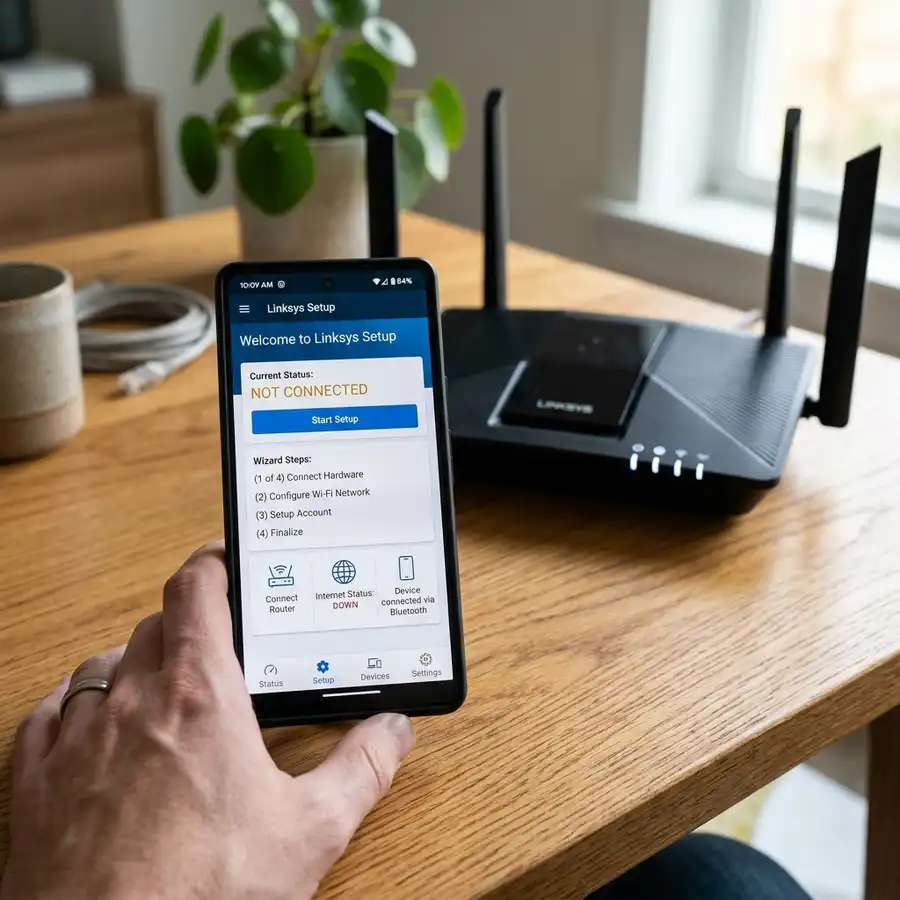
Configuring a TP-Link wireless router from a mobile device is a crucial procedure for establishing a secure and stable home or office internet connection. Although managing networking hardware may seem intimidating to everyday users, the modern design of TP-Link firmwares and responsive local administrative panels simplifies the physical and logical configuration of local routing tables. To set up a TP-Link router from your phone, connect your smartphone to the router's default Wi-Fi network (printed on the label underneath), access the IP address 192.168.0.1 or tplinkwifi.net via a web browser (or use the Tether app), create a new administrator password, and configure the WAN connection settings (PPPoE/DHCP) along with your custom Wi-Fi name and password.
In this advanced, engineering-grade networking guide, we will analyze local network architectures, dynamic and static IP schemes, DHCP (Dynamic Host Configuration Protocol) servers, 2.4 GHz and 5 GHz radio transmissions, wireless encryption standards (WPA2 and WPA3), and typical diagnostic procedures for hardware and internet connection errors. To keep your connected environment secure, it is also useful to examine how other devices manage their wireless networking logic, such as evaluating if Wi-Fi security cameras consume too much data or reviewing the configuration sequence to connect an Epson L3250 printer to Wi-Fi from a phone.
1. Physical and Logical Architectures of TP-Link Routers
TP-Link wireless routers operate as Layer 3 devices within the OSI model (Network Layer), managing the forwarding of IP data packets between your local area network (LAN) and the public wide area network (WAN) managed by your Internet Service Provider (ISP). Upon initialization, the router boot sequence activates a lightweight Linux-based operating system that loads a pre-configured DHCP server. This server dynamically assigns local private IP addresses, typically choosing a pool in the Class C range (from 192.168.0.100 to 192.168.0.199) and managing lease times for connected client devices. Understanding this architecture is crucial for avoiding IP exhaustion or network overhead.
On the physical front, wireless transmitters broadcast radio waves according to the IEEE 802.11 standards. Dual-band routers handle concurrent 2.4 GHz and 5 GHz frequencies. The 2.4 GHz band (utilizing 802.11b/g/n/ax standards) operates on longer electromagnetic waves, enabling wider physical range and improved penetration through solid obstacles like drywall and concrete. However, this band only offers three non-overlapping channels (1, 6, and 11), leaving it highly prone to radio interference from microwaves and neighboring routers. Conversely, the 5 GHz band (supporting 802.11a/n/ac/ax) offers shorter range but accommodates wider channel widths (40MHz, 80MHz, or 160MHz) and multiple interference-free channels, allowing high-throughput data speeds and low latency. The router's central processing unit (CPU) and RAM handle this split-traffic forwarding using Network Address Translation (NAT) tables to map internal private requests to a single external public IP.
Furthermore, in modern Wi-Fi 6 (802.11ax) routers, advanced Orthogonal Frequency Division Multiple Access (OFDMA) and Multi-User Multiple-Input Multiple-Output (MU-MIMO) technologies are integrated into the physical layer. These specifications allow the router's transceivers to transmit data to multiple clients simultaneously rather than queuing packets sequentially. This dramatically reduces local latency and bufferbloat, which is essential when numerous IoT devices, smart TVs, and mobile phones are active on the same local subnet. If your hardware is misconfigured, these advanced Layer 1 and Layer 2 protocols cannot function optimally, degrading overall throughput.
2. Hardware Preparation and Cable Connectivity
Before launching the software setup from your smartphone browser, check the physical connections of your cables to prevent configuration drops or routing conflicts:
- WAN Cable Connection: Connect the RJ-45 Ethernet cable coming from your optical fiber terminal, GPON ONT, or DSL modem directly into the port labeled WAN (or "Internet") on the back of your TP-Link router. This port usually has a blue color to set it apart from the yellow LAN ports;
- Power Cycle and Boot: Plug the DC power adapter into the router and switch on the device. Wait about 60 seconds for the system to boot up, load the firmware parameters, and stabilize the front LED indicators;
- Connecting to the Default Wi-Fi: Open the Wi-Fi settings on your phone. Find the default SSID (Wireless Network Name) printed on the regulatory label on the bottom of the router (typically styled as TP-Link_XXXX). Type the 8-digit default PIN or wireless password printed next to it. If the network is unsecured by default, your phone will connect immediately without asking for a password.
| Default Setting | Typical Factory Value | Technical Purpose |
|---|---|---|
| Access IP (Gateway) | 192.168.0.1 or 192.168.1.1 | The default IP address used to connect to the Web Management Interface. |
| Access URL Domain | tplinkwifi.net | A local DNS domain alias redirected by the router's DNS query interception. |
| Default Admin Login | admin / admin (or blank) | Factory default credentials. Modern firmware requires setting a custom password. |
| Default Encryption | WPA2-PSK (AES) or printed PIN | Protects the router's wireless configuration link before the user configures it. |
3. Step-by-Step Mobile Web Browser Setup (Direct Admin Interface)
Using a web browser is the most reliable configuration method. It provides access to full routing details, NAT parameters, and firewall rules without requiring a cloud registration account.
- Verify Local Link: Connect to the default TP-Link Wi-Fi. Turn off cellular data (3G/4G/5G) on your phone. Smartphones often bypass Wi-Fi and route traffic via cellular data if they detect the local network does not have internet access yet, preventing access to the router's local gateway;
- Access the Web GUI: Open your mobile browser (such as Safari, Chrome, or Firefox). Enter
192.168.0.1in the URL bar (if it fails, try192.168.1.1or go tohttp://tplinkwifi.net) and tap Enter; - Set a Custom Admin Password: On modern firmware, you will be prompted to create a custom administrator password (typically 6 to 15 characters, combining letters and numbers). This password is separate from your Wi-Fi key; it prevents unauthorized users from changing your router's security configuration;
- Configure WAN Settings (Internet Type): The Quick Setup wizard will ask for your WAN Connection Type. This depends on your ISP requirements:
- Dynamic IP (DHCP): Use this if you connect to a cable modem, Starlink, or a fiber box operating in bridge mode. The router dynamically obtains an IP address;
- PPPoE: Use this for ISPs requiring authentication. Enter the PPPoE username and password provided in your contract. Make sure the Maximum Transmission Unit (MTU) is configured to 1480 or 1492 if your ISP uses strict frame encapsulation sizes;
- Static IP: Used when your ISP assigns a fixed IP address. Enter the IP, subnet mask, gateway, and DNS servers (such as
8.8.8.8and8.8.4.4);
When selecting your WAN configuration parameters, it is also important to pay attention to DNS configuration. By default, the router uses the DNS servers supplied by your ISP's DHCP offer. However, these local servers can be slow or unstable, leading to delayed page loading times. For a more responsive browsing experience, navigate to the WAN interface settings in the Advanced menu and manually override the DNS fields. Popular public options include Cloudflare DNS (Primary: 1.1.1.1, Secondary: 1.0.0.1) and Google Public DNS (Primary: 8.8.8.8, Secondary: 8.8.4.4). Setting these static addresses ensures that domain name resolution occurs efficiently across all connected clients on your home network.
4. Alternative Configuration via TP-Link Tether App
If you prefer a clean app-based interface rather than navigating web pages, you can use the TP-Link Tether app, available for free on both iOS and Android platforms.
To set up your device using the Tether app:
- Install the App: Download TP-Link Tether from the App Store or Google Play Store;
- Connect to Default SSID: Ensure your phone is connected to the default Wi-Fi network printed on the router's bottom label;
- Locate Your Device: Open the Tether app. It will scan your local network. Tap your TP-Link router model from the device list;
- Follow the Setup Wizard: Follow the on-screen prompts to set your admin password, choose your WAN connection protocol, and personalize your Wi-Fi name and password;
- Apply Settings: Confirm your configurations and tap "Apply". The app will push the configuration parameters to the router. Once applied, reconnect your phone to your newly created Wi-Fi network.
The Tether app also provides an easy-to-use client management dashboard. Once the initial setup is complete, you can open the app at any time to see a list of all connected devices, block specific MAC addresses from accessing your network, or toggle parental controls. It also supports cloud binding, meaning you can register a TP-Link ID and manage your home network settings remotely via the internet without needing to be connected to your local Wi-Fi. This is highly useful for checking network status or rebooting the device when you are away from home.
5. Common Troubleshooting and Error Diagnostics
If your TP-Link router's internet LED remains solid orange or red, or if the administrative page fails to load, use this technical diagnostic process to resolve the issue:
1. Internet LED (Globe Icon) Is Red or Orange: This means the router's WAN port is connected physically but cannot obtain an IP address or handshake with the ISP. Ensure the Ethernet cable from your modem is plugged into the blue WAN port. Check your WAN settings (Dynamic IP vs. PPPoE). Try power cycling both devices: unplug your modem and router for 30 seconds, power on the modem first, wait 2 minutes, then power on the TP-Link router to clear the modem's DHCP cache;
2. Gateway IP 192.168.0.1 Will Not Load: This happens when your phone defaults to cellular data. Turn off your cellular network link entirely and ensure your phone is connected to the TP-Link Wi-Fi. Verify your gateway IP by checking your phone's advanced network details (look for "Router" or "Gateway"). Enter that exact address in your web browser;
3. Missing Wi-Fi Signal or Frozen Router: If you cannot find the default Wi-Fi name, the router may have crashed or carries modified settings. Perform a Hard Reset. While the router is powered on, press and hold the physical Reset button (or use a pin in the Reset pinhole) on the back panel for 10 to 15 seconds. Release the button when all LEDs flash. Wait for the reboot, then start the mobile configuration process again.
DomineTec Pro Tip: After setting up your router, go to the System Tools > Firmware Upgrade menu in the web GUI. Check if a firmware update is available. Installing the latest firmware improves wireless stability, fixes bugs, and patches critical security vulnerabilities on your home network.
6. Advanced Wireless Optimization and Network Security
To maximize your local Wi-Fi speeds and prevent drops due to local signal congestion, adjust these advanced settings in your web admin panel:
- Manual Channels and Widths: In your Advanced Wireless settings, change the 2.4 GHz channel from Auto to a fixed non-overlapping channel: 1, 6, or 11. Avoid intermediate channels (like 2, 3, 4, 7, etc.), which suffer from overlapping interference. Set the 2.4 GHz channel width to 20 MHz in crowded areas. For the 5 GHz band, select 80 MHz or 160 MHz width to enable maximum wireless speeds;
- Disable WPS (Wi-Fi Protected Setup): WPS is a quick-connect protocol, but its PIN-based system is vulnerable to brute-force security tools. Turn off WPS in your Wireless settings to protect your network from unauthorized local attacks;
- Set Up a Guest Network: Configure a separate Wi-Fi SSID for visitors and smart home IoT devices. Ensure the "Allow Guests to Access My Local Network" checkbox is unchecked. This isolates untrusted devices and visitors from your private local files and computers.
Another important setting to check in the advanced section is transmit power (Tx Power) and client isolation. If your router is placed near the center of your house, setting the transmit power to "High" provides maximum coverage. However, if you live in an apartment building with dozens of overlapping Wi-Fi networks, reducing the Tx Power to "Medium" can actually improve connection reliability by minimizing self-interference and channel saturation. Additionally, enabling Beamforming—which focuses the radio signal directly toward your connected devices rather than broadcasting it uniformly in all directions—greatly improves signal-to-noise ratio (SNR) and throughput on distant devices.
Finally, consider configuring IP Address Reservation for devices that require static hosting parameters, such as network printers or storage devices (NAS). By linking a specific IP address within your local subnet to a device's unique physical MAC address, you guarantee that it will always receive the same address from the DHCP pool upon rebooting. This prevents connection drops when local devices attempt to access shared resources on your home network.
Frequently Asked Questions (FAQ)
What is the difference between 192.168.0.1 and 192.168.1.1 on TP-Link?
Both are standard private IP addresses used as the default gateway for TP-Link routers. The specific IP depends on the router's model and hardware version. Modern TP-Link routers automatically change their local IP subnet if they detect that your modem is already using the same IP pool, preventing network routing conflicts.
What should I do if I forget my TP-Link router's admin login password?
Since the admin password is stored locally for security, there is no email recovery option. You must perform a physical factory reset by pressing the physical Reset button on the back of the router with a pin for 10 to 15 seconds. This restores all default factory settings and credentials.
Can I set up my TP-Link router if my phone has no mobile internet plan?
Yes. The setup process is done entirely on the local network (intranet) and does not require an active internet connection. Your phone only needs to be connected to the router's local Wi-Fi signal. Disabling cellular data is recommended during setup to prevent browser redirection issues.
Why is the 5 GHz Wi-Fi network not visible on my older smartphone?
The 5 GHz frequency band requires a wireless network card in your phone that supports dual-band operations (802.11a/n/ac/ax). Older or budget devices often only have a 2.4 GHz wireless card, meaning they cannot detect or connect to 5 GHz networks.




