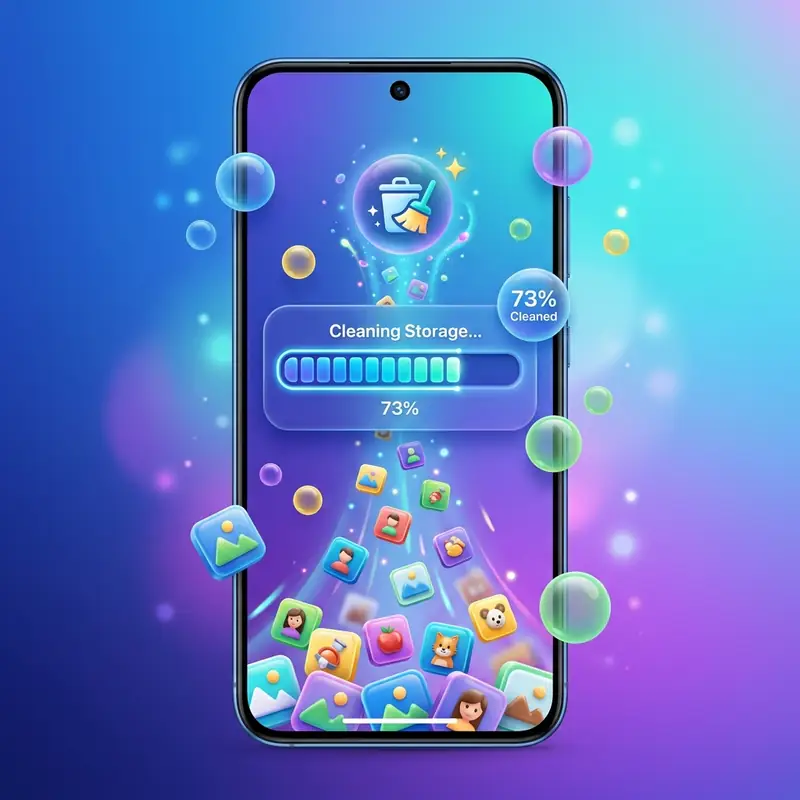
Encountering the dreaded phone storage full warning is one of the most frustrating obstacles of modern digital life. All of a sudden, your smartphone stutters, apps crash immediately upon launching, you stop receiving WhatsApp messages, and the camera refuses to take new photos. This issue plagues both Android and iPhone (iOS) users alike. Fortunately, you don't need to panic or start deleting precious memories. In this detailed guide, you will discover what to do when your phone's memory is full, identifying the actual causes of storage congestion and how to apply safe, advanced cleanup routines.
To resolve storage limitations once and for all, we must understand the difference in phone hardware and act strategically. Accumulated system junk, social media caches, forgotten downloads, and leftover app files are the main causes of local disk saturation. To help you plan your cleanup routine today, check the comparison table below showing where memory is consumed invisibly and how to reclaim space without deleting your photos (as also covered in our guide on how to free up space on your phone safely):
| Media Category | How It Consumes Storage | Recommended Cleanup Action | Potential Reclaimed Space |
|---|---|---|---|
| App Caches | Pre-loaded images, video files, and pages saved by social apps. | Clear application cache in your phone's system settings. | 2 GB to 8 GB |
| Downloads Folder | Old PDFs of invoices, ticket receipts, and email attachments. | Delete unwanted files inside the local "Downloads" folder. | 500 MB to 2 GB |
| WhatsApp & Chat Media | Voice messages, shared memes, and videos received in groups. | Use the built-in storage tool within the messaging app. | 3 GB to 15 GB |
| Offline Streaming Media | Downloaded playlists on Spotify and saved movies or TV shows. | Remove offline media downloads within individual streaming apps. | 5 GB to 20 GB |
| High-Definition 4K Videos | Huge raw video files recorded directly by your phone's camera. | Sync videos to cloud storage or compress them using tools. | 4 GB to 30 GB |
1. The Crucial Difference Between Internal Storage and RAM
A very common point of confusion for many users is the difference between internal storage (memory) and RAM (random access memory). When a device warns of "Full Memory," it is almost always referring to its **internal storage**—the physical hard drive inside the phone where applications, operating system configurations, and media are permanently saved.
RAM, on the other hand, is a temporary, ultra-fast hardware chip the CPU uses to run active applications in real-time. If your RAM is full, the phone will lag and force-close background apps, a behavior we address in our troubleshooting guide for slow phone solutions and performance tips. However, when local storage space fills up past 95%, the system cannot create swap files, which indirectly clogs the RAM and freezes the device. Therefore, maintaining free internal storage is a prerequisite for your phone's hardware performance.
2. How to Identify What is Clogging Your Phone Storage
Before launching any cleanup routine, your first step should be finding out exactly what is taking up space. Both Android and iOS provide visual dashboards that break down storage consumption by category (Apps, System, Photos, Videos, and Audio).
On **Android**, go to *Settings > Device Care > Storage* (on Samsung devices) or *Settings > Storage* (on other brands). The system displays a detailed layout of disk consumption. At the bottom, you can find automatic warnings showing duplicated files, large attachments, and applications you haven't opened in months.
On **iPhone**, navigate to *Settings > General > iPhone Storage*. The iOS system displays a visual breakdown and presents recommendations, such as enabling iCloud backup, offloading unused apps, and reviewing large media files. Checking this dashboard prevents you from wasting time cleaning small folders and helps you target the largest storage hogs directly.
3. The Invisible Storage Drain from Streaming Apps (Spotify, Netflix & YouTube)

Media streaming applications have solved the need to store physical music and video files. However, to guarantee smooth offline playback, apps like Spotify, Netflix, YouTube Music, and Disney+ download heavy media files that remain hidden in your phone's local memory.
If you regularly save offline high-quality music playlists or download entire seasons of TV shows on Netflix for commuting, these apps can easily claim over 15 GB of space. To resolve this without deleting the apps:
- **On Spotify:** Access the app's internal storage settings and tap "Clear Cache." You can also lower download quality to "Normal" to save half the space on future tracks.
- **On Netflix & Disney+:** Open the downloads manager in the app and delete episodes you have finished. Enable "Smart Downloads" so that watched episodes are auto-deleted when a new one is downloaded over Wi-Fi.
4. Managing WhatsApp and Messenger Group Media
WhatsApp is often one of the main culprits for full phone storage. Active group chats send dozens of videos, audios, and high-definition photos daily, which download automatically to your device's memory by default.
To clean up WhatsApp without deleting important conversations or contacts, use the built-in storage tool. Open WhatsApp and go to *Settings > Storage and Data > Manage Storage*. The app will list files larger than 5 MB and sort chats by size. You can enter specific chats to delete heavy video files while keeping text histories safe.
To prevent the storage from filling up again, disable "Save to Camera Roll" or "Media Visibility" in WhatsApp chat settings. This keeps files within the app's history rather than duplicating them in your phone's main gallery.
DomineTec Tip: Turn off media auto-downloads in WhatsApp settings for both cellular data and Wi-Fi connections. This forces the app to only download media files when you manually tap on them, saving massive amounts of storage and mobile data.
5. Cloud Storage Sincronization and the "Free Up Space" Feature

Sincronizing your media library with cloud storage services is the ultimate long-term solution to manage phone storage. Instead of keeping every photo on your physical disk, you upload them to secure cloud servers and delete local copies. Your gallery continues to display lightweight thumbnails and downloads the full file only when you tap to view it.
The best cloud platforms include:
- Google Photos: Provides 15 GB of free initial storage. It features a **Free Up Space** tool that automatically removes local files from your phone once they are safely backed up to Google's cloud.
- iCloud (Apple): Natively integrated on iPhone. Go to *Settings > Photos* and check **Optimize iPhone Storage**. iOS replaces full-resolution photos with space-saving versions on your device, while keeping the originals in iCloud.
- OneDrive & Dropbox: Excellent alternatives if you need real-time synchronization between your mobile device and a desktop computer or work laptop.
Maintaining active cloud backups also keeps your memories safe in case of device damage or theft. If you ever suspect your device is compromised or notice strange account behavior, run a diagnostic check. Check our guide on is my phone being tracked and what to do to secure your personal backup accounts.
6. Clearing Browser Cache and Hidden Web Data
Web browsers store cached files, cookies, and website layouts to speed up your loading times. Over months of surfing, this data accumulates into gigabytes of obsolete files that hold no practical use.
On Google Chrome, go to *History > Clear browsing data*, choose "All time," and check **Cached images and files** to clear junk files while keeping saved passwords active. On Safari for iPhone, go to *Settings > Safari* and tap **Clear History and Website Data**. If you wish to clean cache for other applications on your device, check our step-by-step tutorial on how to clear phone cache correctly to optimize social media apps individually.
7. Reviewing Your System Downloads Folder
The downloads directory is often ignored, acting as a digital junkyard filled with forgotten PDFs, email attachments, and installer files (APKs on Android). These files build up quietly and consume valuable storage space.
On Android, use the **Files by Google** app to sort your downloads folder by size, making it simple to delete outdated documents. On iPhone, open the default **Files** app, tap "Browse," navigate to the "Downloads" folder, and delete files you no longer need.
8. Disabling Carrier and System Bloatware
Many Android devices come pre-installed with carrier apps, custom keyboards, and games (bloatware) that you never use but which continue to update and consume storage in the background.
While you cannot uninstall some system apps, you can disable them. Go to *Settings > Apps*, select the bloatware, and tap **Disable**. This reverts the app to its minimal factory version and prevents background updates. On iPhone, Apple allows you to delete most default system apps directly from the home screen.
9. Enabling High-Efficiency Media Formats and Lowering Resolutions
If you take high-resolution photos and videos regularly, your camera can fill up your phone quickly. Both Apple and Samsung support modern high-efficiency formats: HEIF (High Efficiency Image Format) and HEVC (High Efficiency Video Coding).
On iPhone, go to *Settings > Camera > Formats* and select **High Efficiency** to cut photo and video file sizes in half with no loss in quality. On compatible Android devices, open your camera app settings and enable HEIF images and HEVC videos to save storage automatically with every shot.
Furthermore, pay close attention to your video resolution settings. Many modern devices default to recording in 4K resolution at 60 frames per second (FPS), which consumes up to 400 MB of space per minute of footage. Unless you are producing professional video content, go to your camera settings and lower the recording default to 1080p Full HD at 30 FPS. This simple adjustment preserves beautiful visual details for everyday memories while reducing file footprints by more than 70%, preventing your storage from saturating rapidly.
Additionally, you should disable RAW photo formats (ProRAW on iPhone or RAW/Pro mode on Android) for daily snapshots. RAW files store uncompressed data directly from the camera sensor, meaning a single image can take up over 75 MB. Unless you are planning to run advanced color-grading software on your computer, keep these settings turned off.
10. Restoring Factory Settings as a Last Resort
If you have cleared app caches, deleted downloads, and synced your photos to the cloud, but your phone still displays "Storage Full," your system might have corrupted files or system logs that cannot be removed by normal cleanup methods.
In these persistent cases, performing a factory reset (Hard Reset) is the best choice to wipe the storage completely and restore the phone to its original out-of-the-box performance. Before resetting, perform a complete backup: verify that your photos are synced to iCloud or Google Photos, backup your WhatsApp chat history, and note your account passwords. Once everything is secure, navigate to system settings and select "Reset to Factory Settings."
After the reset process is complete, set up your device as a new phone rather than restoring from a full, raw backup system image. Restoring from a complete backup file can sometimes re-import the exact corrupted system logs and temporary cache files that caused the storage bloat in the first place. Instead, download your applications fresh from the app store and let them pull your personal configurations and documents dynamically from your cloud accounts, resulting in a clean, fast, and optimized smartphone.
Summary and Final Recommendations
Dealing with a full phone storage does not mean you have to lose your photos or delete your favorite apps. By applying cache cleanup routines, configuring automatic cloud backups, and limiting messaging app media auto-downloads, you can keep your smartphone fast and reliable. If you use an older iPhone and find that storage constraints remain an issue even after a factory reset, check our review on is the iPhone 12 still worth buying in 2026 to evaluate its value, storage options, and performance.