How to Limit Bandwidth & Internet Speed per Device in Router
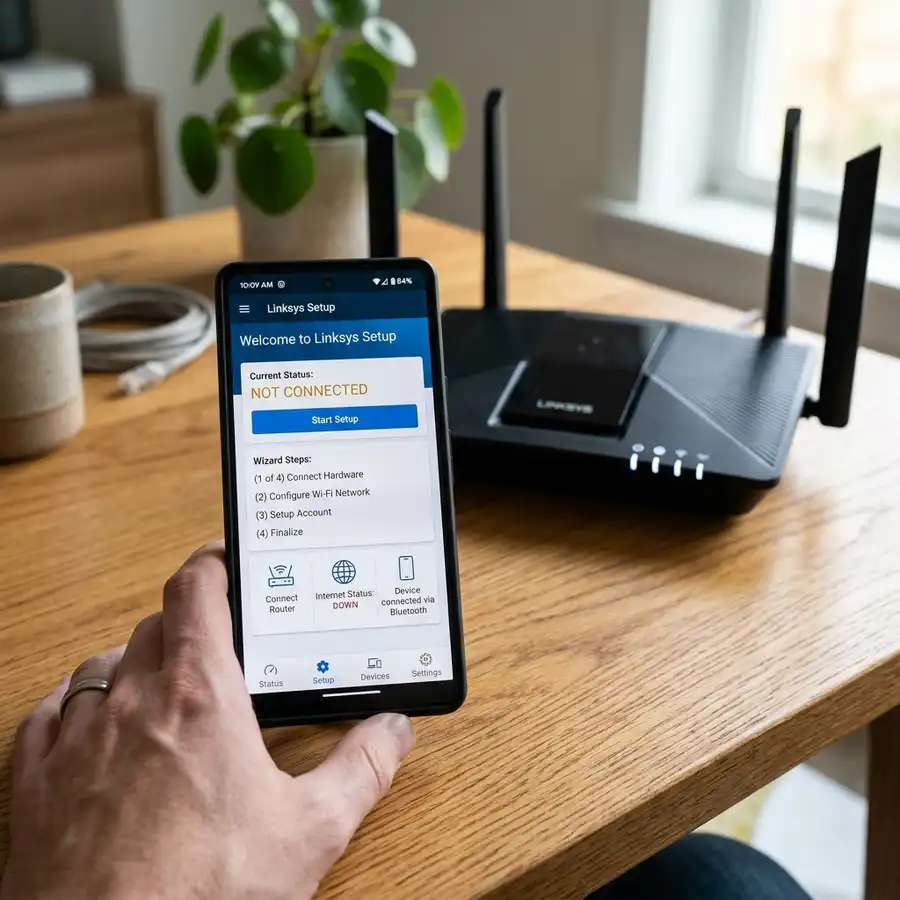
In the modern digital home, internet bandwidth is a shared resource that is easily consumed by high-demand activities. Whether it is a console downloading a massive update, an Apple TV streaming 4K HDR content, or a remote server running intensive backups, a single device can hog the network, leaving other users with high latency, lagging video calls, and sluggish web browsing. In technical terms, this is often referred to as bufferbloat or queue exhaustion, where the router's memory buffer becomes saturated with packets from a single heavy-traffic stream. To solve this, router manufacturers provide bandwidth management features that allow network administrators to partition internet capacity. Understanding how to manage this traffic is essential for maintaining a balanced and stable network.
To limit internet speed per device in a router, configure Quality of Service (QoS), Bandwidth Control, or set IP/MAC speed limits in settings.
1. The Fundamentals of Bandwidth Management and Traffic Shaping
To control the rate of data flowing to individual devices, routers employ techniques known as traffic shaping, policing, and queue management. Bandwidth is measured in Megabits per second (Mbps), representing the volume of data that can be transmitted over a connection in one second. When multiple devices request data simultaneously, the router's processor (CPU) must decide which packets to send first and how much bandwidth to allocate to each device.
Without active management, the router operates on a First-In, First-Out (FIFO) basis. While simple, FIFO is highly susceptible to bandwidth hogging. If one client device initiates a multi-threaded download, it fills the router's queue with its own packets, causing other devices' packets to be delayed or dropped. Traffic shaping resolves this by holding excess packets in a buffer to control the output rate, ensuring smooth traffic flow. Traffic policing, on the other hand, simply drops packets that exceed the configured limit, which triggers TCP's built-in congestion control mechanisms to naturally slow down the transmission rate on the client device.
Modern routers use advanced Active Queue Management (AQM) algorithms such as FQ-CoDel (Fair Queueing Controlled Delay) or CAKE (Common Applications Kept Enhanced). These algorithms automatically classify traffic and ensure that small, time-sensitive packets (like DNS queries, VoIP calls, and online gaming packets) bypass large download queues, maintaining low latency even under heavy network load.
2. Bandwidth Control vs. Quality of Service (QoS)
When navigating your router's administration interface, you will typically encounter two primary methods for managing speed: Bandwidth Control and Quality of Service (QoS). While they share the goal of optimizing network performance, they function differently.
2.1 Bandwidth Control (Rate Limiting)
Bandwidth Control is a hard limit mechanism. It allows the administrator to define exact maximum upload and download speeds (in Kbps or Mbps) for a specific IP address, MAC address, or range of IP addresses. For example, if you have a guest device that constantly streams video, you can set a hard limit of 5 Mbps download and 1 Mbps upload. No matter how much bandwidth is idle on the network, that device will never exceed those speeds. This is highly effective for public or shared networks where strict rationing is required.
2.2 Quality of Service (QoS)
QoS is a prioritization mechanism rather than a hard limit. Instead of restricting a device to a specific speed, QoS organizes network traffic into different priority queues (e.g., High, Medium, Low). When the network is idle, all devices can access the maximum available bandwidth. However, as soon as congestion occurs, the router prioritizes traffic from high-priority devices (such as a work laptop) over low-priority devices (such as a torrent client). QoS is highly recommended for home networks because it maximizes utility, allowing heavy downloads to run at full speed when no one else is active, while immediately throttling them when someone initiates a video conference or starts gaming.
3. Step-by-Step Configuration Guide on Major Router Brands
The exact steps to configure speed limits vary depending on the router's manufacturer and firmware. Below are technical walk-throughs for the most common consumer brands.
3.1 TP-Link Routers (Tether App and Web UI)
TP-Link routers generally use a feature called Bandwidth Control on older models, and a simplified QoS interface on newer Wi-Fi 6 models. To set hard limits on an older TP-Link router:
- Access the router web interface by typing the default IP address (usually 192.168.0.1 or 192.168.1.1) in a browser. Log in with your admin credentials. If you are setting up your router for the first time, you may want to configure TP-Link router from phone using the Tether app.
- Navigate to Advanced > Bandwidth Control.
- Check the box to Enable Bandwidth Control.
- Enter your total Line Speed provided by your ISP (Upload Speed and Download Speed). This is critical, as the router uses these values to calculate percentages.
- Click Save, then click Add to create a new rule.
- Enter the IP address or IP range of the device(s) you want to limit. (e.g., 192.168.0.105).
- Set the Egress Bandwidth (Upload Speed limit) and Ingress Bandwidth (Download Speed limit) in Kbps (Note: 1 Mbps = 1000 Kbps).
- Select the protocol (usually "All") and click Save.
On newer TP-Link Archer models using HomeShield or HomeCare, navigate to the QoS tab, enable QoS, set your total bandwidth, and drag the priority slider for your prioritized devices to the top, while assigning low priority to others.
3.2 ASUS Routers (ASUSWRT Firmware)
ASUS routers feature one of the most robust QoS systems in the consumer market, utilizing Adaptive QoS, Traditional QoS, and Bandwidth Limiter modes.
- Open a browser, go to
router.asus.comor 192.168.50.1, and log in. - On the left menu, navigate to Adaptive QoS and click the QoS tab.
- Toggle the switch to Enable QoS.
- Select Bandwidth Limiter from the QoS Type dropdown menu.
- In the client list, select the device you want to limit (you can identify it by its hostname, IP address, or MAC address).
- Specify the maximum Download limit and Upload limit in Mbps.
- Click the "+" icon to add the rule, and click Apply at the bottom of the page to save the settings.
This ASUSWRT feature applies the limits instantly at the hardware driver level, ensuring low CPU overhead on the Broadcom or MediaTek chipset powering the router.
3.3 Netgear Routers (Nighthawk OS)
Netgear routers typically rely on Dynamic QoS to manage traffic prioritizations automatically.
- Connect to your router and log in via
routerlogin.netor 192.168.1.1. - Go to the ADVANCED tab, select Setup, and click QoS Setup.
- Select the Enable WMM (Wi-Fi Multi-Media) checkbox (this is essential for wireless prioritization).
- Select the Enable Keep My Internet Speed Managed or Enable Dynamic QoS checkbox.
- Run the built-in speed test to allow the router to detect your ISP's bandwidth capacity accurately.
- Under the device list, locate the device you want to deprioritize and change its priority class from "High" or "Normal" to "Low". Click Apply.
4. Binding IP and MAC Addresses for Reliable Control
A common vulnerability of IP-based bandwidth limiting is that devices can change their IP addresses. By default, routers assign IP addresses dynamically via DHCP. If a user manually changes their device's IP address in their operating system network settings, or if the DHCP lease expires and the router assigns a new IP, the bandwidth limiting rule will no longer apply to that device.
To prevent this, you must bind the device's Media Access Control (MAC) address to a static IP address within the router. A MAC address is a unique 12-character physical identifier burned into the network card at the factory, making it very difficult to spoof without administrative privileges on the client device.
To configure IP-MAC Binding (also called DHCP Reservation):
- Navigate to your router's DHCP Server or LAN Settings page.
- Look for the Address Reservation, Static IP Lease, or IP-MAC Binding section.
- Enter the MAC address of the target device (e.g.,
00:1A:2B:3C:4D:5E) and the static IP address you want to assign to it (e.g.,192.168.1.150). - Save the setting and reboot the target device. The device will now always receive the IP address
192.168.1.150from the DHCP server. - Create your Bandwidth Control or QoS rule targeting the IP
192.168.1.150. The speed limit is now locked to that physical device.
This binding is also critical when you turn an old router into a Wi-Fi repeater, as keeping IP addresses static prevents routing loops and conflicts across bridged segments. Additionally, you should remember to change Wi-Fi password from phone or computer periodically to prevent unauthorized clients from joining and consuming bandwidth in the first place.
| Feature Mode | Mechanism Type | Pros | Cons | Best Use Case |
|---|---|---|---|---|
| Bandwidth Control | Hard rate limit (Throttling) | Guarantees exact bandwidth ceiling; prevents any spike. | Wastes idle bandwidth; throttled client is slow even if network is empty. | Guest networks, kids' gaming consoles, smart TVs. |
| Adaptive QoS | Dynamic prioritization | Maintains gaming/work latency; uses 100% of idle speed. | Does not set hard limits; downloaders can still spike momentarily. | Home networks with remote work, streaming, and gaming. |
| IP-MAC Binding | Static DHCP reservation | Secures rules; prevents devices from bypassing limits. | Requires manual setup for every device. | Ensuring bandwidth rules remain active permanently. |
| Guest Network Throttling | Isolated SSID limiting | Applies to all guest devices at once; simple setup. | Limits guests collectively; doesn't distinguish between guest clients. | Smart home IoT devices, visiting guests, neighbors. |

5. Advanced Traffic Management: Guest Networks and SQM
For network administrators looking for a more automated or comprehensive solution, consumer-grade Bandwidth Control can be replaced or augmented with advanced configurations.
5.1 Guest Network Bandwidth Partitioning
Instead of limiting devices one by one, most modern routers allow you to create a secondary Wi-Fi network (SSID) dedicated to guests or IoT (Internet of Things) devices. In the router's wireless settings, you can isolate the guest network from your main local area network (LAN) for security, and apply a global bandwidth limit to the entire guest SSID. For example, you can allocate a maximum of 15% of your total internet speed to the guest network. All connected guests will share this 15% pool, ensuring that guest activity can never impact your main network, regardless of how many devices connect.
5.2 Smart Queue Management (SQM) and Bufferbloat Mitigation
If you use open-source router firmware like OpenWrt, DD-WRT, or Asuswrt-Merlin, you can implement Smart Queue Management (SQM). SQM uses advanced queuing disciplines like FQ-CoDel or Cake to manage network buffers. Traditional routers suffer from bufferbloat, which occurs when a fast connection sends data into a slow connection, causing the router to buffer data excessively, creating latency spikes. SQM works by scheduling packets dynamically and deliberately dropping packets slightly early to signal TCP transmitters to slow down. By configuring SQM to target 90% of your maximum ISP upload and download speeds, you eliminate bufferbloat entirely. All devices automatically receive an equal share of the network latency budget, making manual device-by-device rate limits unnecessary for maintaining ping stability during gaming or video calls.
6. Troubleshooting Speed Limits and Common Bypass Methods
After configuring bandwidth limits, you may find that some devices are still consuming excessive bandwidth or bypassing the limits. Understanding how devices evade these limits is important for maintaining control.
6.1 MAC Address Randomization
Modern operating systems, including Windows 11, macOS, iOS, and Android, feature MAC Address Randomization (also called Private Wi-Fi Address) by default. Every time a device reconnects to the Wi-Fi network, it can generate a spoofed MAC address. This causes the router to treat the device as a new guest client, bypass the IP-MAC binding rule, and assign a new IP address with no bandwidth limits.
Solution: To prevent this, you must disable MAC Address Randomization in the network settings of the target device. On iOS, go to Settings > Wi-Fi, tap the "i" next to the network, and turn off "Private Wi-Fi Address." On Android, navigate to the network details, select Privacy, and change it from "Use Randomized MAC" to "Use Device MAC." On your router, you can configure the DHCP pool to only allow known MAC addresses, blocking unknown devices from connecting entirely.
6.2 VPNs and Encrypted Proxies
If you set up QoS rules based on traffic type (for example, deprioritizing Netflix or YouTube traffic), a user can easily bypass these rules by connecting to a Virtual Private Network (VPN) or an encrypted proxy. Because a VPN encrypts all traffic between the device and the VPN server, the router cannot inspect the packets (Deep Packet Inspection) to determine if they are video streams or web browsing. The router sees only generic encrypted UDP or TCP traffic, allowing the download to bypass application-level QoS rules.
Solution: To mitigate this, apply QoS and Bandwidth Control rules to the physical IP or MAC address of the device itself, rather than trying to categorize application protocols. Regardless of whether the user is connected to a VPN, proxy, or Tor browser, the router will enforce the hard speed ceiling on the device's IP address.
Frequently Asked Questions
Does limiting speed on the router affect local file transfers (LAN)?
In most routers, Bandwidth Control only limits traffic passing between the local network (LAN) and the internet (WAN). It does not restrict local data transfers, such as transferring a file from your computer to a NAS or streaming media via Plex within the same network. However, on some older, lower-end routers with basic chipsets, the rate limit might apply to all traffic passing through the router switch ports. It is recommended to use IP-based WAN Bandwidth Control to ensure local gigabit speeds remain unaffected.
What happens if I set a limit higher than my actual internet speed?
If you set your router's bandwidth limits or total line speed higher than your actual internet subscription speed, the QoS engine will fail to work correctly. The router calculates its queue sizes and priority limits based on the values you input. If the router believes it has 100 Mbps of bandwidth but the ISP link only delivers 50 Mbps, congestion will occur at the ISP's modem rather than inside the router. As a result, the router's queue scheduling is bypassed, and bufferbloat and latency spikes will return.
Can I limit bandwidth per Wi-Fi frequency band (2.4 GHz vs. 5 GHz)?
Yes, many routers offer the option to allocate bandwidth limits per wireless frequency band. The 2.4 GHz band has a lower throughput capacity and is highly susceptible to interference. You can set a limit on the total bandwidth assigned to the 2.4 GHz band to prevent legacy smart home devices from slowing down the high-speed 5 GHz band. This ensures that devices demanding low latency and high bandwidth (like gaming PCs and VR headsets on the 5 GHz band) always have prioritized access to the internet line.
How can I identify which device is consuming the most bandwidth?
Most modern routers feature a traffic monitoring or network statistics page (often called Traffic Analyzer, Device Statistics, or Real-Time Monitor). This page displays a list of all connected devices along with their real-time upload and download speeds. By sorting the list by download rate, you can easily identify the device causing congestion. Once identified, you can bind its MAC address and apply a Bandwidth Control rule to resolve the issue permanently.
Managing internet speed on a home network requires a balance between limiting bandwidth and maximizing overall performance. By understanding the difference between hard Bandwidth Control rate limits and dynamic QoS prioritization, network administrators can choose the best strategy for their environment. Implementing IP-MAC binding ensures that rules remain active permanently, preventing devices from bypassing restrictions using dynamic IP changes. Whether configuring a simple rate limit on a guest network or setting up advanced Smart Queue Management, taking control of your router's bandwidth allocation ensures a smooth, lag-free online experience for everyone on the network.




