
Deploying a Python API on a cheap Linux VPS is straightforward and cost-effective. As businesses and developers increasingly rely on APIs to facilitate communication between different software applications, deploying these APIs efficiently is important. A Virtual Private Server (VPS) allows you to host your applications in a robust environment, providing the flexibility and control that shared hosting often lacks.
This blog post will walk you through the process of deploying and running a FastAPI Python API on an affordable Linux VPS, leveraging Nginx as a reverse proxy for better performance and security.
The landscape of web hosting has evolved significantly, and with the rise of various providers, it's now possible to find budget-friendly VPS options that do not compromise on quality or performance. FastAPI is a modern, fast (high-performance) web framework for building APIs with Python, based on standard Python type hints.
Coupling FastAPI with a Linux VPS and Nginx allows you to create a scalable, efficient, and secure solution for your API needs. In the following sections, we will delve deeper into the technical concepts surrounding web servers and hosting, provide a step-by-step guide for setting up your API, and compare various VPS options to help you make an informed decision.
Understanding Web Servers and Hosting
To fully grasp the deployment of a Python API on a VPS, it's essential to understand the role of web servers and the hosting environment. A web server is a software or hardware that serves content to users over the internet.
It processes requests from clients, typically through the HTTP protocol, and delivers the requested resources, which can include HTML pages, images, or APIs. The hosting environment, on the other hand, refers to the physical or virtual space where your web server resides.
In our case, we are focusing on a cheap Linux VPS, which combines the affordability of shared hosting with the power and flexibility of dedicated servers.
Linux VPS hosting offers several advantages, including root access, which allows you to configure your server according to your needs. Additionally, Linux is known for its stability, security, and efficiency, making it an ideal choice for hosting applications like Python APIs.
When using a VPS, you are sharing physical server resources with other users but have your own dedicated portion of those resources. This setup ensures better performance compared to shared hosting, where multiple websites compete for the same resources.
In the context of deploying a Python API, having a reliable web server and hosting environment is important. Using Nginx as a reverse proxy server enhances performance by handling incoming requests, serving static files directly, and forwarding dynamic requests to your FastAPI application.
This architecture not only improves the speed of your API but also adds a layer of security, as Nginx can help mitigate common web vulnerabilities. Understanding these concepts will lay the groundwork for an effective deployment strategy that harnesses the advantages of both FastAPI and Nginx on a Linux VPS.
Step-by-Step Guide to Deploying Your FastAPI Python API

Now that we have established the technical foundation, let's proceed with a detailed step-by-step guide on how to deploy your FastAPI Python API on a cheap Linux VPS. The first step is selecting a suitable VPS provider.
Look for providers that offer low-cost plans with sufficient resources (CPU, RAM, and storage) for your API's expected load. Popular options include DigitalOcean, Linode, and Vultr, which often have introductory offers for new users.
Once you have chosen your provider, create an account and set up your VPS instance. When configuring your server, select a Linux distribution such as Ubuntu or CentOS. For this guide, we will assume you are using Ubuntu, which is user-friendly and widely supported. After the instance is created, you will receive IP access details and SSH credentials to log into your server securely.
With your VPS up and running, the first thing to do is update the package manager. You can do this by connecting to your server via SSH using a terminal application and running the following commands:
```bash
sudo apt update
sudo apt upgrade
```
Next, install Python and pip, which is the package manager for Python. FastAPI requires Python 3.6 or higher, so ensure you have the appropriate version installed:
```bash
sudo apt install python3 python3-pip
```
After installing Python, you should install FastAPI and an ASGI server, such as Uvicorn, which will serve your FastAPI application:
```bash
pip3 install fastapi uvicorn
```
Now, create a simple FastAPI application. You can create a directory for your API and a file named `main.py` within it:
```bash
mkdir my_fastapi_app
cd my_fastapi_app
nano main.py
```
Add the following FastAPI code to `main.py`:
```python
from fastapi import FastAPI
app = FastAPI()
@app.get("/")
async def read_root():
return {"Hello": "World"}
```
Save the file and exit the text editor. You can run your FastAPI application locally to ensure it works:
```bash
uvicorn main:app --host 0.0.0.0 --port 8000
```
Now your API is accessible via `http://your-server-ip:8000`. To make your FastAPI application accessible on the standard HTTP port (80), you will need to set up Nginx as a reverse proxy. First, install Nginx:
```bash
sudo apt install nginx
```
Next, create a new configuration file for your FastAPI application in the Nginx configuration directory:
```bash
sudo nano /etc/nginx/sites-available/my_fastapi_app
```
Add the following configuration to the file:
```nginx
server {
listen 80;
server_name your-server-ip;
location / {
proxy_pass http://127.0.0.1:8000;
proxy_set_header Host $host;
proxy_set_header X-Real-IP $remote_addr;
proxy_set_header X-Forwarded-For $proxy_add_x_forwarded_for;
proxy_set_header X-Forwarded-Proto $scheme;
}
}
```
Save the file and enable the configuration by creating a symbolic link to the `sites-enabled` directory:
```bash
sudo ln -s /etc/nginx/sites-available/my_fastapi_app /etc/nginx/sites-enabled
```
Finally, test the Nginx configuration and restart the service:
```bash
sudo nginx -t
sudo systemctl restart nginx
```
Your FastAPI application should now be accessible at `http://your-server-ip`. If you need to troubleshoot any issues, check the Nginx error logs located at `/var/log/nginx/error.log` for any relevant messages.
Comparative Analysis of VPS Options for Python API Deployment
It's essential to evaluate different VPS options when deploying your Python API, especially if you are looking for cost-effective solutions. The following table provides a structured comparison of popular VPS providers, taking into account key features that are vital for hosting a FastAPI application.
| Provider | Starting Price (Monthly) | CPU Cores | RAM | Storage Type | Bandwidth | Support |
|---|---|---|---|---|---|---|
| DigitalOcean | $5 | 1 | 1GB | SSD | 1TB | 24/7 Community Support |
| Linode | $5 | 1 | 1GB | SSD | 1TB | 24/7 Support |
| Vultr | $5 | 1 | 1GB | SSD | 1TB | 24/7 Support |
| Amazon Lightsail | $3.50 | 1 | 512MB | SSD | 1TB | 24/7 Support |
When selecting a VPS for deploying your FastAPI application, consider not only the cost but also the performance metrics such as CPU, RAM, and storage type. SSD storage is preferred for faster data retrieval compared to traditional HDDs.
Furthermore, ensure that the provider offers adequate bandwidth to handle your API's traffic, as this will significantly impact performance during peak usage times. Support options are also important; having 24/7 access to knowledgeable staff can be invaluable when facing technical challenges.

Additional Resources and Recommended Links
For those looking to further enhance their knowledge and skills in deploying Python APIs and managing Linux VPS, numerous resources and articles can help you explore more advanced configurations, optimization techniques, and best practices. For instance, you may find it beneficial to read about how to secure your Linux VPS by following the guidelines in this article: How to Setup Linux Ubuntu VPS as a Secure Web Server.
Additionally, learning about containerization and orchestration can greatly improve the deployment process; check out this guide on How to Install Docker and Docker Compose on VPS. These resources will equip you with the knowledge necessary to maximize the potential of your Python API deployment and ensure a smooth operational experience.
Advanced Server Performance Tuning: Cache Policies and Core Networking Metrics
Redis and Memcached serve a similar function but cater to different use cases. Redis is an in-memory data structure store that supports various data types and is often used for caching and message brokering.
Its ability to persist data to disk and support complex data structures makes it ideal for applications that require real-time analytics or session storage. On the other hand, Memcached is a simple key-value store that excels in caching database query results to improve load times.
Depending on the specific needs of your API, integrating one or more of these caching solutions can drastically enhance performance, reduce database load, and improve user experience.
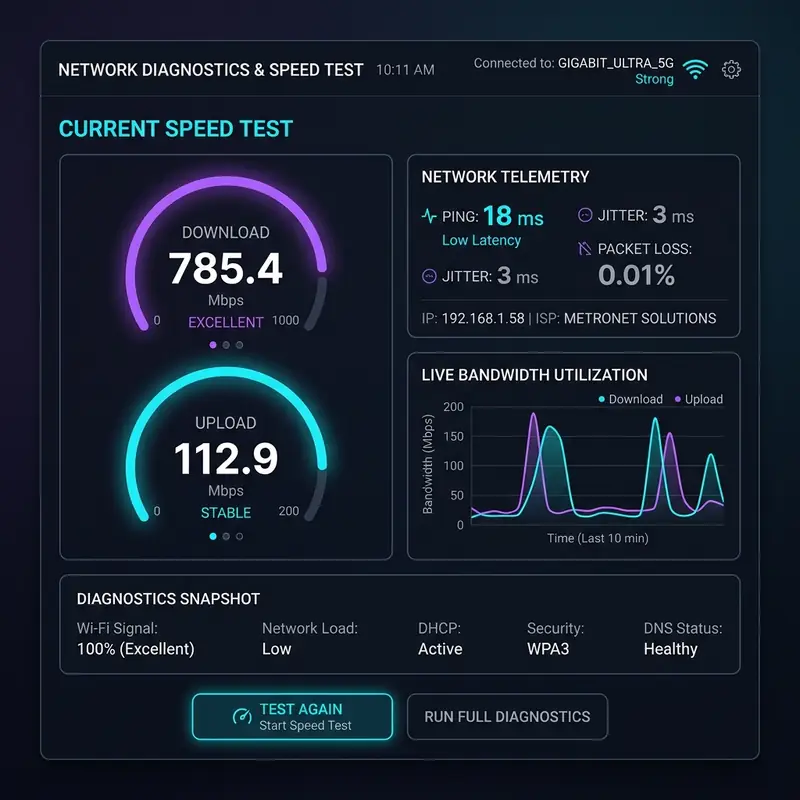
In addition to caching, understanding core networking metrics such as Time to First Byte (TTFB) latency, server load, and bandwidth allocation is important. TTFB measures the duration from when a client makes an HTTP request to the first byte of data being received by the client. A lower TTFB indicates a more responsive server, and several factors can influence this metric, including server processing time, network latency, and DNS resolution time.
By monitoring TTFB, you can identify performance bottlenecks and optimize your server configuration accordingly. Server load, often expressed as a ratio of active processes to the total number of CPUs, provides insights into how well your server is handling requests. Keeping an eye on this metric allows you to scale your resources effectively, ensuring your API remains responsive under varying traffic conditions.
Bandwidth allocation is another critical component of server performance. It defines how much data can be transmitted over a network connection in a given timeframe.
Proper bandwidth management is essential to prevent throttling and ensure that your API can serve multiple concurrent users without significant degradation in performance. Tools like traffic shaping and Quality of Service (QoS) policies can help prioritize API traffic, allowing you to allocate bandwidth dynamically based on real-time demand.
This proactive approach can make a significant difference, especially during peak usage periods.
Lastly, it's important to conduct periodic performance audits and load testing to identify areas for improvement continually. Tools such as Apache JMeter or Locust can simulate user traffic, giving you invaluable data about how your API performs under stress. By analyzing this data, you can make informed decisions about where to invest your optimization efforts, ultimately leading to a more robust and efficient Python API deployment.
Implementing Robust Server-Side Cybersecurity Protocols for API Protection

Another vital aspect of server-side security involves managing IP tables, a built-in firewall capability in Linux. By configuring IP tables, you can control incoming and outgoing traffic to your server, allowing only trusted IP addresses while blocking known malicious sources.
This granular level of control helps mitigate threats such as Distributed Denial of Service (DDoS) attacks, where an attacker attempts to overwhelm your server with traffic. Additionally, setting up rate limiting can further protect your API by restricting the number of requests a particular IP can make in a specific timeframe.
This approach can prevent abuse and ensure that legitimate users can access your API without disruption.
DDoS protection should be complemented by a comprehensive firewall strategy. Implementing a DDoS firewall can provide an additional layer of defense against volumetric attacks aimed at exhausting bandwidth.
Many hosting providers offer DDoS protection services that automatically detect suspicious traffic patterns and mitigate them before they reach your server. These services often use machine learning algorithms to adapt to new threats in real-time, providing peace of mind against evolving attack vectors.
Regularly updating your firewall rules and monitoring logs for unusual activities can further enhance your security posture.
Directory permissions also play a significant role in securing your server. Ensuring that directories on your server have the correct permissions is essential to prevent unauthorized access to sensitive files.
A common practice is to implement the principle of least privilege, meaning users and processes are granted the minimal level of access necessary for their functions. Regular audits of directory permissions can help identify and rectify potential vulnerabilities, thus fortifying your server against unauthorized access.
For instance, sensitive files such as configuration files or database credentials should be stored in directories with restricted access, ensuring that only authorized processes can read them.
Finally, incorporating a comprehensive logging and monitoring strategy is essential for maintaining a strong security posture. Utilizing tools such as fail2ban can help monitor server logs for failed login attempts and automatically block offending IP addresses.
Additionally, regular audits and penetration testing can help identify vulnerabilities before they can be exploited. By creating a culture of security awareness and continuous improvement, you can ensure that your Python API remains resilient against current and future threats.
Evaluating Hosting Limitations: Shared Servers versus Dedicated and Cloud Solutions
When it comes to deploying a Python API, understanding the limitations of your hosting environment is critical for long-term success. Shared servers, while cost-effective, often come with significant limitations that can hinder application performance and scalability. In a shared hosting environment, multiple websites and applications share the same server resources, which can lead to contention for CPU, memory, and bandwidth. This resource sharing can result in slower response times and increased latency, especially during peak traffic periods when other hosted applications consume more resources. Additionally, the lack of control over server configurations can limit your ability to implement specific optimizations or security measures that are tailored to your API's needs.In contrast, dedicated servers and cloud solutions offer greater flexibility and performance. A dedicated server provides you with exclusive access to all server resources, allowing for extensive customization and optimization. This is particularly advantageous for applications that require significant computational power or have high traffic demands.
However, the downside of dedicated servers is the higher cost and the need for more technical expertise to manage the server effectively. On the other hand, cloud hosting solutions present a more scalable option, allowing you to pay for only the resources you use and adjust them according to traffic fluctuations. This elasticity can be particularly beneficial for APIs that experience variable loads, enabling you to scale up during peak times and scale down when demand decreases.
Another consideration when evaluating hosting environments is the impact of DNS propagation errors. When you migrate your API to a new hosting provider or make significant changes to your DNS settings, it can take time for those changes to propagate across the internet.
This delay can lead to confusion for users trying to access your API, resulting in interrupted service and potentially lost traffic. Understanding how DNS propagation works and planning accordingly can mitigate these issues.
Employing techniques such as TTL (Time to Live) adjustments and pre-migrating DNS changes can help ensure a smoother transition.
Database optimization also plays a important role in performance, particularly when choosing a hosting solution. Many developers underestimate the importance of database design and indexing, which can lead to inefficient queries and slow response times.
Shared hosting environments may not provide the necessary resources to implement advanced database optimizations, while dedicated and cloud servers often have the flexibility to incorporate optimized databases. Regularly assessing your database performance and making necessary adjustments can lead to significant improvements in API response times.
Lastly, Service Level Agreements (SLAs) should not be overlooked when selecting a hosting provider. An SLA outlines the level of service you can expect, including uptime guarantees, support response times, and compensation for downtime.
Understanding the terms of your SLA is critical, as it can provide reassurance regarding the reliability and support you will receive. In today's competitive landscape, where API uptime is paramount, investing in a hosting solution with a strong SLA can make a substantial difference in ensuring your API remains operational and accessible to users.