To secure your Linux VPS server against DDoS attacks, implement several layered security measures and best practices. Distributed Denial of Service (DDoS) attacks are malicious attempts to disrupt the normal functioning of targeted servers, services, or networks by overwhelming them with a flood of traffic. These attacks can cause significant downtime, leading to financial losses and reputational damage for businesses of all sizes.
Given the increasing sophistication of cyber threats, it's important for administrators and developers to be well-versed in securing their Linux Virtual Private Servers (VPS) against such attacks. This blog post will delve into various strategies, tools, and best practices to fortify your Linux VPS against DDoS threats.
Understanding the technical concepts behind web servers and hosting is essential for implementing effective DDoS protection. A web server is a software or hardware device that serves content to clients over the internet. When users attempt to access a website, their requests are routed through a series of processes that ultimately deliver the requested content.
Hosting, in this context, refers to the service that provides the infrastructure and resources necessary to make a website accessible on the web. This infrastructure can vary significantly based on the type of hosting service used, such as shared, dedicated, or VPS hosting. Each option has its advantages and disadvantages, particularly concerning security, performance, and control over the server environment.
When dealing with DDoS attacks, it’s important to recognize the specific vulnerabilities and challenges associated with hosting environments. VPS hosting, while offering greater flexibility and control compared to shared hosting, still presents unique risks.
Many VPS environments operate on a shared physical server infrastructure, meaning that if another VPS on the same server is targeted by a DDoS attack, it could inadvertently affect your server's performance and availability. Therefore, understanding the architecture and networking capabilities of your VPS is vital for implementing effective DDoS mitigation strategies.
Detailed Introduction to the Technical Concept of Web Servers and Hosting Related to the Theme
A deep understanding of web servers and hosting is foundational in effectively securing your Linux VPS against DDoS attacks. Web servers operate on a client-server model, wherein the server hosts web applications and files, while clients (typically web browsers) send requests to the server to retrieve this information.
The server processes these requests and responds accordingly, a cycle that is repeated thousands of times per second for high-traffic sites. Each request and response cycle opens potential avenues for attackers to exploit, especially during a DDoS attack, where the sheer volume of requests can overwhelm server resources and lead to service disruptions.
Hosting services can be broadly categorized into shared, dedicated, and VPS hosting. Shared hosting is the most economical option, where multiple users share resources on a single server. While it lowers costs, it also amplifies security risks since vulnerabilities in one website can affect others on the same server.
Dedicated hosting provides an entire server for one client, offering enhanced control and security but at a higher cost. VPS hosting strikes a balance between cost and control, partitioning a single physical server into multiple virtual servers that operate independently. While VPS offers better security than shared hosting, it still requires proactive measures to mitigate DDoS threats effectively.
To protect your Linux VPS from DDoS attacks, you must understand the different types of DDoS attacks that exist. Common types include volumetric attacks, which aim to saturate the bandwidth of the target, and protocol attacks, which exploit weaknesses in network protocols to consume server resources.
Application layer attacks, on the other hand, target specific functionalities of web applications, often mimicking legitimate user behavior to bypass security measures. Each type of attack necessitates a different mitigation strategy, underscoring the importance of understanding the nature of the threats your server may face.
Step-by-Step Practical Guide

Securing your Linux VPS against DDoS attacks involves a combination of proactive monitoring, configuration adjustments, and the use of specific tools. One of the first steps you should take is to ensure that your server's firewall is properly configured to limit unnecessary traffic.
Using tools like `iptables`, you can set up rules that restrict access to your server based on IP addresses, protocols, or ports. For example, you can block incoming traffic from known malicious IPs or limit the rate of requests from individual addresses to prevent abuse.
Another effective tool in your arsenal is Fail2Ban. This application scans log files for suspicious activities and automatically updates firewall rules to block IP addresses that exhibit malicious behavior.
For instance, if someone is attempting to brute-force SSH into your server or sending an excessive number of requests to a specific endpoint, Fail2Ban can temporarily or permanently block that IP. To install Fail2Ban on your Linux server, you can follow these commands in your terminal:
```bash
sudo apt update
sudo apt install fail2ban
```
After installation, you can configure Fail2Ban by editing the configuration file located at `/etc/fail2ban/jail.local`. You can set up specific jails for different services, such as SSH or Apache, and customize the parameters like the maximum number of retries and the ban time. Once you have configured Fail2Ban, restart the service to apply your changes:
```bash
sudo systemctl restart fail2ban
```
Additionally, you should consider implementing rate limiting on your web applications. This involves restricting the number of requests a user can make to your server within a specific timeframe.
Many web servers, including Nginx and Apache, support rate limiting through their configuration files. For example, in Nginx, you can use the `limit_req` directive to set a maximum request rate per IP, which can help mitigate the impact of DDoS attacks targeting your application.
Moreover, consider employing a Content Delivery Network (CDN) that offers built-in DDoS protection. CDNs can absorb and disperse traffic across their network, lessening the load on your VPS and making it more resilient to attacks.
Many popular CDNs, such as Cloudflare and Akamai, include security features designed to detect and mitigate DDoS attacks in real time. By routing your traffic through a CDN, you can significantly enhance your server's ability to withstand high traffic volumes.
Comparative Table of DDoS Mitigation Options
To help you navigate the various DDoS protection measures, the following table compares different options based on key features, effectiveness, and cost. This structured overview will assist you in deciding which method aligns best with your security needs and budget.
| Option | Effectiveness | Cost | Ease of Setup |
|---|---|---|---|
| IP Filtering | Moderate | Low | Easy |
| Fail2Ban | High | Low | Moderate |
| Rate Limiting | High | Medium | Moderate |
| Content Delivery Network (CDN) | Very High | Medium to High | Easy |
| Dedicated DDoS Protection Services | Very High | High | Moderate |
This table illustrates the various options available for DDoS protection, highlighting their respective effectiveness, cost, and ease of setup. While IP filtering is a straightforward and low-cost option, it may not provide comprehensive protection against sophisticated attacks.
Fail2Ban and rate limiting offer more robust solutions, though they require some configuration and maintenance. On the other hand, CDNs and dedicated DDoS protection services provide high levels of protection but come with varying costs, making them suitable for businesses with higher security needs or those that experience significant traffic.

Additional Resources and Recommended Links
For those looking to deepen their understanding of DDoS mitigation and further secure their Linux VPS, several resources and tools are available to assist in enhancing your knowledge and capabilities. For comprehensive guides, consider visiting links such as How to Install Free Let's Encrypt SSL on VPS and How to Setup Linux Ubuntu VPS as a Secure Web Server.
These articles provide invaluable insights into securing your server with SSL certificates and establishing a solid foundation for your web applications. Additionally, resources from cybersecurity organizations, forums, and community discussions can offer practical advice and experiences from fellow administrators facing similar challenges in securing their environments.
Advanced Server Performance Tuning: Cache Policies and Core Networking Metrics
OPcache, for instance, is a powerful PHP extension that significantly enhances the performance of PHP applications by storing precompiled script bytecode in shared memory. This reduces the need for PHP to load and parse scripts on every request, thus minimizing the server's response time.
For optimal configuration, consider adjusting the `opcache.memory_consumption` parameter to allocate sufficient memory for caching, while also tuning `opcache.revalidate_freq` to control how often the opcode cache checks for script updates. These settings can dramatically improve TTFB, allowing your server to serve requests faster, which is paramount during a DDoS attack when every millisecond counts.
Redis and Memcached further amplify performance by acting as in-memory data stores that facilitate faster data retrieval, which is especially beneficial for read-heavy applications. Properly configuring these caching layers requires an understanding of your application's data access patterns.
For instance, using Redis' built-in data structures can optimize complex data manipulations, while Memcached's simplicity allows for rapid caching of small data objects. Implementing these caching strategies will not only enhance your server’s performance but also reduce the load during high-traffic scenarios, providing an additional buffer against DDoS attacks.
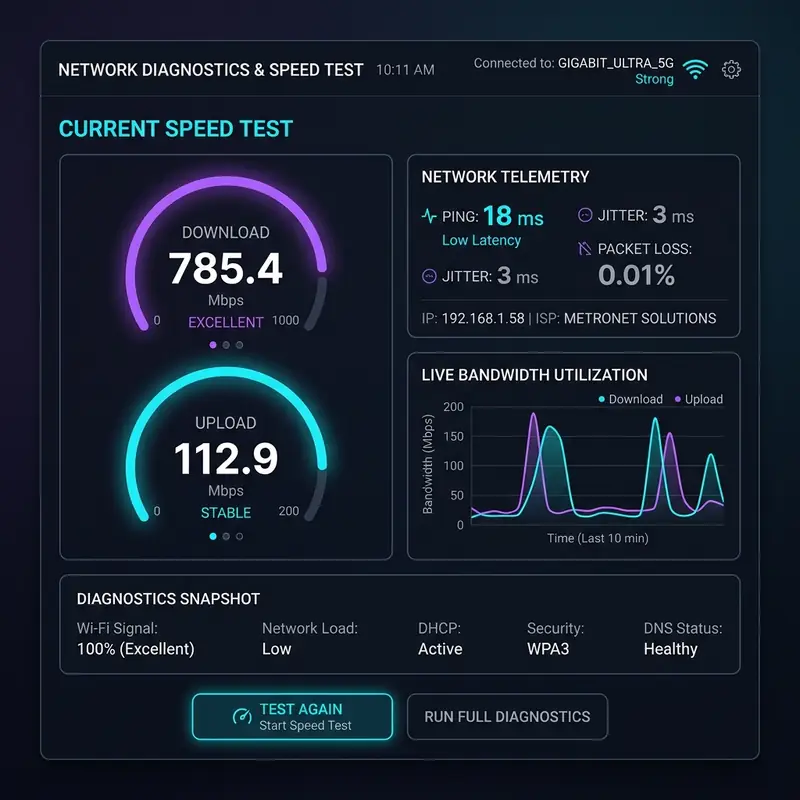
Core networking metrics must also be closely monitored and optimized. TTFB is a critical metric that indicates the responsiveness of your server; a lower TTFB means quicker responses to user requests.
Regularly analyzing server load can help you identify potential bottlenecks that may arise during high traffic periods, allowing you to make necessary adjustments before an attack occurs. Additionally, effective bandwidth allocation ensures that your server can handle unexpected surges in legitimate traffic, which can often be mistaken for DDoS activities.
Finally, understanding how caching policies interact with these metrics is essential. Implementing a layered caching approach, where static content is served from the highest level of caching (such as CDN), followed by OPcache for PHP scripts, and finally Redis or Memcached for dynamic content, can create a robust infrastructure that minimizes the impact of DDoS attacks.
By optimizing these elements, you not only enhance server performance but also build a resilient environment that can withstand the pressures of malicious traffic.
Implementing Server-Side Cybersecurity Protocols: SSL, Firewalls, and Permissions

SSL certificates are fundamental in securing data in transit between your server and clients. They encrypt the data, ensuring that sensitive information remains protected from interception.
Properly configuring SSL involves not only obtaining a valid certificate but also ensuring that it is installed correctly on your server. This includes redirecting all HTTP traffic to HTTPS, which not only secures your connection but can also help in blocking certain types of DDoS attacks by preventing malicious entities from exploiting unsecured channels.
Regularly updating and renewing your SSL certificates is equally important to maintain trust with your users and uphold the integrity of your server’s security.
Utilizing IP tables to manage incoming and outgoing traffic provides a powerful line of defense against DDoS attacks. By implementing rules that allow only trusted IP addresses and blocking suspicious or malicious traffic, you can significantly reduce the potential attack surface.
For instance, configuring rate limiting for each IP can help prevent abuse by limiting the number of requests a single IP can make within a specified timeframe. Advanced configurations may also involve setting up rules to block specific ports or protocols that are commonly exploited during DDoS attacks, further enhancing your server's security posture.
In addition to IP tables, deploying a DDoS firewall is a proactive approach to safeguarding your server. Unlike traditional firewalls, which primarily focus on blocking unauthorized access, a DDoS firewall is specifically designed to absorb and mitigate large-scale attacks.
These firewalls utilize various techniques, such as traffic shaping and anomaly detection, to identify and filter out malicious traffic before it reaches your server. Integrating a DDoS firewall with your existing security infrastructure can dramatically reduce the risk of downtime during an attack, ensuring that your legitimate users can access your services without interruption.
Directory permissions are another critical aspect of server-side security. Misconfigured permissions can lead to unauthorized access to sensitive files and directories, making your server more vulnerable to exploitation.
It is essential to follow the principle of least privilege when setting permissions, granting only the necessary access rights to users and applications. Regular audits of directory permissions can help identify potential vulnerabilities, allowing you to take corrective actions before they can be exploited.
Implementing secure file permissions, along with secure coding practices, can significantly enhance your server's resilience against both internal and external threats.
In conclusion, the integration of these cybersecurity protocols forms a comprehensive defense mechanism for your Linux VPS server. By ensuring secure data transmission through SSL, meticulously managing traffic with IP tables, deploying specialized DDoS firewalls, and maintaining strict directory permissions, you can create a fortified environment that is better equipped to withstand DDoS attacks and other cybersecurity threats.
Understanding Hosting Limitations: Comparing Shared, Dedicated, and Cloud Servers
The choice of hosting environment plays a significant role in how effectively you can secure your Linux VPS server against DDoS attacks. Understanding the limitations and advantages of different hosting solutions—shared servers, dedicated servers, and cloud machines—will guide you in selecting the most suitable environment for your needs. Each hosting type comes with its own set of constraints and benefits that can significantly impact your server's performance and security.Shared servers, while cost-effective, often present limitations that can hinder your ability to withstand DDoS attacks. In a shared hosting environment, multiple users share the same server resources, which can lead to performance degradation during high traffic volumes.
This can be particularly problematic in the event of a DDoS attack, where malicious traffic can consume shared resources and lead to downtime for all users on that server. Additionally, the lack of control over server configurations and security measures in shared environments can result in vulnerabilities that may be exploited by attackers.
Therefore, while shared hosting may be suitable for smaller websites or applications with limited traffic, it is generally not recommended for services where security and uptime are critical.
On the other hand, dedicated servers offer enhanced performance and security by allocating all resources exclusively to a single user. This isolation allows for greater control over server configurations and security protocols, making it easier to implement advanced DDoS mitigation strategies.
Dedicated servers can handle higher traffic loads without significant performance drops, making them a preferred choice for businesses that anticipate large volumes of legitimate traffic or need to safeguard sensitive data. However, the trade-off often includes higher costs and the requirement for more technical expertise to manage and maintain the server effectively.
Cloud hosting presents a compelling alternative, combining the benefits of dedicated resources with the scalability of shared environments. Cloud hosting allows you to leverage multiple servers to distribute traffic dynamically, which can be particularly advantageous in the face of a DDoS attack.
The ability to scale resources up or down as needed ensures that your server can handle sudden surges in traffic without suffering from performance issues. However, cloud environments can also introduce complexities such as DNS propagation errors, where changes to DNS records may take time to propagate across the internet, leading to potential accessibility issues during critical periods.
Database optimization is another important factor to consider when selecting a hosting environment. Poorly optimized databases can become significant bottlenecks during high traffic scenarios, exacerbating the effects of DDoS attacks.
Therefore, regardless of the hosting type, it is important to implement regular database maintenance practices, such as indexing and query optimization, to ensure that your database performs efficiently under load. This proactive approach can mitigate the risks associated with DDoS attacks, as a well-optimized database will respond more rapidly to legitimate requests even during traffic spikes.
Lastly, understanding Service Level Agreements (SLAs) is paramount when choosing a hosting provider. SLAs outline the expected performance and uptime guarantees provided by the hosting company and can serve as a safeguard against potential downtimes caused by DDoS attacks.
Before selecting a hosting provider, it is essential to review their SLA terms, focusing on their commitment to uptime, support response times, and the measures they have in place to mitigate DDoS attacks. A robust SLA can provide peace of mind, knowing that your hosting provider is prepared to handle disruptions effectively.
In summary, the choice of hosting environment is critical in securing your Linux VPS server against DDoS attacks. By carefully weighing the limitations and advantages of shared, dedicated, and cloud hosting solutions, alongside considerations for database optimization and SLAs, you can make an informed decision that best meets your security and performance needs.