How to Install aaPanel on VPS to Manage Web Server for Free

Installing aaPanel on a VPS allows you to efficiently manage your web server without incurring costs. For web developers, the ability to manage server resources effectively while keeping expenses minimal is important. aaPanel serves as a powerful control panel that facilitates the management of web servers with an intuitive user interface. This open-source tool simplifies numerous tasks such as website management, database handling, and server configuration, making it an excellent choice for those looking to streamline their workflow on a Virtual Private Server (VPS) environment.
With aaPanel, users can enjoy comprehensive functionalities comparable to those found in premium control panels, all without the associated costs. By opting for a free VPS, users can start their hosting journey without financial commitment.
This post will cover how to install aaPanel on a VPS, specifically focusing on configurations suitable for Ubuntu systems. Whether you are a novice looking to dip your toes into server management or an experienced developer seeking an efficient solution, this guide will provide you with everything you need to set up, troubleshoot, and optimize your aaPanel installation.
Understanding Web Servers and Hosting
To grasp the significance of aaPanel, it's essential to first delve into the technical concept of web servers and hosting. A web server is a specialized computer that stores and serves web content to users over the Internet.
When a user inputs a web address into their browser, a request is sent to the web server hosting that site. The server processes this request, retrieves the relevant files, and sends them back to the user's browser, which then displays the website.
Hosting, in this context, refers to the service that allows individuals and organizations to make their sites accessible on the Internet by storing the necessary files on a server.
There are various types of hosting services available today, including shared, VPS, dedicated, and cloud hosting. Each type has its pros and cons, tailored to different user needs and budgets.
VPS hosting, in particular, is a popular choice for those seeking the benefits of a dedicated server without the hefty price tag. With VPS, users get a portion of a physical server that is partitioned into multiple virtual servers, allowing for greater control and customization.
This makes it an ideal environment for installing control panels like aaPanel, as they demand specific server configurations to function optimally.
Using a control panel simplifies the management of a web server significantly. Instead of relying on command-line interfaces, users can perform complex functions through a graphical interface. aaPanel stands out among its peers due to its ease of use, rich features, and no-cost model.
It offers users the ability to manage websites, databases, and other server resources with just a few clicks, making it an excellent choice for both beginner and advanced users alike. The installation process can seem daunting at first, but with a structured approach, it can be accomplished smoothly.
Step-by-Step Guide to Install aaPanel on VPS

This section will provide a comprehensive step-by-step guide on installing aaPanel on your VPS. Before starting, ensure you have access to your VPS console and that your system runs Ubuntu, as this guide focuses on Ubuntu installations.
1. **Access Your VPS**: Begin by logging into your VPS via SSH. You can do this using a terminal on Linux or macOS or an SSH client like PuTTY on Windows. The command you should run is:
```
ssh root@your_vps_ip_address
```
Replace `your_vps_ip_address` with the actual IP address of your VPS. You will be prompted to enter your password.
2. **Update Your System**: Once logged in, it’s a good practice to update your package list and upgrade the installed packages to their latest versions. Run the following commands:
```
apt update && apt upgrade -y
```
This ensures that all dependencies required for aaPanel to function correctly are up to date.
3. **Install Required Dependencies**: aaPanel requires certain packages to function optimally. Install these packages by executing:
```
apt install -y wget curl
```
These tools are essential for downloading aaPanel's installation script.
4. **Download the Installation Script**: Next, you will need to download the aaPanel installation script to your server. Use the following command:
```
wget -O install.sh http://www.aapanel.com/script/install-ubuntu_6.0.sh
```
This command fetches the latest installation script directly from aaPanel’s official repository.
5. **Run the Installation Script**: After downloading the installation script, you need to change the permissions to make the script executable. Execute the following command:
```
chmod +x install.sh
```
Now, run the script with:
```
bash install.sh
```
The installation process will start, and it may take several minutes to complete, depending on your VPS specifications.
6. **Access the aaPanel Dashboard**: Once the installation is complete, the script will provide you with a URL to access your aaPanel dashboard, along with a temporary username and password. Make sure to save this information securely. You can access your aaPanel dashboard by entering the URL in your web browser.
7. **Initial Configuration**: Upon your first login, you will be prompted to change the default password. Follow the on-screen instructions to set up your aaPanel environment according to your preferences. It's advisable to explore the settings to familiarize yourself with the interface.
8. **Troubleshooting Common Issues**: If you encounter issues during installation, check your VPS firewall settings. You may need to allow specific ports for aaPanel to function correctly. Generally, ports 80, 443, and 8888 should be open for web traffic.
By following these steps meticulously, you should have aaPanel successfully installed on your VPS, paving the way for efficient web server management.
Comparative Analysis of Free VPS Control Panels
As you consider your options for managing a VPS, it's beneficial to compare the different control panels available. Each panel comes with its unique features, limitations, and advantages. Below is a structured table that highlights key attributes of several popular free VPS control panels, including aaPanel, to help you make an informed decision.
| Control Panel | Cost | Supported Operating Systems | User Interface | Features | Community Support |
|---|---|---|---|---|---|
| aaPanel | Free | Ubuntu, CentOS | Intuitive GUI | Websites, Databases, File Management | Active Forums |
| Webmin | Free | Linux, FreeBSD | Complex GUI | System Configuration, Server Monitoring | Extensive Documentation |
| VestaCP | Free | Ubuntu, Debian, CentOS | Simple GUI | Multi-user Management, DNS Management | Community Forums |
| ISPConfig | Free | Linux | Moderate GUI | Multi-server Management, Client Management | Moderate Community Support |
The above table provides a comparative analysis of several free VPS control panels. Each panel has its strengths and weaknesses, and your choice will depend on your specific needs. For instance, aaPanel offers a user-friendly interface with comprehensive features tailored for web management, making it an excellent choice for both novices and seasoned developers.
In contrast, Webmin, while powerful, may present a steeper learning curve due to its complex interface. VestaCP and ISPConfig provide robust functionalities as well, but they may lack some of the user-friendliness found in aaPanel. Ultimately, evaluating your requirements against the features offered by each panel will guide you towards the best choice for your VPS hosting needs.

Additional Resources and Recommended Links
For those looking to dive deeper into the world of VPS management and server control panels, a plethora of resources is available online. Consider exploring guides and articles that cover topics such as security best practices for your VPS, advanced configuration techniques for aaPanel, and comparisons of various server architectures. Here are a few recommended links that can further enhance your understanding and management capabilities:
- Best Free Web Hosting Control Panels for Linux VPS
These resources can provide valuable insights and methodologies to enhance your experience with aaPanel and VPS management. Whether you're looking for technical details or practical tips, these links serve as excellent starting points for your journey into managing web servers efficiently.
Advanced Server Performance Tuning: Optimizing Cache Policies and Core Networking Metrics
Redis and Memcached, on the other hand, act as in-memory data stores that can be leveraged to cache frequently accessed data. Redis offers advanced data structure support and persistence options, making it suitable for applications that require quick access to complex data types, while Memcached is simpler and excels in caching string data.
By strategically employing these caching solutions, you can alleviate database load, improve latency, and enhance user experience by delivering content faster. Implementing these technologies can be particularly beneficial in high-traffic scenarios, where every millisecond counts.
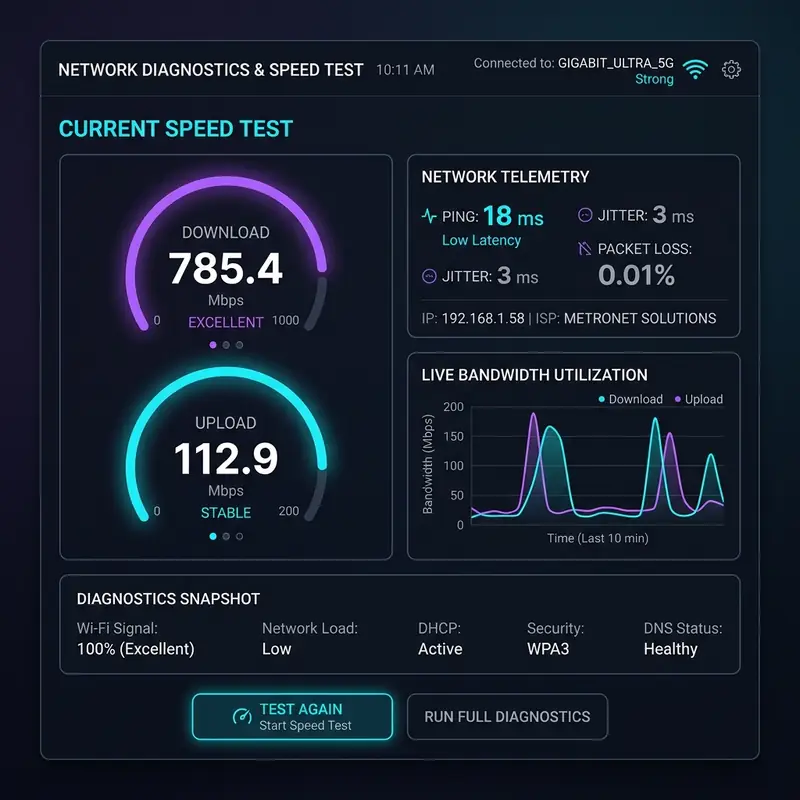
In addition to caching, monitoring core networking metrics is equally vital for maintaining server performance. Time to First Byte (TTFB) is a critical metric that measures the time taken to receive the first byte of data from the server.
A high TTFB can indicate issues with server responsiveness or network latency. To mitigate this, consider optimizing your application code, utilizing a Content Delivery Network (CDN), and ensuring that your server resources are adequately provisioned.
Tools like Pingdom and GTmetrix can help you analyze TTFB and other performance metrics effectively.
Server load is another important consideration. It reflects the amount of computational work that your server is currently handling, and an excessive load can lead to sluggish performance or even downtime.
To effectively manage server load, you can employ load balancing techniques, which distribute incoming traffic across multiple servers. This not only enhances performance but also improves redundancy and fault tolerance, ensuring that your applications remain available even during peak traffic periods.
Lastly, bandwidth allocation plays a significant role in server performance, particularly when dealing with large files or high-volume traffic. Understanding your bandwidth limits and properly configuring your server to manage bandwidth can prevent bottlenecks. Implementing rate limiting for various user types, optimizing images and other media, and leveraging lazy loading techniques can ensure that your server remains responsive while effectively distributing available bandwidth.
Implementing Server-Side Cybersecurity Protocols: Protecting Your VPS with SSL and Firewalls

Beyond SSL, the implementation of firewall rules is important for safeguarding your server against unauthorized access. Configuring IP tables on your VPS allows you to define which traffic is permitted or denied at the network level.
This granular control can be tailored to restrict access based on IP addresses, protocols, and ports, effectively minimizing the attack surface. Additionally, utilizing a DDoS firewall can provide an extra layer of defense against distributed denial-of-service attacks, which seek to overwhelm your server with traffic.
Many cloud service providers offer built-in DDoS protection, which can be integrated seamlessly with your aaPanel setup.
Moreover, ensuring proper directory permissions is vital in maintaining the integrity of your web applications. Misconfigured permissions can lead to unauthorized access to sensitive files or even full server compromise. It is advisable to follow the principle of least privilege, granting users and applications only the permissions necessary to perform their functions. Regularly auditing your file permissions and employing security best practices can help protect your server from potential vulnerabilities.
Another significant aspect of server-side cybersecurity is the implementation of logging and monitoring solutions. By keeping detailed logs of server activity, you can track unauthorized access attempts and identify potential security breaches in real-time.
Integrating monitoring tools such as Fail2Ban can automatically block suspicious IP addresses based on predefined criteria, serving as an additional layer of defense. This proactive approach not only enhances your server's security posture but also allows you to respond swiftly to any emerging threats.
Lastly, regular security updates and patches are indispensable in maintaining a secure server environment. Vulnerabilities in server software and applications can be exploited by attackers, leading to data breaches or service disruptions.
Establishing a routine for checking and applying updates ensures that your server is equipped with the latest security enhancements. Additionally, consider employing tools like unattended-upgrades for automatic updates on critical packages, which can significantly reduce the window of exposure to known vulnerabilities.
Understanding Hosting Limitations: Key Differences Between Shared and Dedicated/Cloud Servers
When choosing a hosting solution, understanding the limitations of different server types is important for optimizing performance and ensuring reliability. Shared hosting is often the most economical option, but it comes with inherent constraints. In a shared environment, multiple websites are hosted on the same server, competing for limited resources such as CPU, RAM, and bandwidth. This can lead to performance degradation, particularly during peak traffic periods, as the server’s resources are stretched thin. Users may experience slower load times, making shared hosting less suitable for websites that require high performance and uptime.In contrast, dedicated and cloud servers offer a more robust solution by providing exclusive access to resources. A dedicated server means that all hardware resources are allocated to a single client, allowing for optimal performance and security.
This setup is ideal for high-traffic websites or applications that demand significant processing power. Cloud hosting further enhances this by allowing resources to be scaled dynamically based on demand.
This elasticity ensures that your applications can handle sudden spikes in traffic without compromising performance, making it a preferred choice for businesses with fluctuating workloads.
Another critical aspect to consider is DNS propagation errors, which can occur when changes to DNS records are not reflected immediately across the internet. These delays can lead to confusion for users trying to access your site, as some may still be directed to the old server location.
Understanding how DNS propagation works and planning your changes during off-peak hours can help mitigate these risks. Tools like WhatsMyDNS can assist in monitoring the propagation status of your DNS changes across various locations worldwide.
Database optimization is another area fraught with potential pitfalls that can impact server performance. Improperly indexed databases can lead to slow query responses, consuming unnecessary CPU cycles and memory. Regularly analyzing your database queries and implementing indexing strategies can yield significant performance improvements. Additionally, avoiding common traps, such as over-normalization or excessive joins in your database schema, can help maintain optimal performance levels.
Lastly, it is essential to understand Service Level Agreements (SLA) when selecting a hosting provider. SLAs outline the expected level of service, including uptime guarantees and support response times.
A provider with a strong SLA offers a commitment to maintain high availability and provides recourse in the event of service disruptions. When evaluating hosting options, look for clear and concise SLAs that align with your business needs, ensuring that you receive the level of support and reliability necessary to keep your applications running smoothly.