![How to Hide Your IP Address on Smart TV [Easy Steps]](/images/posts/wifi-router.webp)
To hide your Smart TV's IP address, use a VPN or Smart DNS to ensure privacy and access geo-restricted content.
Why You Need to Hide Your Smart TV IP Address
DomineTec Tip: Smart DNS only changes your virtual coordinates without encrypting your traffic. If you require absolute data secrecy, use a router VPN. If you own a Samsung TV, check our detailed tutorial on how to setup a VPN on Samsung Smart TV.
In an era where online privacy is increasingly threatened, hiding your Smart TV's IP address has become essential. Smart TVs are more than just devices for streaming your favorite shows. They collect and transmit data, making them vulnerable to various threats. By concealing your IP address, you can protect your personal information from potential hackers, advertisers, and even your Internet Service Provider (ISP).
Furthermore, many streaming services impose geo-restrictions, limiting access to certain content based on your geographical location. This means that even if you have a subscription, you may find that some shows or movies are unavailable in your region. Hiding your IP address allows you to bypass these geographical barriers, granting you access to a broader range of content.

Hiding Your IP: VPN vs Smart DNS vs Router Setup
| Redirection Method | Data Encryption | Streaming Speed | Setup Complexity |
|---|---|---|---|
| Smart DNS | No (Only redirects DNS traffic) | Maximum (No overhead) | Low (Change DNS on TV settings) |
| VPN on Router | Yes (AES-256 military-grade) | Reduced (5% to 10% overhead) | High (Requires custom firmware setup) |
When it comes to hiding your Smart TV's IP address, two primary methods are commonly used: Virtual Private Networks (VPNs) and Smart DNS. Both have their advantages and specific use cases, and understanding these differences can help you choose the right solution for your needs.
VPN (Virtual Private Network)
A VPN encrypts your internet traffic and routes it through a server located in a different geographical location. This means that your original IP address is hidden, and your data is protected from prying eyes. The benefits of using a VPN include:
- Enhanced Security: VPNs provide robust encryption, safeguarding your data from hackers.
- Access to Global Content: By connecting to servers in various countries, you can access content that may be restricted in your region.
- Privacy Protection: Your ISP cannot monitor your online activities, ensuring your browsing history remains private.
However, using a VPN may result in slower internet speeds due to the encryption process and the distance to the VPN server.
Smart DNS
Smart DNS, on the other hand, works by rerouting specific DNS queries related to geo-restricted content. Unlike a VPN, it does not encrypt your data, which means it can offer faster speeds. Here are some advantages of using Smart DNS:
- Speed: Since it does not encrypt your traffic, Smart DNS typically provides a faster streaming experience.
- Access to Geo-Restricted Content: Smart DNS can easily bypass geographical restrictions, allowing access to various streaming platforms.
- Simplicity: Smart DNS configuration is often simpler compared to VPN setups on Smart TVs.
However, the lack of encryption means that your online activities are not as private or secure as they would be with a VPN.
Router Setup
Setting up either a VPN or Smart DNS on your home router can ensure that all devices connected to your network, including your Smart TV, are protected. This method provides a more seamless experience since it eliminates the need to configure each device individually.
In the following sections, we will delve into configuring Smart DNS on your Smart TV and setting up a VPN on your home router.
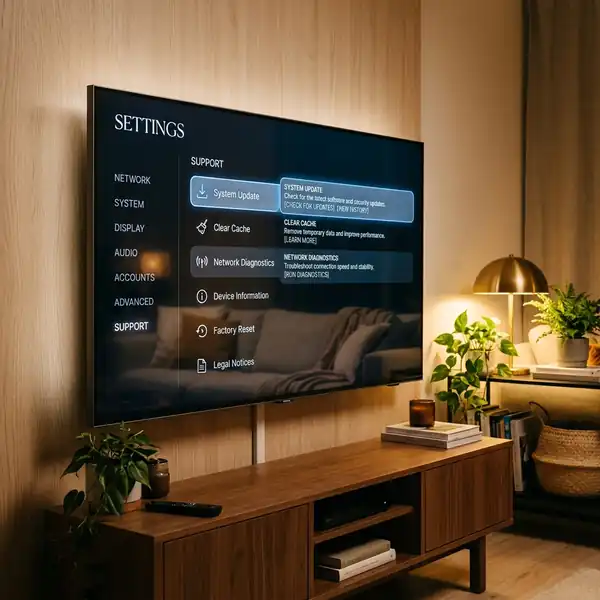
Step-by-Step Guide: Configuring Smart DNS on Your Smart TV
Configuring Smart DNS on your Smart TV is a straightforward process. Below are detailed steps to guide you through the setup:
Step 1: Choose a Smart DNS Provider
Select a reputable Smart DNS service provider. Popular options include Unlocator, Smart DNS Proxy, and OverPlay. Each of these services typically requires a subscription, so choose one that fits your budget and offers the content access you desire.
Step 2: Obtain Smart DNS Settings
Once you have subscribed to a Smart DNS service, log in to your account on the provider's website. Look for the section that provides DNS server addresses. You will typically receive two DNS addresses that you will need for configuration.
Step 3: Access Smart TV Network Settings
1. Turn on your Smart TV. 2. Navigate to the "Settings" or "Setup" menu (the exact wording may vary by manufacturer). 3. Locate the "Network" or "Network Settings" option.
Step 4: Configure DNS Settings
1. Select the option to change your connection type. If you are connected via Wi-Fi, choose the Wi-Fi option; for wired connections, select Ethernet. 2. Opt for "Manual" to input your DNS settings manually. 3. Enter the primary and secondary DNS addresses provided by your Smart DNS service. 4. Save your changes and restart the Smart TV to apply the new settings.
Step 5: Verify Configuration
To confirm that Smart DNS is working correctly, go to the Smart DNS provider's website and follow their instructions for checking your DNS settings. If set up correctly, your Smart TV should now be able to access geo-restricted content.
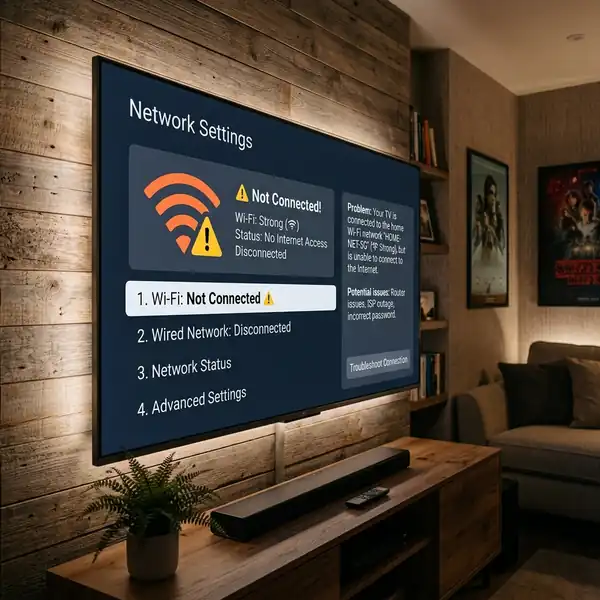
How to Install a VPN Directly on Your Home Router
Installing a VPN on your home router can protect all devices connected to your network, including your Smart TV. Here is how to do it:
Step 1: Choose a Compatible Router
Ensure that your router is compatible with VPN services. Routers that support firmware such as DD-WRT, Tomato, or OpenWRT are often suitable for VPN installation. If your router does not support these, you may need to consider purchasing a pre-flashed router with VPN capabilities.
Step 2: Select a VPN Provider
Choose a reputable VPN service that suits your needs. Providers like ExpressVPN, NordVPN, and CyberGhost are known for their reliability and user-friendly interfaces.
Step 3: Access Router Settings
1. Connect your computer to the router using an Ethernet cable or wirelessly. 2. Open a web browser and enter your router’s IP address (commonly 192.168.1.1 or 192.168.0.1). 3. Log in using the admin credentials (default usernames and passwords can usually be found on the router).
Step 4: Configure VPN Settings
1. Navigate to the "VPN" section of the router settings. 2. Enter the VPN server address, your username, and password provided by your VPN service. 3. Select the VPN protocol you wish to use (OpenVPN is recommended for its balance of speed and security). 4. Save your configurations and restart the router.
Step 5: Verify VPN Connection
Using a device connected to the router, visit a website like whatismyip.com to confirm that your IP address has changed. If successful, your Smart TV will now route its traffic through the VPN.

Security and Privacy Benefits of Hiding Your TV's IP Address
Hiding your Smart TV's IP address offers several security and privacy benefits:
- Data Encryption: Using a VPN ensures that all data transmitted from your Smart TV is encrypted, safeguarding it from potential data breaches.
- IP Address Masking: Your real IP address remains hidden, making it difficult for third parties to track your online activities.
- Bypass Censorship: With a VPN or Smart DNS, you can access content that may be restricted in your country, thus enhancing your viewing experience.
- Protection from ISP Tracking: Your ISP cannot monitor your streaming habits, allowing for a more private browsing experience.
In conclusion, hiding your Smart TV's IP address is essential for protecting your privacy and enhancing your viewing experience. Whether you choose a VPN or Smart DNS, the benefits of securing your connection and accessing global content are undeniable. Follow the outlined steps to set up your chosen method, and enjoy a more secure and unrestricted Smart TV experience.
Understanding VPN Protocols and Their Role in Hiding Your IP Address
Virtual Private Networks (VPNs) are essential tools for masking your IP address while using a Smart TV. By creating a secure tunnel between your device and the internet, VPNs shield your data from snooping and provide anonymity online. Various VPN protocols are available, each with unique configurations and security features that can significantly impact performance and privacy.
The most common VPN protocols include OpenVPN, L2TP/IPsec, PPTP, and IKEv2/IPsec. Understanding how these protocols function will help you select the right one for your Smart TV configuration.
- OpenVPN: This is one of the most secure and versatile VPN protocols, utilizing OpenSSL for encryption. OpenVPN can operate on both UDP and TCP, which allows users to choose between speed (UDP) and reliability (TCP). In a typical configuration, OpenVPN runs on port 1194 by default. It uses SSL/TLS for key exchange, establishing a secure connection through encryption techniques such as AES-256, which is highly regarded for its strength. Configuring OpenVPN on your router can be achieved by downloading the appropriate firmware (like DD-WRT or Tomato) and then setting up the VPN client with the server's address, port, username, and password.
- L2TP/IPsec: Layer 2 Tunneling Protocol (L2TP) itself does not provide encryption; therefore, it is typically used in conjunction with IPsec for a secure connection. The combination ensures data integrity and confidentiality. L2TP operates on UDP port 1701, while IPsec uses 50 for the ESP protocol and 500 for IKE negotiation. When configuring L2TP/IPsec on your router, you need to ensure that both the L2TP and IPsec are enabled in the router's VPN settings. You may also need to create a pre-shared key, which is required for establishing a secure channel between the VPN server and client.
- PPTP: The Point-to-Point Tunneling Protocol is one of the oldest and least secure methods of VPN connection. While it offers fast speeds due to low encryption overhead, it is vulnerable to a range of attacks. PPTP uses TCP port 1723 and can be set up on most routers with minimal configuration. However, given its lack of robust encryption, it is not recommended for users who prioritize security.
- IKEv2/IPsec: Internet Key Exchange version 2 is often used in mobile devices due to its ability to reconnect quickly after a lost connection. It provides robust security through IPsec and is capable of utilizing AES encryption. Configuring IKEv2 on your router typically involves setting up the server address, enabling the IKEv2 protocol, and entering your credentials. This protocol is particularly beneficial for Smart TVs that may experience intermittent connections.
When selecting a VPN protocol for your Smart TV, consider the balance between speed, security, and compatibility with your router's firmware. It's crucial to verify that your router supports the chosen protocol and is adequately configured to handle the encryption processes involved. Additionally, always ensure that you are using a reputable VPN service provider that follows strict no-logs policies to maintain your online anonymity.
Router Configuration for Secure Smart TV Access
Configuring your router to enhance the security of your Smart TV not only helps in hiding your IP address but also adds a layer of protection against potential cyber threats. A properly configured router can ensure that all devices connected to your home network benefit from the same level of privacy and security offered by a VPN.
First and foremost, access your router’s firmware interface, typically done by entering the router's IP address (commonly 192.168.1.1 or 192.168.0.1) into a web browser. You will be prompted to log in with your admin credentials, which should be changed from the default settings for security purposes.
- Firmware Updates: Ensure your router's firmware is updated to the latest version. Manufacturers frequently release updates that patch vulnerabilities and improve performance. This can typically be done through the router's settings interface under the "Firmware Update" section.
- VPN Client Setup: If your router supports VPN functionality, navigate to the VPN settings. Here, you will enter your VPN provider’s details, including the server address, username, and password. Depending on the router, you might also have options to choose the VPN protocol as discussed earlier. This ensures that all devices connected to your network, including your Smart TV, are routed through the VPN.
- Firewall Configuration: Enable your router's firewall if it is not already active. This feature adds an additional security layer by blocking unauthorized access attempts. You can typically find this option in the “Security” or “Firewall” section of your router settings.
- Network Segmentation: For added security, consider segmenting your network. Create a separate SSID for your Smart TV and other IoT devices, isolating them from your primary network. This prevents potential vulnerabilities on less-secure devices from exposing your main network.
- DNS Settings: To further enhance your privacy, configure your router to use a DNS service that supports privacy, such as Cloudflare (1.1.1.1) or Google DNS (8.8.8.8). By doing this, you ensure that DNS queries are protected, making it harder for third parties to track your browsing habits.
- MAC Address Filtering: Enable MAC address filtering to restrict network access to only recognized devices. This adds another layer of security, making it harder for unauthorized devices to connect to your network.
- Monitoring Tools: Finally, utilize any monitoring tools available in your router's firmware to keep an eye on connected devices. Regularly check for any unfamiliar devices that may have accessed your network and take necessary action if unauthorized access is detected.
By following these guidelines and thoroughly configuring your router, you can significantly enhance the privacy and security of your Smart TV and all connected devices. Remember, the effectiveness of these configurations relies not only on the technical setup but also on maintaining good security habits, such as regularly changing passwords and monitoring network activity.
Additional Resources and Recommended Links
For more networking and security guides, check out our step-by-step tutorials on how to setup a VPN on Samsung Smart TV and how to use VPN on LG Smart TV. For official hardware troubleshooting, visit the Official Netflix Help Center.