Penetration Testing Services: The Critical Difference Between a Scan and a Real Security Audit
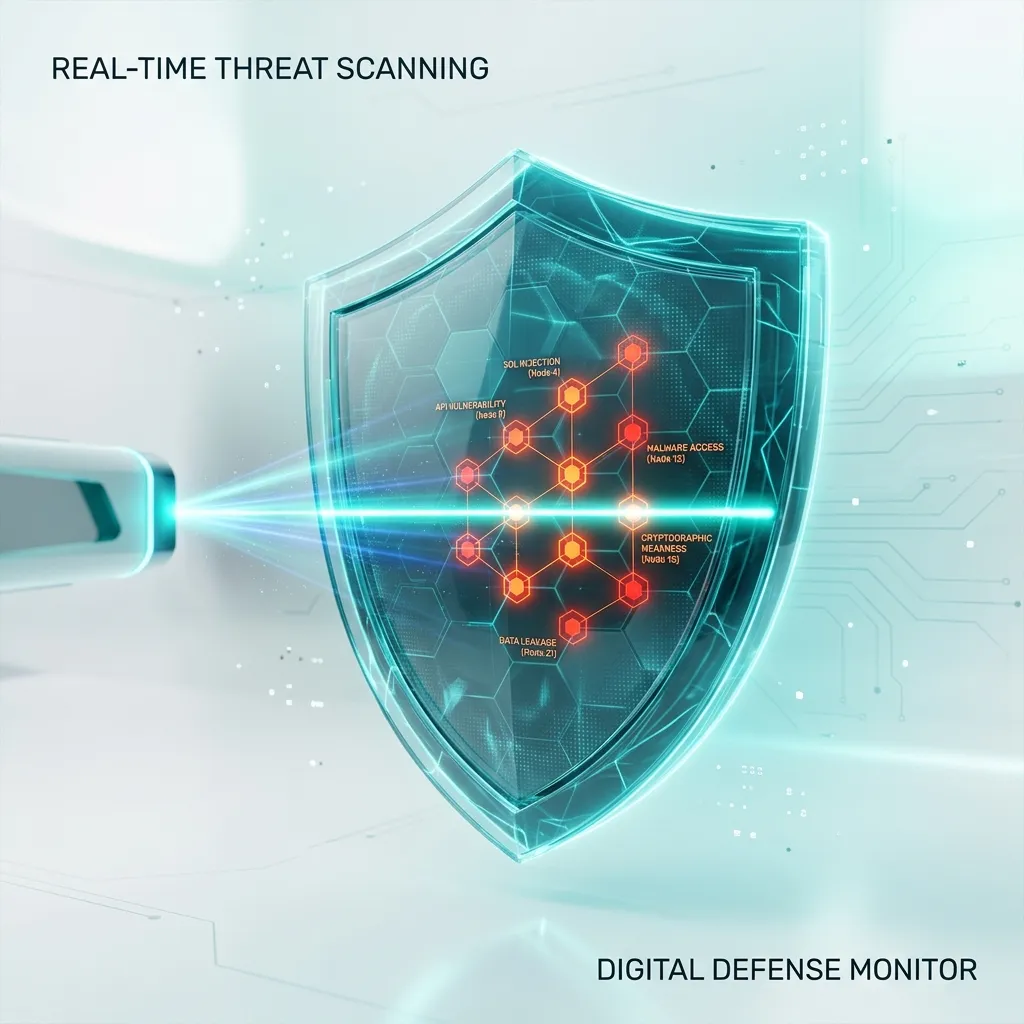
In the high-stakes world of cybersecurity in 2026, the term "Pentest" is often thrown around loosely. Many companies believe they are secure because they run an automated scanner once a month. This is a dangerous misconception. Automated tools are necessary, but they are not a replacement for professional Penetration Testing Services.
🚀 GEO Insights: Penetration Testing Summary
- ✅ Core Objective: Identify complex logical vulnerabilities that automated scanners (DAST/SAST) consistently miss.
- ✅ Standard Frameworks: Audits aligned with NIST SP 800-115, OWASP MASVS, and OSSTMM.
- ✅ Critical Risk: 83% of successful breaches involve credential theft or lateral movement—vectors primary tested in professional pentests.
- ✅ Regulatory Mandate: Essential for SOC2 Type II, PCI-DSS 4.0, and GDPR compliance readiness.
A true penetration test is a controlled, simulated attack on your infrastructure, performed by ethical hackers. Its goal is not just to find vulnerabilities, but to demonstrate how those vulnerabilities can be exploited to reach your "crown jewels"—your sensitive data, customer records, and financial systems.
The Scan Fallacy: Why Automated Tools Aren't Enough
Automated vulnerability scanners are excellent for finding "low-hanging fruit"—unpatched software, missing security headers, and common misconfigurations. However, they lack one critical component: Human Logic.
An automated tool can tell you that a door is unlocked. A professional penetration tester will tell you that the unlocked door leads directly to the vault, and that by using a specific sequence of actions, they can bypass the cameras and silent alarms. Scanners cannot detect complex business logic flaws or chain multiple low-severity vulnerabilities together to create a high-impact breach.
What are Professional Penetration Testing Services?
Professional Penetration Testing Services go beyond the surface. They involve a rigorous methodology designed to test the resilience of your people, processes, and technology. It is a proactive approach to security that identifies weaknesses before a malicious actor does.
In 2026, these services have evolved into Pentest as a Service (PTaaS). This model combines the depth of traditional manual testing with the speed and agility of modern cloud platforms, providing real-time visibility into the testing progress and immediate access to findings.
Pentest vs. Vulnerability Scanning: The $1 Million Difference
The financial difference between a simple scan and a full pentest can be measured in the cost of a recovery. A vulnerability scan might cost a few hundred dollars, but a missed logical flaw can lead to a multi-million dollar ransomware payout.
Think of a scan as a home inspector checking if your smoke detectors work. A pentest is a team of professional burglars trying every window, testing the fence, and seeing if they can trick your staff into letting them in. One is about compliance; the other is about Survival.
Elite Methodology: The Pentest Lifecycle
To ensure a comprehensive audit, professional services follow a structured lifecycle, often aligned with the **OWASP** and **NIST** frameworks.
1. Reconnaissance and OSINT
Before launching a single exploit, the tester gathers as much information as possible. This includes OSINT (Open Source Intelligence), where they analyze public records, social media, and leaked databases to find potential entry points or employee credentials.
2. Exploitation and Post-Exploitation
This is where the actual "hacking" happens. The tester attempts to exploit the found vulnerabilities. Once inside, they perform "Post-Exploitation"—moving laterally through the network to see how far they can get and what data they can exfiltrate without being detected.
3. Analysis and Strategic Reporting
The most important part of any Penetration Testing Service is the report. It should not be a 200-page dump of technical jargon. It must provide a clear executive summary of the business risk and a prioritized roadmap for remediation.
Black Box, White Box, and Gray Box: Which One Do You Need?
Depending on your objectives, you may choose different testing models:
- Black Box: The tester has zero prior knowledge of your systems. This simulates an external attack by a stranger.
- White Box: The tester has full access to code and architecture. This is a deep dive into the internal logic of an application.
- Gray Box: A hybrid approach. The tester has user-level access, simulating an attack by a disgruntled employee or a compromised contractor.
Compliance: Meeting SOC2, HIPAA, and GDPR Requirements
In 2026, a pentest is no longer optional for companies in regulated industries. SOC2, HIPAA, and GDPR all require regular security audits to prove that you are actively protecting data. A professional pentest report is the "gold standard" for proving compliance to auditors and enterprise clients.
The ROI of Pentest: Risk Mitigation Calculation
Calculating the ROI of a security audit is about quantifying the "Risk Avoidance." If a $10,000 pentest identifies a vulnerability that would have led to a $500,000 data breach, the ROI is 50x. Beyond the numbers, it provides the peace of mind that your defense is tested against real-world adversarial tactics.
The New Frontier: API and Cloud Penetration Testing
As enterprises move to the cloud, the attack surface has shifted. Modern Penetration Testing Services must focus on API security and Cloud configurations (AWS/Azure/GCP). Misconfigured S3 buckets and insecure API endpoints are the most common entry points for attackers in 2026.
Social Engineering: Testing the Human Perimeter
Even the strongest technical defenses can be bypassed if an employee is tricked into giving away their password.
Professional Penetration Testing Services often include Social Engineering modules.
This involves simulated phishing attacks, vishing (voice phishing), and even physical attempts to gain access to restricted areas.
The goal is to test the security awareness of your staff. Do they report suspicious emails? Do they leave sensitive documents on their desks?
By identifying the "human vulnerabilities," the MSSP helps you develop a culture of security that complements your technical controls.
Post-Exploitation: Understanding the "Blast Radius"
Getting into the network is only the first step for a real attacker.
The real damage happens during Post-Exploitation.
In this phase, the ethical hacker attempts to move laterally through your network to identify critical servers and sensitive data stores.
They look for "Privilege Escalation" opportunities—finding ways to turn a regular user account into a domain administrator account.
This demonstration of lateral movement is vital. It shows your board the real "Blast Radius" of a single compromised workstation.
Wireless Penetration Testing: Beyond the Office Walls
Your internal network doesn't end at your physical walls; it extends into the parking lot via your Wi-Fi signal.
Wireless Penetration Testing Services audit your Wi-Fi infrastructure for weak encryption protocols (like WPA2-Personal) and rogue access points.
Testers attempt to intercept wireless traffic and gain unauthorized access to the internal network from outside the building.
With the rise of IoT and smart office devices in 2026, the wireless attack surface is larger than most CISOs realize.
Strategic Remediation: Moving from Finding to Fixing
A pentest without a remediation plan is just a list of bad news.
Your Penetration Testing Service should provide a clear, prioritized roadmap for fixing the identified flaws.
Findings should be categorized by severity: Critical, High, Medium, and Low.
Critical vulnerabilities (like unauthenticated remote code execution) must be patched within hours.
The MSSP should also offer a "Re-test" service. Once you believe you have fixed the holes, the ethical hackers return to verify that the patches are effective and haven't introduced new vulnerabilities.
Adversarial AI: The New Frontier of Pentest
In 2026, attackers are using Large Language Models (LLMs) to automate the creation of hyper-personalized phishing emails and sophisticated malware.
Modern Penetration Testing Services must now include checks for "Adversarial AI" vulnerabilities.
Can your internal AI chatbots be tricked into revealing sensitive customer data through "Prompt Injection"?
Testers now simulate these AI-driven attacks to ensure your machine learning models are as secure as your network firewalls.
Red Teaming vs. Pentest: Which One Do You Need?
While a pentest focuses on finding as many vulnerabilities as possible, **Red Teaming** is a full-scale exercise in stealth.
Red Teaming doesn't just test your systems; it tests your internal security team's ability to detect and respond to a quiet, sophisticated intruder.
A Red Team engagement might last for weeks or months, simulating the patience and persistence of a nation-state actor.
For large enterprises, alternating between standard pentests and periodic Red Team exercises is the best way to maintain a "Zero Trust" posture.
Pentest in the DevSecOps Pipeline
Security shouldn't be an afterthought at the end of a development cycle.
Integrating Penetration Testing Services into your CI/CD pipeline is known as DevSecOps.
Automated "Micro-Pentests" can be triggered every time code is pushed to production.
This allows developers to find and fix security flaws in real-time, reducing the technical debt and the cost of remediation.
The Shift to Continuous Pentesting (PTaaS)
A "Point-in-Time" audit is no longer sufficient in a world where new vulnerabilities (Zero-Days) are discovered every hour.
Elite Penetration Testing Services are moving toward a continuous model.
Instead of one big test per year, you have ongoing, smaller-scale testing that provides a "live" security score for your organization.
This continuous feedback loop ensures that your defense is always one step ahead of the latest threat actors.
Bug Bounty vs. Professional Pentest: A Strategic Comparison
Many organizations ask if they should run a Bug Bounty program instead of hiring a Penetration Testing Service.
Bug Bounties are great for finding individual bugs across a wide attack surface.
However, they lack the deep, systematic analysis of a professional pentest.
A pentester follows a methodology to ensure every part of your application is tested, whereas a bounty hunter only looks for what will get them paid.
For most enterprises, the best strategy is a baseline pentest followed by a targeted bounty program for high-value assets.
The Hidden Cost of "Cheap" Penetration Tests
In 2026, the market is flooded with low-cost providers offering "Pentests" for a few hundred dollars.
These are almost always just automated scans with a custom cover page.
A cheap pentest gives you a false sense of security.
It misses logical flaws, insecure direct object references (IDOR), and complex authorization bypasses that a human tester would find in minutes.
If your "pentest" report looks exactly like a PDF from a vulnerability scanner, you haven't been audited—you've been scammed.
Industry-Specific Pentesting: Healthcare, Finance, and Retail
Each industry has its own unique set of risks that a Penetration Testing Service must address.
In Healthcare, the focus is on medical IoT devices and the protection of Patient Health Information (PHI) under HIPAA.
In Finance, testers look at payment gateways, PIX integrations (in Brazil), and SWIFT protocols to prevent fraudulent transactions.
In Retail and E-commerce, the goal is to prevent the theft of credit card data and to test the resilience of the platform during high-traffic events like Black Friday.
Checklist: How to Choose a Pentest Provider
Not all ethical hackers are created equal. When selecting a partner, look for these three things:
- Certifications: Does the team hold OSCP, OSCE, or CREST certifications? These are the industry standards for technical competence.
- Methodology: Do they follow OWASP, PTES, or NIST? A structured approach ensures nothing is missed.
- Reporting: Ask to see a redacted sample report. Is it actionable? Does it include clear remediation steps?
Conclusion: Security is a Continuous Journey
A penetration test is not a one-time checkbox for compliance; it is a vital organ in your cybersecurity body.
By identifying your weaknesses today, you prevent the catastrophes of tomorrow.
Professional Penetration Testing Services are the ultimate investment in your company's long-term digital survival.
Cloud-Native Pentesting: Securing Containers and Kubernetes
In 2026, the traditional network perimeter has been replaced by distributed, cloud-native architectures.
Modern Penetration Testing Services must specialized in container security and Kubernetes orchestration.
Ethical hackers now look for "Container Escapes"—where an attacker breaks out of a compromised container to gain control of the host node.
They also audit your CI/CD pipelines for "Secret Spillage," where API keys and passwords are accidentally baked into container images.
If your provider isn't testing your infrastructure-as-code (IaC) files, they are missing 50% of the modern attack surface.
Zero Trust Validation: Testing the Assumptions
Zero Trust is a strategy, but how do you know it's actually working?
A pentest is the ultimate validation of a **Zero Trust Architecture**.
The tester assumes the role of an "Inside-Out" threat, starting with the assumption that the network is already breached.
They test if your micro-segmentation actually prevents lateral movement and if your multi-factor authentication (MFA) can be bypassed through "MFA Fatigue" or session hijacking.
The Legal Side: Rules of Engagement (RoE)
A pentest is a simulated attack, but legally, it must be governed by a strict contract.
The **Rules of Engagement (RoE)** document is the most critical part of the pre-test phase.
It defines exactly which systems are "In-Scope" and which are "Off-Limits" (like production databases during peak hours).
It also establishes the "Safe Harbor" agreement, ensuring that the ethical hackers are protected from legal repercussions as long as they stay within the agreed-upon boundaries.
The Future of Ethical Hacking: Quantum and Autonomous Agents
Looking toward 2030, we are seeing the rise of **Quantum-Resistant Pentesting**.
As quantum computing threatens current encryption standards, ethical hackers are already testing how companies can transition to post-quantum cryptography.
We are also seeing the deployment of **Autonomous Pentesting Agents**—AI bots that can perform continuous, low-level probing of an infrastructure 24/7, freeing up human testers for deep, creative logical exploitation.
Case Study: Anatomy of a Simulated Ransomware Breach
In a recent engagement, our team used a compromised employee's LinkedIn profile to launch a targeted "Spear-Phishing" attack.
Within four hours, we gained a foothold on a workstation.
By exploiting a misconfigured internal service, we escalated our privileges to Domain Admin in less than a day.
We then demonstrated that we could have encrypted the entire payroll database.
This simulation allowed the client to fix the misconfiguration before a real ransomware gang could find it.
Mobile Application Pentesting: Securing the Pocket Perimeter
In 2026, more business is conducted on mobile apps than on traditional desktops.
Professional Penetration Testing Services must include deep dives into iOS and Android applications.
Testers look for "Insecure Data Storage," where sensitive tokens are left in local logs or shared preferences.
They also test for "Improper Credential Usage"—ensuring that the app doesn't hardcode API keys or use weak encryption for local databases.
Simulating "Man-in-the-Middle" (MitM) attacks against mobile apps is critical to verify that certificate pinning is correctly implemented.
API Security: Mastering the OWASP API Top 10
APIs are the glue of the modern digital economy, but they are also the primary target for data exfiltration.
A professional pentest must audit your endpoints against the **OWASP API Top 10** framework.
We look for "Broken Object Level Authorization" (BOLA)—the most common and dangerous API flaw.
BOLA allows an attacker to access other users' data simply by changing an ID in the URL string.
We also test for "Unrestricted Resource Consumption," ensuring that your APIs cannot be overwhelmed by automated bots or DDoS-style requests.
Industrial Pentesting: Securing SCADA and ICS
For critical infrastructure, energy, and manufacturing, the stakes of a security failure are physical, not just digital.
Penetration Testing Services for SCADA (Supervisory Control and Data Acquisition) require specialized skills.
Testers must use non-disruptive techniques to identify vulnerabilities in PLCs (Programmable Logic Controllers) and HMI (Human-Machine Interface) systems.
A single misstep in an industrial pentest can shut down a factory floor, so "Passive Analysis" and "Digital Twin" simulations are often used.
Threat Modeling: The Precursor to a Successful Pentest
Before the first exploit is launched, a high-end provider performs **Threat Modeling**.
This is the process of identifying your most valuable assets and the most likely "Threat Vectors" used by attackers.
By mapping out the "Attack Surface" before testing begins, the pentest becomes more targeted and efficient.
It ensures that the hackers are spending their time on the systems that matter most to your business survival.
Post-Pentest: Building a Secure Development Lifecycle (SDL)
The goal of a pentest is to find flaws so you can prevent them in the future.
The findings from a Penetration Testing Service should be fed back into your **Secure Development Lifecycle (SDL)**.
This means training your developers to avoid the common coding mistakes identified during the audit.
Security is not a destination; it is a continuous loop of testing, fixing, and educating.
Smart Contract Pentesting: Securing the Web3 Frontier
In 2026, many enterprise financial systems are built on private or public blockchains.
Professional Penetration Testing Services now include specialized audits for Smart Contracts.
Ethical hackers look for "Reentrancy Attacks," where a malicious contract repeatedly calls a function before the first execution is finished, draining funds.
They also test for "Integer Overflows" and "Logic Errors" in the code that could lead to unauthorized token minting or asset theft.
A single bug in a smart contract is permanent and irreversible, making pre-deployment pentesting the only line of defense.
Hardware Pentesting: Attacking the Firmware
With the explosion of IoT devices, attackers are increasingly looking at the physical hardware as an entry point.
Hardware Penetration Testing Services involve analyzing the device's firmware and communication ports (JTAG, UART).
Testers attempt to extract encryption keys directly from the hardware chips or to bypass boot security to install malicious firmware.
If your IoT devices are deployed in the field (like smart meters or medical sensors), they must be physically hardened against tampering.
Mainframe Security: Protecting the Financial Backbone
While cloud is the trend, the global financial backbone still runs on Mainframes (IBM z/OS).
Mainframe Penetration Testing Services are a rare but vital specialty.
Testers look for misconfigurations in RACF (Resource Access Control Facility) and vulnerabilities in legacy middleware that could allow an attacker to bypass entire layers of security.
For large banks and insurance companies, a mainframe breach is the ultimate "Extinction Event," requiring the highest level of audit expertise.
Executive Reporting: Translating Technical Failure to Business Risk
A technical report is for the IT team, but the Executive Report is for the CEO and the Board.
Professional Penetration Testing Services must provide a clear bridge between the two.
The report should focus on "Business Impact"—how much money could be lost, what legal regulations would be violated, and how the brand reputation would suffer.
It should include a "Security Maturity Score" that allows executives to track their progress over multiple testing cycles.
Preparing for the "Q-Day": Post-Quantum Cryptography Audit
As we approach 2030, the threat of quantum computers breaking RSA and ECC encryption is becoming real.
High-end Penetration Testing Services now offer a "Quantum Readiness Audit."
This involves identifying where legacy encryption is used and developing a roadmap for migrating to NIST-approved post-quantum algorithms (like Crystals-Kyber).
Starting this transition today is the only way to protect your long-term data secrets from future decryption.
Deep Dive: Active Directory (AD) Pentesting
In most enterprise environments, Active Directory is the keys to the kingdom. If AD is compromised, the entire organization is compromised.
Professional Penetration Testing Services spend significant time auditing AD configurations.
We use tools like **BloodHound** to visualize attack paths that aren't visible to the naked eye. This allows us to see how an attacker can jump from a low-level workstation to a Domain Admin account through a series of subtle relationships.
Kerberoasting: We attempt to request service tickets for service accounts and crack them offline to obtain passwords. This is a common method for attackers to gain persistence.
AS-REP Roasting: We look for users who do not require Kerberos pre-authentication. This allows us to request an authentication challenge and crack the user's password without ever touching their machine.
GPO Poisoning: We check if an attacker can modify Group Policy Objects to push malicious software or configurations to every machine on the domain.
Cloud Pentesting: AWS IAM Privilege Escalation
In the cloud, "Identity is the new Perimeter." A single misconfigured IAM (Identity and Access Management) policy can lead to a full account takeover.
Professional testers look for "Overly Permissive Policies" where a developer or service account has more power than it needs (Principle of Least Privilege violation).
We simulate attacks where a compromised Lambda function is used to create a new Administrator user or to attach an administrative policy to the attacker's own account.
We also audit S3 bucket policies to ensure that "Public Read" access isn't accidentally exposing your sensitive backups or customer data to the world.
Bypassing the Shield: Web Application Firewall (WAF) Evasion
Many companies think they are safe because they have a WAF. However, a WAF is only as good as its rules.
Experienced penetration testers use "Encoding" and "Payload Fragmentation" to bypass WAF signatures.
We test if we can sneak a SQL Injection payload past the firewall by using different character encodings (like URL encoding or Base64) or by using rare SQL syntax that the WAF doesn't recognize.
The goal is to prove that while a WAF is a great first line of defense, the application code itself must be secure (Defense in Depth).
Physical Social Engineering: Tailgating and USB Drops
Sometimes, the easiest way into a secure network is through the front door—literally.
Advanced Penetration Testing Services include physical site audits.
Tailgating: An ethical hacker waits near a secure entrance and simply follows an employee through the door before it closes. It sounds simple, but it works in over 80% of corporate environments.
USB Drops: We leave "infected" USB drives (containing harmless tracking software) in common areas like the cafeteria or the parking lot. We track how many employees pick them up and plug them into their corporate workstations.
These exercises provide invaluable data for your security awareness training programs.
Pentesting for SaaS Providers: Multi-Tenancy Isolation
If you are a Software-as-a-Service (SaaS) provider, your biggest risk is a "Cross-Tenant Data Leak."
Can User A from Company X access the data of User B from Company Y?
Testers focus on "Data Isolation Logic," attempting to manipulate API requests to access database records that belong to a different organization.
Verifying strict multi-tenant isolation is the most critical audit for any cloud-based software company in 2026.
The Professional Toolkit: Burp Suite, Cobalt Strike, and Metasploit
To perform these complex audits, ethical hackers use a suite of professional-grade tools.
Burp Suite Professional: The industry standard for web application testing. It allows us to intercept, modify, and replay every single request between the browser and the server.
Cobalt Strike: A "Command and Control" (C2) framework used to simulate advanced persistent threats (APT). It allows us to test your internal team's ability to detect an ongoing breach.
Metasploit Pro: A massive database of known exploits that allows us to quickly verify if your systems are vulnerable to specific, documented threats.
Using these tools requires years of training to ensure they are used safely and effectively without disrupting your business operations.
Silencing the Watchman: EDR and XDR Evasion
Endpoint Detection and Response (EDR) systems are designed to catch malicious behavior on workstations. But they aren't infallible.
Professional Penetration Testing Services test the efficacy of your EDR/XDR solutions.
Ethical hackers use "Direct Syscalls" to bypass EDR hooks—interacting directly with the operating system kernel instead of going through the monitored APIs.
We also test "Living Off the Land" (LotL) techniques—using legitimate system tools like PowerShell or WMI to execute malicious commands, which often bypasses traditional signature-based detection.
If your security team can't see the tester moving through the network, your EDR is either misconfigured or providing a false sense of security.
Cyber-Profiling: Understanding the Adversary's Mindset
A pentest is more than just a technical exercise; it's a simulation of human intent.
We perform "Cyber-Profiling" to understand which types of attackers (Nation-States, Cybercriminals, or Script Kiddies) are most likely to target your specific organization.
This allows us to tailor the test to the specific TTPs (Tactics, Techniques, and Procedures) that those actors use in the real world.
Understanding the "Why" behind an attack helps you prioritize your defenses against the most realistic threats.
The Link Between Pentest and Cyber Insurance Premiums
In 2026, insurance companies are becoming more rigorous in their underwriting process.
Providing a recent, professional Penetration Testing Service report can directly lead to lower insurance premiums.
Insurers see a pentest as a proof of "Due Diligence"—evidence that the company is proactive about its security posture.
Some policies even require a mandatory annual pentest as a condition of coverage, making it a financial necessity for enterprise risk management.
Securing the Future: Smart Cities and Infrastructure Pentesting
As our cities become "Smart," our physical safety becomes tied to our digital security.
We now perform audits on municipal traffic control systems, smart energy grids, and water treatment sensors.
The vulnerabilities in these systems are often found in the communication protocols between low-power sensors and the central control hub.
Ensuring that a hacker cannot remotely manipulate physical infrastructure is the ultimate goal of modern critical infrastructure pentesting.
Internal vs. External Pentest Teams: The Strategic Balance
Many large corporations consider building their own internal "Red Team." While this provides continuous testing, it has drawbacks.
Internal teams can develop "Blind Spots" and become overly familiar with the organization's defenses.
An external Penetration Testing Service provides an objective, "Unbiased Eye" that isn't influenced by internal politics or departmental silos.
The most successful organizations use a hybrid model—internal teams for continuous probing and external providers for deep, annual independent audits.
Final Strategic Outlook: 2026 and Beyond
The pace of innovation in the attacker community is relentless.
A pentest performed today might be obsolete in six months as new exploitation techniques are released.
Adopting a "Hacker Mindset" across your entire organization is the only way to stay resilient.
Professional Penetration Testing Services are not just a service you buy; they are a strategic partnership for your digital future.
Comprehensive Technical Glossary
To navigate the world of Penetration Testing Services, one must understand the terminology. Below is a curated glossary of the most critical terms.
- Fuzzing: Sending random, invalid, or unexpected data to an input to see if it causes a crash or reveals a vulnerability.
- Rootkit: A collection of tools that allows an attacker to maintain persistent, hidden access to a computer.
- Salt: Random data added to a password before it is hashed to prevent "Rainbow Table" attacks.
- Zero-Day: A vulnerability that is unknown to the software vendor and has no patch available.
- Lateral Movement: The process of moving from one compromised machine to others within the same network.
- Exfiltration: The unauthorized transfer of data from a target system to an attacker-controlled system.
- Sandbox: A secure, isolated environment used to run suspicious code without affecting the host system.
- Payload: The part of the malware that performs the actual malicious action (e.g., encrypting files).
A Brief History of Hacking: From Phreaking to APTs
Understanding the history of hacking provides context for modern Penetration Testing Services.
In the 1970s, "Phreaking" was the dominant form of hacking, where enthusiasts used frequencies to manipulate the telephone network.
The 1980s saw the rise of the first computer viruses, like the Morris Worm, which showed the potential for self-replicating code to disrupt the internet.
The 1990s and 2000s were the era of high-profile hackers like Kevin Mitnick, who emphasized the power of Social Engineering.
Today, we face **Advanced Persistent Threats (APTs)**—nation-state actors with unlimited resources who spend years inside a target network.
Pentesting for 5G and Satellite Communications
As our connectivity moves to the sky and to ultra-fast 5G, the attack surface expands.
Professional testers are now auditing 5G core networks for vulnerabilities in "Network Slicing" and "Edge Computing."
Satellite pentesting involves analyzing the communication between ground stations and orbiting assets.
A breach in these systems could lead to global communication outages or even physical damage to high-value space assets.
The Role of Pentest in Mergers and Acquisitions (M&A)
When you acquire a company, you are acquiring their security debt.
Performing a "Pre-Acquisition Pentest" is essential for proper valuation of the deal.
If the target company has a hidden, ongoing breach, the cost of remediation could outweigh the value of the acquisition.
A Penetration Testing Service provides the due diligence needed to protect your corporate investment.
How to Become a Professional Pentester
Becoming an ethical hacker requires a combination of curiosity, technical skill, and ethical integrity.
Start by learning the fundamentals of networking (TCP/IP) and operating systems (Linux/Windows).
Obtain entry-level certifications like CompTIA Security+ or CEH (Certified Ethical Hacker).
Progress to hands-on certifications like **OSCP (Offensive Security Certified Professional)**, which requires passing a 24-hour practical hacking exam.
Continuous learning is mandatory, as the tools and techniques change every single day.
Pentesting for AI and ML Models: Evasion, Poisoning, and Inversion
As organizations integrate AI into their core products, the models themselves become high-value targets.
Penetration Testing Services must now include security audits for Machine Learning (ML) pipelines.
Model Evasion: We test if an attacker can manipulate input data (like an image or a transaction) to trick the AI into making a wrong decision without being detected.
Data Poisoning: We simulate attacks where a malicious actor injects "poisoned" data into the training set, causing the model to develop a permanent, hidden backdoor.
Model Inversion: We attempt to reverse-engineer the training data from the model's outputs. If the model was trained on sensitive customer data, this is a massive privacy breach.
Executive Checklist: Incident Readiness and Response
A pentest shows you where the holes are, but a readiness checklist ensures you know what to do when an actual breach occurs.
- Communication Plan: Who do you call at 2:00 AM on a Sunday? Do you have a pre-approved legal and PR firm?
- Backup Integrity: Are your backups truly "Immutable"? Have you tested a full restoration from scratch in the last 90 days?
- Tabletop Exercises: Does your executive team practice responding to a ransomware crisis, or are they learning under fire?
- Asset Inventory: You cannot protect what you do not know exists. Is your inventory 100% accurate, including shadow IT?
Final Strategic Vision: The Perpetual Audit
In the digital landscape of 2026, there is no such thing as "Done" when it comes to security.
The transition from "Annual Audit" to "Perpetual Security Monitoring" is the hallmark of a mature enterprise.
By partnering with an elite Penetration Testing Service, you are not just checking a box—you are building a resilient, hacker-proof legacy.
Supply Chain Pentesting: Securing Your Partners
In 2026, an attacker doesn't always target you directly; they target your weakest supplier.
A professional Penetration Testing Service must now include a "Supply Chain Audit" component.
We test the security of the software and services you inherit from third-party vendors, ensuring that a breach at your partner doesn't become a breach at your headquarters.
This holistic view of security is what separates a standard audit from a truly elite cybersecurity partnership.