Managed Security Services Provider: Hidden Risks Companies Ignore Before Signing an MSSP Contract

In the rapidly evolving landscape of 2026, the reliance on a Managed Security Services Provider (MSSP) has transitioned from a luxury to a necessity for most mid-to-large scale enterprises.
However, a dangerous paradox has emerged: as companies outsource their defense, they often outsource their critical judgment.
The "set it and forget it" mentality in cybersecurity is not just a strategic error—it is a silent budget killer and a massive compliance risk.
The global MSSP market is flooded with providers promising 24/7 monitoring and "bulletproof" protection.
Yet, breach statistics show that a significant portion of successful attacks occur in environments supposedly "protected" by high-end MSSPs.
Why? Because most companies ignore the hidden risks embedded in the fine print of their contracts and the operational gaps that no provider can fill alone.

The Myth of Total Outsourcing: Responsibility vs. Accountability
The most common mistake CFOs and CISOs make is assuming that hiring an MSSP transfers the accountability for a breach.
In the eyes of the law and regulatory bodies like the SEC or GDPR, you cannot outsource accountability.
If your provider fails, it is your company that pays the fines, suffers the reputational damage, and loses customer trust.
A high-quality Managed Security Services Provider should act as an extension of your team, not a replacement for it.
The "Shared Responsibility Model and Zero Trust"—originally popularized by cloud providers like AWS—applies here with equal weight.
If you do not have clear internal processes to receive and act upon the alerts your MSSP generates, you are effectively paying for a smoke detector while ignoring the fire.
The 5 Hidden Contractual Risks Most Companies Ignore

1. The "Alert Fatigue" Clause
Many entry-level MSSP contracts are volume-based. However, the hidden risk lies in "tuning."
To avoid overwhelming your team (or theirs), providers often tune out "noisy" alerts.
The danger is that sophisticated attackers thrive in the noise. If your contract doesn't specify how noise reduction is audited, you might be missing the early indicators of a zero-day exploit.

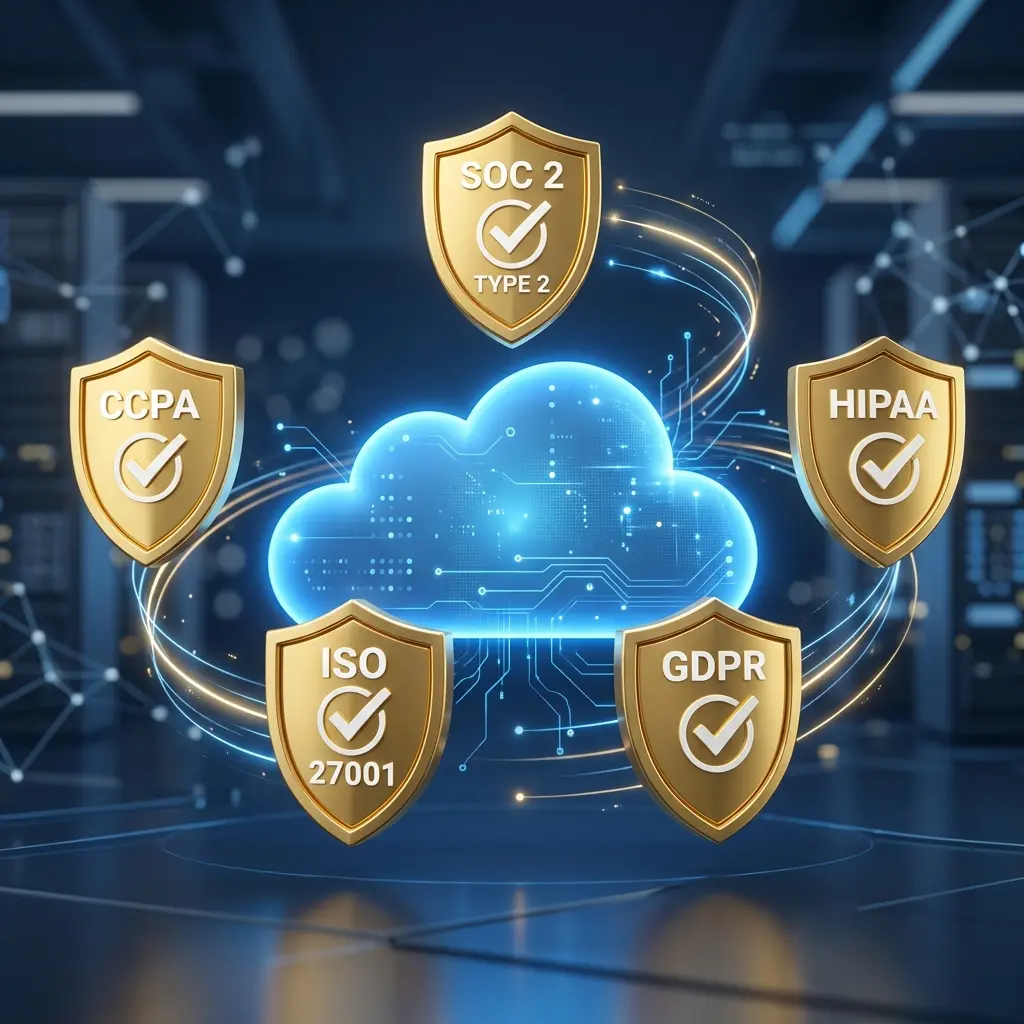
2. Data Sovereignty and the "Borders of Defense"
In 2026, data privacy laws are stricter than ever. If your MSSP offshores their SOC (Security Operations Center) to a jurisdiction with weak privacy laws, you might be inadvertently violating your own compliance mandates.
Always ask: "Where is my telemetry data stored, and who—physically—has access to it?"
3. The SLA Trap: Time to Detect vs. Time to Respond
Standard SLAs (Service Level Agreements) often focus on "Uptime" or "Time to Acknowledge." These are vanity metrics.
A provider might acknowledge an alert in 5 minutes but take 5 hours to understand its context.
Your focus must be on MTTR (Mean Time to Respond) and MTTD (Mean Time to Detect). If these aren't guaranteed, your contract is a paper shield.

4. Vendor Lock-in and Log Ownership
Who owns the data in the SIEM platform? If you decide to switch providers, will you have access to your historical security data?
Many companies discover too late that their logs are trapped in a proprietary format, making migration an expensive nightmare.

5. The "Black Box" Reporting Problem
If your monthly report only shows "10,000 alerts blocked," you aren't seeing the full picture.
You need visibility into false negatives and false positives. An MSSP that never reports a false positive is likely not looking hard enough.

MSSP, MDR, and XDR: Clearing the Acronym Fog
As you evaluate a Managed Security Services Provider, you will inevitably encounter terms like MDR (Managed Detection and Response) and XDR (Extended Detection and Response).
Understanding the technical nuances between these is critical for aligning your budget with your actual risk profile.
The traditional MSSP model is often "log-heavy." It focuses on collecting telemetry from various sources and alerting you when a predefined rule is triggered.
While essential for compliance, it often lacks the "Response" element. This is where MDR comes in.
MDR providers don't just tell you there's a fire; they are equipped to jump in and help you put it out, often providing deeper forensic analysis and proactive threat hunting.
XDR, on the other hand, is the technical evolution of detection. It breaks down the silos between endpoint, network, and cloud security, correlating data across the entire stack.
In 2026, the best MSSPs are those that have successfully transitioned into "Managed XDR" providers, offering a unified view of the attack surface rather than a disjointed list of alerts from different tools.
Co-Managed Security: The Hybrid Advantage
For enterprise companies with an existing—but perhaps overwhelmed—IT team, the "all or nothing" outsourcing approach is often a failure.
The Co-Managed Security model is the strategic middle ground.
In this setup, your internal team handles day-to-day policy management and internal user support, while the MSSP provides the 24/7 "eyes-on-glass" monitoring and specialized incident response expertise.
The benefits of Co-Managed Security include:
- Contextual Awareness: Your internal team knows your business logic better than any external provider.
- 24/7 Coverage: The MSSP fills the "after-hours" gap, ensuring that a ransomware attack at 2 AM is detected.
- Knowledge Transfer: Working alongside high-level SOC analysts helps level up your internal team's skills.
AI in the SOC: Real-World Application vs. Marketing Hype
Every Managed Security Services Provider in 2026 claims to be "AI-powered."
To avoid hallucinations and marketing traps, you must understand how AI is actually used in a modern SOC.
It is not a replacement for human analysts, but a force multiplier for them.

AI-Driven Triage and Correlation
The primary role of AI today is automated triage. An enterprise environment can generate billions of log events daily.
AI algorithms are exceptional at spotting patterns that indicate lateral movement or data exfiltration.
This reduces "Mean Time to Detect" (MTTD) from weeks to minutes.
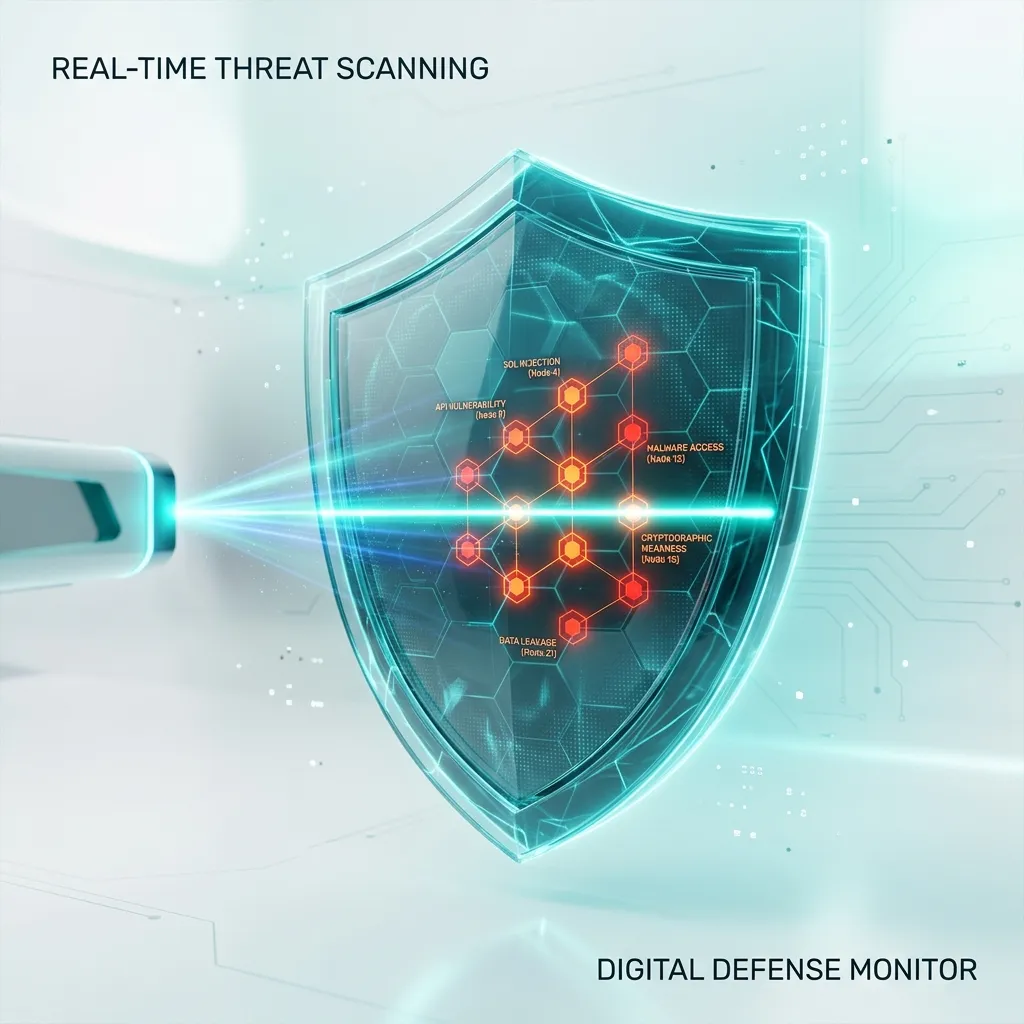
Behavioral Analytics (UEBA)
User and Entity Behavior Analytics (UEBA) is where AI shines. Instead of looking for a specific virus signature, the system learns the "normal" behavior of every user and device.
If an accountant suddenly starts accessing sensitive engineering files from a new country, the AI flags this anomaly immediately.
MSSP for Compliance and Governance: Beyond the Checkbox
In 2026, regulatory compliance is no longer a yearly audit; it is a continuous operational requirement.
A modern Managed Security Services Provider plays a pivotal role in ensuring that your organization adheres to frameworks like NIST Compliance Standards.
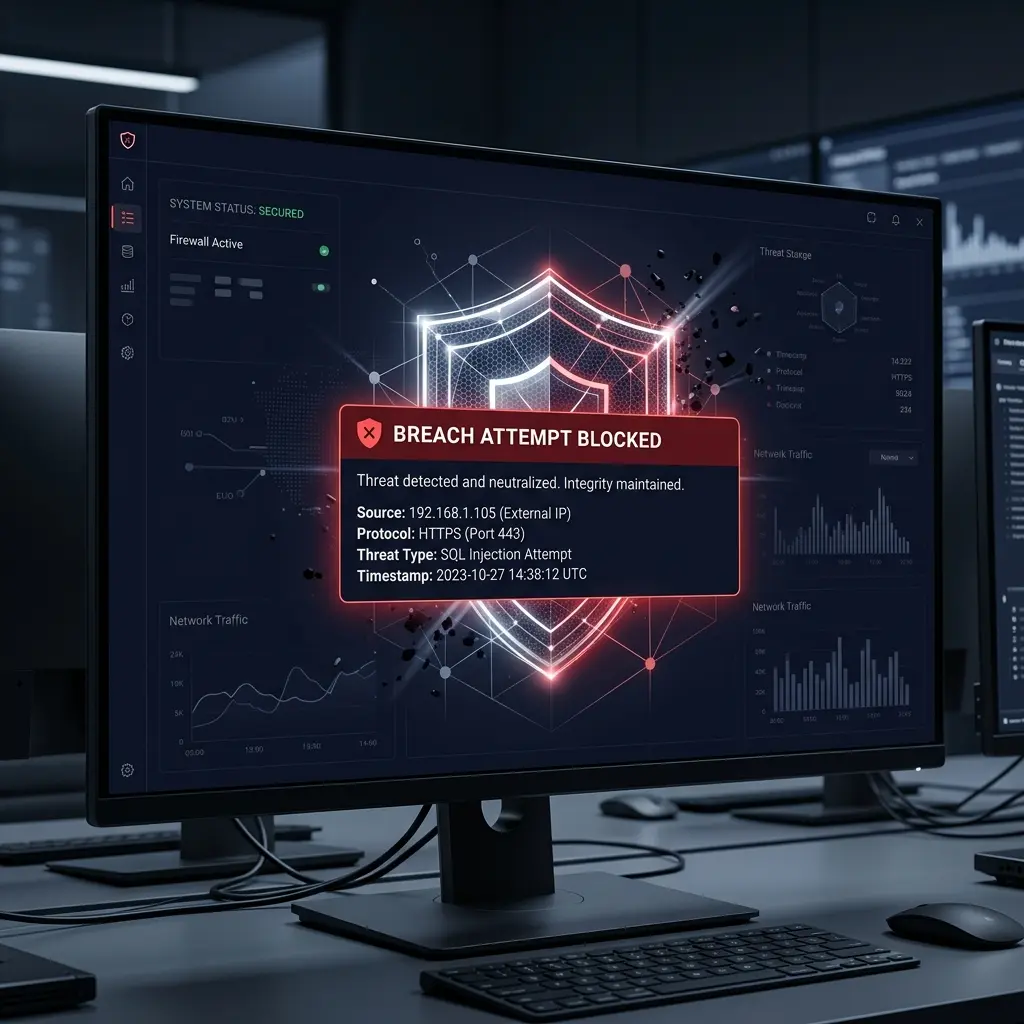
The hidden risk in compliance outsourcing is the "Compliance Drift." Security configurations can change hourly as new cloud instances are spun up.
An elite MSSP provides continuous compliance monitoring, ensuring that a misconfigured S3 bucket is detected and remediated within minutes.

Reporting for the Boardroom
Compliance is also about documentation. Your MSSP should provide audit-ready reporting that translates technical telemetry into business risk.
When the board asks, "Are we compliant?", your provider should be able to produce a data-backed report showing active encryption and access logs.
Managed IAM and PAM: Protecting the Keys to the Kingdom
Identity is the new perimeter. Statistics from 2025 show that over 80% of successful breaches involved compromised credentials.
This is why Managed Identity and Access Management (IAM) and Privileged Access Management (PAM) have become core offerings of high-end MSSPs.
A Managed PAM service ensures that high-level administrative accounts are vaulted, monitored, and used only through a "just-in-time" access model.
The MSSP monitors these accounts for suspicious activity, which is often the first sign of a sophisticated insider threat.
Ransomware Readiness: The MSSP as a First Responder
When a ransomware attack occurs, the first 60 minutes determine the survival of the business.
An MSSP with a dedicated **Incident Response (IR)** retainer provides the specialized expertise needed to contain the spread before the encryption reaches your backups.
The role of the MSSP in Ransomware includes:
- Endpoint Isolation: Automatically disconnecting infected machines via EDR/XDR integration.
- Forensic Preservation: Ensuring evidence of how the attacker got in is not deleted.
- Backup Validation: Proactively monitoring the integrity of your off-site backups.
Managed API Security: The New Frontier of Defense
As businesses become increasingly interconnected, the attack surface has shifted to APIs.
In 2026, a Managed Security Services Provider must offer dedicated API Security as a managed service.
APIs are often the "soft underbelly" of an enterprise. They frequently bypass traditional security checks.
An elite MSSP monitors your API traffic for anomalies like "BOLA" attacks, which are invisible to standard network monitors.
The ROI of an MSSP: Justifying the Investment to the Board
One of the hardest tasks for a CISO is explaining why an MSSP costs what it does.
To win over the board, you must speak the language of finance.
The ROI of an MSSP is calculated by comparing the cost of the service against the "Total Cost of Ownership" (TCO) of an in-house SOC.
The Hidden Costs of an Internal SOC
Building a 24/7 internal SOC requires at least 8 to 12 full-time analysts to cover shifts and holidays.
When you add SIEM licenses, continuous training, and specialized hardware, the internal model often costs 3 to 5 times more than an elite MSSP.
Monitoring the Supply Chain: The MSSP as a Watchdog
Your security is only as strong as your weakest supplier.
A Managed Security Services Provider in 2026 helps you manage Third-Party Risk by monitoring the security posture of your key vendors.
If a supplier suffers a breach, your MSSP can immediately assess if that breach puts your own data at risk.
Managed IoT and OT Security: Protecting the Industrial Edge
In 2026, the boundary between IT (Information Technology) and OT (Operational Technology) has completely dissolved. For manufacturing and energy companies, a Managed Security Services Provider must now offer specialized monitoring for industrial control systems (ICS) and IoT devices.
The hidden risk here is "Legacy Fragility." Many OT devices were never designed to be connected to the internet and lack basic security protocols. An elite MSSP uses specialized tools like passive network monitoring to identify threats on the factory floor without disrupting sensitive production equipment.
Cyber Resilience vs. Cybersecurity: The Strategic Shift
Modern boardrooms are moving away from the concept of "impenetrable security" toward Cyber Resilience. This is the ability of an organization to continue delivering its core services even after a breach has occurred. Your MSSP is the architect of this resilience.
A resilience-focused MSSP ensures that your critical business processes are mapped and that there is a documented, tested "failover" plan for your digital infrastructure. Security is about keeping the bad guys out; resilience is about ensuring the business stays up when they inevitably get in.
The NIST Incident Response Lifecycle in an MSSP Framework
To provide structured defense, high-end Managed Security Services Providers align their operations with the NIST 800-61 framework. Understanding how your provider handles each stage of this lifecycle is critical for long-term security health.
1. Preparation
This is where the MSSP helps you develop playbooks and conduct tabletop exercises. Without a pre-defined plan, response during a real crisis is chaotic and prone to error.
2. Detection and Analysis
Using SIEM/XDR, the MSSP identifies the "patient zero" of an infection. They analyze the TTPs (Tactics, Techniques, and Procedures) used by the attacker to understand their intent and ultimate objective.
3. Containment, Eradication, and Recovery
This is the "active combat" phase. The MSSP works to isolate affected segments, wipe out the attacker's presence, and restore services from clean backups. Each step must be documented for post-incident auditing.
4. Post-Incident Activity
The most ignored phase. An elite MSSP conducts a "Lessons Learned" session after every major alert to identify how the defense can be improved to prevent a repeat performance.
MSSP in Mergers and Acquisitions (M&A)
During an acquisition, you are not just buying a company's assets; you are buying their digital liabilities. A Managed Security Services Provider can perform "Cyber Due Diligence," scanning the target company's infrastructure for hidden backdoors or ongoing breaches before the deal is finalized.
Integrating a new acquisition into your security fold is a high-risk period. The MSSP provides the rapid scalability needed to extend your corporate security standards to the newly acquired entity on day one, preventing it from becoming an entry point for attackers into your core network.
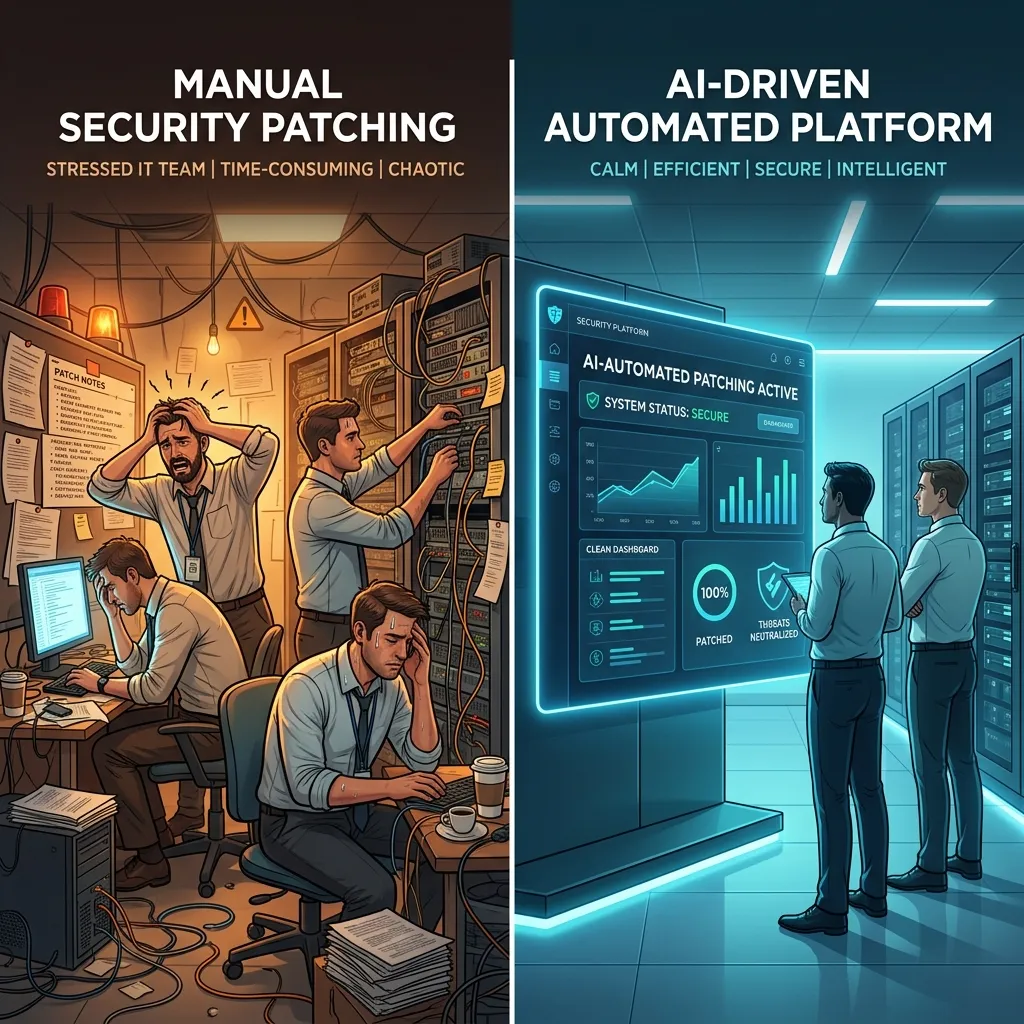
Managed Vulnerability Management vs. Automated Patching
Many organizations confuse patching with vulnerability management. While they are related, an elite Managed Security Services Provider treats them as distinct tactical operations. Patching is the action of fixing a hole; vulnerability management is the strategy of knowing which holes matter most.
The risk of "Blind Patching" is real. Applying every update as soon as it is released can break critical business applications. Your MSSP should provide a risk-based prioritization matrix, telling you which vulnerabilities are being actively exploited in the wild (CISA KEV catalog) and must be patched immediately, versus those that can wait for the next maintenance window.
The vCISO (Virtual CISO): Adding Strategic Brainpower to Your MSSP
Beyond the 24/7 SOC, many high-end providers now offer a Virtual CISO (vCISO) service. This is a strategic advisor who doesn't just look at logs, but helps you align your security roadmap with your business goals.
A vCISO is invaluable for:
- Budget Optimization: Helping you decide which security tools are redundant and where to reallocate funds for better ROI.
- Policy Development: Creating enterprise-grade security policies that actually work in the real world, not just on paper.
- Board-Level Communication: Translating technical threats into business risks for non-technical executives.
Internal SOC vs. MSSP: The 2026 Cost Matrix
To truly understand the value of a Managed Security Services Provider, you must look at the granular cost comparison. Below is a simplified matrix based on 2026 market rates for a mid-sized enterprise (500-1000 employees).
| Expense Category | In-House SOC (Annual) | Elite MSSP (Annual) |
|---|---|---|
| Personnel (8-12 Analysts) | $1,200,000+ | Included |
| SIEM/XDR Licensing | $150,000 - $300,000 | Often Bundled |
| 24/7 Overhead & Training | $80,000+ | Included |
| TOTAL ESTIMATE | $1.43M - $1.6M | $180k - $350k |
The Future: Autonomous SOC and AI-Warfare
As we look toward the end of the decade, the Managed Security Services Provider will evolve into an Autonomous SOC. We are moving away from human-driven triage toward AI systems that can self-heal network configurations in real-time as threats are detected.
However, the attackers are also using AI. We are entering an era of "AI vs. AI" warfare where the speed of the provider's algorithms will be the deciding factor in whether a breach is successful. Choosing an MSSP today is not just about current protection; it is about choosing a partner that is technically prepared for the automated threats of tomorrow.