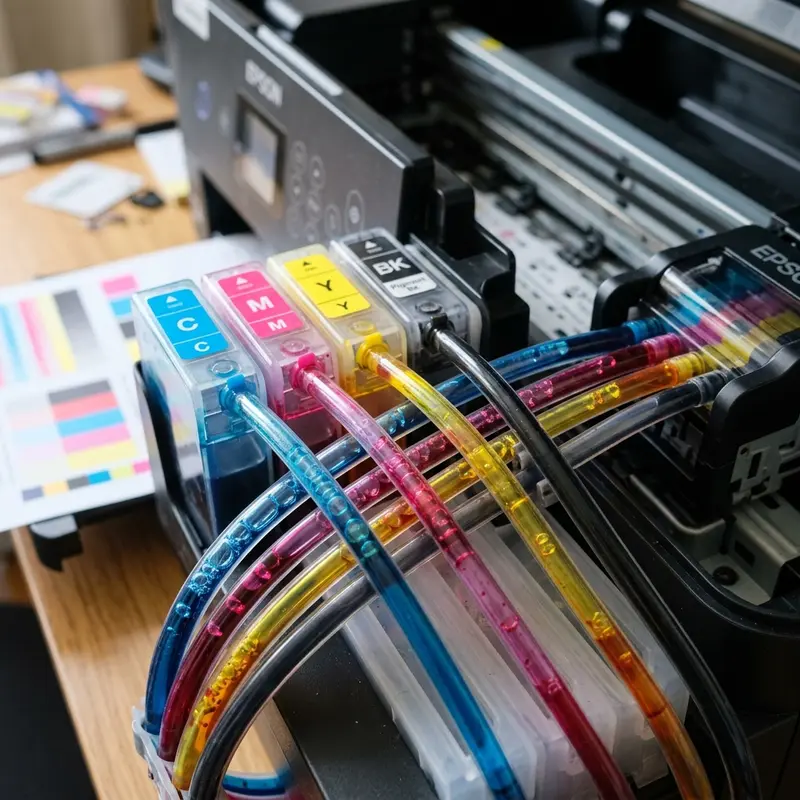
Is It Safe to Use Household Cleaners or Window Spray to Unclog a Printhead?
Using household multipurpose sprays (such as Veja or Windex) or glass cleaners to unclog a dried printhead is highly discouraged and carries a high risk of permanently ruining the printhead's micro-nozzles and electronic circuitry. These household cleaning products contain harsh chemicals like ammonia, sodium hydroxide (lye), and aggressive surfactants that chemically react with the delicate metal alloys in the printhead nozzle plate, accelerating galvanic corrosion and stripping away the vital hydrophobic coatings that guide ink drops.
To safely clean and unclog a printhead, you should use specialized printhead cleaning solvents (commercial flushing fluids formulated with deionized water and propylene glycol) or high-purity (99.8%) isopropyl alcohol to dissolve solid ink clogs. The safest physical method involves applying gentle negative pressure (suction) with a syringe and silicone tubing to draw out clogs, or using a low-frequency ultrasonic cleaning bath for heavily dried cartridges. In this technical manual, we detail the chemistry of ink coagulation, the dangers of household solvents, and step-by-step instructions for physical printhead recovery.
The Chemistry of Ink and Clog Formation
Modern inkjet inks are complex chemical solutions. Dye-based inks consist of colorant molecules fully dissolved in a liquid solvent, while pigment-based inks consist of solid micro-particles of pigment suspended in a liquid carrier. In both cases, the carrier liquid contains water, humectants (to prevent drying), surfactants (to control surface tension), and pH buffers.
The nozzles in the nozzle plate have diameters of only 10 to 50 microns. When water evaporates from the nozzle tip during periods of inactivity, a skin of dried ink forms. If you inject household window cleaner or multipurpose spray into these bicos, the following chemical reactions occur:
- Pigment Precipitation: Ink pH is carefully balanced (typically slightly alkaline, between 7.5 and 9.0). Household cleaners often have highly basic or acidic pH levels. Mixing them breaks the suspension of the pigment particles, causing them to group together (agglomerate) into a thick, rubbery gel that permanently blocks the microscopic ink channels.
- Chemical Corrosion: Ammonia, a common ingredient in window cleaners, is highly corrosive to copper and brass. Printheads contain delicate gold-plated copper contacts and fine wires. Ammonia attacks these metals, causing them to oxidize and break, which cuts off electrical signals to the nozzles.
- Mineral Deposits: Household sprays are made with tap water, which contains dissolved minerals like calcium and magnesium. When these products dry inside the printhead, they leave behind hard mineral scales that physically block the nozzles and cannot be dissolved.
Vulnerability by Brand: Epson Piezo vs. HP and Canon Thermal
Understanding your printer's printhead design is critical before applying any cleaning fluid:
- Epson (Fixed Piezoelectric Printhead): Epson printers use a permanent printhead built into the carriage. Because replacing this assembly is expensive, using improper cleaning agents is risky. If the adhesive seals separating the ink channels dissolve due to harsh solvents, ink will leak between colors (crossover contamination), ruined the printhead.
- HP and Canon (Integrated Thermal Cartridges): Many budget HP and Canon printers use disposable cartridges with integrated printheads (e.g., HP 67, Canon PG-245). While the financial risk is lower because you can simply replace the cartridge, using conductive household cleaners can short-circuit the electrical contacts on the carriage, potentially damaging the printer's mainboard logic.
Understanding the Cap Station and Peristaltic Pump Dynamics
When diagnosing a clogged printhead, technicians must inspect the capping station and the peristaltic pump assembly. The cap station is a spring-loaded rubber cup designed to form an airtight seal around the nozzle plate when the printhead carriage is in its home (docked) position. This seal prevents the volatile organic solvents in the ink from evaporating, which is the primary cause of solid ink crust formation. If the rubber cap becomes warped or caked with dried waste ink, it will fail to seal the head, allowing room air to enter and solidify the ink within the microfluidic chambers.
Connected to the underside of the capping station is the peristaltic pump. This pump uses rotary rollers to compress flexible silicone tubing, generating a strong, controlled negative pressure (vacuum) that sucks ink through the printhead bicos during maintenance cleaning cycles. If this tubing splits, or if the internal rollers wear out, the pump will lose its suction capacity. In this scenario, running software-guided cleaning cycles does nothing but spin the motor, failing to pull fresh ink to clear minor blockages. Technicians can diagnose this by manually depositing a few drops of distilled water onto the capping pad: if the pump is functional, the water should be instantly sucked down into the waste ink pads when the printer initiates a startup cycle.
Ultrasonic Bath Parameters and Physical Precautions
For cartridges with integrated printheads or removable printhead assemblies (such as those found in Canon PIXMA Maxify or HP OfficeJet series), an ultrasonic cleaning bath is a highly effective secondary tool. However, incorrect configurations can destroy the internal components. Ultrasonic cleaners work through a process called acoustic cavitation, where high-frequency sound waves create millions of microscopic vapor bubbles that implode upon contact with the dried ink, breaking it apart.
To perform this safely, the fluid level in the ultrasonic tank must be extremely shallow—no deeper than 2 to 3 millimeters. Only the external metallic nozzle plate should be submerged in the cleaning solvent. Submerging the entire printhead will flood the internal driver circuitry (de-multiplexer chips and copper contact traces), causing instant electrical short circuits when powered. Furthermore, the ultrasonic frequency must be restricted to 40 kHz or higher, and the duration of each cycle must not exceed 15 to 30 seconds. Excessive exposure to high-energy acoustic vibration can shatter the microscopic piezoelectric crystals or detach the thermal resistor plates from their silicon substrate, resulting in permanent component failure.
Comparison Matrix: Cleaning Solvents for Printheads
Compare the effectiveness and safety of various fluids for clearing ink clogs:
| Flushing Agent | Cleaning Power | Chemical Compatibility | Primary Risks | Recommended Use |
|---|---|---|---|---|
| Commercial Printhead Flush (Decapant) | Excellent (10/10) | High | Virtually none if matched to the ink type (dye vs. pigment). | Severe clogs, pigment ink clearing, and sublimation ink flushing. |
| Isopropyl Alcohol (99.8%) | Good for dye ink (8/10) | Medium-High | Can degrade rubber gaskets if left to soak for long periods. | Cleaning electrical contact pads and dissolving surface dye ink clogs. |
| Warm Deionized/Distilled Water (40°C) | Moderate (6/10) | High | Slow to dissolve heavy, dried pigment deposits. | Mild clogs, flushing system during color transitions, safe preventative rinse. |
| Household Multi-surface Cleaner (Veja/Windex) | Poor/Dangerous (3/10) | Low | Ammonia corrosion, pigment coagulation, electrical short circuits. | Not recommended. Only for disposable cartridges as a last resort. |
| Acetone / Paint Thinner | None (0/10) | Extremely Corrosive | Melts ABS plastics, acrylics, and printhead adhesives instantly. | Never use. Will permanently destroy the printer hardware in seconds. |
Safe Physical Unclogging Procedure (Controlled Pressure Method)
To clear stubborn blockages without damaging internal seals, follow this step-by-step flushing procedure using professional printhead cleaning fluid:
Required Materials:
- 10ml or 20ml sterile syringe.
- A 5cm section of flexible silicone tubing (3mm internal diameter).
- Professional printhead cleaning solvent.
- High-density, lint-free paper towels.
- Nitrile gloves.
Step-by-Step Instructions:
- Turn on the printer, wait for the carriage to move to the center of the frame, and unplug the power cord from the wall to cut all electrical currents.
- Fold a sheet of lint-free paper towel into a flat pad. Slide the printhead carriage manually over the paper pad. This catches any solvent that pushes through the nozzles and prevents it from wetting the electrical contact carriage.
- If working on an Epson EcoTank, lift the dampers to expose the metal ink inlet posts of the printhead.
- Fill the syringe with 3ml of warm printhead cleaning solvent.
- Connect one end of the silicone tubing to the syringe tip and the other end to the inlet post of the clogged color channel.
- CRITICAL STEP: Gently pull back on the syringe plunger first to perform negative pressure suction. This pulls dried ink out of the nozzles rather than forcing clogs deeper into the printhead's micro-filters. You will see air and ink enter the syringe.
- After performing suction, press the syringe plunger very gently to inject a tiny amount of solvent. Do not apply heavy pressure! If the plunger resists, stop immediately. Applying too much force will rupture the internal glue seals.
- Check the paper towel below the carriage. If the nozzles are clear, the solvent will flow through, creating a clean, rectangular wet pattern on the paper towel.
- If the clog is severe, leave the solvent inside the printhead to soak for 20 minutes. Afterward, remove the syringe, clear the paper pad, and clean any spilled fluid.
- Reassemble the dampers or cartridges, plug in the printer, and run a software cleaning cycle to prime the nozzles before printing a test page.
Additional Diagnostic: Manual Damper Priming and Airlock Purging
In many printhead servicing procedures, chemical clearing is only half the battle. If a printer has been sitting idle for several months, air bubbles will penetrate the ink delivery tubes, creating a physical barrier known as an airlock. When this happens, even a perfectly clean printhead will fail to draw ink because air is compressible, unlike liquid ink. When the peristaltic pump pulls at the capping station, it simply expands the air pocket in the tubes instead of pulling ink from the external reservoirs.
To resolve this, technicians must manually prime the dampers before reinstalling them. Using a clean syringe without a needle, insert the tip directly into the outlet valve at the bottom of the damper (the rubber seal that mounts onto the printhead inlet posts). Slowly draw back the syringe plunger. You will see air bubbles, followed by a steady stream of ink, fill the syringe. Once the damper is completely filled with ink and all air pockets are removed, disconnect the syringe and clean the valve before placing it back onto the printhead. This ensures a direct, continuous column of liquid ink is in contact with the nozzle plate, allowing printing to resume immediately without further cleaning cycles.
For detailed guides on correcting communication issues after mechanical servicing, refer to our article on resolving HP printer offline issues on Windows or check out our diagnostic walkthrough on selecting the best value Epson EcoTank printers.
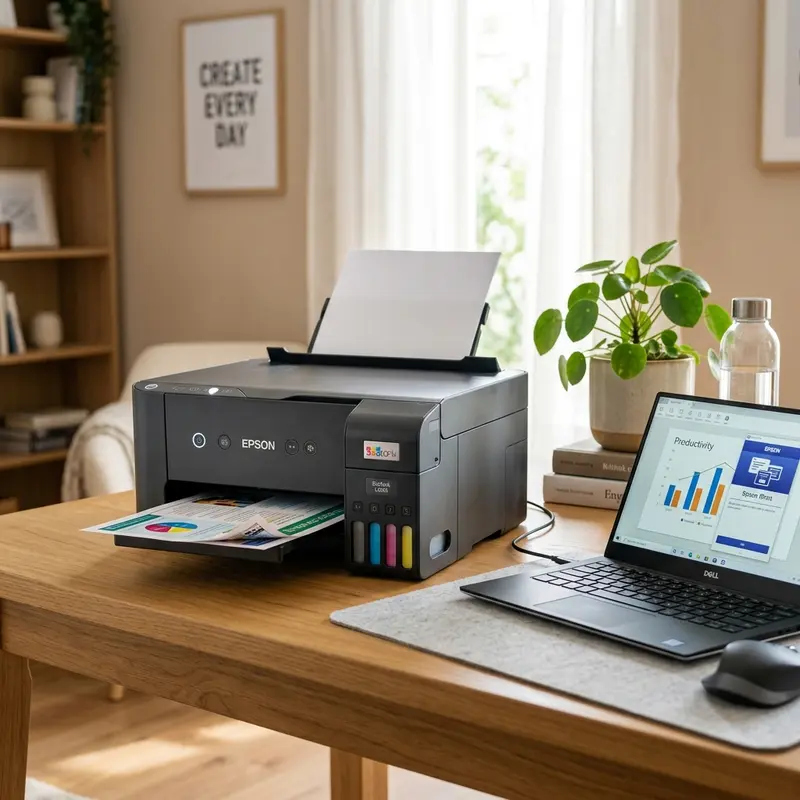
Preventative maintenance for domestic inkjet printers
To avoid future physical blockages in the printhead nozzles and extend the overall lifespan of your printer components, it is highly recommended to print a test page containing all primary colors at least once a week. This routine forces fresh ink to flow through the internal delivery lines and clears any dried residue from the nozzle plate, preventing crystallization due to prolonged inactivity. Additionally, keeping the printer away from direct drafts and heat sources reduces the rate of solvent evaporation inside the ink chambers.
Frequently Asked Questions (FAQ)
1. Is it safe to use blue window cleaner for Epson printhead clogs?
No. Standard window cleaners contain ammonia, which corrodes copper contacts, and tap water, which leaves behind mineral scale. Commercial cleaning solutions formulated with distilled water and glycols are the only safe choices for permanent printheads.
2. How can I tell if a printhead is clogged or the damper is empty?
If you see air pockets in the clear tubes leading to the dampers, the issue is an airlock in the ink lines. If the dampers are filled with ink but a specific color still does not print after running software cleaning cycles, the printhead nozzles are physically clogged.
3. Can I use isopropyl alcohol to clean a printhead?
You can use 99.8% pure isopropyl alcohol to clean the copper electrical contacts and dissolve dried dye-based inks. However, avoid using lower concentrations (like 70% rubbing alcohol) as they contain tap water and additives that leave conductive residues.
4. What should I do if cleaning fluid spills onto the printhead circuitry?
Do not plug the printer in. Immediately blot the wet area with dry paper towels and use a hair dryer on the cold air setting to dry the circuit board. Let the printer sit unplugged for at least 24 hours to ensure all moisture evaporates before powering it back on.
5. Can I use an ultrasonic cleaner to clear printhead blockages?
Ultrasonic cleaning is effective for removable printheads or cartridges, but only if done correctly. Limit cycles to 15-30 seconds in a shallow bath of printhead cleaner at frequencies below 40 kHz. Longer exposure can crack the delicate piezoelectric crystals.
6. How often should I print to prevent dried ink clogs?
To keep ink flowing and prevent drying, print a color test pattern at least once every 10 to 14 days for dye-based inks, and once every 7 days for pigment-based or sublimation inks, which settle and dry out faster.
Chemical Composition and Properties of Printhead Flush
Professional printhead cleaners are chemically formulated to target the specific binders present in inkjet inks. Most solutions consist of diethylene glycol, which acts as a powerful humectant, and non-ionic surfactants that lower the surface tension of the liquid. This allows the cleaner to penetrate deeply into the microscopic capillaries of the printhead. Some formulations also contain a tiny percentage of ammonium hydroxide to break down the resilient polymer chains found in dried pigment-based inks. Using a scientifically formulated solution ensures that the chemical reaction dissolves only the ink binders, without reacting with or corroding the delicate nickel-cobalt nozzle plates or the plastic adhesive sealants of the carriage assembly.




