How to Stop Robot Vacuum from Getting Stuck on Doors thresholds
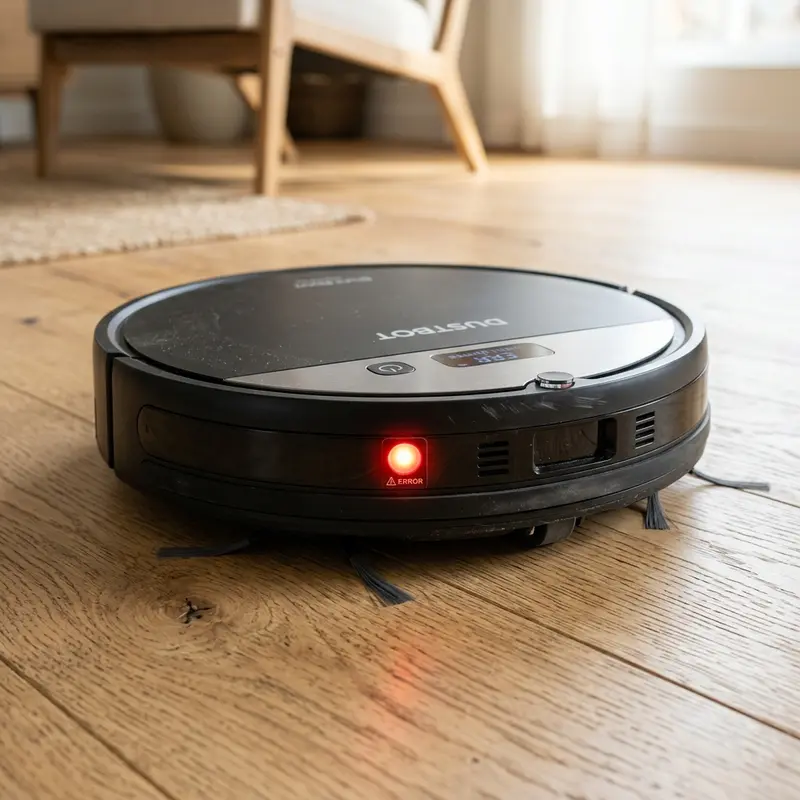
How to Stop Robot Vacuum from Getting Stuck on Doors thresholds
If your device gets stuck when changing rooms, understanding why a robot vacuum gets stuck on door thresholds requires analyzing the maximum obstacle climbing height (usually between 0.6 and 0.8 inches), the threshold's edge profile, and drive wheel tread wear. Flat-edged wood or marble thresholds act as physical walls for vacuums with stiff suspension springs or smooth tire treads. Installing rubber transition ramps or setting up digital boundary lines stops these jams.
1. Obstacle Ramping Limits and Chassis Ground Clearance
The technical metric "obstacle climbing capacity" defines the maximum vertical transition the drive wheels can clear before the under-chassis casing scrapes the floor. For most mid-range vacuums, this limit ranges from 0.6 to 0.8 inches (15 mm to 20 mm) under ideal conditions.
However, this climbing limit assumes thresholds with rounded or sloped edges at angles under 45 degrees. Straight, flat-edged thresholds (common in bathroom dividers and balcony doors) of just 0.6 inches block the front bumper. The physical impact registers as a wall collision, causing the vacuum to turn around and skip the next room.
2. Installing Rubber or Wooden Transition Ramps
The most effective physical solution to let the vacuum clean the entire home is installing small transition ramps on the sides of high thresholds. This creates a gentle slope that the drive wheels can easily climb without high-centering the chassis.
You can implement two practical solutions:
- Flexible silicone or rubber ramps: Self-adhesive rubber wedge strips ranging from 0.4 to 0.8 inches in height are available online. They are durable and blend into the floor.
- Custom wood wedges: A carpenter can cut small wood transitions matching the threshold's color, securing them in place with double-sided mounting tape.
If your vacuum backs up or spins when transitioning between rooms, read our guide on how to fix a robot vacuum that only moves backwards.
3. Worn Drive Wheel Treads and Loss of Traction
If your robot vacuum used to climb thresholds but now gets stuck in the same spots, this indicates wear on the rubber tire treads. Drive wheels require high friction to pull the vacuum over obstacle edges.
Fine dust and soapy residues from past floor cleanings fill the rubber tread grooves, creating a slick layer on the wheels. When climbing a threshold, the tires slip on polished hardwood or marble. The motherboard's traction control detects wheel spin without linear displacement, shutting down the vacuum to prevent motor overheating.
Clean the rubber treads weekly using a stiff brush and degreaser. If the tires are worn smooth, apply replacement rubber tread bands. If the wheels are clogged with pet hair, read how to clean robot vacuum caster wheel.
4. Climbing Limits by Robot Vacuum Class
The table below summarizes climbing limits and performance when transitioning thresholds across different vacuum classes:
| Vacuum Class | Flat Edge Limit | Sloped Edge Limit | Common Threshold Behavior | Recommended Solution |
|---|---|---|---|---|
| Premium (LiDAR / LiDAR maps) | 0.7 inches (1.8 cm) | 0.9 inches (2.2 cm) | Climbs with high motor torque | App transition zone configuration |
| Mid-range (Gyroscope map) | 0.5 inches (1.3 cm) | 0.7 inches (1.8 cm) | Attempts climb, may high-center | Install 0.6-inch adhesive rubber ramp |
| Entry-level (Random bounce) | 0.3 inches (0.8 cm) | 0.5 inches (1.2 cm) | Bumps and turns away, or stalls | Use thin silicone ramp strips |
| Hybrid (Mop bracket attached) | 0.2 inches (0.7 cm) | 0.4 inches (1.0 cm) | Mop bracket drags, wheels lift | Remove mop plate or set no-go zone |
5. Setting Up Virtual Boundaries to Block Balconies
If a high threshold separates a room from an outdoor balcony or wet laundry room where the vacuum should not clean, the best approach is using virtual boundaries in the smart app.
Open the app's floor plan and draw a virtual wall line directly over the threshold. The navigation firmware treats this digital line as a solid wall, stopping the vacuum from trying to cross the threshold and getting stuck in door tracks.
To evaluate if a hybrid model fits your home's layouts, check our best mopping robot vacuum value guide.
Cliff Sensor Errors on Shiny Metal Thresholds
Polished aluminum or brass threshold transitions reflect infrared light intensely. This high reflection confuses the optical receiver diodes on the underside of the vacuum bumper.
The vacuum registers the metal glare as an open ledge (cliff), backing away from the doorway. Clean the underside cliff sensors with a cotton swab, and apply matte tape over highly reflective threshold metals to prevent false ledge errors.
How Mop Brackets Affect Climbing Heights
Attaching a water reservoir and microfiber cloth to a hybrid vacuum reduces the exit angle of the rear suspension. The mop bracket acts as a rigid, low-clearance block behind the drive wheels.
Even premium vacuums that climb 0.8 inches will get stuck when the mop pad catches on a threshold. Always detach the plastic mop plate before running cleaning cycles focused on rooms separated by high doorsills.
Preventing Gearbox Wear from Repeated Impacts
Repeatedly slamming into straight thresholds strains the nylon reduction gears inside the drive wheel gearboxes. Over time, this stress can chip the gear teeth, leading to wheel motor failures.
Avoid letting the vacuum crash into the same thresholds during every clean. Use transition ramps or configure no-go zones in your smart app to protect the plastic gearbox gears.
Calibrating Gyroscopes to Resolve Mapping Drifts
When climbing over thresholds at an angle, the vacuum tilts sideways. This tilt is measured by the internal Inertial Measurement Unit (IMU) gyroscope to keep map tracking aligned.
If the vacuum often gets stuck at a threshold, the IMU calibration can drift, causing the navigation software to register a crooked map, which leads to pathing errors in subsequent clean runs.

Climbing Physics: Wheel Diameter and Tire Friction Coefficients
The mechanical capacity to climb thresholds is determined by the drive wheel diameter and suspension travel. Wheels larger than 2.7 inches (70 mm) provide the required climb angle to clear flat doorsills.
The friction coefficient between the rubber tires and the doorsill is also critical. Worn treads slide on polished marble or shiny metal thresholds. Clean the tire rubber weekly with a degreaser and check that the suspension arms maintain correct vertical tension.
Retrofitting Doorways with Silicone Transition Wedge Ramps
The most effective solution to stop your vacuum from high-centering on door thresholds over 0.6 inches is retrofitting the threshold with self-adhesive silicone wedge ramps.
These ramps create a gentle slope, allowing the drive wheels to roll over the transition without bottoming out the chassis or scratching the bottom plastic plates, preventing gear fatigue inside the wheel hub.
Preventing Gear Stripping inside Driving Wheel Gearboxes
Repeatedly slamming into high threshold edges causes mechanical shocks that strain the nylon gears inside the wheel gearboxes. Over time, these impacts can chip the plastic teeth, leading to wheel failure.
Install silicone ramps or draw virtual walls in the smart app to protect the vacuum from crashing into the same high thresholds, preserving the life of the internal wheel drivetrain.
How Wet Mop Brackets Lower the Rear Climbing Angle
Attaching the water reservoir and microfiber mop pad to the vacuum lowers the rear clearance angle. The plastic mop plate acts as a rigid block very close to the floor level.
This plate can drag on doorsills during climbs, lifting the drive wheels off the floor and causing traction loss. Remove the mop bracket assembly before running vacuum-only cycles in rooms separated by high thresholds.
Re-calibrating Gyroscopes after Hard Doorsill Collisions
Climbing high thresholds repeatedly can cause shocks that misalign the internal Inertial Measurement Unit (IMU) gyroscope sensors over time.
This misalignment causes the vacuum to register crooked coordinates or phantom walls on the app map. Place the vacuum on a flat, level surface and run the sensor calibration routine in the smart app to restore tracking accuracy.
Wheel Traction Strips and Using Tread Wrappers for Doorsill Climbing
If clean wheels still slip on doorsills, you can install silicone traction bands. These self-adhesive bands wrap around the drive wheels, increasing the traction coefficient on slippery tile and marble thresholds.
Traction wraps prevent wheel spin, helping the vacuum climb over door frames. Ensure the rubber bands are aligned on the wheel hubs to prevent friction jams inside the chassis side panels.
The Role of Wheel Suspensions in Doorsill Tractions
Drive wheel suspensions are spring-loaded to push the tires against the floor. Over years of use, these suspension springs can lose their tension, causing the chassis to sag.
If the suspension is weak, the vacuum will high-center on low thresholds. Inspect the suspension spring coils and replace them if the chassis ground clearance has dropped below factory specifications.
How Wheel Wear Reduces Climbing Angles over Time
As rubber treads wear down from daily cleanings, the wheel diameter decreases by a few millimeters, lowering the approach clearance. This reduction makes the front bumper crash into doorsills.
Regularly check the thickness of the wheel rubber and clean the suspension pivots to ensure the spring coils push the wheels to their full travel, maintaining optimal climbing capability.
How Mop Bracket Attachments Affect Climbing Angle Exit Paths
Attaching the water reservoir and microfiber mop pad to the vacuum reduces the exit angle of the rear suspension. The plastic mopping mount forms a low-clearance barrier right behind the tire hubs. Remove the mop bracket before running dry cycles.
The Effect of Heavy Mop Attachments on Doorsill Approach Clearance
When the water tank and microfiber mop are attached, the rear ground clearance of the hybrid vacuum drops significantly. The plastic mop bracket drags on threshold edges, lifting the drive wheels and causing wheel spin. Remove the mop plate before vacuum-only runs.
Wheel Traction Strips and Using Tread Wrappers for Doorsill Climbing
If clean wheels still slip on thresholds, you can install self-adhesive silicone traction bands. These bands wrap around the drive wheels, increasing the traction coefficient on slippery tile and marble doorsills.
How Worn Drive Wheel Suspensions Cause High-Centering
Check the drive wheel suspension springs monthly. Over years of use, springs can lose tension and cause the chassis to sag, making the vacuum high-center on door thresholds. Replace springs to restore ground clearance.
How Wheel Wear Reduces Doorsill Approach Angle
Check drive wheel tread thickness quarterly. As tire rubber wears down, the vacuum's ground clearance drops by a few millimeters, making the bumper crash into doorsills. Replace tire bands to restore clearance.
Installing Beveled Transition Strips on Hardwood Floors
If doorsills are higher than 0.7 inches, you can apply wooden transition strips bevel-cut to 15 degrees. This slope allows the drive wheels to climb the threshold without bottoming out the bumper.
Inspecting Drive Wheel Pivot Axles for Smooth Rotation
Ensure the wheel pivoting axles are free of debris. Trapped hairs can bind the pivot, reducing climbing response and causing doorsill stalls.
Frequently Asked Questions (FAQ)
Can a robot vacuum cross sliding door tracks?
Sliding door aluminum tracks have deep channels and sharp metal edges. Standard vacuums often get stuck in these grooves. We recommend using track filler inserts or setting app no-go zones.
How do I stop my robot vacuum from getting stuck on bathroom thresholds?
Apply a self-adhesive silicone transition ramp to the edge of the bathroom doorsill. This reduces the approach angle, allowing the wheels to roll up easily.
What is the maximum threshold height a Mondial vacuum can climb?
Mondial vacuums (such as Pratic Clean and Fast Clean) have short suspension travel and can climb sloped transitions up to 0.4 inches. Flat edges higher than 0.3 inches will cause jams.
Does a wet mop pad stop a robot vacuum from climbing door thresholds?
Yes. The mop plate reduces the vacuum's rear clearance. When climbing, the pad drags on the threshold, lifting the drive wheels off the floor and causing traction loss.
Conclusion
Adapting high door thresholds for your robot vacuum requires reducing the mechanical approach angle of the wheels. By using self-adhesive silicone transition ramps or drawing digital boundaries in the smart app, your vacuum will clean your home without getting stuck.




