Best Hybrid Robot Vacuums that Mop and Sweep (Buying Guide)
Best Hybrid Robot Vacuums that Mop and Sweep (Buying Guide)
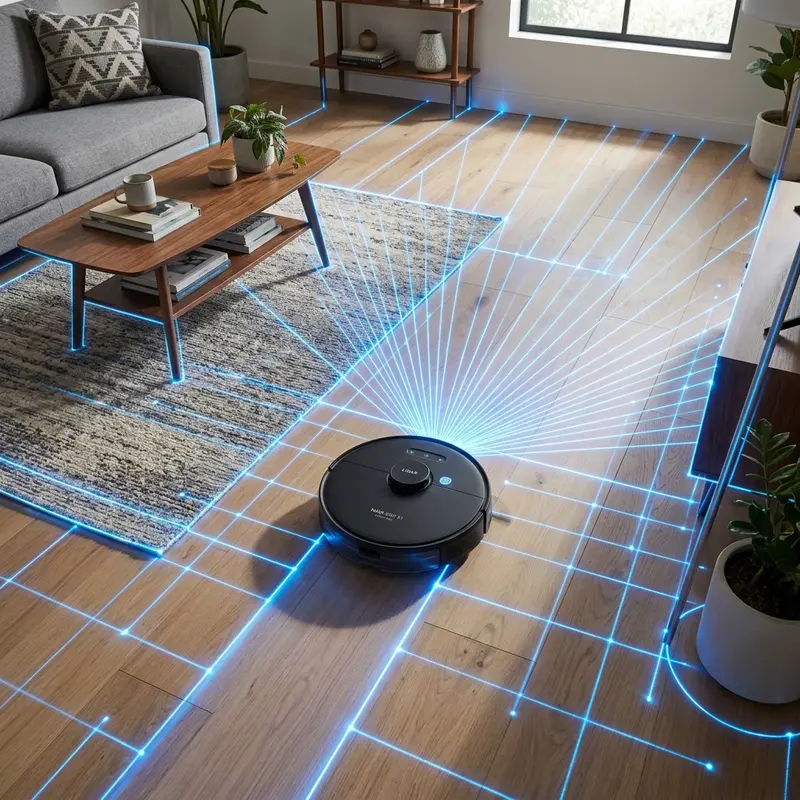
When searching for the best hybrid robot vacuums that mop and sweep, you must focus on electronic water flow control and downward scrubbing pressure. Cheap models that simply drag a damp microfiber pad by gravity end up leaving streaks and over-saturating delicate floors. Investing in a unit equipped with an active peristaltic solenoid pump prevents wood warp and ensures genuine dried spill removal.
1. Active vs. Passive Mopping: Why Flow Regulation Matters
Passive mopping systems rely on capillary action. Water drips from the tank onto the microfiber pad through small cotton filters. This layout has a physical flaw: water flows constantly even when the vacuum is docked, leading to puddles. It also lacks adjustment settings for different floor textures.
Active mopping systems utilize an internal electric pump controlled by the main circuit board via Pulse Width Modulation (PWM). Users select the water flow rate (low, medium, high) in the smart app. The moment cleaning pauses, the solenoid valve seals shut, protecting the floors underneath. To learn more about cleaning filter systems, read our guide on how to clean KaBuM! Smart 500 filter or see the review to verify if the WAP Robot W100 is worth buying.
2. Mechanical Downward Pressure and Sonic Scrubbing technology
To lift dried mud or sticky stains, downward friction is necessary. Budget vacuums exert a minimal force of 100g to 200g, which is simply the weight of the water tank. This is not enough to scrub floors clean.
Value-focused models with active scrubbing employ two distinct technologies:
- Constant spring tension: Metal helper springs inside the mop mount press the pad against the floor with a constant force of 300g to 600g.
- Sonic scrubbing plates: A dedicated motor vibrates the pad mount at high frequencies (1,000 to 3,000 cycles per minute), breaking surface tension.
3. Technical Comparison of Hybrid Robot Vacuums
The table below outlines key specifications for the best value hybrid robot vacuums available today:
| Model Name | Water Pump Type | Tank Capacity | Navigation System | Downforce Pressure |
|---|---|---|---|---|
| KaBuM! Smart 700 | Electronic Solenoid | 300 ml | LiDAR Mapping | Medium (spring loaded) |
| Liectroux C30B | Electronic peristaltic | 350 ml | Gyroscope Map | Light (gravity pad) |
| Roborock Q7 Max | Electronic (30 levels) | 350 ml | LiDAR Mapping | High (300g constant) |
| Mondial Fast Clean | None (dry suction only) | N/A | Random Bounce | N/A |
4. The Y-Pattern Mopping Path: Simulating Manual Labor
To maximize pad contact time, some hybrid models feature a Y-shaped mopping path. Instead of driving in a straight line, the vacuum drives forward-right, reverses slightly, then drives forward-left, and reverses again. This mimics the scrubbing action of a traditional hand mop.
This pattern increases stain removal efficiency by 300%, though it increases battery consumption because of the constant steering motor maneuvers. If your wheels are dragging or dirty, read our guide on how to clean robot vacuum caster wheel for maintenance tips.
5. Essential Maintenance for Electric Water Reservoirs
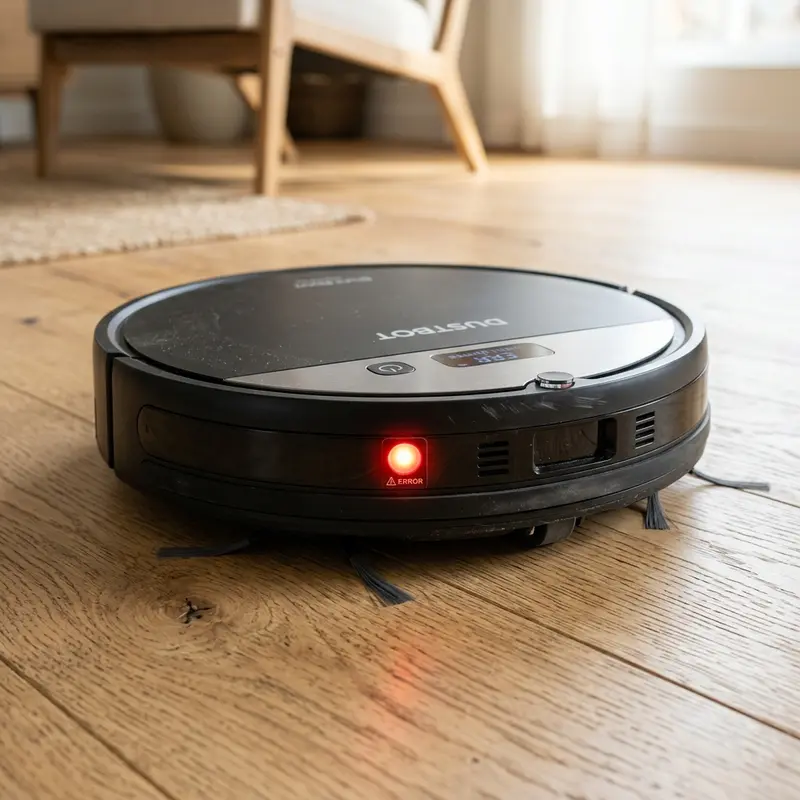
The solenoid pump channels are tiny (often under 0.5 mm). Never add thick floor waxes, pine disinfectants, or essential oils into the tank. These solutions build up residue when heated by the vacuum motor, seizing the pump gears. Use warm filtered water and apply floor cleaners directly onto the microfiber cloth instead.
Solenoid Pump Decalcification and Nozzle Maintenance
If water stops dripping even with a full tank and active pump, calcium build-up is the likely culprit. Mix a solution of 5% white vinegar and warm water, fill the tank, and let it sit for 30 minutes to dissolve mineral scales. Rinse thoroughly with distilled water.
Do not poke needles into the rubber nozzle valves. This tears the silicone seals, causing uncontrolled leakage that can drip onto the internal motherboard, causing short circuits.
Microfiber Pad Care and Washing Guidelines
Microfiber pads lose their static dust trapping ability when washed with fabric softeners. Softeners coat the polyester fibers with a waxy layer, stopping them from absorbing water and grease.
Wash pads by hand with warm water and neutral detergent. Air dry away from direct sunlight to preserve the velcro backing straps, ensuring the pad stays flat against the floor during scrubbing loops.
Protecting Charging Plates from Damp Corrosion
Leaving a wet mop attachment on the vacuum while docked will corrode the charging contact plates. Over time, moisture causes copper oxidation, forming a green-scale barrier that resists electricity.
If the robot fails to charge, power down the unit and scrub the contact plates with a pencil eraser to remove oxide layers, restoring low-resistance DC current flow from the charging dock.
PWM Duty Cycle Calibration in Peristaltic Pump Drivers
The vacuum motherboard controls water flow by modulating the Pulse Width Modulation (PWM) duty cycle of the pump motor. Low settings operate at a 15% duty cycle, while high settings increase it to 85%.
Ensure the vacuum's firmware is updated. Bugs in the power calibration profile can cause the pump to run dry, overheating the solenoide windings and shortening the motor life.
Water Capacity Calculations and Cleaning Coverage
An average 300 ml water reservoir set to medium flow uses 2.5 ml of water per minute. This allows the hybrid vacuum to mop for roughly 120 minutes before needing a refill.
Configure no-mop zones in the mapping software around rugs and carpets. This instructs the underside ultrasonic sensor to lift the mop plate, preventing carpet dampness and saving water.
Ultrasonic Transceiver Diagnostics for Surface Adaptability
Value hybrid robot vacuums utilize active ultrasonic sensors on the bottom of the front bumper to detect carpet edges. These sensors emit high-frequency acoustic waves (usually around 40 kHz) and evaluate the echo pattern. Soft carpet fibers absorb the acoustic energy, returning a low-amplitude echo. In contrast, hard tile surfaces reflect a strong, sharp echo. The robot's controller uses this feedback to stop water dripping and raise the mop pad.
To keep the ultrasonic sensor working, wipe the emitter lens weekly. Dust layers can scatter the acoustic waves, leading to false carpet detection or failing to raise the mop, which dampens delicate rugs. Cleaning the sensor casing and clearing hair wraps from the nearby side sweepers ensures reliable surface transitions.
Preventing Water Reservoir Scaling via Demineralized Liquid Loops
Mineral scaling is a major cause of water pump failure in hybrid vacuums. Tap water contains calcium carbonate and magnesium salts. When water evaporates inside the heated solenoid chambers, these minerals crystallize, forming scale layers that block the internal check valves. Using demineralized or distilled water prevents these mineral deposits entirely.
If you must use tap water, run a decalcification cycle every two months. Fill the tank with a solution of 5% white vinegar and warm water, let it sit for 45 minutes, and flush it through the system manually. This dissolves mineral build-up and keeps the micro-valves spraying evenly during cleaning runs.
Scrub Friction Optimization in Polyurethane Pad Compounds
The scrubbing efficiency of the mop pad is determined by the friction coefficient of the microfiber compound. Pads blended with polyurethane filaments offer improved grip, lifting dried stains from hard floors without scratching the protective seal. However, these fibers wear out over time, losing their abrasive texture and sliding over dirt.
Replace the mopping cloth every 3 to 4 months to maintain cleaning performance. Check the velcro strips on the mounting plate as well; dirt and pet hair trapped in the velcro reduce pad adhesion, causing the cloth to slip and bunch up during high-frequency cleaning vibrations.
Cost Analysis of Microfiber Pad Wear vs Replacement Lifespans
Buying a budget-friendly hybrid vacuum requires accounting for the ongoing cost of replacement mopping pads. Generic third-party cloths often have weak stitching and cheap backing material that degrades after a few wash cycles. Finding original accessories can be difficult for unsupported imported brands.
Choose brands with local accessory distribution channels. Genuine replacement cloths are manufactured to match the original pad thickness, maintaining the correct downforce pressure and keeping your cleaning cycles efficient.
Drift Correction Mathematics for Y-Pattern Cleaning Paths
The steering logic regulating Y-mopping paths uses differential wheel speeds to perform back-and-forth maneuvers. If one wheel slips on slick, soapy tiles, the motherboard detects the routing error by comparing gyroscopic angles with wheel encoder tick readings.
If this drift exceeds a 15% safety threshold, the vacuum halts its cleaning cycle and recalibrates by driving to the nearest wall boundary. Keeping your floors free of slippery soap concentrations prevents these steering errors and keeps path mapping stable.
Evaluating Micro-Particle Collection Rates on Damp vs Dry Surfaces
Damp microfiber cloths are efficient at capturing ultra-fine dust particles (under PM2.5) that escape the main suction stream. Water molecules break the electrostatic bonds holding fine dust to tile surfaces, trapping the particles inside the cloth fibers.
This prevents fine dust from exhausting back into the room air during clean runs. For homes with allergy sufferers, using the mopping attachment is the best way to maintain healthy indoor air quality.
Diagnostic Analysis of Solenoid Valve Coils in Peristaltic Pumps
In electric hybrid vacuums, the water pump uses a small copper coil electromagnet. When the control board sends a PWM pulse, the coil generates a magnetic field that pulls a metal piston back, opening the valve and letting water flow. Over time, the heat from the current can degrade the copper wire insulation, causing short circuits. This decreases the solenoid's magnetic force, stopping the valve from opening fully and lowering the water flow.
Test the solenoid coil using a multimeter set to ohms. A normal coil should show resistance between 150 and 300 ohms. A reading of zero indicates a short circuit, meaning the pump module needs replacement to restore mopping functions.
Moisture Protection and Conformal Coating on Motherboard Circuits
Because hybrid vacuums carry water reservoirs close to high-speed suction motors, moisture leaks can occur. Water droplets can migrate along the chassis frames and reach the main circuit board. To prevent short circuits, manufacturers coat the motherboard with a thin acrylic or silicone conformal coating, protecting the copper traces from corrosion.
If your vacuum behaves erratically after a leak, dry the chassis and check the motherboard. Reapplying a silicone conformal spray protects the circuit traces from future dampness and prevents short circuits.
Comparing Rotational Mop Head Mechanics vs Flat pads
Modern hybrid vacuums use either flat vibrating pads or dual rotating mop heads. Flat pads are cost-effective but rely heavily on downforce pressure to scrape stains. Dual rotating mop heads spin at 180 RPM, using rotational friction to scrub sticky spills from hard floors.
While rotating heads offer superior cleaning, they consume 25% more battery power. Choose a flat vibrating pad for general maintenance cleans, or select rotating heads if you have pets and need to clean muddy paw prints daily.
Mechanical Fatigue in Suspension Mop Springs
The helper springs that push the mop plate down can fatigue over time. Constant contact with uneven tile joints or door thresholds strains the steel coils. If a spring loses its tension, the mopping downforce drops, leaving the cloth too loose to lift dried dirt.
Inspect the suspension springs during monthly cleaning routines. Ensure they are aligned on their mounting pins. Replacing tired springs restores optimal downforce, keeping your hybrid vacuum mopping efficiently.
Frequently Asked Questions (FAQ)
Can I add liquid disinfectants into the robot vacuum water tank?
No. Concentrated chemicals build up residue that blocks the tiny internal solenoid pump channels. Dilute floor cleaners heavily or spray them directly onto the microfiber pad before starting.
How does the hybrid vacuum avoid carpets while mopping?
Models with ultrasonic sensors detect the acoustic absorption of carpets, instantly lifting the mop bracket or diverting the navigation path to prevent wetting the fibers.
What is Y-mopping and does it use more battery?
Y-mopping is a path pattern where the vacuum maneuvers back and forth to scrub stains. Because of the frequent motor reversals, it consumes roughly 40% more battery power than straight-line paths.
Why is my water tank not dripping during cleaning?
Any Roborock S7 warranty claim should be filed directly through your original retail seller or importing agent..
Conclusion
Selecting the best hybrid robot vacuum depends on downward pressure and pump electronic flow control. By avoiding thick chemicals in the tank and keeping the microfiber pad clean, your hybrid vacuum will deliver excellent value and spotless floors.




