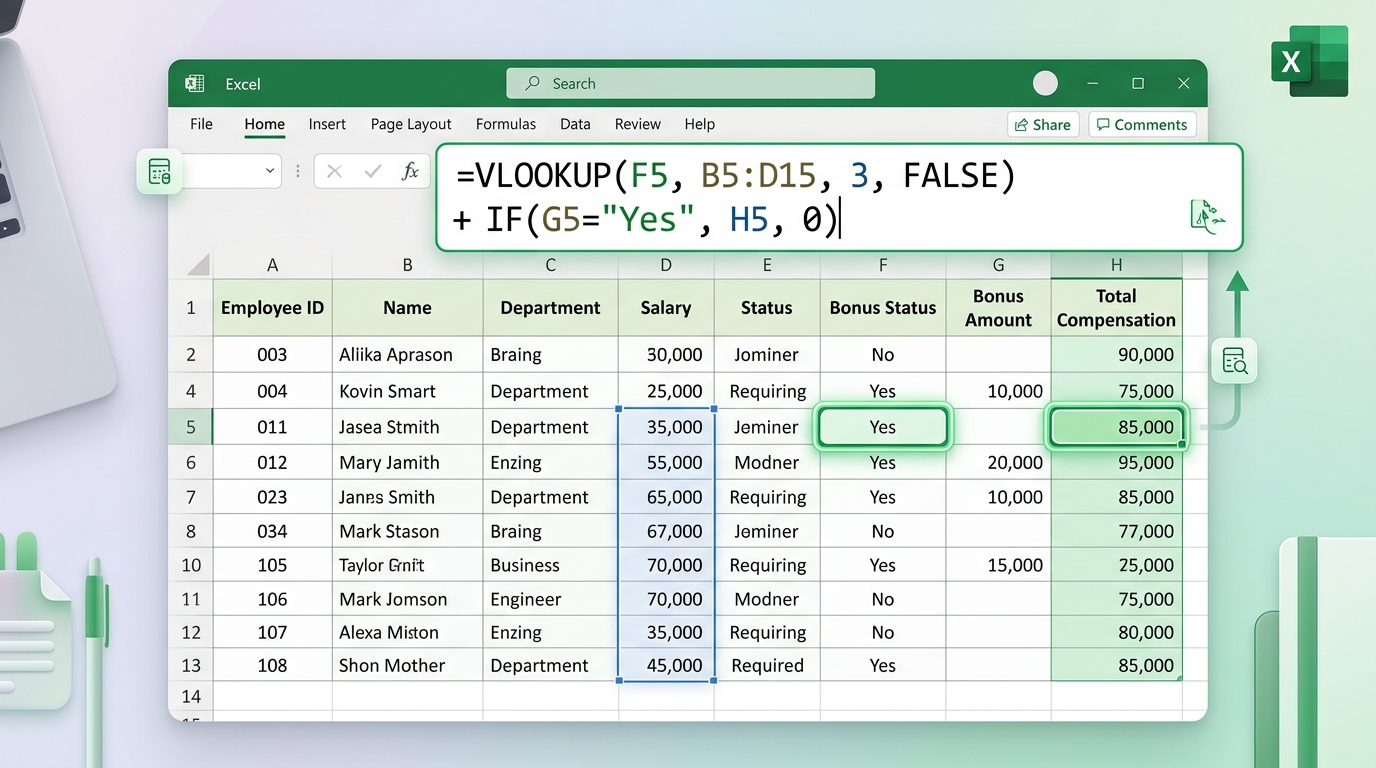
The Importance of Merging Cells in Excel
When it comes to Excel, merging cells can be a game-changer. Picture this: you're creating a financial report for your stakeholders. You want to present your data in a manner that’s not just functional but visually appealing. Merging cells can help you achieve that tidy look, making your headers stand out and your data easier to read. It’s one of those features that, once you know how to use it, you can’t live without.
Na minha experiência, I often find that the simplest things can make the biggest difference in Excel. Merging cells is a straightforward task, but it can save you a heap of formatting time. Whether you're using Excel 365, Excel 2021, or even Excel for Mac, the process is largely consistent. Let’s get into the nitty-gritty of how to merge cells quickly and efficiently.
Different Ways to Merge Cells
There are multiple ways to merge cells in Excel, and each method has its own set of conveniences. Here, I'll break down the most popular options for Excel users across various versions, including Excel 2019, Excel 2021, and Excel 365. Let's look at the following methods:
- Using the Ribbon
- Using Keyboard Shortcuts
- Using Context Menu
- Using VBA (Visual Basic for Applications)
Each of these methods has its pros and cons depending on your workflow, so let's explore them one by one.
Merging Cells via the Ribbon
By far the most common method is through the Ribbon. The Ribbon is the toolbar at the top of your Excel window—where all the magic happens!
- Select the cells you want to merge.
- Navigate to the Home tab on the Ribbon.
- Click on the Merge & Center button.
This method works in all versions, though in Excel 2019, this feature is right there on the main home screen, while in earlier versions, it might be hidden in the drop-down menu. This feature not only merges the cells but also centers the content within them, giving a neat and professional look.
Using Keyboard Shortcuts to Merge Cells
If you're anything like me, you're always looking for ways to speed up your workflow. That’s where keyboard shortcuts come into play!
Unfortunately, there isn’t a direct keyboard shortcut for merging cells across all versions. But you can create your own quick-access combination:
- Select the cells you want to merge.
- Press
Alt+H+M+C(for Merge & Center) on Windows. - If you're on a Mac, use
Command+Option+Mafter selecting your cells.
Using these shortcuts can save you precious time, especially when you're knee-deep in data for your sales tracking spreadsheet. Imagine entering your quarter-end numbers and quickly merging the headers—smooth sailing!

Merging Cells via Context Menu
A less conventional method, but still a valid one, is using the context menu. Sometimes, when I'm in a hurry or just feeling particularly lazy, I enjoy right-clicking my way to success.
Here's how you do it:
- Select the cells you want to merge.
- Right-click to open the context menu.
- Choose Format Cells.
- Head over to the Alignment tab and check the box for Merge cells.
This method may take a bit longer than the Ribbon and shortcuts, but it’s handy if you’re already in the context menu for other formatting tasks.
Using VBA for Merging Cells
If you're working on repetitive tasks, especially with vast datasets, VBA might just be your best friend. In Excel 365, you can automate the merging process with a quick script. Here’s a basic example:
Sub MergeCells()
    Range("A1:B2").Merge
End Sub
To run this script, press Alt + F11 to open the VBA editor. Paste the code above into a new module, and run it. Boom! Cells A1 through B2 are merged in a jiffy. Just make sure to adjust the range as needed!
Dica DomineTec: Be cautious when merging cells that contain data. Excel will only keep the upper-left most value and discard the rest!
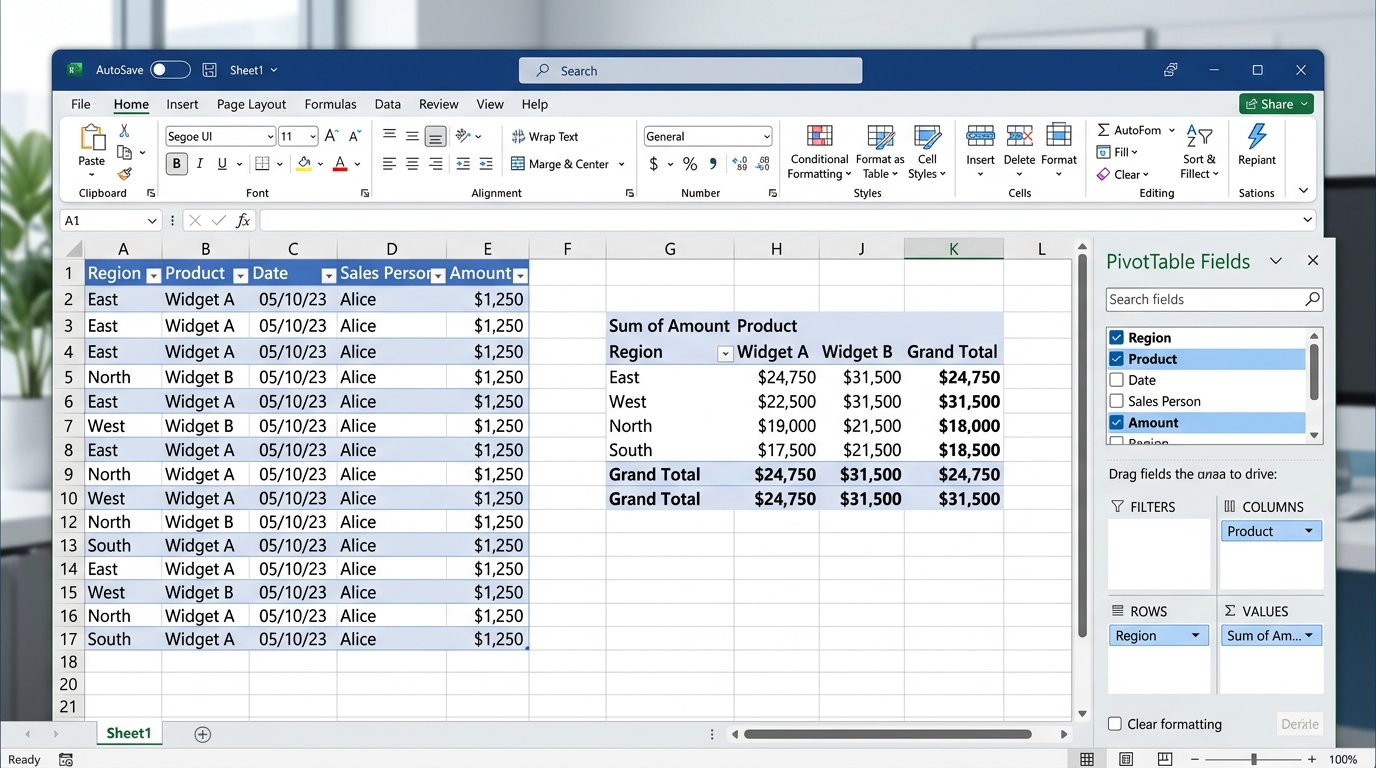
Common Mistakes When Merging Cells
Merging cells can be a double-edged sword. While it can enhance your spreadsheets' readability, it can also lead to some common pitfalls. Here are some mistakes I've seen people make time and time again:
- Data Loss: As mentioned earlier, only the data in the upper-left cell is retained when merging. So, if you have important info in other cells, it’s simply erased.
- Inconsistent Formatting: If you're merging cells with different formatting, the merged cell will adopt the formatting of the upper-leftmost cell, which can lead to inconsistencies.
- Sorting Issues: Merged cells can disrupt sorting and filtering. If you want to keep your data organized, be wary of merging cells in columns that require sorting.
In my experience with HR spreadsheets, I’ve seen colleagues accidentally merge cells with employee IDs and end up losing critical information. Trust me, avoiding these blunders can save you headaches down the line.
When Should You Merge Cells?
While merging cells can certainly enhance the look of your spreadsheets, it's not always necessary. Here are a few scenarios where merging might be beneficial:
- Creating Headers: If you’re compiling a sales report, merging the title cells at the top makes it clear and concise.
- Formatting for Presentation: When you're preparing a presentation for stakeholders, a clean layout can significantly impact readability.
- Grouping Related Data: For inventory tracking, merging cells can help visually group categories or related items.
Ultimately, the key is to merge cells judiciously. Think of it as seasoning a dish: a little can go a long way, while too much can spoil the flavor!
Mastering Dependent Drop-Down Lists (The Pro's Secret)
Remember that time you needed to pick a State and then only the Cities from that state should appear? Yeah, me too. I wasted hours trying to hack this in Excel 2019 until I discovered the true power of the =INDIRECT() function. If you want to impress your boss on a financial report or HR dashboard, creating dependent drop-down lists is the way. Basically, you name a range of cells (select it and hit Ctrl+F3 to open the Name Manager) and use data validation to call that name.
The trick here is to use the Data Validation feature (quick shortcut: Alt, A, V, V) and, in the Source field, type something like =INDIRECT(A2). When I built an inventory management tracker last week, this reduced typing errors to zero. Seriously, zero! In Excel 365, with dynamic arrays, it got even easier. You can use the =FILTER() function alongside =UNIQUE() to create self-updating lists. Something like =UNIQUE(FILTER(B:B, A:A=D2)). This is real life, folks, no fluff.
=SUBSTITUTE(A2," ","_") if you have to!Formatting Cells Based on Selection (Conditional Formatting)
Having a list isn't enough; it needs to pop. How many times have you stared at a dull, gray spreadsheet? I personally love using Conditional Formatting to highlight a user's choice. Say you select "Completed" from a drop-down. Boom, the whole row turns green. Awesome, right? In Excel Online and Excel for Mac, this works wonderfully too.
To do this, select your data (use Ctrl+Shift+L to toggle filters first if you like), go to Conditional Formatting > New Rule, and choose "Use a formula to determine which cells to format". The formula will look like =$C2="Completed". Remember the dollar sign ($) to lock the column, hitting F4 a couple of times. I've literally seen sales managers applaud when a sales pipeline magically changes color. It’s the little details that separate the rookies from the Excel ninjas.
Troubleshooting Common Issues: The Ghost of the Blank List
You know what's frustrating? You click the little arrow on your list and... nothing. Just blank space. I've been there too many times, especially working with shared workbooks in Excel 365. Usually, this happens because the source range has empty cells at the bottom, or you forgot to check the "Ignore blank" box in the validation window.
Another classic issue is when users copy and paste (the infamous Ctrl+C, Ctrl+V) data from elsewhere, completely wiping out your data validation rules. Trust me, I almost cried when a coworker destroyed months of data validation doing exactly that. The fix? Protect the sheet! Go to the Review tab and click Protect Sheet. Allow users to only select unlocked cells. To avoid massive headaches, I sometimes use a quick Alt+F11 macro to block paste-special actions (though that's a topic for an advanced post).
If you're using a =VLOOKUP(A2,Sheet2!$A:$D,3,FALSE) based on a list choice and it returns #N/A, check for trailing spaces. The =TRIM() function is your best friend here!
Dynamic Arrays and Lists: The Future is Here
If you're running Excel 365 or Excel 2021, listen up, because this changed my life. Dynamic arrays allowed us to ditch a lot of messy workarounds. Back in the day, to get a drop-down list without duplicates, we needed brain-melting array formulas. Today? Just type =UNIQUE(A2:A100) in a scratch cell, and in your Data Validation, reference that cell by adding a hashtag at the end, like =$G$2#.
The hashtag (or spill operator) tells Excel to grab the entire spilled range. I used this on a fleet tracking spreadsheet last month. Whenever a new driver was added to the table (always use tables, Ctrl+T is life!), the drop-down list on another tab updated instantly, no reference tweaking needed. It's the kind of efficiency that saves hours of grunt work and gives you more time for coffee. If you try this in Excel 2019, it'll error out, so mind your version.
Ninja Tips for Shortcuts and Productivity
I wouldn't be a true Excel nerd if I didn't talk about keyboard shortcuts. Productivity is everything. Want to open a drop-down list without touching the mouse? Navigate to the cell and press Alt + Down Arrow. Wham! The list opens. It might sound trivial, but when you're filling out 200 rows of an accounting report, it saves your wrists.
And if you mess up? Good old Ctrl+Z undoes the last action. Need to repeat the formatting you just applied to a list? Press F4. F4 repeats your last command (besides locking cells in formulas). Combining these small actions turns you into a maestro, conducting a symphony of cells. I've seen analysts who took all day to close a P&L cut their time in half just by abandoning the mouse. Try it!
Bonus: Automating Processes with Macros and VBA
If you think formulas solve everything, wait until you discover the power of VBA (Visual Basic for Applications). Once, I had a weekly sales report that took about 4 hours just to consolidate data from different branches. Hitting Alt+F11, I wrote a simple macro that looped through the tabs and copied everything to a master sheet. The time dropped from 4 hours to 15 seconds! And the best part? You don't even need to know how to code from scratch. The macro recorder does most of the heavy lifting for you; just tweak the code afterwards.
A quick tip: always save files with macros using the .xlsm extension (Macro-Enabled Workbook). If you save as .xlsx, all your code will vanish, and believe me, you do not want to feel that pain. Another amazing thing I did recently was creating a custom data entry form. Users on my team no longer need to navigate through a spreadsheet full of columns. They simply fill out fields in a nicely designed UserForm, click "Save", and the data is perfectly formatted into the last empty row. It's almost like having your own custom software running inside Excel!
Frequently Asked Questions
1. Can I merge cells in Excel without losing data?
No, when you merge cells, only the data in the upper-left cell is retained. All other data in the merged cells will be lost. Always make sure to back up your data or ensure important information isn’t erased.
2. How do I unmerge cells in Excel?
Select the merged cell, go to the Ribbon, click on Merge & Center, and choose Unmerge Cells. You can also right-click and select Format Cells to unmerge.
3. Is there a limit to how many cells I can merge?
While there isn’t a strict limit in Excel, merging an extensive range of cells that covers multiple rows and columns can create complications with sorting and filtering. It’s best to keep merges minimal for optimum functionality.
4. Can I merge cells using a formula?
No, merging cells is a formatting feature and cannot be performed using a formula. However, you can use text concatenation functions to combine cell contents into a single cell.
5. What happens if I try to sort data that has merged cells?
Sorting data with merged cells can lead to errors and unexpected results. It’s advised to keep columns where sorting is necessary free of merged cells.