Installing CloudPanel on a Vultr VPS is a straightforward process that can enhance your cloud management capabilities. CloudPanel is an open-source control panel designed specifically for managing high-performance web servers, particularly those that run on the Nginx web server. This tool provides an intuitive graphical interface for managing your server, allowing you to easily deploy applications, manage databases, and configure various server settings.
With CloudPanel, you can efficiently handle multiple PHP applications, set up SSL certificates, and optimize server resources, making it a valuable asset for developers, system administrators, and businesses alike.
As businesses and developers increasingly migrate to cloud solutions, understanding how to effectively manage these resources is important. Vultr is a popular choice for hosting virtual private servers (VPS), offering a range of performance-optimized cloud instances that cater to various needs.
With its competitive pricing and global data centers, Vultr provides an excellent foundation for deploying applications and services. By integrating CloudPanel into your Vultr VPS, you gain a powerful toolkit that simplifies server management while enhancing performance and security.
This blog post provides an exhaustive guide on how to install and set up CloudPanel on a Vultr Cloud VPS. Whether you are a novice looking to familiarize yourself with server management or a seasoned professional seeking to streamline operations, this guide will cover everything you need to know. From the foundational concepts of web servers to a detailed step-by-step installation process, you will be well-equipped to leverage CloudPanel's capabilities.
Understanding Web Servers and Hosting
To appreciate the significance of CloudPanel in managing a Vultr VPS, it’s essential to first understand the underlying technical concepts of web servers and hosting. A web server is a program or a machine that accepts requests via HTTP and serves web content to clients, such as browsers or applications.
The server handles various protocols, manages resources, and runs applications that produce web pages or other types of content. In a cloud environment, multiple web servers can work together, distributing tasks to ensure high availability and resilience against failures.
Hosting, on the other hand, refers to the service that provides the technologies and services necessary for the website or application to be viewed on the Internet. When you choose a cloud VPS like Vultr, you are essentially renting a virtual machine that operates in a cloud infrastructure.
This allows you to have your own dedicated resources, such as CPU, RAM, and storage, without the need for physical hardware. The virtualization technology that underpins VPS hosting enables you to run multiple virtual servers on a single physical server, offering flexibility and scalability.
CloudPanel acts as a web interface to streamline the management of these web servers. With its open-source nature, it allows users to have full control over their server configurations without incurring licensing fees typical of proprietary software.
This open-source setup means that you can customize CloudPanel to suit your specific needs, making it an excellent choice for businesses looking to optimize their cloud server management processes. Additionally, its user-friendly interface simplifies tasks such as setting up new sites, managing databases, and configuring security settings, making it accessible even for those with limited technical experience.
Step-by-step Practical Guide to Install CloudPanel on Vultr VPS
Installing CloudPanel on your Vultr VPS is a systematic process that can be broken down into several detailed steps. First, you need to create a Vultr account if you haven't already done so.
After logging in, navigate to the "Products" section and click on "Deploy New Server." You will be prompted to select a server location, which can be based on your target audience or personal preferences. Vultr offers numerous data centers across the globe, allowing you to choose a location that best suits your needs.
Next, choose the server type. For CloudPanel, a VPS with at least 1GB of RAM is recommended. Under the "Server Type" selection, choose the Ubuntu operating system, as CloudPanel is optimized for Ubuntu.
After selecting the server type, you will be asked to choose a plan. Depending on your needs, you can select a plan ranging from the basic to more advanced configurations. Once you have made your selections, click on "Deploy Now."
After the server is deployed, you will receive an IP address and access credentials via email. Use an SSH client like PuTTY (for Windows) or Terminal (for macOS/Linux) to connect to your new server. Open your SSH client and enter the IP address, along with your user credentials. Once logged in, update your server's packages by executing the following commands:
```bash
sudo apt update
sudo apt upgrade
```
This step ensures that your server has the latest security patches and updates. Next, you need to install the necessary dependencies for CloudPanel. Execute the following command to install required packages:
```bash
sudo apt install curl wget unzip
```
With the dependencies in place, you can now proceed to download and install CloudPanel. Use the following command to download the installation script:
```bash
curl -O https://get.cloudpanel.io/installer.sh
```
Once the download is complete, make the script executable and run it:
```bash
chmod +x installer.sh
sudo ./installer.sh
```
The installation process will begin, and it may take some time to complete, depending on your server's specifications. Once the installation finishes, you will see a message displaying your CloudPanel URL, along with the default admin username and password. Make sure to save this information securely, as you will need it to log into your CloudPanel dashboard.

After installation, you can access CloudPanel through a web browser using the URL provided. It is advisable to update the default password immediately for security reasons.
Log in to the dashboard using the admin credentials, and you will be greeted with an intuitive interface that allows you to manage your server effortlessly. From here, you can add new sites, manage databases, and configure various server settings, all from a single dashboard.
Comparative Analysis of CloudPanel and Other Control Panels
When considering a control panel for your server management, it is essential to evaluate various options available in the market. Below is a comparative table that outlines key features, advantages, and considerations for CloudPanel against other popular control panels. This analysis aims to help you make an informed decision based on your specific needs and preferences.
| Control Panel | Open Source | User Interface | Performance Optimization | Cost |
|---|---|---|---|---|
| CloudPanel | Yes | Intuitive and modern | Optimized for Nginx | Free |
| cPanel | No | Traditional and complex | Good, but resource-heavy | Paid |
| Plesk | No | Modern and versatile | Good performance | Paid |
| Webmin | Yes | Basic and slightly outdated | Good, but requires manual tweaks | Free |
This comparative analysis provides an overview of the strengths and weaknesses of each control panel option. CloudPanel stands out particularly for its user-friendly interface and zero-cost model, making it an appealing choice for individuals and businesses that want powerful server management without the burden of licensing fees.
Additionally, its open-source nature allows for customization and community support. In contrast, popular options like cPanel and Plesk, while feature-rich, can be costly and may require more resources, potentially leading to higher operational costs.

Additional Resources and Recommended Links
For those looking to further enhance their understanding of server management and CloudPanel, several resources can provide valuable insights and guidance. Websites like the official CloudPanel documentation offer comprehensive tutorials and FAQs that can assist you in troubleshooting common issues.
Additionally, forums such as Stack Overflow can be a great place to ask questions and share experiences with other users. You may also find useful articles on performance optimization and security best practices on sites dedicated to web development and cloud computing.
For more in-depth reading, consider exploring articles such as Best Hosting for Mautic to gain insights into optimal hosting solutions for marketing automation, or How to Allow Remote MySQL Connections for guidance on securing your database connections. These resources can further complement your CloudPanel and VPS management skills, ultimately leading to a more robust and efficient server environment.
Advanced Server Performance Tuning: Cache Policies and Core Networking Metrics
When it comes to optimizing server performance, understanding how to implement advanced caching mechanisms is foundational. Cache policies such as OPcache, Redis, and Memcached can significantly reduce the load on your web server by storing frequently accessed data in memory.
OPcache is particularly useful for PHP applications, as it caches the compiled bytecode of PHP scripts, thereby eliminating the need for PHP to parse and compile scripts on every request. This can result in considerable performance improvements, especially for applications that experience high traffic.
To enable OPcache, you would typically adjust the php.ini file or the relevant configuration within your CloudPanel setup, ensuring optimal settings that align with your server resources.
Redis and Memcached serve similar purposes but operate differently. Redis is an in-memory data structure store that supports various data types, making it versatile for caching sessions and objects. Memcached, on the other hand, is a distributed memory object caching system designed for simplicity and speed.
Depending on your application's requirements, you might choose one over the other. Configuring these caching systems involves installing the relevant packages via your server's command line and then defining the cache settings in your application’s configuration files. By correctly implementing these caching mechanisms, you can achieve a dramatic reduction in response times and a more efficient allocation of server resources.
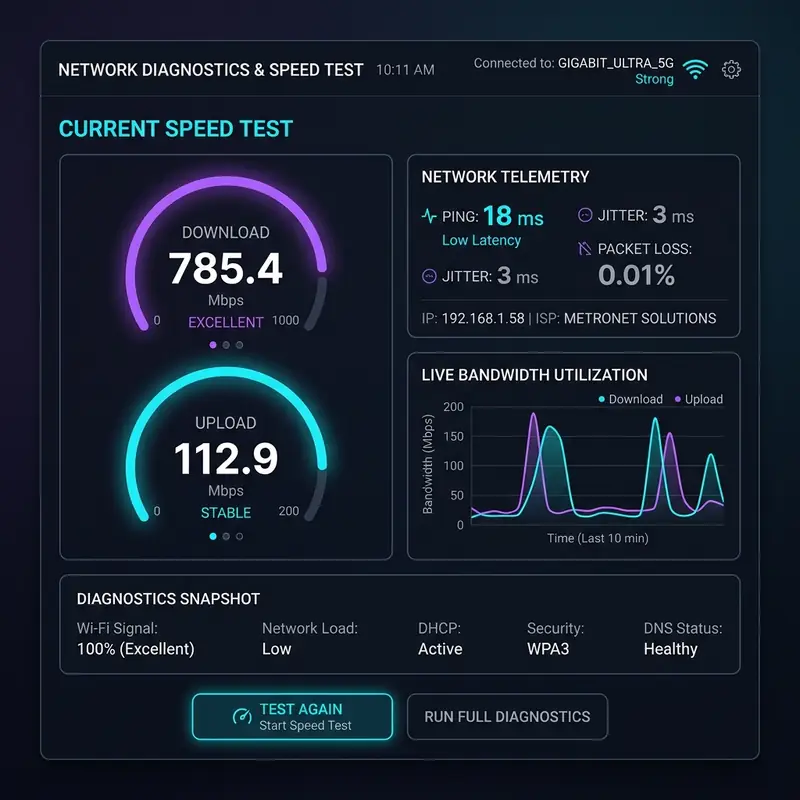
In addition to caching, it is essential to monitor core networking metrics like Time to First Byte (TTFB), server load, and bandwidth allocation. TTFB is a critical performance indicator that measures the time taken for a user's browser to receive the first byte of data from your server.
A high TTFB can indicate server performance issues or network latency. To reduce TTFB, consider optimizing your web server configuration, reducing the number of redirects, and employing a Content Delivery Network (CDN) to bring your content closer to users.
Tools like Pingdom or GTmetrix can provide insights into your TTFB and help identify bottlenecks.
Server load is another important metric to keep track of, as it reflects the number of processes your server is handling at any given time. High server load can lead to slower response times and decreased performance.
Implementing performance monitoring tools like Netdata or Prometheus can help you gain visibility into server load and identify when it exceeds optimal levels. When server load is high, consider scaling your resources or optimizing your application to handle requests more efficiently.
Lastly, bandwidth allocation plays a significant role in server performance, especially if your application serves large files or experiences high traffic. Understanding your bandwidth limits and monitoring usage patterns can help prevent issues related to network congestion.
Utilizing tools like iftop can provide real-time data on bandwidth usage, enabling you to make informed decisions about resource allocation and traffic management. Ultimately, a holistic approach to performance tuning — combining caching, network metrics, and resource management — can lead to a more resilient and responsive server environment.
Implementing Server-Side Cybersecurity Protocols: A Comprehensive Guide

As cyber threats continue to evolve, implementing robust server-side cybersecurity protocols is not just recommended but necessary. One of the primary steps in securing your server is configuring SSL certificates.
SSL (Secure Sockets Layer) encrypts data transmitted between your server and clients, ensuring that sensitive information like login credentials and personal data remains protected. To install an SSL certificate on your CloudPanel server, you can use Let's Encrypt, a free and automated certificate authority that simplifies the SSL installation process.
After obtaining the certificate, ensure that your web server is configured to redirect HTTP traffic to HTTPS, thereby enforcing secure connections.
Another critical aspect of server security is setting up IP tables, which act as a firewall to control incoming and outgoing traffic. By defining specific rules, you can block unwanted traffic while allowing legitimate requests to pass through.
For example, you might configure IP tables to restrict access to certain ports or allow connections only from specific IP addresses. This adds a layer of protection against unauthorized access attempts and potential attacks.
It's advisable to regularly review and update your IP table configurations to adapt to changing security needs.
In addition to firewalls, implementing a DDoS (Distributed Denial of Service) firewall can significantly enhance your server's resilience against large-scale attacks. DDoS attacks aim to overwhelm your server with traffic, rendering it inaccessible to legitimate users.
Many cloud service providers offer built-in DDoS protection, which can automatically detect and mitigate such attacks. Additionally, you can utilize services like Cloudflare that specialize in DDoS mitigation, providing an extra layer of defense to your CloudPanel server.
Configuring directory permissions is another vital step in fortifying server security. By establishing strict permissions for files and directories, you can limit access to sensitive data and reduce the risk of exploitation.
For example, directories that contain your web application’s code should be readable only by the web server user and not by other users on the system. Utilize commands like `chmod` and `chown` to set appropriate permissions, ensuring that only authorized users can access critical files.
Regularly auditing these permissions can help identify and rectify any potential vulnerabilities.
Lastly, it is important to stay informed about the latest cybersecurity threats and vulnerabilities. Regularly updating your server's software, including the operating system and any installed applications, can help patch known vulnerabilities.
Additionally, consider implementing intrusion detection systems (IDS) that monitor server activity for signs of malicious behavior. By adopting a proactive approach to server-side cybersecurity protocols, you can significantly mitigate risks and protect your web applications and data from potential threats.
Understanding Hosting Limitations: Navigating Shared vs. Dedicated/Cloud Machines
When selecting a hosting solution, understanding the inherent limitations of various options is vital for ensuring optimal performance and reliability. Shared hosting is often touted as a budget-friendly solution, but it comes with significant restrictions.
In a shared hosting environment, multiple websites share the same server resources, which can lead to performance degradation during peak traffic times. If one site on the server experiences a spike in traffic or encounters technical issues, it can adversely affect the performance of all other sites sharing those resources.
For businesses or applications with a growing user base, transitioning to dedicated or cloud hosting becomes increasingly attractive.
Dedicated servers provide an exclusive environment where all resources are allocated to a single client. This model offers enhanced performance, greater control over server configurations, and improved security.
However, the downside is the higher cost and the requirement for technical expertise to manage the server effectively. Cloud hosting, on the other hand, offers a flexible alternative that allows businesses to scale resources up or down based on demand.
This elasticity makes cloud hosting an appealing choice for applications with fluctuating traffic patterns, as you can dynamically allocate resources to accommodate varying loads without significant downtime.
Another important aspect to consider is DNS propagation errors, which can occur when changes to DNS settings take time to update across the internet. When migrating to a new server or changing your hosting provider, DNS changes can lead to temporary access issues as different DNS servers around the world update their records.
To mitigate these issues, it's advisable to plan migrations during off-peak hours and maintain the old server in operation until DNS changes fully propagate. Tools like DNS Checker can help monitor the status of DNS propagation, giving you insights into when your changes have fully taken effect.
Database optimization is another area where hosting limitations can pose challenges. In shared hosting environments, database performance can be significantly affected by the resource constraints imposed by the shared architecture.
As your application grows, poorly optimized database queries can lead to slow response times. To avoid these pitfalls, employing techniques such as indexing, query optimization, and regular database maintenance can help ensure efficient database performance.
Dedicated and cloud hosting environments typically allow for greater control over database configurations, enabling you to fine-tune settings for optimal performance.
Finally, Service Level Agreements (SLAs) are critical in understanding the support and uptime guarantees promised by your hosting provider. A well-defined SLA outlines the provider's responsibilities concerning uptime, support response times, and compensation policies in case of service outages.
When evaluating hosting options, it is essential to scrutinize the SLA to ensure it aligns with your operational requirements. This understanding will help you choose a provider that can meet your expectations and mitigate potential risks associated with downtime.