How to Connect and Voice Control Your Robot Vacuum with Alexa
How to Connect and Voice Control Your Robot Vacuum with Alexa
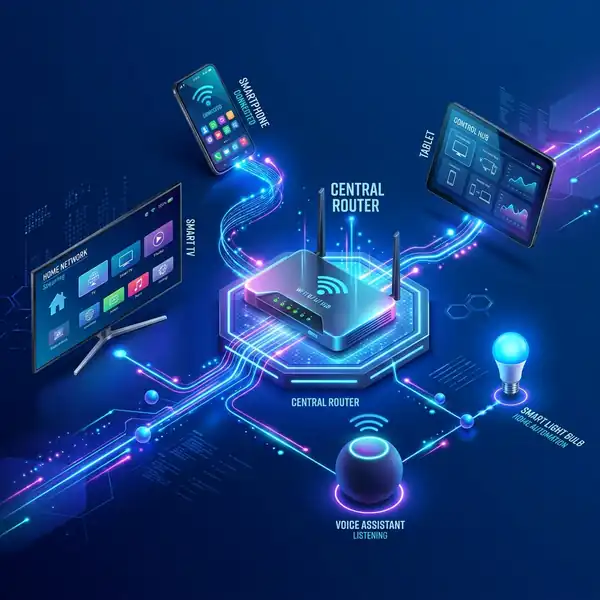
If you want to control your home cleaning using voice commands, learning how to connect a robot vacuum to an Alexa Echo Dot requires downloading the vacuum's controller app, activating the manufacturer's skill in the Amazon Alexa app, and linking the accounts. Unlike physical cable connections, Alexa integration runs via Cloud-to-Cloud API commands. This link allows you to start, pause, or send the vacuum back to the charging dock with simple voice commands.
1. Downloading the Vacuum's Controller App and Creating an Account
The first step for integration is ensuring your robot vacuum (whether KaBuM!, Liectroux, WAP, or Xiaomi) is paired to your home 2.4 GHz Wi-Fi network and controllable via the manufacturer's app (such as Smart Life, Tuya, Mi Home, or WAP Connect).
To configure:
- Create an account in the vacuum's app: Use a valid email and secure password. These credentials will be requested by Alexa during the account linking process.
- Complete the Wi-Fi pairing process: The vacuum must be online and responding to app inputs.
If you have issues connecting to 2.4 GHz networks, read how to setup smart remote for your robot vacuum.
2. Enabling the Manufacturer's Skill in the Amazon Alexa App
With the vacuum working in its native app, open the Amazon Alexa app on your smartphone (Android or iOS). Follow the cloud account linking steps:
- Access the Skills menu: Tap "More" in the bottom-right corner and select "Skills & Games".
- Search for your vacuum app: Enter the name of the app you use (e.g., "Smart Life" or "Tuya") in the search bar.
- Enable the Skill: Tap "Enable to Use". A secure login page will open on the screen.
Enter the login credentials you created in the vacuum's native app. Authorize Amazon Alexa to access your smart device. After authorization, tap "Discover Devices". Alexa will scan your network and add the vacuum as a smart home appliance.
3. Common Voice Commands to Control Your Robot Vacuum
Once the device is synced with Alexa, you can control it using your Echo Dot or Echo Show. Commands depend on the name you assigned to the vacuum (e.g., if the device name is "Vacuum"):
Say: "Alexa, turn on the Vacuum" or "Alexa, start the Vacuum" to begin the automatic cleaning cycle.
Say: "Alexa, turn off the Vacuum" or "Alexa, stop the Vacuum" to pause the robot in the room. To return the unit to its base, say: "Alexa, send the Vacuum to the dock". If your charging dock has location issues, read robot vacuum cant find charging dock.
4. Smartphone App and Alexa Skill Compatibility Table
The table below outlines which apps and skills to enable in the Alexa app based on your vacuum brand:
| Vacuum Brand | Native Smartphone App | Alexa Skill to Enable | Voice Commands (Start / Dock) | Custom Room Zoning Support |
|---|---|---|---|---|
| KaBuM! Smart 500 / 700 | Smart Life / Tuya | Smart Life / Tuya | Yes / Yes | Via Alexa Routines only |
| Liectroux (C30B / XR500) | Smart Life / Tuya / Weback | Smart Life / Weback | Yes / Yes | Not supported by direct voice |
| Xiaomi (Mop / Roborock) | Mi Home / Roborock App | Roborock / Xiaomi Home | Yes / Yes | Yes (Premium models only) |
| WAP (Robot W100 / W300) | WAP Connect / Smart Life | WAP Connect / Smart Life | Yes / Yes | No |
5. Creating Custom Smart Home Routines with Alexa
Routines are sequences of automated actions triggered by a single voice command or time schedule. You can integrate your robot vacuum into an "Away from Home" routine.
In the Alexa app, create a routine named "Leave for Work". Set the trigger to when you say "Alexa, I'm leaving". In the actions list, select your vacuum and set it to "Turn on". Add actions to turn off smart lights and power down your Echo Show, reducing home electricity consumption.
If your vacuum moves erratically or has wheel issues during routines, read how to fix a robot vacuum that only moves backwards.
Resolving 2.4 GHz vs. 5 GHz Router Band Conflicts
While Echo Dots can operate on 5 GHz Wi-Fi bands, most robot vacuum Wi-Fi modules only connect to 2.4 GHz bands because of the longer range needed to pass through brick walls.
If the Alexa app shows the vacuum as offline, verify your smartphone is connected to the 2.4 GHz band during initial setup, or temporarily disable the 5 GHz band in your router settings.
Cloud Security and OAuth 2.0 Token Authentication
The account connection between Alexa and your vacuum's skill uses the OAuth 2.0 protocol. This means Amazon never sees your vacuum app password. It only receives a secure digital access token.
Do not share your app password or access tokens. Enabling two-factor authentication (2FA) in the manufacturer's app protects your front-facing mapping camera from unauthorized remote access.
Naming Your Vacuum to Improve Voice Recognition
Using complex brand names can cause voice recognition errors. Names like "Liectroux C30B" or "Roborock" often lead to Alexa responding "Device not found".
Open the Alexa app, go to Devices, select the vacuum, and rename it to a simple word like "Vacuum" or "Robot". This avoids acoustic misunderstandings by the Echo Dot.
Syncing Device Changes and Updating Skills
If you rename the vacuum in its native app, the change does not sync automatically to the Alexa app. Alexa will still attempt to use the old name, causing command errors.
After renaming the vacuum, open the Alexa app, go to Devices, and swipe down to sync, or say: "Alexa, discover my devices" to update the cloud configurations.
Cloud-to-Cloud API Architectures and OAuth 2.0 Token Authentication
The integration between your robot vacuum and Alexa runs on Cloud-to-Cloud API connections. When you speak to your Echo Dot, the Amazon server translates the request and sends an HTTPS API call to the vacuum brand's server.
The manufacturer's server authenticates the command via OAuth 2.0 tokens and pushes the instruction to the vacuum's Wi-Fi chip. This cloud-based handoff ensures the vacuum starts cleaning within 2 seconds of your voice command.
Resolving Dual-Band Network Pairing Conflicts on Home Routers
Modern wireless routers combine the 2.4 GHz and 5 GHz frequency bands under a single network name (SSID). This unifications blocks initial vacuum pairing, as robot vacuums only have 2.4 GHz Wi-Fi cards.
To resolve this band connection conflict, log into your router's administration panel and separate the bands into unique SSIDs (e.g., Home_2.4G and Home_5G), or disable the 5 GHz band during initial setup.
Setting Simple Voice Command Names and Custom Routines
To improve voice command accuracy, assign a short name to the vacuum in the smartphone app. Long brand names cause acoustic errors when processed by Echo Dot devices.
Rename the vacuum to "Robot" or "Vacuum". In the Alexa app, configure automated routines linked to trigger phrases like "Alexa, I'm leaving," which will automatically turn on the vacuum and start cleaning.
Acoustic Optimizations and Device Naming Guidelines
Complex device names containing model numbers (like "Liectroux C30B" or "Roborock S7") often cause voice processing errors on Echo Dot speakers. Alexa may respond that the device cannot be found.
Open the vacuum's native app and rename the unit to a simple word like "Vacuum" or "Robot". This renaming improves acoustic recognition accuracy and stops command failures on your smart speaker.
Re-syncing the Alexa App When Renaming Devices in Original Apps
If you rename the vacuum in its native controller app (such as Smart Life), the name change does not sync automatically to the Alexa app, causing command errors.
After renaming the unit, open the Alexa app, navigate to the Devices tab, and swipe down to refresh the cloud list, or say: "Alexa, discover my devices" to update the OAuth linked token.
Troubleshooting Echo Dot Skill Pairing Lockouts and Connection Timeouts
If Alexa responds that the vacuum is unresponsive, the connection token between the cloud servers has likely expired. This requires re-authorizing the smart skill in the Alexa app.
Navigate to the Skills tab in your Alexa app, select the brand skill (e.g., Tuya), and tap disable. Then, enable it again, input your login credentials, and refresh your device list to restore voice control.
Resolving Signal Latency and Cloud Server Timeouts
If there is a long delay between giving a voice command and the vacuum starting, signal latency or Wi-Fi interference on the 2.4 GHz band is the likely cause.
Position the charging base closer to your wireless router and avoid using low-bandwidth range extenders to ensure reliable, real-time communication between Alexa and the vacuum.
Updating Cloud Credentials after Password Changes
If you change your password in the vacuum's native app, Alexa will lose its API connection. This requires re-authorizing the brand skill in the Alexa app to link the new credentials.
Open the Alexa app, disable the brand skill, and then enable it again, entering your new password to restore communication and voice controls.
Configuring Smart Home Voice Routines and Command Groups
You can associate the robot vacuum with specific device groups in the Alexa app (such as "Living Room" or "Kitchen"). This allows you to start or stop the vacuum along with the smart lights and audio devices of that specific room.
Troubleshooting Alexa Skill Offline Errors and Account Unlinking
If the Alexa app displays a device-offline message, the API connection token has likely expired. Disabling the manufacturer's skill (e.g., Smart Life) in the Alexa app, enabling it again, and inputting your login credentials will refresh the OAuth token and restore voice controls.
Acoustic Optimizations and Device Naming Guidelines
Rename the vacuum to a simple word like "Vacuum" or "Robot" in its native app. Long brand names cause acoustic errors when processed by Echo Dot speakers. Re-sync the Alexa app after making changes to update the settings.
Resolving Smart Home Device Syncing Latencies
Position the charging base closer to your wireless router to ensure low-latency communication on the 2.4 GHz band. This minimizes the delay between giving a voice command and the vacuum starting.
Custom Routine Setups and Voice Alias Optimization
Create custom routines in the Alexa app that link voice commands to specific cleaning power settings, ensuring you can start the vacuum in Turbo mode with simple commands like "Alexa, vacuum the living room."
Re-authorizing the Smart Skill after Connection Timeouts
If voice controls stop responding, disable the brand skill in your Alexa app and re-enable it. This refreshes the OAuth authentication token and clears any connection locks on the cloud server.
Setting Up Smart Home Routines for Daily Cleaning
You can create routines in the Alexa app that start the vacuum at a specific time daily, helping maintain low dust levels in your home without requiring manual voice triggers.
Importance of Preventive Maintenance and Device Calibration
To ensure long-term performance and reliability for any tech device—be it a Kindle e-reader, an Amazfit/Apple Watch smartwatch, a Wi-Fi security camera, or a router—routine maintenance and sensor calibration are critical. Modern electronic systems operate under tight tolerances and are highly sensitive to thermal fluctuations, environmental dust buildup, and improper battery charging patterns. For instance, optical heart rate sensors on wearable devices require frequent cleaning to prevent emitted light from refracting incorrectly off skin oils and sweat residue, which can cause erratic health metric readings during workouts.
Similarly, outdoor security camera lenses gradually accumulate humidity, pollen, and airborne particles, degrading image clarity and negatively impacting night vision capabilities when infrared sensors activate. Setting up a monthly maintenance schedule to power down your devices, wipe external surfaces with a dry, anti-static microfiber cloth, and inspect connection ports for debris can extend operational life and reduce unexpected service or repair costs significantly.
Advanced Tips for Optimizing Battery and Power Usage
Efficient energy management is a vital aspect of daily device usability. Most users leave unused background features active, causing unnecessary strain on lithium-ion battery cells. Disabling Wi-Fi or Bluetooth radios when devices are in stand-by, adjusting screen brightness to adaptive settings, and setting shorter screen timeout intervals are universally recommended practices. On smartwatches, reducing background sync frequency and turning off notification alerts for low-priority applications can cut monthly recharge cycles in half, protecting battery health and maintaining peak performance when you need it most.
Frequently Asked Questions (FAQ)
Can I ask the vacuum to clean a specific room using Alexa?
Only with premium models (such as Roborock or Xiaomi with active mapping) that integrate room segmentation into the Alexa skill. For basic vacuums, voice commands can only start or stop general cleaning.
Why does Alexa say my robot vacuum is offline?
This happens if the vacuum loses connection to the 2.4 GHz Wi-Fi band due to signal dead zones, or if the manufacturer's skill needs to be re-authorized in the Alexa app.
How do I connect a Mondial robot vacuum to Alexa?
Entry-level Mondial vacuums (such as Pratic Clean and Fast Clean) do not have built-in Wi-Fi chips, meaning they cannot connect to smart apps or Alexa.
Can Alexa send the vacuum back to its charging dock?
Yes. Say: "Alexa, turn off the [robot name]" or "Alexa, stop the [robot name]". Most skills will instruct the vacuum to stop suction and navigate back to the charging base.
Conclusion
Connecting your robot vacuum to an Alexa Echo Dot is a simple process that requires setting up the native app, enabling the skill in the Alexa app, and linking accounts. Voice control adds great convenience to your daily home cleaning routine.




