How to Clean and Replace Side Brushes on WAP Robot Vacuum
How to Clean and Replace Side Brushes on WAP Robot Vacuum
If the side sweeping brushes on your WAP robot vacuum are spinning slowly, stalling mid-clean, or showing bent and tangled bristles, the problem is mechanical: long hair and sewing threads wrap around the internal drive shaft, blocking the side motor and overloading the control board. Knowing how to clean and replace the side brushes on your WAP robot vacuum restores sweep performance and protects the small DC geared motors from overheating.
1. The Mechanical Design of Corner Sweeping Brushes
The rotating side brushes on a WAP vacuum (such as the W100, W300, or W90 models) are driven by independent low-voltage DC motors with internal plastic reduction gears. The brushes feature a three-arm design with nylon bristles extending past the chassi profile. The default spin speed averages 120 to 150 RPM. The primary function is mechanical: reaching corners and baseboards where the round frame of the vacuum cannot fit, guiding dirt directly into the suction channel.
When pet hair and long fibers are swept, they tend to crawl up the brush core due to centripetal forces. Over time, these fibers compact beneath the plastic hub, forming a hard washer that lifts the brush assembly. This increases mechanical resistance and current draw. If the control board lacks overcurrent cut-off pathways, the motor will run hot, melting the nylon reduction gears.
To learn about cleaning other filtering elements, read our instructions on how to clean KaBuM! Smart 500 filter or check our review to evaluate if the WAP Robot W100 is worth buying.
2. Removing Hair and Cleaning the Drive Axle
To clean your WAP side brushes without stripping the mounting screws or breaking the plastic guide slots, follow this guide:
- Set the main power switch to the off position and place the vacuum upside down on a clean towel;
- Identify the mounting system: the WAP W100 uses snap-on press pins, while the WAP W300 uses central philips screws. If screwed, turn counter-clockwise using a fine screwdriver;
- Pull the side brush straight up. If jammed by hair, use a flat plastic tool to pry it up gently;
- Use small scissors or a seam ripper to cut the wrapped hair spool off the metal motor axle;
- Clean the plastic cavity where the axle enters the gearbox using an old toothbrush and isopropyl alcohol;
- Add a single drop of high-viscosity silicone oil or white lithium grease to the axle to keep rotation quiet and smooth;
- Reinstall the side brush onto the guide pin and tighten the mounting screw without over-torquing.
3. Maintenance and Replacement Intervals Table
The table below provides recommended maintenance schedule guidelines for WAP robot vacuum side brushes and other key consumable parts:
| Consumable Part | Cleaning Frequency | Wear Indicators | Estimated Lifespan | Recommended Action |
|---|---|---|---|---|
| Side Brushes | Weekly (clear hair) | Frayed, bent, or broken bristles | 3 to 6 months | Replace in pairs or reshape bristles in hot water. |
| Dustbin Filter | Every 2 runs | Reduced suction, dust leakage | 2 to 4 months | Tap off dry dust. Wash if microfiber type. |
| Front Caster Wheel | Bi-weekly (clear axle) | Jammed axle, clicking noise on turns | 12 months | Pull out wheel, clean metal axle, and lubricate. |
| Mop Sweep Cloth | After each run | Torn fabric, worn velcro backing | 3 months | Wash with mild soap. Air dry. |
4. Reshaping Bent Nylon Bristles (Hot Water Trick)
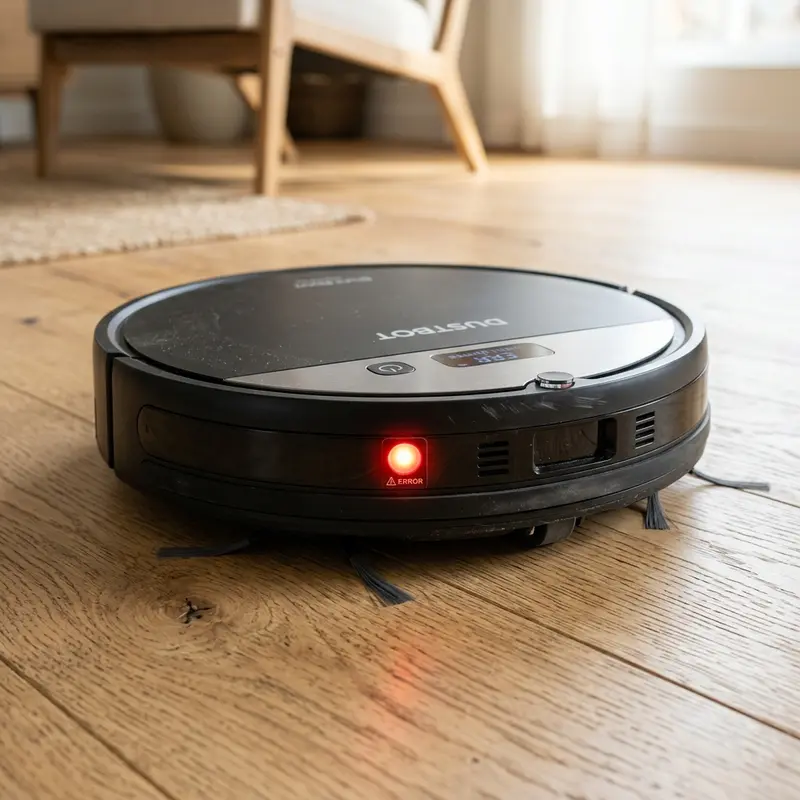
During normal cleaning, the nylon bristles on the side brushes can bend and lose their stiffness, causing them to slide over debris instead of sweeping it. If the bristles on your WAP vacuum are bent but not broken, you can restore them using a simple hot water reshape trick:
Bring 200 ml of water to a boil in a heat-safe glass. Remove the side brushes from the vacuum. Dip only the nylon bristles into the hot water for 30 to 40 seconds. The heat allows the nylon polymer to return to its original straight orientation due to the elastic memory of the plastic. Remove the brushes and use your fingers to shape the bristles straight on a flat counter. Let them cool and dry completely before reinstalling. This simple tip adds another 2 months of operational life to the brushes at no cost.
5. Installing New Side Brushes on WAP W100 and W300
When the bristles become short, frayed, or the plastic arms crack, the brushes must be replaced. Always replace both left and right side brushes at the same time to ensure even sweeping resistance. Purchase original or compatible parts designed for your WAP model. The WAP W100 has directional markings ("L" for Left and "R" for Right). Placing the "L" brush on the "R" motor shaft changes the attack angle of the bristles, scattering dust away from the inlet instead of sweeping it in. Always check the molded letters before snapping the brushes into place.
Static Friction and Gearbox Wear in Side Sweeping Modules
The reduction gearbox that drives the WAP side brushes is assembled with high-density nylon gears. When hair loops wrap around the brush hub and stall the axle, the DC motor continues drawing power, applying static torque to the gear teeth. This stall builds up friction heat, softening the nylon polymer and leading to stripped gear teeth. Consequently, even after clearing the axle obstruction, the brush may spin unevenly or make clicking noises.
Inspect the gearbox by removing the side module from the chassis. Spin the drive pin manually; the rotation must feel smooth and offer consistent resistance without slip. Applying white lithium grease to the nylon gears reduces wear and protects the motor housing from moisture drawn from damp mop sweep pads, extending the lifespan of the sweeping assembly.
Sweep Mechanics and Corner Cleaning Efficiency
The attack angle and length of the three-arm side brushes on the WAP vacuum are designed to maximize debris collection on tile and hardwood floors. The nylon fibers reach under cabinet edges, sweeping dust into the center suction channel. If the bristles are bent, they will glide over dust particles instead of capturing them, lowering the vacuum's clearing efficiency.
Keeping the brushes straight and free of hair spools ensures that the vacuum cleans edges in fewer sweeps, saving battery power. Avoid running the vacuum on abrasive outdoor surfaces like concrete, as this friction grinds down the nylon fibers quickly, requiring early accessory replacements.
Overcurrent Protection Loops in the Side Sweeper Assemblies
The control board of the WAP vacuum utilizes low-resistance shunt resistors (usually 0.1 ohms) in series with each side brush motor drive line. These shunts track the voltage drop to compute real-time current draw. If hair wraps around the shaft and drives the current above 800mA for longer than 3 seconds, the microcontroller cuts off the gate voltage to the MOSFET driver transistors, saving the motor coils from thermal burnout.
If conductive dust accumulates around these shunt resistors, it can create electrical leakage, leading to false motor jam warnings. Blowing out the logic board with dry compressed air and spraying contact cleaner into the side motor wire harnesses restores accurate voltage feedback, preventing logical stalls on hard floors.
Torque Calculations and Current Draw Under Obstruction Loads
In DC motor theory, the output torque of the WAP side brushes is proportional to the current drawn from the power rails. When hair wraps block brush rotation, the motor stalls, causing current to spike from a normal 150mA to over 1.2A. This current surge heats the copper windings, degrading the enamel insulation and causing internal shorts that disable the motor assembly.
Regularly clearing fibers and applying dry PTFE lubricant to the spindle reduces the operational torque needed to sweep corners. This lowers strain on the nylon gearbox and prevents heat from warping the plastic chassis, keeping battery consumption low and runtime high.
Abrasive Wear and Mechanical Stress on Nylon Bristles
Operating WAP side brushes on rough surfaces like textured porcelain tiles or slate floors accelerates nylon wear through mechanical abrasion. This friction grinds down the brush ends, reducing their sweep radius. As the bristles shorten, they can no longer reach into corner crevices to sweep dust to the central suction port, lowering overall cleaning performance.
To maximize accessory life, avoid running the vacuum on highly abrasive surfaces. Replacing worn side brushes with original high-density nylon replacements restores corner sweeping efficiency and protects the geared motor drives from spinning under constant high-friction drag.
Nylon Bristle Alignment and Debris Sweep Performance
Correct geometric alignment of the nylon bristles on WAP side brushes ensures the vacuum scrapes and channels dust from corners efficiently. If the bristles are bent or crushed due to bad storage habits, sweeping performance drops, requiring more runs to clean hard floor edges.
Use the hot water restoration trick to reshape deformed bristles and restore nylon elasticity. Keep the metal motor spindles clear of wrapped hair to prevent mechanical loads that can wear out the internal nylon gears, ensuring smooth steering travel.
For more home automation advice, check our guide on how to share Intelbras Mibo Smart camera access to manage security permissions.
Replacing the Side Brush Geared Motor Module Step by Step
If the WAP side brush spins slowly or stalls after clearing hair wrap, the internal DC motor windings have shorted or the reduction gears are broken. To replace the side brush motor assembly, unscrew the bottom chassis cover to access the drive modules.
Disconnect the 2-pin wiring harness from the motherboard and lift out the motor block. Drop the new assembly into its slot, matching the alignment tabs. Apply a drop of silicone grease to the drive shaft before closing the cover to keep the sweeper running quietly.
Check our guide on how to share Intelbras Mibo Smart camera access to configure local network permissions for connected home appliances.
Replacing the Side Brush Motor and Internal Gearbox Assemblies
If a side brush fails to spin after removing hair wraps, the internal DC motor windings are burned or the plastic gears are stripped. To replace the side brush module, unscrew the bottom chassis cover to access the drive assemblies. Disconnect the wiring harness from the motherboard and lift out the motor block.
Drop the new assembly into its slot, ensuring the wires are tucked away to prevent pinching. Apply a drop of silicone oil to the drive shaft before closing the cover to ensure quiet operation and restore sweeping performance.
Understanding Side Sweeper Bristle Resiliency and Elastic Memory
The nylon fibers used in WAP side brushes are selected for their elastic memory. This allows the bristles to bend when hitting walls and pop back straight. However, prolonged stress from being stored flat against barriers can deform the fibers permanently, causing them to drag dust instead of sweeping it.
Running the bristles under hot water (the thermal reshape trick) resets the polymer structure, restoring the original attack angle. Ensure the brushes are completely dry before mounting them back to prevent water droplets from sliding up the metal drive shaft and entering the motor casing.
Frequently Asked Questions (FAQ)
Can I use household soap to clean WAP side brushes?
Yes. Mild dish soap and warm water are safe to remove dirt build-up, but make sure the hub parts are dry before installing.
The side brushes on my WAP W100 stopped spinning. What should I do?
Remove the brushes and check for hair wrapped around the axles. If the metal axle spins freely by hand when the unit is off but fails to spin when powered, the internal reduction gears may be stripped or the side motor has failed.
Can I wash the side brushes of my WAP robot vacuum?
Yes. You can clean the plastic brushes with warm water and mild dish soap. Remove them from the vacuum first, and ensure they are 100% dry before reinstalling them to prevent water from reaching the motor axles.
How do I identify the left and right brushes on WAP vacuums?
Check the color of the plastic base or the molded letter. The brush marked with an "L" goes onto the left pin (facing forward), and the brush marked "R" goes onto the right pin.
Conclusion
Cleaning the side brushes on your WAP robot vacuum prevents side motor overload and ensures your floor edges stay clean. Incorporating this quick inspection into your weekly cleaning schedule will save on motor repairs and replacement parts.




