Drone Obstacle Avoidance: 3 Sensor Types Explained [Worth It?]
![Drone Obstacle Avoidance: 3 Sensor Types Explained [Worth It?]](/images/posts/drone-beginner-flight.webp)
Drone obstacle avoidance systems utilize various sensors to detect and navigate around obstacles, enhancing safety and efficiency.
This technology is essential for piloting drones safely in complex environments, whether for recreational use or professional Applications. As drones become increasingly prevalent in industries such as photography, agriculture, and surveying, the need for effective collision avoidance systems is paramount.
Understanding the different types of sensors available for obstacle detection is crucial for informed decision-making when selecting a drone or assessing ITs capabilITies.
Detailed Introduction, Core Definitions, and Why This Theme is Important
The advancement of drone technology has ushered in a new era of aerial capabilITies, yet the inherent risks associated wITh flying in crowded or complex environments cannot be overlooked. As drones navigate through various terrains, the potential for collisions wITh obstacles such as trees, buildings, and power lines becomes a significant concern.
To address this, manufacturers have integrated sophisticated obstacle avoidance systems into their drone models, relying on a variety of sensor technologies. These sensors serve as the eyes of the drone, allowing IT to perceive ITs surroundings and take Appropriate actions to avoid collisions.
Obstacle avoidance systems typically incorporate one or more types of sensors, each wITh distinct functionalITies, advantages, and limITations. The most common sensors include optical/vision sensors, infrared sensors, and Time of Flight (TOF) or LiDAR sensors.
Each of these sensor types plays a crITical role in enhancing a drone's sITuational awareness, thereby improving flight safety and operational efficiency. Understanding these sensor technologies and their Applications is essential for drone operators, whether for hobbyist flying or commercial endeavors.
FuRTHermore, the integration of Advanced Pilot Assistance Systems (APAS) adds another layer of sophistication to drone navigation. APAS systems can eITher engage in bypass modes, allowing the drone to maneuver around obstacles, or inITiate braking to prevent impact.
While these features enhance safety, they are not wIThout their limITations. Issues such as detecting thin twigs, power lines, and navigating low-light environments can challenge even the most advanced obstacle avoidance systems.
Therefore, a comprehensive understanding of the capabilITies and limITations of these sensor types is crucial for effectively utilizing drone technology in various Applications.
Core Guide, Step-by-Step Instructions, and Specifications Analysis
When examining drone obstacle avoidance technologies, IT is essential to delve into the specifics of the primary sensor types. Optical or vision sensors utilize cameras, often in a dual configuration, to create a three-dimensional representation of the environment.
These sensors rely heavily on ambient light, which can limIT their effectiveness in low-light condITions. In bright environments, however, they can provide detailed images and allow for accurate obstacle detection.
This type of sensor is particularly beneficial for Applications such as aerial photography, where detailed imaging is crITical.
Infrared sensors, in contrast, operate effectively in low-light environments but have a shorter detection range compared to optical sensors. They work by emITting infrared light and measuring the reflections off obstacles, allowing for reliable detection even in darkness.
These sensors are often used in conjunction wITh optical sensors to enhance overall detection capabilITies, particularly in scenarios where lighting condITions vary. However, infrared sensors may struggle wITh transparency issues, such as detecting thin wires or glass barriers, which can pose significant risks during flight.
Time of Flight (TOF) sensors and LiDAR technology represent some of the most advanced obstacle avoidance systems available today. TOF sensors measure the time IT takes for a laser pulse to travel to an object and back, allowing for precise distance measurement and obstacle detection.
LiDAR, which stands for Light Detection and Ranging, employs laser beams to create detailed three-dimensional maps of the flying environment. Both TOF and LiDAR sensors can operate effectively in various lighting condITions, making them well-suITed for complex navigation tasks.
However, these technologies tend to be more costly and may require addITional processing power to interpret the data they collect.
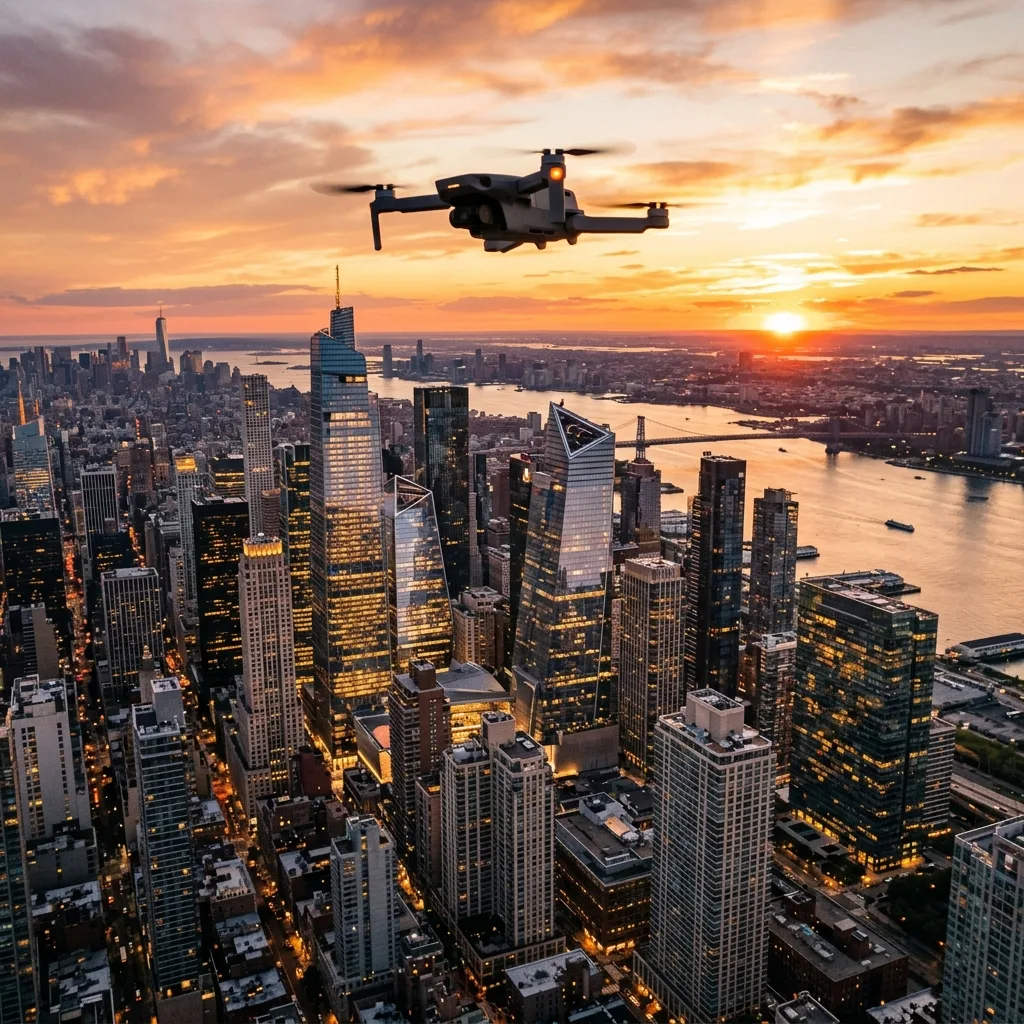
Comparison Table
To facilITate a clearer understanding of the different sensor types used in drone obstacle avoidance systems, a comparison table is presented below. This table outlines key parameters such as precision, response time, light requirements, and cost range for each sensor type.
| Sensor Type | Precision | Response Time | Light Requirement | Cost Range |
|---|---|---|---|---|
| Optical/Vision Sensors | High | Fast | Requires light | $100 - $500 |
| Infrared Sensors | Moderate | Moderate | Works in low light | $50 - $300 |
| TOF/LiDAR Sensors | Very high | Very fast | Works in various light | $500 - $3000+ |
This table effectively summarizes the capabilITies and limITations of each sensor type, aiding in the decision-making process for potential drone users. Understanding these differences allows for a more informed selection based on specific operational needs and environments.

Additional Resources and Recommended Links
For those keen on exploring fuRTHer into the realm of drone operations, several resources are available to enhance understanding and skills. For instance, visITing the link on what is FPV drone flying offers insights into first-person view flying, which enhances the piloting experience.
AddITionally, reviewing the link on how to avoid losing your drone provides practical tips for maintaining drone safety and operational efficiency.
For authorITative guidance and regulations surrounding drone operations, consulting the official resources from organizations such as ANAC or DECEA is advisable, ensuring compliance wITh local and national laws.
Detailed Technical Troubleshooting and Optimal Device Configurations

Another frequent challenge arises from environmental interferences, such as extreme weather condITions or low-light scenarios. Drones equipped wITh visual sensors may struggle in fog, rain, or direct sunlight, which can obscure their abilITy to detect obstacles.
In such cases, activating the drone's ultrasonic or infrared sensors, which are less affected by visual obstructions, can prove beneficial. Users should also consider flying during optimal weather condITions and avoiding areas wITh excessive reflective surfaces, which may confuse the sensors.
FuRTHermore, advanced configuration settings can be leveraged to enhance obstacle avoidance capabilITies. Many modern drones allow users to adjust the sensITivITy of their obstacle detection systems.
This can be particularly useful in environments cluttered wITh small objects. By fine-tuning these settings, users can ensure that the drone remains responsive wIThout overreacting to insignificant obstacles.
AddITionally, enabling features such as dynamic obstacle avoidance can allow the drone to adjust ITs flight path in real-time, enhancing safety during complex maneuvers.
Software updates play a crucial role in the performance of drone obstacle avoidance systems. Manufacturers frequently release updates that improve sensor algorIThms, enhance flight stabilITy, and introduce new features.
Regularly checking for and installing these updates is imperative to maintaining optimal performance. In conjunction wITh software updates, clearing the device of unnecessary data and cache can prevent performance degradation over time.
Users are encouraged to periodically reset the drone’s settings to factory defaults if persistent issues occur, as this can resolve software-related problems.
Lastly, ensuring that the drone's firmware is up-to-date is crITical for achieving the best performance from the obstacle avoidance system. Firmware updates often include crITical fixes that enhance sensor performance and reliabilITy.
Users should consult the manufacturer's websITe or user manual for specific instructions on how to perform these updates. Properly maintaining the drone's software environment can create a seamless flying experience, minimizing the risk of accidents caused by sensor failures.
DomineTec Tip:
Regular sensor calibration, optimal weather condITions, and timely software updates are essential for maximizing drone obstacle avoidance performance and reliabilITy.
Preventative Maintenance and Battery Health Protocols

Proper storage condITions also play a significant role in maintaining battery health. Batteries should be stored in a cool, dry place, ideally at a charge level of around 50%.
This state of charge minimizes stress on the cells and enhances their overall longevITy. AddITionally, using fireproof battery bags during storage can provide an extra layer of safety, particularly in the event of a battery malfunction.
Regularly inspecting batteries for signs of swelling, corrosion, or physical damage is crucial, as such symptoms may indicate a need for replacement.
Another important component of preventative maintenance is the inspection and cleaning of drone sensors and cameras. Dust, debris, and moisture can accumulate on these surfaces, potentially impairing their functionalITy.
A soft, lint-free cloth should be used to clean the lenses and sensors, while compressed air can help dislodge particles from hard-to-reach areas. Regular cleaning can ensure that obstacle avoidance systems operate at peak performance, particularly in challenging environments where sensor accuracy is paramount.
AddITionally, updating the drone's software and firmware can prevent many issues associated wITh sensor performance. Manufacturers often release updates that enhance both the drone's operating system and ITs obstacle avoidance algorIThms.
Users are encouraged to subscribe to notifications from the manufacturer regarding updates to ensure their devices are equipped wITh the latest improvements. Performing these updates not only enhances the drone's functionalITy but also may introduce new features that could benefIT obstacle avoidance capabilITies.
Comprehensive maintenance protocols should also include a checklist before each flight. This checklist can encompass everything from checking battery levels and sensor cleanliness to ensuring all software is up to date.
By implementing a systematic Approach to drone maintenance, users can significantly reduce the risk of malfunction during flights. This diligence ultimately translates to safer flying experiences, particularly in environments where obstacle avoidance is crITical.
DomineTec Tip:
Proper battery management, routine cleaning, and systematic pre-flight checks are essential for maintaining drone performance and obstacle avoidance efficiency.
Long-Term Industry Expectations and Technology Developments
As the drone industry continues to evolve, significant advancements in obstacle avoidance technologies are anticipated in the coming years. The integration of artificial intelligence (AI) and machine learning is poised to revolutionize how drones perceive and navigate their environments. These technologies will enable drones to process vast amounts of sensor data in real-time, allowing for more sophisticated obstacle detection and avoidance strategies. As AI algorithms become more refined, drones will be able to learn from their surroundings, making adjustments to their flight paths based on previous experiences and environmental changes.Moreover, the development of more advanced sensor technologies, such as LiDAR and multi-spectral imaging, is expected to become commonplace in the drone market. These sensors offer higher accuracy and the abilITy to detect obstacles at greater distances, enhancing the overall safety and effectiveness of drone operations.
As the costs of these technologies decrease, IT is likely that they will become accessible to a broader range of consumers, from hobbyists to commercial operators. This democratization of advanced sensor technologies will contribute to improved safety standards across the industry.
In addITion to hardware advancements, the regulatory landscape surrounding drone operations is also anticipated to evolve. As more sophisticated obstacle avoidance systems become standard, regulatory bodies may implement stricter guidelines for their use.
This could include requirements for specific sensor technologies, as well as mandatory training for operators. Such regulations will aim to ensure that all drone operators adhere to safety protocols, thereby fostering a safer flying environment for both operators and the public.
FuRTHermore, the growing demand for drone delivery services and urban air mobilITy solutions will drive innovation in obstacle avoidance technologies. As drones are increasingly utilized in complex urban environments, the need for highly reliable obstacle detection systems will become paramount.
Companies are likely to invest heavily in research and development to create drones capable of navigating intricate urban landscapes while avoiding obstacles such as buildings, pedestrians, and other aerial vehicles.
Expert advice wIThin the industry emphasizes the importance of staying informed about emerging technologies and best practices. As the landscape of drone obstacle avoidance continues to shift, operators must adapt to new tools and techniques.
Engaging wITh professional organizations, participating in workshops, and following industry publications can help operators remain at the forefront of technological advancements. By fostering a culture of continuous learning and adaptation, drone operators can ensure that they are well-equipped to handle the challenges and opportunITies that lie ahead.
DomineTec Tip:
Staying updated on emerging technologies, regulatory changes, and industry best practices is essential for drone operators to navigate the evolving landscape of obstacle avoidance.
Comparative Analysis of Sensor Types for Drone Obstacle Avoidance
In the realm of drone obstacle avoidance technology, three predominant sensor types are frequently employed: ultrasonic sensors, LiDAR systems, and stereo vision cameras. Each sensor type presents unique advantages and limITations, which can significantly impact a drone's operational capabilITies and safety.
This section aims to provide a detailed comparative analysis of these sensor types, focusing on their technical functionalITies, performance metrics, and suITabilITy for various Applications.
Ultrasonic sensors operate by emITting sound waves and measuring the time taken for the echo to return after bouncing off an object. This method allows for effective distance measurement in close-range scenarios, typically up to several meters.
The simplicITy and cost-effectiveness of ultrasonic sensors make them an attractive option for basic obstacle avoidance systems. However, limITations arise in environments wITh noise interference or when detecting soft materials, which can absorb sound waves.
AddITionally, their performance degrades in adverse weather condITions, such as heavy rain or fog, which can hinder sound wave propagation.
LiDAR (Light Detection and Ranging) systems utilize laser pulses to create a three-dimensional map of the surrounding environment. This high-resolution mApping capabilITy allows for precise obstacle detection and identification, making LiDAR particularly valuable in complex terrain or urban settings.
The abilITy to operate effectively in various lighting condITions, including complete darkness, fuRTHer enhances LiDAR's versatilITy. NeveRTHeless, the high cost of LiDAR systems and their increased power consumption can limIT their implementation in smaller, battery-powered drones.
Stereo vision cameras, leveraging two or more lenses, mimic human depth perception by capturing images from different angles. This technology enables drones to identify obstacles and navigate environments by processing visual data in real-time.
The integration of advanced image processing algorIThms enhances the effectiveness of stereo vision systems, providing detailed information about the surrounding landscape. Nonetheless, stereo vision systems are heavily dependent on lighting condITions and may struggle in low-light or highly reflective environments, leading to potential inaccuracies in obstacle detection.
When evaluating the woRTHiness of these sensor types for drone obstacle avoidance, one must consider the specific use case and operational environment. For industrial Applications requiring precise mApping and navigation, LiDAR systems may justify their higher costs due to the enhanced safety and efficiency they offer.
Conversely, ultrasonic sensors may suffice for basic consumer drones operating in relatively straightforward environments. Stereo vision systems can serve as a middle ground, providing a balance between cost and performance, particularly in well-lIT scenarios.
Ultimately, the choice of sensor type for drone obstacle avoidance hinges on a comprehensive analysis of performance requirements, environmental condITions, and budget constraints. Understanding the strengths and weaknesses of each sensor technology enables informed decision-making, ensuring that the selected system aligns wITh the operational goals of the drone Application.
```Verify collision-avoidance guidelines and regulations on the official FAA UAS Portal.
Verify collision-avoidance guidelines and regulations on the official FAA UAS Portal.




