How to Connect Epson L3250 Printer to Wi-Fi Using Phone: Expert Setup
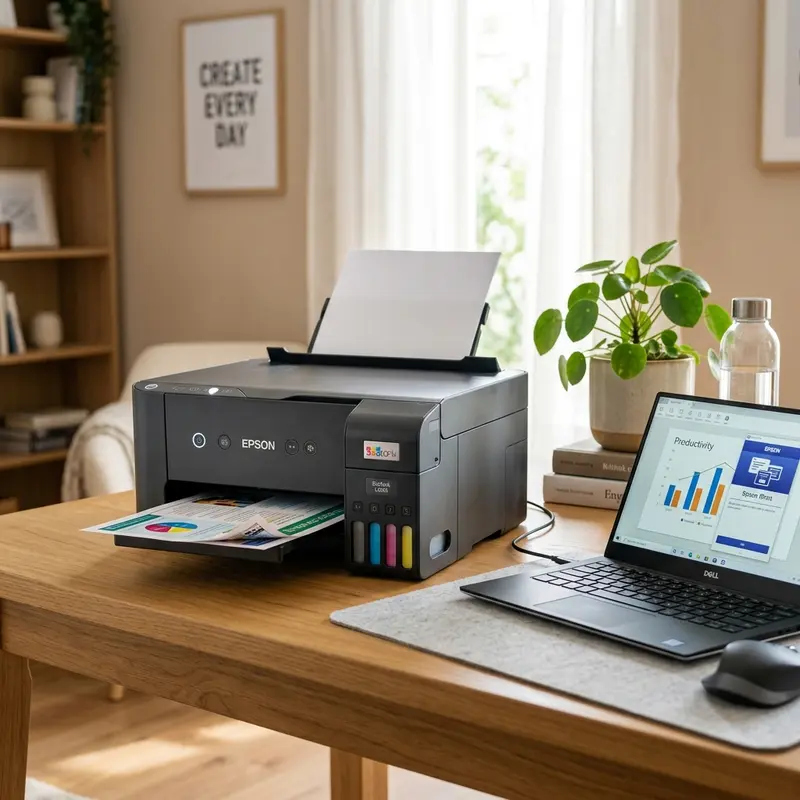
The Epson EcoTank L3250 is a popular multi-function ink tank printer widely appreciated for its low running costs and versatile wireless printing capabilities. However, configuring this machine on a local Wi-Fi network using only a smartphone can often lead to confusing errors. When the printer fails to register on the network or the companion app cannot detect the hardware, resolving the issue requires a technical understanding of the device's internal network card and wireless routing protocols. To connect the Epson L3250 printer to Wi-Fi from your phone, enable Bluetooth and connect your smartphone to the 2.4 GHz network, then open the Epson Smart Panel app and follow the step-by-step assistant, or connect directly to the Wi-Fi Direct network generated by the printer using the password from the network status sheet.
In this technical, step-by-step diagnostic guide, we will analyze the network architecture of the Epson L3250, explain the physical and logical constraints of the 2.4 GHz radio frequency band, outline the TCP/IP and UDP discovery protocols used by the Epson Smart Panel application, and walk you through the process of connecting your printer to Wi-Fi using your mobile device. We will cover both standard infrastructure network setup and peer-to-peer Wi-Fi Direct connection. Additionally, we provide comprehensive troubleshooting solutions for hardware discovery failures. For troubleshooting guides related to other smart home appliances, check out our guide on fixing a Liectroux C30B robot vacuum beeping and not moving or read about whether wireless security cameras consume too much Wi-Fi bandwidth.
1. The Wireless Network Architecture of the Epson L3250
Connecting the Epson L3250 to a network requires understanding the constraints of its physical network card. The printer's wireless module operates exclusively on the 2.4 GHz radio band under the IEEE 802.11 b/g/n protocols. This means it lacks the internal antennas and radio transceivers required to scan or decode signals on the 5 GHz band. In modern home networks with dual-band routers that merge both bands under a single SSID (using technologies like Band Steering or Smart Connect), the printer often fails the security handshake because the router attempts to force it onto the faster but incompatible 5 GHz network.
At the software layer, discovery is driven by multicast packets using protocols such as mDNS (Multicast Domain Name System) on UDP port 5353, SSDP (Simple Service Discovery Protocol) on UDP port 1900, and WSD (Web Services on Devices). When you launch the Epson Smart Panel app, it sends a query to the multicast IP address 224.0.0.251 to find available printers. If client isolation (also known as AP isolation or private Wi-Fi mode) is active on your router, the router prevents wireless clients from communicating with each other. This results in the app reporting that the printer is offline or not found, even if the printer's Wi-Fi LED is glowing solid blue.
| Network Component | Technical Specification | Setup Impact on Smartphones |
|---|---|---|
| Wi-Fi Frequency | 2.4 GHz only (IEEE 802.11 b/g/n) | Phone must temporarily run on the 2.4 GHz band during configuration; 5 GHz connections will not establish communication. |
| Discovery Protocols | mDNS (Port 5353 UDP), SSDP (Port 1900 UDP) | Router-level multicast filtering or AP isolation prevents the smartphone from discovering the printer hardware. |
| Wi-Fi Direct | Peer-to-peer (Ad-hoc virtual access point) | Enables the mobile phone to connect directly to the printer SSID without a router. |
| Supported Security | WPA2-PSK (AES), WPA-PSK (TKIP) | Enterprise networks requiring 802.1x credentials (separate username and password) are not supported. |
2. Preparing Your Phone and Router for Setup
Before launching the setup process, preparing both your smartphone and router helps avoid initial handshake failures. Follow these pre-configuration steps:
- Isolate the 2.4 GHz SSID: Access your router's admin panel (typically 192.168.1.1 or 192.168.0.1 in a web browser) and temporarily rename the 5 GHz band (e.g., adding "_5G"). Connect your smartphone to the 2.4 GHz network SSID.
- Grant App Permissions: Navigate to your phone's Settings > Apps > Epson Smart Panel. Enable Location Services (GPS) and Local Network/Nearby Devices access. On Android, GPS permission is mandatory to allow the app to scan for nearby Wi-Fi beacons broadcast by the printer.
- Reset Printer Network Settings: To clear any cached connection parameters in the printer's NVRAM, turn off the printer. Press and hold the Wi-Fi button and the Network Status (i) button together, then press the Power button until the Wi-Fi and Wi-Fi Direct LEDs begin flashing alternately. Release the buttons and wait for the lights to stop flashing, returning the network interface to its default state.
3. Standard Wi-Fi Infrastructure Setup via Epson Smart Panel
The Epson Smart Panel app is the recommended tool for linking the printer's network board to your wireless router. Follow these steps:
- Connect your smartphone to the 2.4 GHz Wi-Fi network and enable Bluetooth. The app uses Bluetooth Low Energy (BLE) to detect the unconfigured printer nearby.
- Power on the Epson L3250. Wait for the green power LED to stop flashing and remain steady.
- Launch the Epson Smart Panel app. Accept the terms of use and grant all requested permissions.
- The app will automatically scan the local network. Since the printer is not yet connected, select the "Start Setup" option on the dashboard.
- Choose the Epson L3250 from the detected device list. The app will communicate with the printer via BLE or its default configuration Wi-Fi channel.
- The app will display your home Wi-Fi network SSID. Carefully enter your Wi-Fi network password. Incorrect passwords are the most common cause of setup failures.
- The app will transmit the credentials to the printer. The Wi-Fi status indicators on the printer's control panel will flash.
- After approximately 2 minutes, the Wi-Fi LED (router icon) on the printer will light up solid blue or green, and the app will confirm a successful connection.
4. Setting Up a Wi-Fi Direct (Peer-to-Peer) Connection
If you do not have a wireless router (or if you are on a public network that restricts multicast connections), you can use Wi-Fi Direct. In this mode, the L3250 acts as its own virtual access point, allowing your phone to connect directly to it.
To establish a Wi-Fi Direct connection, retrieve the network security credentials directly from the printer:
- Print the Network Status Sheet: Load plain paper into the rear feed slot. Press and hold the Network Status (i) button on the control panel for approximately 7 seconds. The paper feed motor will engage, printing a technical report.
- Find the Wi-Fi Direct Credentials: Locate the section titled "Wi-Fi Direct" on the printed page. Note the SSID (Name) (usually starting with DIRECT-XX-EPSON) and the Password (an 8-digit numeric or alphanumeric key).
- Connect the Smartphone: Open the Wi-Fi settings on your phone, locate the printer's SSID in the available network list, and enter the 8-digit password.
- Open the App: Open the Epson Smart Panel app. It will detect the direct connection, allowing you to print or scan documents without a router.
5. Advanced Troubleshooting for Network Failures
If the printer's Wi-Fi LEDs flash red or orange, or if the connection drops, use the following technical troubleshooting steps:
1. Wi-Fi LED Flashing Alternately: This indicates the printer failed to complete the WPS handshake or locate the SSID. Restart the printer, move it closer to the router (ideally 3 to 10 feet for testing), and restart the configuration process.
2. MAC Address Filtering: If your router has access control lists (ACL) enabled, it will block the printer's connection request. Locate the printer's MAC address on the network status sheet and whitelist it in your router's security settings.
3. Wireless Interference: The 2.4 GHz band is highly susceptible to interference from household devices like microwaves, cordless phones, and baby monitors. Log into your router and switch the 2.4 GHz channel from "Auto" to a fixed, non-overlapping channel (1, 6, or 11).
4. Clear Router ARP Cache: Routers can store outdated IP-to-MAC mapping tables, causing connectivity issues. Unplug your router from power for 30 seconds to flush its volatile memory, then restart it to allow the printer to request a clean IP address via DHCP.
Technician Tip: On iOS devices, if the app fails to discover the printer, go to Settings > Privacy > Local Network and ensure the toggle for Epson Smart Panel is turned on. If this setting is disabled, iOS sandboxing blocks the app from sending multicast packets across the local subnet.
6. Printer Connection Paths Comparison
The table below summarizes the technical paths, requirements, and internet behaviors for the two connection methods available on the Epson L3250:
| Connection Method | Signal Flow Path | Router Required? | Mobile Internet Availability |
|---|---|---|---|
| Wi-Fi Infrastructure Mode | Smartphone → Router (DHCP Server) → Epson L3250 | Yes (2.4 GHz Band) | Active (phone accesses local network and internet simultaneously) |
| Wi-Fi Direct Mode | Smartphone → Epson L3250 Virtual Access Point | No | Limited (phone uses cellular data for internet traffic) |
7. Maximizing Wireless Printing Reliability
Once your printer is connected, you can improve its long-term reliability by applying a few technical practices:
- Assign a Static IP Address: Standard routers dynamically reassign IP addresses periodically. This can cause your phone to lose contact with the printer. To prevent this, log into the printer's embedded web server (EWS) by typing its IP address into a web browser and change the network settings from DHCP to Manual/Static, assigning an IP address outside of the router's dynamic range.
- Disable Deep Sleep Modes: Some printer firmware versions contain bugs that prevent the network board from waking up from deep sleep (Standby Mode) when receiving a print job over Wi-Fi. You can adjust the auto-off timer and sleep options through the printer's EWS dashboard under the basic settings menu.
- Keep Ink Tubes Free of Air: Maintaining your printer's physical hardware is just as important as network maintenance. If air bubbles get trapped in the ink delivery tubes, it can lead to printhead damage. Regular print cycles and proper maintenance processes help keep ink flowing smoothly to the printhead nozzle plates.
By ensuring your wireless router is configured for 2.4 GHz compatibility, granting the correct app permissions on your phone, and using a static IP address, your Epson EcoTank L3250 will remain connected and ready for wireless print jobs.
Advanced Wireless Network Tuning for High-Speed Printing
To ensure consistent and uninterrupted printing speeds on your Epson L3250 printer when routing requests through your smartphone, you should optimize the wireless channel settings on your local router. Most domestic Wi-Fi routers operate on automatic channel selection, which can cause frequency hopping and drop packets during heavy data transmission. When sending a multi-page PDF document to the printer, the file size can balloon to dozens of megabytes due to the high-resolution bitmap conversion. If the Wi-Fi signal experiences packet drops, the print queue will stall, resulting in partial prints or communication time-outs.
Log in to your router gateway and bind the 2.4 GHz band to a static, non-overlapping channel (such as 1, 6, or 11) with a bandwidth set strictly to 20 MHz rather than 40 MHz. This adjustment reduces RF interference from neighboring networks and improves the signal-to-noise ratio. Furthermore, assign a static IP address to the printer via DHCP reservation on your router. A static IP ensures that your smartphone's Epson iPrint app or AirPrint service can instantly locate the printer on the local network without waiting for dynamic hostname resolution, resulting in faster spooling times and immediate print execution.
Frequently Asked Questions
Why won't my Epson L3250 connect to my 5 GHz Wi-Fi?
The Epson L3250 contains a 2.4 GHz network interface board. It lacks the physical dual-band antennas and transceiver chips required to detect or decode 5 GHz wireless signals. You must connect the printer to a 2.4 GHz band.
How can I find the default Wi-Fi Direct password for the L3250?
Print the network status page by holding the Network Status "i" button for 7 seconds. The printout will contain the SSID and the 8-digit password under the "Wi-Fi Direct" section.
What does a flashing orange or red Wi-Fi light mean?
A flashing light indicates that the printer's network board failed to connect to the router. This can be caused by signal loss, interference, a wrong password, or router-level restrictions like MAC address filtering.
Can I print via Wi-Fi Direct while using mobile data?
Yes. Modern iOS and Android operating systems detect that the printer's Wi-Fi Direct connection has no internet access and will automatically routing internet traffic through your cellular data connection (4G/5G) while maintaining the local Wi-Fi connection for printing.




