CAT5e vs CAT6 Ethernet Cable: Which Should You Use for Router?
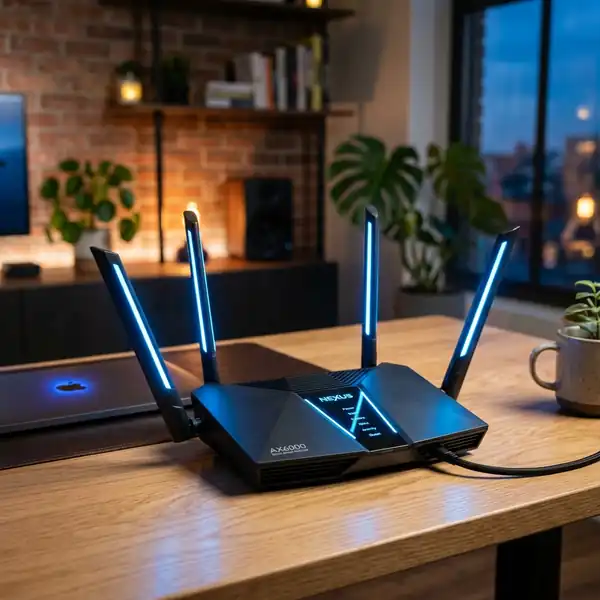
When building a high-speed local network, users often focus on buying the fastest Wi-Fi 6 or Wi-Fi 7 routers, neglecting the physical cables that connect their infrastructure. Ethernet cables are the foundation of any reliable network setup, determining the maximum throughput, latency, and stability of data transmissions. If you are using an outdated cable to connect your fiber-optic ONT (Optical Network Terminal) to your router, you might be limiting your connection. Understanding the technical differences between CAT5e and CAT6 Ethernet cables is essential to avoid bottlenecks.
CAT6 cables support higher speeds (up to 10 Gbps) and higher bandwidth (250 MHz) compared to CAT5e (1 Gbps at 100 MHz).
1. Introduction to Ethernet cable standards in modern routing
Ethernet standards are defined by the Institute of Electrical and Electronics Engineers (IEEE) and the Telecommunications Industry Association (TIA). These classifications help consumers and technicians identify the capabilities of copper cables. In home networking, the most common cable categories are Category 5e (CAT5e) and Category 6 (CAT6). While they look nearly identical from the outside and both use standard RJ-45 connectors, their internal construction and electrical performance are quite different, affecting how signals travel across the copper medium.
A standard Ethernet cable contains eight individual copper wires twisted into four pairs. The twists are crucial because they create electromagnetic fields that cancel out external interference and prevent crosstalk (the signal bleeding between adjacent wire pairs). As network speeds increased from Fast Ethernet (100 Mbps) to Gigabit Ethernet (1000 Mbps) and beyond, engineers had to improve the physical architecture of cables to handle higher frequencies. This led to the development of stricter manufacturing standards for CAT6 cables, allowing them to deliver cleaner signals with fewer errors.
When connecting a modern router to a high-speed fiber modem, the link between the two devices is the most important pathway in your home network. A bad or outdated cable on this link will force the router interface to negotiate a lower link speed (often falling back to 100 Mbps Fast Ethernet). This reduces the speed for all connected devices, including those on Wi-Fi. Understanding how these cables function at an electrical level helps you design a better home network. Historically, cable categories have evolved from simple telephone wires like CAT3 to modern solutions, with each step increasing frequency capabilities and noise resistance under TIA/EIA-568 standards.
Furthermore, copper cabling is susceptible to signal degradation over long distances. As high-frequency electrical pulses travel through copper, they experience resistance and attenuation, which weakens the signal. While a low-category cable might work for short distances, it will fail to maintain high-speed links over longer runs. This makes category choice essential when planning in-wall cabling or runs that connect different rooms, ensuring that the signal-to-noise ratio remains high enough for error-free data packet transfers throughout your entire home network architecture.
2. Understanding CAT5e: Specifications, limitations, and use cases
Category 5e is an enhanced version of the original CAT5 standard, which was introduced in the late 1990s. The "e" stands for enhanced, indicating improvements in crosstalk performance. CAT5e was designed to support the 1000BASE-T standard (Gigabit Ethernet) over distances up to 100 meters (about 328 feet). It operates at a maximum frequency of 100 MHz, which was a significant jump from the 16 MHz frequency of Category 3 cables used for analog telephone lines. This bandwidth allows the transmission of Gigabit speeds by using all four copper pairs simultaneously.
CAT5e cables are constructed using 24 AWG (American Wire Gauge) copper wires, which have a diameter of approximately 0.51 mm. While they are certified for Gigabit speeds, they operate close to their physical limits when running at 1 Gbps. Under ideal conditions with short cable runs and minimal electromagnetic interference, CAT5e is reliable. However, in environments with many electrical devices, power lines, or other network cables running in parallel, CAT5e is susceptible to performance drops due to alien crosstalk and signal degradation. This makes it less ideal for dense installations.
Despite these limitations, CAT5e remains popular because it is thin, highly flexible, and cheap. It is easy to route through tight conduits or bend around corners. For internet plans below 500 Mbps, CAT5e is usually sufficient to handle the bandwidth. It is also suitable for connecting low-bandwidth devices like smart home hubs, IP cameras, and network printers that do not require multi-gigabit speeds. It also supports basic Power over Ethernet (PoE) standards, such as IEEE 802.3af, delivering up to 15.4 Watts of DC power to remote devices over the existing copper wire pairs without requiring separate electrical lines.
3. Understanding CAT6: Bandwidth, crosstalk reduction, and speeds
Category 6 Ethernet cables represent a major upgrade in hardware design. CAT6 was built to support the 10GBASE-T standard (10 Gigabit Ethernet) over shorter distances. A standard CAT6 cable can transmit data at speeds up to 10 Gbps over distances of up to 55 meters (180 feet). For longer runs up to 100 meters, it falls back to supporting 1 Gbps. This performance is enabled by its higher operating frequency of 250 MHz, which is more than double the bandwidth of CAT5e, providing a much wider highway for digital traffic.
The main physical difference in CAT6 cables is how they handle crosstalk. Most CAT6 cables feature an internal separator called a "spline" (a longitudinal plastic cross that isolates the four twisted pairs from each other). This physical barrier reduces crosstalk between the pairs. Additionally, CAT6 cables feature tighter twists in the copper wires (more twists per inch) and often use thicker 23 AWG conductors (approximately 0.57 mm in diameter). These changes reduce signal attenuation and improve the signal-to-noise ratio over longer distances, ensuring stable data transfers.
CAT6 cables also offer better shielding options. They are available in Unshielded Twisted Pair (UTP) and Shielded Twisted Pair (STP) variations. Shielded versions include foil wrapping around the wire pairs or an outer braided shield to protect the signal from heavy electromagnetic interference (EMI) caused by power lines or industrial machinery. This makes CAT6 the standard choice for modern home installations and corporate networks. Additionally, the thicker 23 AWG wire gauge enables CAT6 to support advanced Power over Ethernet standards like IEEE 802.3at (PoE+) and IEEE 802.3bt (PoE++), supplying up to 90 Watts of power with lower electrical resistance and less heat build-up inside bundled cables.
4. Key differences: Speed, frequency, distance, and shielding
To help you choose the right cable for your home network, we have compiled a comparison table showing the key technical differences between CAT5e and CAT6 Ethernet standards:
| Technical Parameter | Category 5e (CAT5e) | Category 6 (CAT6) |
|---|---|---|
| Maximum Data Rate | 1 Gbps (Gigabit Ethernet) | 10 Gbps (up to 55 meters) / 1 Gbps (100 meters) |
| Operating Frequency | 100 MHz | 250 MHz |
| Wire Gauge (Typical) | 24 AWG | 23 AWG (thicker copper cores) |
| Internal Spline Separator | Rarely present (no physical separation) | Usually present (plastic cross spline) |
| Crosstalk Protection | Moderate (basic twisting) | High (tight twisting, internal spline isolation) |
| Maximum Certified Distance | 100 meters at 1 Gbps | 55 meters at 10 Gbps / 100 meters at 1 Gbps |
When selecting cables, it is important to remember that Category 6 cables are backward compatible with CAT5e and CAT5 ports. This means you can plug a CAT6 cable into a standard Gigabit LAN port on an older router, and it will function perfectly. However, the connection will run at the speed of the slowest link in the path. In this case, it will operate at 1 Gbps, but with the reduced interference benefits of the CAT6 cable design. This makes CAT6 a safe, future-proof choice for any existing infrastructure.
Another factor to consider is the physical thickness and rigidity of the cables. Because CAT6 cables use thicker copper conductors and include an internal plastic spline, they are thicker, heavier, and less flexible than CAT5e. This makes them slightly harder to pull through narrow wall conduits or bend around tight corners. However, this rigidity protects the internal conductors from being damaged or stretched during installation, preventing impedance mismatches that could lead to packet errors.
5. Which cable is right for your home network and router setup?
If you are setting up a new home network, connecting a high-speed router, or running permanent wiring inside your walls, CAT6 is the clear choice. Even if your current internet plan is only 100 Mbps or 300 Mbps, installing CAT6 cables ensures your physical network is ready for future upgrades. Internet service providers are constantly increasing fiber-optic speeds, and gigabit plans are becoming the standard. Installing CAT6 prevents you from having to run new cables in a few years. It is a long-term investment in your home's digital foundation.
If you need to connect your primary router to your modem, you should always use at least a CAT6 cable. If you want to configure your network, you can learn how to configure TP-Link router from phone and check your connection status. A high-quality CAT6 cable ensures that your router receives the full bandwidth from your ISP without packet loss. It also helps maintain a stable connection during heavy use, like online gaming or downloading large files, avoiding the frustrating drops that occur when cables are pushed past their limits.
On the other hand, if you already have CAT5e cables running through your house and you are getting your full subscribed speed, there is no urgent need to replace them. CAT5e is still capable of handling standard Gigabit speeds over short distances. However, if you experience random drops in connection speed, high latency, or packet loss, it might be due to cable degradation or interference. In this case, upgrading to CAT6 is a cheap and effective way to troubleshoot and stabilize your local area network (LAN), ensuring that physical layer bottlenecks do not bottleneck your gigabit hardware.
6. Practical tips for installing and identifying Ethernet cables
Before buying or installing network cables, it is helpful to know how to identify them. The category of an Ethernet cable is printed on the outer plastic jacket. Look for text like "Category 6", "CAT6", or "CAT5e". You will also find certifications like ANSI/TIA-568-C.2, which indicates that the cable meets official industry performance standards. If you do not see any printing on the cable, it is likely a cheap, non-standard cable that may not deliver gigabit speeds, and you should avoid using it for critical connections.
When installing Ethernet cables, avoid running them parallel to electrical wiring. High-voltage power lines generate electromagnetic interference that can disrupt the low-voltage signals in network cables. If you must cross a power line, run the Ethernet cable at a 90-degree angle to minimize interference. Also, avoid tight bends; exceeding the minimum bend radius (typically four times the cable diameter) can damage the twisted pairs inside and degrade performance. When terminating cables yourself, make sure to follow either the T568A or T568B wiring standard on both ends. Mixing these standards on a single cable creates a crossover cable, which modern Auto-MDIX ports can handle but is bad practice for structured cabling.
Finally, if you need to secure your network, you can learn how to change Wi-Fi password from phone to protect your wireless connections. Keeping both your wired and wireless networks secure and updated ensures a safe browsing experience. Investing in good cabling and following best practices helps you build a stable network that will last for years, maximizing the value of your internet subscription and high-end routing equipment.
7. Frequently Asked Questions (FAQ)
Can I use a CAT5e cable with a 10 Gbps network switch?
You can physically plug a CAT5e cable into a 10 Gbps network switch port, but the connection will not run at 10 Gbps under standard specifications. CAT5e is only certified for speeds up to 1 Gbps. Under very short distances of less than 15 meters and in environments without electromagnetic interference, a CAT5e cable might achieve 5 Gbps or even 10 Gbps, but it is not guaranteed and will likely suffer from high packet loss and packet retransmissions.
What is the difference between CAT6 and CAT6A Ethernet cables?
CAT6A (Category 6 Augmented) is an improved version of the CAT6 standard. It operates at double the frequency of CAT6 (500 MHz compared to 250 MHz) and is certified to support 10 Gbps speeds over the full distance of 100 meters, whereas standard CAT6 is limited to 55 meters for 10 Gbps speeds. CAT6A cables also feature much heavier shielding to eliminate crosstalk, making them thicker and more difficult to install in home environments.
Why does my CAT6 cable only connect at 100 Mbps instead of 1 Gbps?
If your CAT6 cable is only connecting at 100 Mbps, it is usually due to a physical wiring issue or port limitation. Gigabit Ethernet requires all eight wires (four twisted pairs) to be functional. If even one wire is broken or poorly crimped inside the RJ-45 connector, the connection will drop back to 100 Mbps, which only requires four wires. Additionally, check that both the sending and receiving devices have Gigabit-capable network ports.
Are shielded CAT6 cables (STP) better for home installations?
For most residential installations, unshielded (UTP) CAT6 cables are preferred. Shielded (STP) cables require proper electrical grounding through shielded RJ-45 connectors and compatible metal-shielded switches. If an STP cable is not grounded correctly, the shield can act as an antenna, trapping electromagnetic interference and degrading signal quality. Only use shielded cables if you are running them near heavy electrical panels or high-voltage lines.




