Best Cheap VPS Hosting Providers with Pre-installed cPanel [2026]
![Best Cheap VPS Hosting Providers with Pre-installed cPanel [2026]](https://umoaupsqhrhivceztycp.supabase.co/storage/v1/object/public/media/posts/wifi-office.webp)
Finding the best cheap VPS hosting with cPanel included is key for budget-conscious users in 2026. As businesses and individuals increasingly rely on digital platforms, the demand for cost-effective yet reliable hosting solutions continues to grow. Virtual Private Servers (VPS) provide an optimal balance between shared hosting and dedicated servers, offering users dedicated resources without the hefty price tag.
For those seeking simplicity in management, the inclusion of cPanel—an industry-standard control panel—enhances the overall user experience, allowing for easy management of web files, databases, and email accounts. This blog post will explore the best cheap VPS hosting providers that offer pre-installed cPanel, focusing on their features, pricing, and unique offerings.
Understanding Web Servers and Hosting
To comprehend the significance of VPS hosting with cPanel, it’s essential to first understand the underlying technology of web servers and hosting. A web server is a system that stores, processes, and delivers web pages to users over the internet.
When you type a website's address into your browser, your request is sent to a server, which then sends the requested page back to you. This process involves several layers of technology, including the hardware that makes up the server and the software that manages the server's operations.
Different hosting types—shared, VPS, and dedicated—offer various levels of performance, control, and cost.
Shared hosting is the most economical option, where multiple websites share the same server resources. However, this often results in slower load times and limited control, making it unsuitable for larger businesses or high-traffic websites. On the other end of the spectrum, dedicated hosting provides an entire server for one user, offering maximum performance and customization but at a higher cost.
VPS hosting strikes a balance between these two extremes. It utilizes virtualization technology to partition a physical server into multiple virtual servers, each with its own dedicated resources. This means better performance, enhanced security, and greater customization options without the financial burden of a dedicated server.
The inclusion of cPanel with a VPS hosting plan further simplifies the management of your hosting environment. cPanel provides a graphical interface and automation tools designed to simplify the process of hosting a website. Users can easily manage files, databases, domains, and email accounts without requiring extensive technical knowledge.
This makes it an ideal choice for small business owners and individuals who want to focus on content creation rather than server management. As we delve deeper into the best cheap VPS hosting providers with pre-installed cPanel in 2026, understanding these foundational concepts will help you make informed decisions tailored to your specific needs and budget.
Troubleshooting and Executing Tasks on Your VPS

When you opt for a VPS hosting solution with cPanel, you may encounter a variety of tasks that require troubleshooting or execution. Understanding how to effectively manage these tasks is important for ensuring your site runs smoothly and efficiently. This section will provide a step-by-step guide to address common tasks and troubleshooting scenarios that you may face.
The first essential task in managing your VPS is ensuring that your server is running optimally. This can be achieved by regularly monitoring your server's performance metrics, such as CPU usage, memory consumption, and disk space.
Access your cPanel dashboard and navigate to the "Metrics" section, where you will find tools like "Resource Usage" and "Bandwidth." If you notice high CPU usage, it could be due to an inefficient script or a sudden surge in traffic. In such cases, consider optimizing your website code, upgrading your hosting plan, or implementing caching solutions to enhance performance.
Another common issue users may face is email configuration. With cPanel, setting up email accounts is straightforward, but problems can arise with email deliverability or spam filtering.
To troubleshoot these issues, ensure that you have configured DNS records correctly, especially SPF, DKIM, and DMARC settings, which play important roles in email authentication. Within cPanel, you can access the "Email Deliverability" section to check the status of these records and make necessary adjustments.
If your emails are still being marked as spam, consider using a dedicated IP address or an email service provider that specializes in deliverability.
Finally, backups are a critical aspect of managing your VPS hosting. Regular backups ensure that you can recover your website quickly in case of data loss. cPanel simplifies this process through its "Backup" feature. You can create full backups or partial backups of specific files and databases.
It’s advisable to schedule automated backups daily or weekly, depending on how often you update your site. Additionally, consider storing these backups off-site or using cloud storage solutions to further safeguard your data. By following these troubleshooting steps and executing essential tasks through cPanel, you can maintain a healthy and efficient VPS hosting environment.
Comparative Table of Cheap VPS Hosting Providers with cPanel
Before diving into the specifics of each hosting provider, it's beneficial to have a comparative overview of the top options available in 2026. The following table outlines key features, pricing, and performance metrics of several leading cheap VPS hosting providers that include cPanel in their plans. This structured comparison will help you identify which provider aligns best with your requirements.
| Provider | Monthly Price | RAM | Storage | Bandwidth | cPanel License | Support |
|---|---|---|---|---|---|---|
| Hostinger | $9.99 | 2 GB | 20 GB SSD | 100 GB | Included | 24/7 Chat Support |
| InMotion Hosting | $15.99 | 4 GB | 75 GB SSD | Unlimited | Included | Phone & Live Chat Support |
| Bluehost | $19.99 | 2 GB | 30 GB SSD | 1 TB | Included | 24/7 Phone Support |
| DigitalOcean | $12.00 | 2 GB | 50 GB SSD | Data Transfer Pay As You Go | $15/month | Community Support |
| A2 Hosting | $14.99 | 4 GB | 75 GB SSD | Unlimited | Included | 24/7 Guru Crew Support |
The table above presents a clear comparison of several cheap VPS hosting providers, showcasing their pricing, specifications, and the support they offer. It provides a comprehensive overview that helps users weigh the pros and cons of each option based on their specific needs.
As you analyze these figures, consider not only the costs but also the level of support, storage capacity, and bandwidth limits that align with your website's requirements. As a general rule, opting for a provider that offers a good balance between price and features will serve you well in the long run.

Additional Resources and Recommended Links
To further assist you in your journey towards selecting the best cheap VPS hosting solution with cPanel included, we have compiled a list of additional resources and recommended links. These resources provide valuable insights, tutorials, and comparisons that can enhance your understanding of web hosting options and help you make informed decisions.
You might find it beneficial to explore our in-depth analysis on Shared Hosting vs VPS vs Cloud to understand the differences and benefits of each hosting type. Additionally, if you're looking to optimize your website's performance, check out our guide on How to Enable Cloudflare Development Mode for further insights into enhancing your site’s speed and security.
Advanced Server Performance Tuning: Cache Policies and Core Networking Metrics
Optimizing the performance of a Virtual Private Server (VPS) is vital for ensuring that your applications run efficiently and effectively. One of the most significant aspects of performance tuning revolves around cache policies, particularly OPcache, Redis, and Memcached.
OPcache, a built-in PHP extension, greatly enhances the performance of PHP applications by storing precompiled script bytecode in shared memory, thus eliminating the need for PHP to load and parse scripts on each execution. By configuring OPcache correctly, you can significantly reduce the time it takes for your PHP applications to respond, leading to faster load times and improved user experiences.
Redis and Memcached play significant roles in caching data that requires quick access. Redis, an in-memory data structure store, can be utilized for various use cases, including caching and session management.
Its support for complex data types allows for efficient storage and retrieval of data, making it an excellent choice for dynamic web applications. On the other hand, Memcached, although simpler, provides robust performance for storing key-value pairs.
When implementing these caching systems, it is important to analyze your website’s architecture and identify bottlenecks that can be alleviated through optimized cache usage.
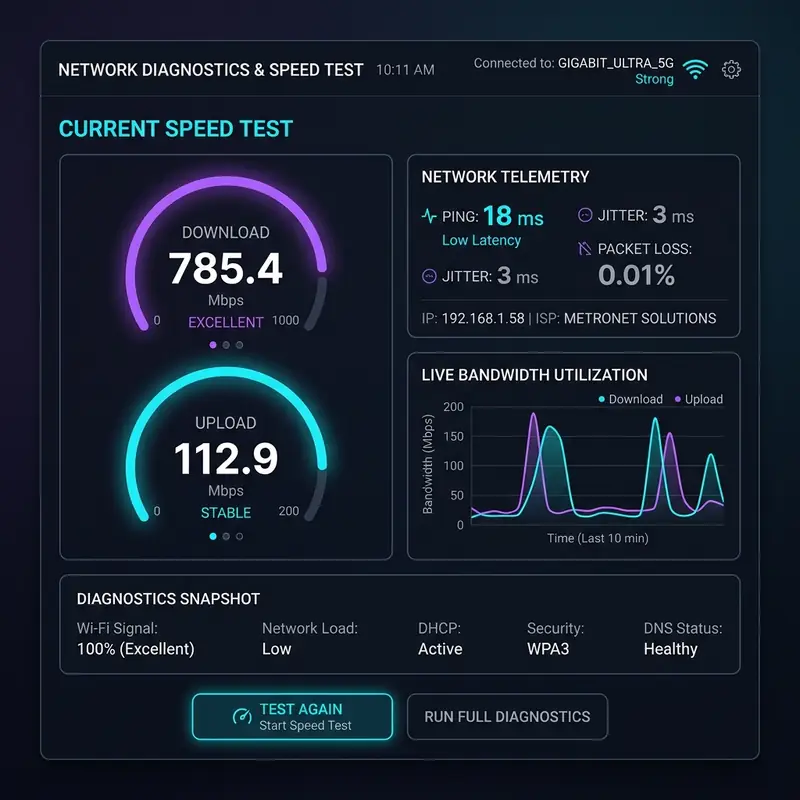
In addition to cache policies, understanding core networking metrics is fundamental for performance tuning. Time to First Byte (TTFB) latency is one such metric that directly impacts user experience.
TTFB measures the time taken for a user's browser to receive the first byte of data from the server. A high TTFB can indicate server performance issues, network latency, or inefficient application code.
By monitoring TTFB and leveraging tools such as Pingdom or GTmetrix, you can pinpoint the source of delays and address them effectively.
Server load is another critical factor that influences performance. It reflects the amount of processing power required to handle requests on your server.
A consistently high server load can lead to slow response times and degraded performance. It is vital to set up monitoring tools that can provide real-time insights into server load, allowing you to take proactive measures such as load balancing or resource upgrades as necessary.
Additionally, bandwidth allocation should not be overlooked, as insufficient bandwidth can lead to throttling and further exacerbate performance issues.
In conclusion, the intricate dance of server performance tuning requires a comprehensive approach that combines effective cache policies with a deep understanding of networking metrics. By utilizing tools like OPcache, Redis, and Memcached, alongside monitoring vital metrics such as TTFB, server load, and bandwidth allocation, you can create a finely tuned server environment that meets the demands of modern web applications.
This level of optimization not only enhances user experience but also improves resource efficiency, paving the way for sustained growth and success.
Implementing Server-Side Cybersecurity Protocols: SSL, Firewalls, and Permissions

As the digital landscape continues to evolve, the importance of robust server-side cybersecurity protocols cannot be overstated. Among these protocols, the configuration of SSL certificates plays a significant role in securing data transmission.
An SSL certificate encrypts the data exchanged between the client and the server, ensuring that sensitive information remains confidential and protected from potential interception. Implementing SSL not only enhances security but also boosts your website's credibility and SEO ranking, as search engines favor secure sites.
It is important to monitor the expiration dates of SSL certificates and renew them promptly to avoid any lapses in security.
IP tables form another critical layer of security for your VPS. They act as a firewall, allowing you to define rules for incoming and outgoing traffic.
By configuring IP tables effectively, you can restrict access to your server, allowing only trusted IP addresses to connect. This can prevent unauthorized access and mitigate potential threats.
Additionally, implementing rate limiting through IP tables can help protect against brute force attacks, further enhancing your server's security posture.
DDoS (Distributed Denial of Service) attacks pose a significant threat to servers, and having a robust DDoS firewall is essential for any VPS hosting environment. Such firewalls are specifically designed to detect and mitigate DDoS attacks in real time, ensuring that your server remains accessible even under heavy traffic.
When selecting a DDoS firewall, consider solutions that offer customizable rules and automated threat detection capabilities, enabling you to tailor the protection based on your specific needs.
Directory permissions are often overlooked yet are important to maintaining server security. Incorrectly set permissions can lead to unauthorized access or data breaches.
It is essential to implement the principle of least privilege, ensuring that users only have access to the directories necessary for their roles. Regular audits of directory permissions can help identify and rectify any vulnerabilities that may have developed over time.
Additionally, incorporating tools for automated scanning can assist in maintaining strict permission controls across your server.
In summary, the implementation of server-side cybersecurity protocols is a multi-faceted strategy that requires careful consideration and continuous monitoring. From SSL certificates to IP tables, DDoS firewalls, and directory permissions, each aspect plays a vital role in safeguarding your VPS. By prioritizing these security measures, you can create a resilient server environment that not only protects sensitive data but also instills confidence in your users.
Understanding Hosting Limitations: Shared vs Dedicated/Cloud Servers and Optimization Pitfalls
The choice between shared, dedicated, and cloud servers is one of the fundamental decisions you'll make when selecting a hosting provider. Shared servers, while cost-effective, come with significant limitations. Resources such as CPU, RAM, and bandwidth are shared among multiple users, which can lead to performance issues, particularly during peak times.
For businesses that rely on their online presence, such limitations can hinder growth and user experience. In contrast, dedicated servers provide exclusive access to all resources, allowing for greater customization and performance optimization. However, they come with a higher price tag and require substantial technical knowledge to manage effectively.
Cloud servers offer a flexible alternative, enabling businesses to scale resources based on demand. This elasticity is particularly advantageous for websites experiencing variable traffic patterns.
However, it is essential to consider the potential downsides of cloud hosting, such as data transfer costs and the complexities involved in managing cloud infrastructure. Understanding the nuances of each hosting option is vital to making an informed decision that aligns with your specific business needs and budget constraints.
DNS propagation errors are another common issue that can arise when changing hosting providers or making updates to domain settings. When you update DNS records, it can take time for the changes to propagate across the internet, leading to inconsistencies where some users see the updated site while others do not.
This can create confusion and negatively impact user experience. Implementing a DNS management strategy that includes monitoring propagation status and utilizing TTL (Time to Live) settings can help mitigate these issues, ensuring a smoother transition and reducing downtime.
Database optimization is often fraught with potential pitfalls that can affect performance and scalability. For instance, poorly indexed databases can lead to slow query responses, which can significantly impact user experience.
It is essential to regularly analyze database performance and implement indexing strategies that enhance efficiency. Be wary of over-indexing as well, as it can lead to increased write times and reduced overall performance.
Leveraging database optimization tools can help identify areas for improvement, ensuring that your database operates at peak performance.
Service Level Agreements (SLAs) are a critical component of any hosting arrangement and should not be overlooked. SLAs define the expected levels of service, including uptime guarantees and support response times.
Understanding the terms of your SLA is vital to ensure that the hosting provider meets your operational requirements. Be sure to evaluate the implications of an SLA breach and the compensation mechanisms in place, as these factors can significantly impact your business continuity and overall satisfaction with the hosting service.
In conclusion, understanding the limitations of different hosting options, navigating DNS propagation, optimizing database performance, and scrutinizing SLAs are all critical aspects of maintaining a successful online presence. Each element plays a significant role in shaping the performance and reliability of your server, necessitating careful consideration and management to ensure long-term success and satisfaction.