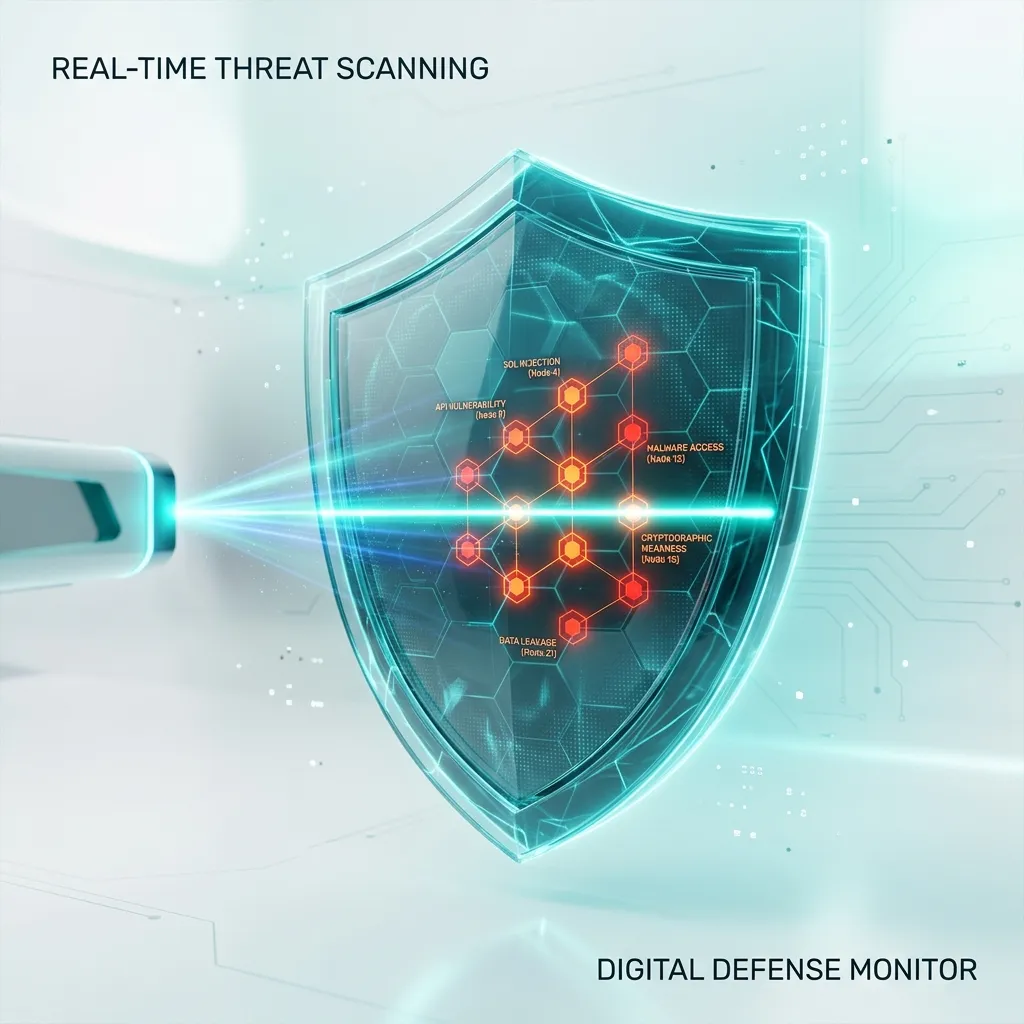
In the modern enterprise landscape, "Never Trust, Always Verify" has become the mantra. Yet, despite investing millions in high-end Zero Trust security solutions, global companies continue to suffer catastrophic breaches. The problem isn't the technology—it is the implementation philosophy.
What is Zero Trust in One Sentence?
Zero Trust is a strategic security framework that assumes breach is inevitable and requires strict, continuous identity and device verification for every access request, regardless of origin.
The core failure of many deployments is treating Zero Trust as a product you buy rather than a system you build. When a CFO approves a $2M budget for "Zero Trust Solutions," they often expect a magic shield. In reality, they are buying tools that require deep governance to actually work.
The Hidden Risks of "Fake" Zero Trust
Most breaches in "Zero Trust environments" happen because of legacy bypasses. Identity is the new perimeter, yet many organizations still allow long-lived session tokens or fail to enforce phishing-resistant MFA. This is where the breach risk lives.
Publicidade
Critical Breach Risk
If your "Zero Trust" solution doesn't analyze device posture (OS version, patch level) before granting access, you are not doing Zero Trust. You are just doing modern VPN.
Why Paying Now is Cheaper Than Surviving a Breach
The average cost of a data breach in 2026 has surpassed $5M. When you factor in legal fees, regulatory fines, and the loss of customer trust, a proactive investment in Zero Trust solutions looks like a rounding error. It is about protecting the revenue pipeline.
Zero Trust is not a destination; it is a continuous state of verification. By focusing on identity, device health, and the principle of least privilege, you can significantly reduce your breach risk and ensure your company remains resilient in an increasingly hostile digital world.
Publicidade
Beyond technical aspects, it is essential to understand the cultural impact of Zero Trust on organizations. Transitioning to a "zero trust" model requires a shift in mindset for both IT managers and end-users. It is not just about implementing tools, but about redefining how access to information is granted and continuously monitored.
Historically, corporate networks were protected by robust perimeters, such as traditional firewalls. However, with the rise of remote work and cloud computing, this perimeter has vanished. Zero Trust fills this gap by focusing on user identity and device health, ensuring that access is granted only after rigorous verification, regardless of location.
Another crucial point is continuous monitoring. In the traditional model, once a user was "inside" the network, they had lateral movement freedom. In Zero Trust, every step is analyzed. If anomalous behavior is detected—such as access from an unusual geographic location or at an atypical time—the system can instantly revoke access, preventing the exfiltration of sensitive data.
Publicidade
NIST 800-207 Architecture: The Heart of Zero Trust
To deeply understand Zero Trust, one must refer to the standard defined by NIST (National Institute of Standards and Technology). The NIST 800-207 architecture does not view Zero Trust as an isolated tool, but as a set of network design principles. The central component is the Policy Decision Point (PDP), which acts as the system's brain, deciding in real-time whether an access request is legitimate or not.
This PDP is subdivided into two fundamental elements: the Policy Engine (PE) and the Policy Administrator (PA). The PE uses artificial intelligence and machine learning algorithms to evaluate the request's context—such as geographic location, time, user behavior history, and device health. If all criteria are met, the PA instructs the Policy Enforcement Point (PEP) to open the connection. This level of granular control is what sets Zero Trust apart from any traditional perimeter security model.
Publicidade
Micro-segmentation: Ending Lateral Movement
One of the biggest nightmares for CISOs (Chief Information Security Officers) is lateral movement. In a classic breach, once a hacker compromises a low-privilege workstation, they use that base to exploit vulnerabilities within the internal network until they reach the domain controller or the main database. Micro-segmentation solves this problem by creating "micro-perimeters" around each individual workload.
Instead of a flat network where all servers "talk" to each other, micro-segmentation isolates resources. For example, the web server can only communicate with the application server via specific ports, and the application server can only access the database under strictly defined conditions. This means that even if an attacker manages to get in, they will be confined to an extremely limited space, making it nearly impossible to cause damage at scale.
Publicidade
Challenges in Implementing Legacy Systems
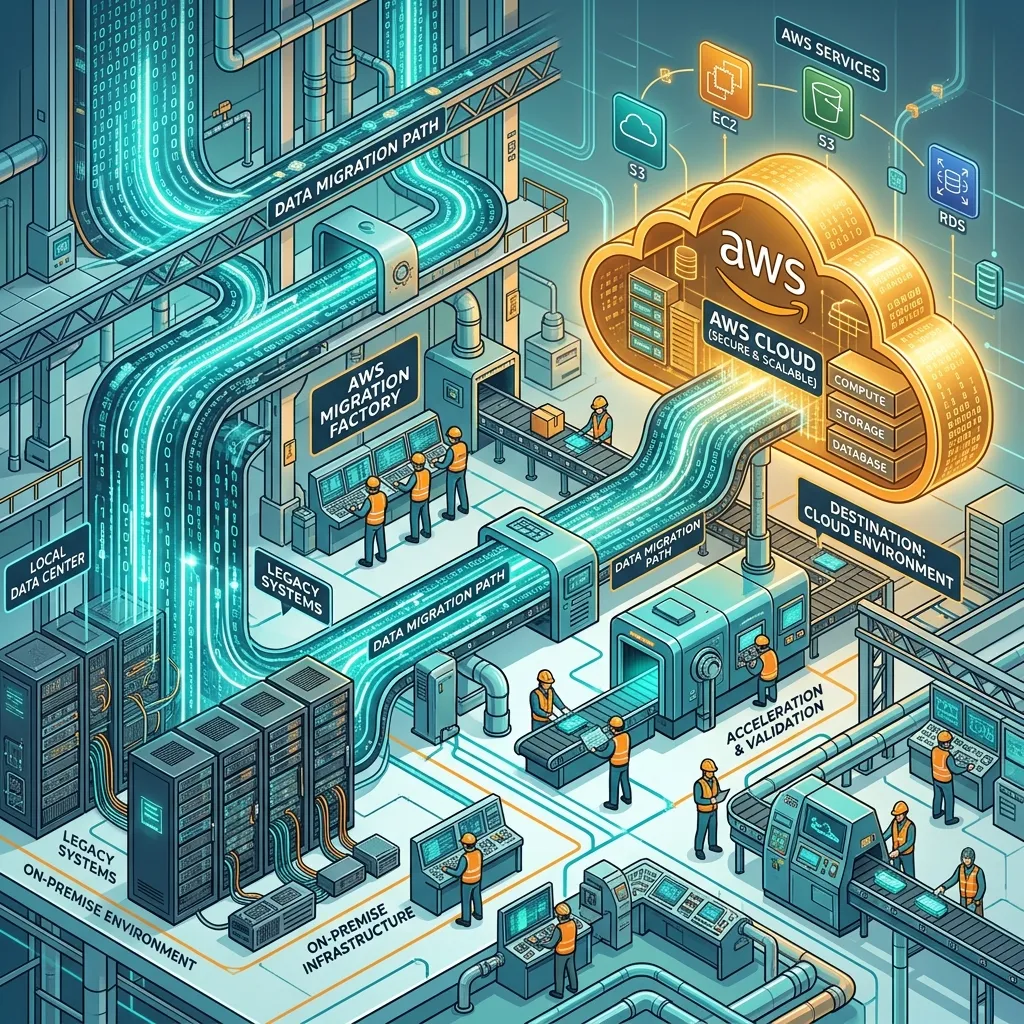
While the Zero Trust concept is elegant, implementing it in legacy infrastructures is a monumental challenge. Many companies operate with systems from decades ago that do not support modern authentication protocols or rely on constant, unverified network connections. The transition requires a "bridge" approach, where security proxies are placed in front of these systems to act as modern PEPs.
This modernization process is not just technical; it is financial and operational. It is necessary to map every data flow in the organization—something many companies have never done exhaustively. Without this mapping, Zero Trust implementation can end up blocking critical business processes, causing expensive disruptions.
The Role of Identity as the New Perimeter
In the Zero Trust model, identity replaces the IP address as the basic unit of trust. This means it doesn't matter where the user is coming from, but rather **who** they are and if they are strongly authenticated. The use of phishing-resistant Multi-Factor Authentication (MFA), such as FIDO2 security keys, becomes mandatory.
Publicidade
Furthermore, Privileged Access Management (PAM) must be integrated. High-privilege users (system administrators, DBAs) are the primary targets. Zero Trust requires these accesses to be temporary (Just-In-Time access) and restricted only to what is necessary for the task (Just-Enough Administration). At the end of the task, privileges are automatically revoked, reducing the identity's "attack surface."
Compliance (GDPR/LGPD) and Data Governance
For international companies, Zero Trust is a powerful ally in GDPR compliance. The principle of "least privilege" is an implicit requirement for protecting personal data. By ensuring that only strictly necessary people have access to sensitive data, the company demonstrates governance and drastically reduces the risk of accidental or malicious leaks.
The continuous auditing and logging inherent in Zero Trust provide the necessary "evidence trail" to respond to incidents and account to regulatory authorities. In case of an inspection, having a system that records every access attempt and every policy decision is what differentiates a negligent company from a resilient one.
Looking ahead, Zero Trust is converging with network technologies to form SASE (Secure Access Service Edge). SASE combines network capabilities (SD-WAN) with Zero Trust security capabilities (ZTNA, CASB, SWG) into a single cloud-based platform. This allows security to be applied as close to the user as possible, regardless of whether they are in a corporate office, at home, or at an airport.
This evolution is crucial for supporting the modern, distributed workforce. Zero Trust, therefore, ceases to be an "IT project" and becomes the foundation of digital business infrastructure. Without it, the agility needed to compete in today's market creates risks that no company can afford to take.
Zero Trust in DevOps: "Shift-Left" Security
Integrating Zero Trust into the software development lifecycle (SDLC) is known as Shift-Left Security. In a CI/CD (Continuous Integration and Continuous Delivery) environment, speed is essential, but security cannot be sacrificed. Zero Trust requires every container, every microservice, and every API to have its own strictly controlled identity and permissions.
Publicidade
This eliminates the use of shared secrets or static API keys that are often exposed in code repositories. By implementing Workload Identities, the system ensures that only service "A" can call service "B" if policy explicitly allows it. If a service is compromised, the attacker cannot use that connection to escalate privileges within the Kubernetes cluster or cloud infrastructure.
The Challenge of BYOD and Mobile Devices
With the explosion of hybrid work, the concept of BYOD (Bring Your Own Device) has become the norm. However, personal devices are often the weakest link in corporate security. Zero Trust addresses this through mobile device management (MDM) and real-time posture verification.
Before allowing an employee to access company email or ERP from their personal phone, Zero Trust checks: Is the device jailbroken/rooted? Is disk encryption active? Is the operating system up to date? Is there an active antivirus? Only after passing this health "check-up" is the user's identity validated for access. This protects company assets even on public Wi-Fi networks or devices not directly owned by the corporation.
Publicidade
Real-World Case Studies: Google's BeyondCorp Legacy
The most famous real-world example of Zero Trust is Google's BeyondCorp project. Started over a decade ago, BeyondCorp allowed Google employees to work from anywhere, on any network, without the need for a traditional VPN. The idea was simple yet revolutionary: treat the internal corporate network as if it were the public internet.
By removing implicit trust from the office network, Google forced every request to be authenticated and authorized based on context. This model proved so resilient that it survived nation-state attacks and served as the foundation for what we now know as Zero Trust Network Access (ZTNA). Studying BeyondCorp is essential for any security architect who wants to understand how to scale zero trust in organizations with tens of thousands of users.
Zero Trust for IoT and Operational Technology (OT)
The Internet of Things (IoT) and Operational Technology systems (in factories and power plants) represent a new and dangerous attack surface. Many IoT devices have minimal security and cannot run traditional security agents. Zero Trust addresses this through identity-based network segmentation at the infrastructure level.
Publicidade
Industrial sensors, security cameras, and HVAC controllers are placed in isolated networks that have no visibility of the corporate data network. If a camera is compromised, it cannot be used as a starting point for a ransomware attack against the company's file servers. "Zero trust" therefore extends from humans to machines and sensors, creating a holistic security ecosystem.
The Future: Post-Quantum Cryptography and Zero Trust
As we move into the quantum computing era, the cryptography underpinning internet trust is at risk. Future Zero Trust will need to incorporate Post-Quantum Cryptography (PQC) algorithms to ensure that communications verified today cannot be decrypted by quantum computers tomorrow.
Cryptographic agility—the ability to swap security algorithms without disrupting operations—will be a fundamental pillar of Zero Trust resilience. Leading organizations are already beginning to evaluate how their public key infrastructures (PKI) and identity management systems can adapt to these new threats, ensuring that the principle of "continuous verification" remains valid even in the face of exponential technological leaps.
Publicidade
Executive Governance and Security KPIs
Finally, Zero Trust needs to be translated into Board (C-Level) language. It is not just about "blocking access," but about reducing business continuity risk. Zero Trust KPIs (key performance indicators) include reducing mean time to detect (MTTD) and mean time to respond (MTTR).
A successful Zero Trust program allows the company to be more agile, enabling fast partnerships and third-party integrations securely. When the board understands that security is not a cost, but a business accelerator that enables global expansion with confidence, investment in Zero Trust ceases to be a technical discussion and becomes a strategic governance priority.
The eBPF Revolution in Zero Trust Observability
One of the biggest technical challenges of Zero Trust is monitoring network traffic without causing significant latency. This is where eBPF (Extended Berkeley Packet Filter) comes in. eBPF allows security engineers to run programs directly in the Linux kernel without needing to change kernel code or load heavy modules. In the context of Zero Trust, this provides unprecedented visibility into what is happening at the network and system levels.
Publicidade
By utilizing eBPF, Policy Enforcement Points (PEPs) can analyze system call behavior in real-time. For example, if a microservice that normally only reads files suddenly starts attempting to establish external network connections, eBPF can detect and block this action at the kernel level within microseconds. This deep observability is what allows Zero Trust to be truly adaptive and reactive to modern zero-day threats.
Decentralized Identity (DID) and Verifiable Credentials
The next frontier of Zero Trust is Decentralized Identity (DID). Currently, most Zero Trust systems rely on a centralized identity provider (IdP), such as Microsoft Entra ID or Okta. While effective, these systems create a single point of failure and attack. DID uses blockchain technology to give users full control over their identity without the need for a central mediator.
Through Verifiable Credentials (VCs), a device can prove it is secure and belongs to an authorized employee without revealing unnecessary sensitive information. This reinforces the "privacy by design" principle and makes the Zero Trust ecosystem much more resilient to attacks aiming to compromise corporations' central identity databases. Integrating DID into Zero Trust represents the end of passwords and traditional identity silos.
Publicidade
Zero Trust in Multi-Cloud Strategies (AWS, Azure, GCP)
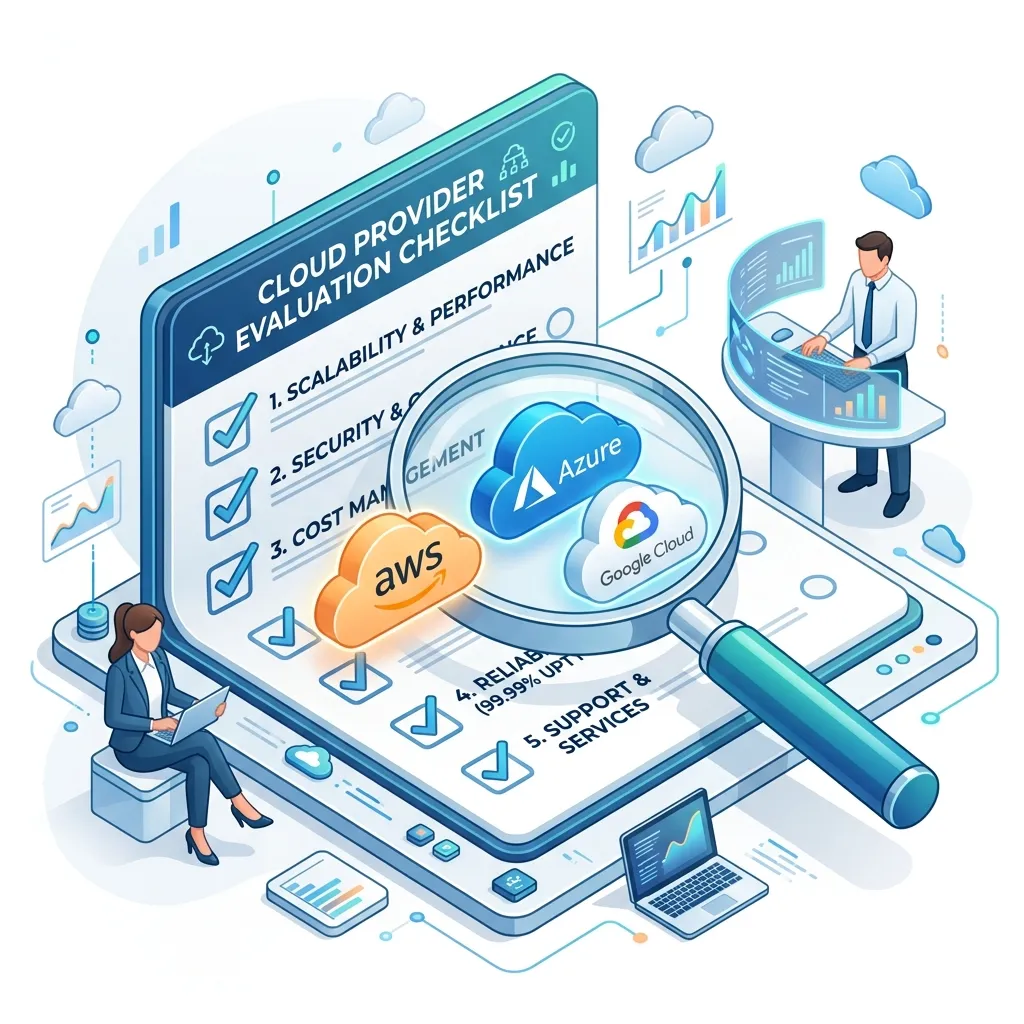
Managing Zero Trust in a single cloud provider is already complex, but the real-world scenario for most large companies is Multi-Cloud. Each provider has its own security tools and identity and access management (IAM) models. The challenge is creating a unified security policy that works seamlessly across AWS, Azure, and Google Cloud.
The solution lies in policy layer abstraction. Using Cloud Security Posture Management (CSPM) tools and Service Mesh networks, organizations can enforce the same Zero Trust rules regardless of where the workload is running. This ensures there are no security "blind spots" in the transition between clouds, where many hackers find gaps to exfiltrate data or escalate privileges.
Homomorphic Encryption: Data Processing Without Decryption
One of the biggest breakthroughs that can be integrated into Zero Trust is Homomorphic Encryption. This type of encryption allows calculations to be performed on encrypted data, generating a result that, when decrypted, matches the result of operations performed on the original text. In the Zero Trust model, this is revolutionary.
Publicidade
Imagine a data analysis server that needs to process confidential customer information. With homomorphic encryption, the server never "sees" the data in clear text; it only processes the encrypted data and returns the result also encrypted. This completely removes the need to trust the server or the infrastructure processing the data, raising the "Never Trust" concept to a nearly unbreakable mathematical level.
The Human Factor: Social Engineering in a Zero Trust World
Even with all the technology, the human being remains the weakest link. Zero Trust mitigates social engineering by removing implicit trust in the user, but "vishing" (voice phishing) and "MFA fatigue" attacks still try to bypass defenses. Therefore, modern Zero Trust incorporates User and Entity Behavior Analytics (UEBA).
If an authenticated user starts accessing resources frantically or outside their usual work pattern, the Zero Trust system must assume the identity has been compromised via social engineering and require re-verification or preventively block access. End-user education remains vital, but Zero Trust acts as the seatbelt that prevents human error from turning into a data catastrophe.
Publicidade
Technical Conclusion: Resilience as a Permanent State
We conclude this guide understanding that Zero Trust is not an "install and forget" solution. It is a continuous security engineering journey. By adopting these advanced principles—from the kernel with eBPF to unified Multi-Cloud—your organization builds a cyber resilience posture that not only survives attacks but discourages attackers due to the extreme difficulty and low return on effort they will find.
Remote Browser Isolation (RBI) and Zero Trust
The web browser is currently the primary gateway for malware and social engineering attacks. In the Zero Trust model, trust should not be extended even to the content the user views on the internet. This is where Remote Browser Isolation (RBI) comes in. RBI executes all browsing activity in an isolated container environment in the cloud, away from the user's endpoint device.
Instead of downloading potentially malicious HTML, CSS, and JavaScript directly onto the employee's computer, RBI renders the page in the cloud and sends only a secure stream of pixels to the local browser. If the user clicks an infected link, the malware executes in the disposable cloud container and is instantly destroyed when the tab is closed. This eliminates "drive-by download" infection risks and protects user identity, ensuring the public internet remains isolated from the corporate network.
Publicidade
Supply Chain Security and SBOM (Software Bill of Materials)
Modern software security depends not just on the code you write, but on thousands of third-party dependencies. Zero Trust extends its philosophy to the software supply chain through the SBOM. An SBOM is essentially an ingredient list for every software component used in the organization.
In the Zero Trust ecosystem, the system can automatically verify if any component listed in the SBOM has known vulnerabilities (CVEs) before allowing the software to run in production. If an open-source library is deemed insecure, the Policy Decision Point (PDP) can block service execution until the fix is applied. This protects the company against massive supply chain attacks, like the Log4j case, ensuring trust is verified at every layer of the technology stack.
The Impact of 5G and Edge Computing on Zero Trust
With the arrival of 5G and the expansion of Edge Computing, data processing is moving to the edge of the network, much closer to users and IoT devices. This creates new security challenges, as data no longer passes through a central data center where traditional controls are located. Zero Trust is the only architecture capable of supporting this distributed model.
Publicidade
In Edge Computing, identity and posture verification must be performed ultra-fast at the Edge itself. The reduced latency of 5G allows Zero Trust Network Access (ZTNA) to work imperceptibly, ensuring every device connected to a 5G cell tower is treated with the same security rigor as a computer inside the office. The network becomes irrelevant; what matters is the security policy following the data and the device wherever they are.
Adaptive Risk Scoring: Fine-tuning the Policy Engine
The heart of modern Zero Trust is the adaptive risk scoring engine. Instead of a binary "yes" or "no" decision, the system assigns a continuous risk score to every user session. If the user is on a known device, in a habitual location, and accessing common data, the risk is low, and access is fluid.
However, if risk increases—for example, if the user attempts to download an unusual volume of data or if the device shows signs of being outdated—the system can require a second factor of authentication (MFA) or limit access to read-only, blocking the download. This "dynamic adjustment" allows security to be strong without being an obstacle to productivity, adapting to business needs in real-time.
Publicidade
Technical Checklist: Pillars for a Resilient Implementation
To conclude this comprehensive guide, we consolidate the fundamental pillars every organization must follow for a successful Zero Trust implementation:
Total Inventory: You cannot protect what you do not know. Map all users, devices, applications, and data flows.
Strong Identity: Implement phishing-resistant MFA (FIDO2) for 100% of users.
Least Privilege: Apply Just-In-Time and Just-Enough-Administration access policies.
Granular Segmentation: Use micro-segmentation to isolate critical workloads.
Continuous Inspection: Monitor and log all traffic, decrypting and inspecting as necessary (always respecting privacy).
Automated Response: Integrate SIEM/SOAR tools to react to anomalies in milliseconds.
Zero Trust is the foundation of digital sovereignty. By investing in the depth of these concepts, your company is not just "protecting itself"; it is building an infrastructure capable of thriving in the global digital economy with unwavering confidence and resilience.
Publicidade
Zero Trust for Artificial Intelligence (AI) and LLMs
With the rapid integration of Generative AI and Large Language Models (LLMs) into corporate operations, a new and complex attack surface has emerged. Zero Trust must be applied not only to the users using these tools but to the entire AI stack. This includes securing access to training data, model parameters, and inference APIs.
In the Zero Trust model for AI, every prompt sent to the model must be treated as a potentially dangerous access request. It is necessary to implement content inspection filters to ensure sensitive data (PII) is not sent to public models and that AI output does not contain malicious code or misinformation. Furthermore, the "AI agent's" identity must be verified: only authorized applications can consume the model's intelligence, following the principle of least privilege to prevent an AI application breach from becoming an attack vector for the rest of the infrastructure.
Publicidade
Data Privacy Vaults: Shielding Sensitive Data
Traditionally, sensitive data is scattered across various databases and applications, drastically increasing the attack surface. Zero Trust is evolving toward the creation of Data Privacy Vaults. In these vaults, personally identifiable information (PII) is centralized, encrypted, and isolated from the rest of the technological ecosystem.
When an application needs data—for example, the last four digits of a social security number for verification—it does not access the original database. Instead, it requests a "token" from the Vault. The Vault verifies identity and access policy (Zero Trust) and provides only the minimum necessary information. This ensures that even if the main application is compromised, the attacker will only find useless tokens, while real data remains protected by an insurmountable layer of mathematical and logical defense.
Publicidade
The Impact of Zero Trust on Cyber Insurance Premiums
The cyber insurance market has become extremely rigorous. To obtain policies with broad coverage and affordable premiums, insurers now require concrete proof of security posture. Implementing a full Zero Trust architecture is often the determining factor for policy approval in 2026.
Insurers value Zero Trust because it provides full visibility and granular control, which drastically reduces the probability of large-scale ransomware attacks. By demonstrating that your organization has phishing-resistant MFA, micro-segmentation, and continuous kernel monitoring (via eBPF), you are not just protecting the business, but also reducing fixed operating costs through lower insurance premiums and better financial negotiation terms.
Identity Threat Detection and Response (ITDR)
As identity has become the new perimeter, it has also become the number one target. ITDR is a new discipline within Zero Trust focused specifically on detecting and responding to threats against the identity system. This goes beyond simple password failure blocking; it's about identifying sophisticated behaviors like "Golden Ticket" or password spraying attacks.
Publicidade
ITDR continuously monitors the integrity of Active Directory or the cloud identity provider. If an administrator account is created anomalously or if there are suspicious changes in policy permissions, the ITDR system triggers immediate alerts and can automate access revocation in milliseconds. Integrating ITDR into the Zero Trust decision engine ensures that the foundation of all your security—identity—remains intact under any circumstances.
The Vision for the Next 10 Years: Autonomy and Self-Healing
Looking toward the next decade, Zero Trust will evolve into autonomous and "self-healing" security systems. With the advancement of defensive AI, security networks will be able to reconfigure their micro-segmentation automatically upon detecting the first signs of a new malware variant, even before an official signature exists for it.
Security will cease to be something we "install" and will become an intrinsic property of digital infrastructure. Zero Trust will be the common language between clouds, quantum devices, and edge networks, ensuring that data privacy and security are preserved by default in all human and robotic interactions in cyberspace.
Publicidade
Executive Summary for Digital Resilience
In concluding this exhaustive compendium, it is clear that Zero Trust is the definitive answer to the complexity of the digital age. It does not eliminate risk but manages it so granularly and effectively that the cost of a successful attack becomes prohibitive for the attacker. Your company, by adopting these principles, positions itself not just as a technological leader, but as a guardian of the trust of its customers and partners in an increasingly volatile world.
Zero Trust in Cloud-Native and Serverless Architectures
Transitioning to cloud-native architectures based on microservices and serverless functions has drastically changed how we think about security. In the Zero Trust model, each microservice must be treated as an independent entity with its own identity. We can no longer trust traffic moving within the cluster simply because it is "behind the firewall."
Publicidade
In serverless environments, where functions are ephemeral and scale instantly, the challenge is applying security policies that match this dynamism. Zero Trust requires authentication and authorization to occur at the function level. This means that before a serverless function accesses a database or a messaging service, it must prove its identity through short-lived tokens (such as signed JWTs), ensuring that even if a function is compromised by a code vulnerability, the attacker cannot use that identity to access other infrastructure components.
Service Meshes and the Role of Istio and Linkerd
To manage the complexity of communication between thousands of microservices, Service Meshes like Istio and Linkerd have emerged. In the context of Zero Trust, the Service Mesh acts as the control layer that transparently enforces security policies for applications. It uses the "Sidecar" pattern (a small proxy running alongside each service) to intercept all inbound and outbound traffic.
Publicidade
The great advantage of Service Mesh is the automatic implementation of **mTLS (Mutual TLS)**. mTLS ensures that both the client and server verify each other's digital certificates before establishing any communication. This encrypts data in transit and ensures only authorized services can communicate with each other. The Service Mesh therefore becomes the definitive Policy Enforcement Point (PEP) for "East-West" traffic within the data center or cloud, providing full observability and granular control without requiring application code changes.
Security in Mergers and Acquisitions (M&A): Agility with Confidence
One of the highest-risk scenarios for corporate security is the Mergers and Acquisitions (M&A) process. Integrating two distinct corporate networks with different security standards and maturity levels is a technical nightmare that often takes years and creates critical gaps. Zero Trust revolutionizes this process by allowing integration based on applications, not networks.
Publicidade
Instead of trying to join two complex network backbones via VPNs or dedicated links, the acquiring company can simply expose the necessary applications to new employees through a ZTNA (Zero Trust Network Access) portal. Access is granted based on identity and device posture, regardless of whether the source network is considered "secure" or not. This reduces integration time from months to days and isolates security risks from one network to the other, ensuring the strategic value of the M&A is not destroyed by a cybersecurity incident during transition.
Bastion Hosts vs. Zero Trust Access (SSH/RDP)
Remote server management via SSH or RDP has always been a weak point. The traditional use of Bastion Hosts (or Jump Servers) creates a single point of failure: if an attacker compromises the Bastion, they have direct access to the entire internal infrastructure. Zero Trust proposes eliminating these bastions in favor of direct but strictly controlled access.
Publicidade
With Zero Trust, server access is done through encrypted tunnels established only after MFA verification and policy authorization. There are no SSH ports open to the public internet (or even the internal network). The system uses ephemeral identities to ensure access expires automatically upon task completion. This drastically reduces the attack surface and eliminates the risk of lost or stolen administrative credentials that could be used for long-term persistence attacks.
Ethical Considerations: Security vs. Employee Privacy
Implementing Zero Trust requires deep visibility into employee devices (device posture, running processes, etc.). This raises important ethical questions about individual privacy. How do we balance the company's need to protect its data with the employee's right to privacy, especially on BYOD devices?
The answer lies in transparency and data segregation. Modern Zero Trust uses sandboxing techniques and inspection focused only on corporate assets. Collected data should be limited to what is strictly necessary for security decision-making (Minimum Viable Data Product). Furthermore, organizations should be clear about what information is being monitored and why. Well-implemented Zero Trust protects the company without turning the workplace into a state of constant surveillance, maintaining trust between the organization and its talent.
Publicidade
Strategic Conclusion: Zero Trust as a Competitive Advantage
At the end of this entire technical journey, we realize that Zero Trust is not just a "protection layer." It is a competitive differentiator. Companies operating under zero trust principles are more agile, adapt faster to market changes, and possess an operational resilience that protects them against the volatilities of modern cybercrime. Zero Trust is the foundation for sustainable growth in the global digital economy.
Legal Disclaimer: The information provided in this guide is for educational and informational purposes only regarding the 2026 tech landscape. DomineTec does not provide formal legal, technical auditing, or certified consulting services. Cybersecurity investments, compliance certifications (SOC 2), and cloud infrastructure involve inherent risks and should be validated by certified professionals. We are not liable for any third-party decisions or security breaches following the use of this information.