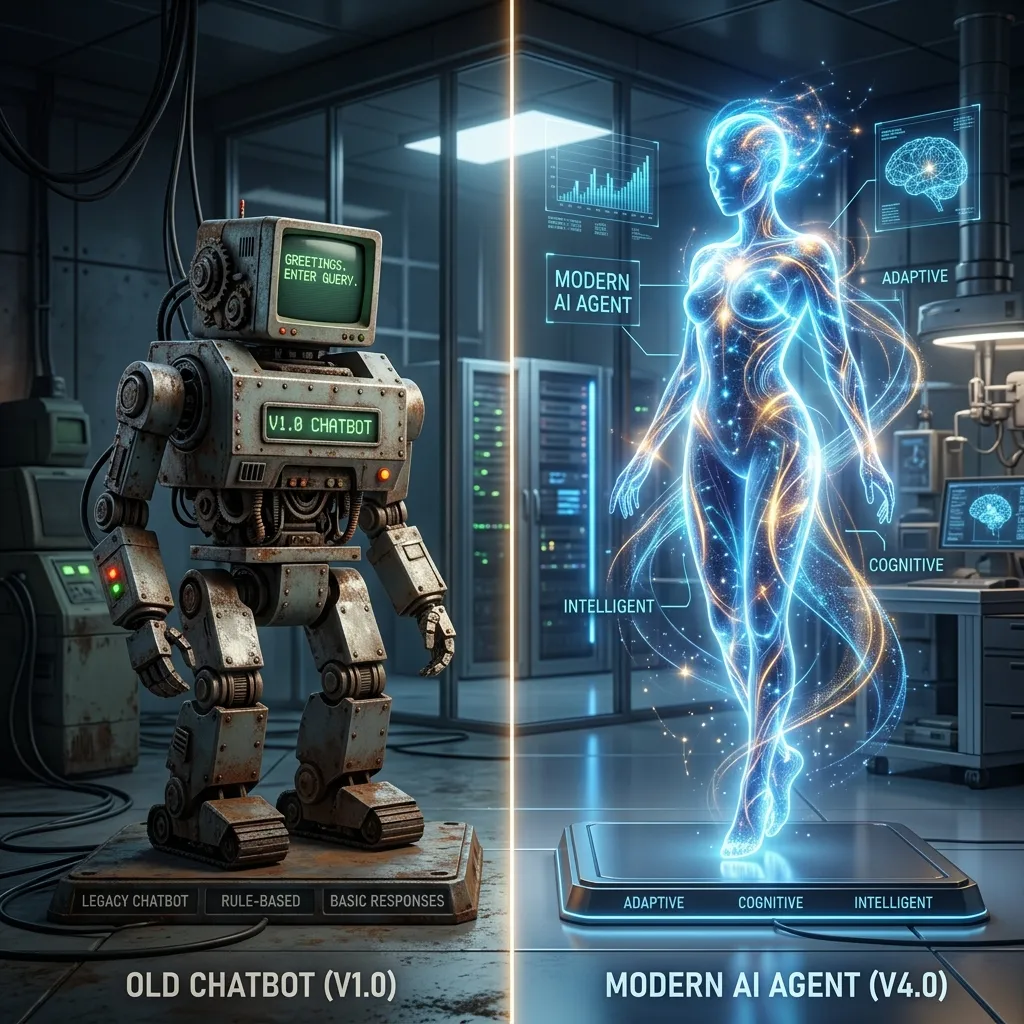
Want to know what MCP is and why it's transforming Artificial Intelligence? The Model Context Protocol (MCP) is an open-source communication protocol created by Anthropic that acts as a secure, universal connector between Large Language Models (LLMs) and external data sources or tools, including databases, APIs, and local files.
DomineTec Tip: Before MCP, developers had to write proprietary integration glue for every single AI model and data source. The Model Context Protocol standardizes this interaction, allowing LLMs to seamlessly talk to any database or tool with a single interface.
What is the Model Context Protocol (MCP)?
The Model Context Protocol (MCP) is an open standard designed to solve a critical limitation of modern AI models: isolation. As powerful as language models are, they lack native access to your spreadsheets, your company's database, your GitHub repositories, or local files on your computer. To read a log file or fetch data from a system, an AI model relies on custom-built bridges.
MCP simplifies this setup by introducing a common communication language. Simply put, MCP is to AI what the HTTP protocol was for the web or the USB port was for computer hardware. It standardizes connection pathways so any AI application can safely read data or execute tools on external platforms under user consent.
Built on the JSON-RPC 2.0 specification, the protocol decouples the reasoning engine (the LLM) from the physical implementation of integrations. The language model sends structured request messages requesting data or tools, and the destination server, running locally or in the cloud, replies in a predictable and fast manner.
Why Did Anthropic Create MCP? The Problem of Fragmented Integrations
As autonomous AI agents gained massive popularity in 2025 and 2026, maintaining custom, isolated integrations for every AI model became highly inefficient. If a developer wrote a connector for Claude 3.5 Sonnet to fetch database logs, they would have to rewrite most of the code to adapt it to GPT-4o or Gemini Pro.
This fragmentation increased software maintenance costs and decreased the overall reliability of AI integrations. Recognizing this industry bottleneck, Anthropic launched MCP under an open-source license. The goal is to build a collaborative ecosystem where developers can write an "MCP Server" once and connect it to any compatible AI client without friction. This reduces redundant work and accelerates agentic AI innovation.
Understanding the MCP Architecture
The Model Context Protocol architecture is divided into three main components:
1. MCP Clients
MCP Clients are the final user interfaces or AI-powered applications that prompt the LLM. Prominent examples of MCP Clients include the Claude Desktop app, and AI-focused code editors like Cursor AI and Windsurf AI. The client handles user input, formats tools output, and manages user approval for tool executions.
2. MCP Servers
MCP Servers are lightweight background programs or scripts that expose files, tools, or prompts to the client. An MCP Server for PostgreSQL exposes database tables, while a GitHub MCP Server fetches commits and branches. These servers run independently, serving as the bridge to raw data.
3. Data Sources and Tools
These are the underlying systems you wish to expose to your AI. They include relational databases (like PostgreSQL and SQLite), local directories, development environments, team messaging platforms (like Slack), and remote APIs.
| Feature | With MCP (Standardized) | Without MCP (Traditional) |
|---|---|---|
| Integration Complexity | Low (Universal Connector Model) | High (Custom API code for every combination) |
| Portability | Complete (Works across multiple clients/editors) | None (Locked to vendor-specific APIs) |
| Security & Privacy | Controlled locally by client permission settings | Varies (Depends on ad-hoc script security) |
| API Maintenance | Simple (Just update the server connector) | Complex (Multiple endpoints spread across source code) |
The Three Primitives of MCP: Prompts, Resources, and Tools
The protocol defines three distinct interaction paradigms between the AI client and the MCP server:
1. Resources
Resources represent passive data read-access for the AI. This includes server log files, raw database table schemas, configuration files, and local documentation. The AI can pull context from resources dynamically to improve response accuracy.
2. Tools
Unlike passive resources, Tools are executable actions. This allows the AI to perform modifications on external systems. Examples include committing code to GitHub, running a database query update, triggering automated Slack alerts, or browsing a web page. The user remains in control, explicitly approving tool runs via the client interface.
3. Prompts
Prompts are pre-configured conversation templates provided by the server. They guide users on how to structure tasks and help the AI adopt specific instructions, such as auditing code templates or generating database migrations.
MCP Transport Types: Stdio vs. SSE
The Model Context Protocol supports two primary transport methods for data transfer between client and server, addressing different setup configurations:
Stdio (Standard Input/Output) Transport
Perfect for local development. In this mode, the MCP server runs on the same physical machine as the AI client. The two processes communicate instantly using standard input and output streams (stdin/stdout). It is the default transport method for tools like Claude Desktop and Cursor when running database or filesystem utilities on your local machine.
SSE (Server-Sent Events) Transport
Designed for cloud environments and distributed setups. In this mode, the MCP server runs on a remote server. The client opens a persistent HTTP connection to receive updates from the server. This enables cloud-based or local AI clients to safely communicate with remote microservices and legacy enterprise platforms.
Advanced Configuration Examples for MCP Clients
Here is an example of what a claude_desktop_config.json file looks like when connecting both a GitHub and a Postgres server simultaneously:
{
  "mcpServers": {
    "github": {
      "command": "npx",
      "args": ["-y", "@modelcontextprotocol/server-github"],
      "env": {
        "GITHUB_PERSONAL_ACCESS_TOKEN": "your-token-here"
      }
    },
    "postgres": {
      "command": "npx",
      "args": ["-y", "@modelcontextprotocol/server-postgres"],
      "env": {
        "DATABASE_URL": "postgresql://user:password@localhost:5432/mydb"
      }
    }
  }
}
How to Build a Custom MCP Server (TypeScript / Node.js Template)
Building custom servers to solve specific enterprise tasks is simple. Official SDKs are provided for TypeScript and Python. Below is the basic skeleton of an MCP server running on Node.js:
import { Server } from "@modelcontextprotocol/sdk/server/index.js";
import { StdioServerTransport } from "@modelcontextprotocol/sdk/server/stdio.js";
import { CallToolRequestSchema, ListToolsRequestSchema } from "@modelcontextprotocol/sdk/types.js";

const server = new Server({
  name: "custom-mcp-server",
  version: "1.0.0"
}, {
  capabilities: {
    tools: {}
  }
});

// Expose available tools
server.setRequestHandler(ListToolsRequestSchema, async () => {
  return {
    tools: [
      {
        name: "get_system_time",
        description: "Returns the current local system timestamp",
        inputSchema: {
          type: "object",
          properties: {}
        }
      }
    ]
  };
});

// Tool execution logic
server.setRequestHandler(CallToolRequestSchema, async (request) => {
  if (request.params.name === "get_system_time") {
    return {
      content: [
        {
          type: "text",
          text: `Local system time: ${new Date().toISOString()}`
        }
      ]
    };
  }
  throw new Error("Tool not found");
});

// Initialize Stdio transport
const transport = new StdioServerTransport();
await server.connect(transport);
console.error("MCP Server running via stdio transport!");
Configuring MCP Servers in Cursor AI and Windsurf AI
AI-native code editors have built-in graphical interfaces for managing MCP servers, streamlining local configurations.
Configuring in Cursor AI
- Open the Cursor Settings pane (gear icon at the top-right).
- Navigate to the Features tab and locate MCP.
- Click on + Add New MCP Server.
- Assign a name (e.g., "Postgres Local Server").
- Set the transport type to
command(for stdio). - Enter your server start command (e.g.,
node /path/to/server.js). - Save the configuration. Cursor will connect immediately, exposing the tools in your Chat and Composer panels.
Configuring in Windsurf AI
- Access your Windsurf Settings.
- Navigate to the AI tool configurations section (AI Extensions / External Tools).
- Add your custom connector pointing to your MCP JSON settings.
- The Windsurf Cascade assistant will read the exposed capabilities instantly.
Enterprise Case Study: Accelerating Support Desk Workflows
Consider an enterprise IT support team tasked with investigating customer database connection errors. Previously, the workflow involved accessing client machines via SSH, searching through recent server logs, copying and pasting the errors into ChatGPT to read recommendations, and manually running commands back in the terminal.
Using the Model Context Protocol, the IT team built a restricted filesystem MCP server and a secure read-only terminal server. Now, a support representative simply prompts the AI chat panel: "Diagnose the database connection error on client node 5." The AI scans the log files locally via MCP, analyzes the issue, and prints the exact recovery command, waiting for the human agent's click of approval to run it. The time to resolve dropped from 30 minutes to under 45 seconds, eliminating manual command errors.
Security, Compliance, and Enterprise Auditing
Early iterations of autonomous AI agents suffered from security risks. Unconstrained AI models could accidentally execute destructive database operations or leak files.
MCP addresses these security concerns through three robust features:
- Explicit Consent: AI clients require users to visually confirm and approve any tool run that modifies system states (e.g., writing code or sending messages).
- Local Isolation: Stdio-based servers execute with local machine boundaries. The AI cannot browse the filesystem at will; it must request a localized script to perform the reading, ensuring restricted access directories.
- Strict Auditing: Since the protocol is built on standard JSON-RPC 2.0, IT security teams can intercept and log all traffic between client and server. This provides complete audit trails for security compliance.
How to Troubleshoot Common MCP Configuration Errors
Setting up custom servers may occasionally trigger connection warnings. Here are the most common failures and how to solve them in corporate environments:
1. "Command not found" or Spawn errors
This typically occurs when the client interface tries to run commands like npx or python but cannot find them in the system's global environment path variables (PATH). To fix this, replace relative command keywords with their absolute system file path equivalents, such as C:\Program Files\nodejs\node.exe or /usr/local/bin/node. This is especially true for developer setups running under isolated shells on Windows.
2. Permission Denied (EACCES) and Local Access Blocks
If your script tries to access restricted local files, the operating system might block the server process. Always ensure the script resides in and targets directories that have active read/write permissions for the current system user profile, avoiding administrative program folders.
3. Missing Environment Variables and Authentication Tokens
Many servers (like GitHub or PostgreSQL connectors) depend on API tokens or database credentials. If these are missing, the server will exit immediately upon handshake. Make sure to define all necessary keys within the env block of the client configuration JSON file, double checking spelling and token expiration values.
Frequently Asked Questions (FAQ)
Does MCP work with any LLM?
Yes. While developed by Anthropic, MCP is an open-source protocol. Any AI client (such as Cursor, Windsurf, or custom developer wrappers) can leverage MCP servers using models from OpenAI (GPT-4o), Google (Gemini Pro), or Meta (Llama 3).
How does MCP differ from REST APIs?
A standard REST API exposes hardcoded endpoints that the client must know how to invoke. MCP, conversely, exposes a metadata schema that allows the AI model to dynamically discover and understand the available tools. It essentially automates the documentation phase for the AI, removing manual integration glue.
Are MCP servers safe to run locally?
Yes, because they inherit the local user environment permissions and constraints. The LLM cannot execute tools without the AI client asking for human approval on your screen, preventing unapproved operations and protecting local data privacy.
Where can I find pre-built MCP servers?
The open-source community maintains curated lists of MCP servers on GitHub. These include connectors for SQLite, Postgres, Redis, Docker, Git, Slack, Notion, and Google Search APIs.
Can I host an MCP server on a public domain?
Yes, using the SSE (Server-Sent Events) transport type. This allows you to deploy your server to a cloud provider and expose it securely to client connections over HTTPS, rather than relying on local stdio pipes.
Do I need an active internet connection to run local MCP servers?
No. When using the stdio transport method, all data transfers and program executions occur entirely on your local machine. You do not need internet access to run local database or filesystem integrations, making it ideal for offline development and secure data isolation.
Is there a latency overhead when using MCP?
Because the protocol uses lightweight JSON-RPC 2.0 messages over standard I/O pipes, the latency added by the protocol wrapper is negligible (typically under 2 milliseconds). The vast majority of time is spent on the actual tool execution logic or LLM response generation.
The Future of Autonomous AI Agents with MCP
The standardization brought by the Model Context Protocol is a cornerstone for autonomous corporate AI agents. By removing the weight of custom API configurations, MCP empowers software engineers to focus on business value and AI decision-making logic rather than glue code.
As the AI ecosystem matures, more enterprise software applications will ship with built-in MCP Server APIs. This means that integrating legacy systems with new autonomous AI systems will soon be a matter of minutes, not weeks.