How to Set Up Tagged and Untagged VLANs on Mikrotik v7 Switch Chip Hardware

This article details the configuration of tagged and untagged VLANs on Mikrotik v7 switch chip hardware.
Understanding VLANs
VLAN (Virtual Local Area Network) allows logical segmentation of networks, enhancing security and reducing broadcast traffic.
Tagged VLANs carry VLAN information in the Ethernet frame, while untagged VLANs do not. This distinction is critical for proper configuration.
Equipment and Configuration Requirements
The following equipment is needed for VLAN configuration: Mikrotik router, Ethernet cables, and a computer for terminal access.
Ensure that the Mikrotik device is running RouterOS version 7 or later for optimal functionality.
Basic Terminal Commands
The following terminal commands are essential for VLAN setup:
- Access the Mikrotik terminal via Winbox or SSH.
- Enter the command to create a VLAN:
/interface vlan add name=vlan10 vlan-id=10 interface=ether1. - For tagged VLAN, use:
/interface bridge vlan add bridge=bridge1 tagged=ether1,ether2 vlan-id=10. - For untagged VLAN, use:
/interface bridge vlan add bridge=bridge1 untagged=ether3 vlan-id=20.
Configuring Tagged VLANs
To set up tagged VLANs, ensure that the port configuration allows tagged traffic.
Use the following command to verify VLAN settings: /interface bridge vlan print.
Configuring Untagged VLANs
Untagged VLANs simplify configurations for devices that do not support VLAN tagging.
Set the untagged ports properly using: /interface bridge port set ether3 pvid=20.
Technical Specifications Comparison
| Feature | Tagged VLAN | Untagged VLAN |
|---|---|---|
| Traffic Type | Supports multiple VLANs | Single VLAN only |
| Configuration | Requires VLAN ID tagging | No tagging required |
| Device Compatibility | Requires VLAN-aware devices | Compatible with all Ethernet devices |
DomineTec Tip: For advanced configurations, consider implementing access control lists (ACLs) on VLANs for enhanced network security.
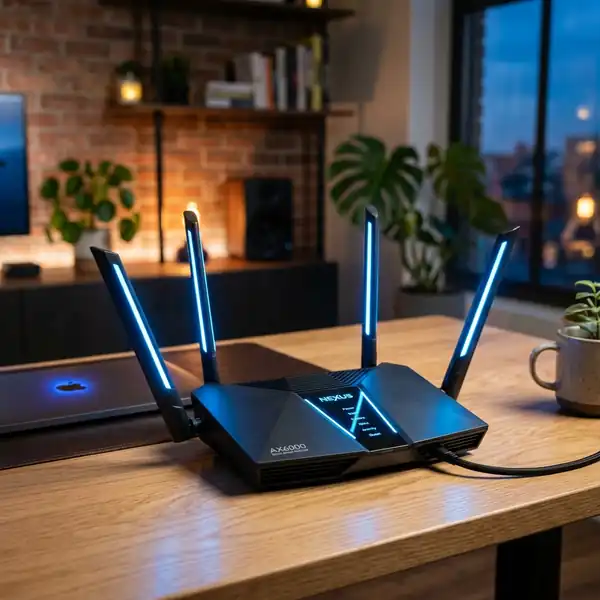
Visual Representation of Network Setup

Visualizing the setup can greatly assist in understanding VLAN configurations and their impact on network traffic.
Ensuring Connection Security

Implementing secure configurations is critical for maintaining the integrity of VLANs.
Regularly audit VLAN setups to ensure they comply with security best practices.
VLAN Management Best Practices
Implementing VLANs requires adherence to best practices to ensure optimal network performance and security. Regularly reviewing VLAN configurations can help identify potential issues or misconfigurations that may arise over time.
Documentation of VLAN assignments and purposes is crucial for network administrators. This includes maintaining an updated inventory of devices associated with each VLAN and their respective roles within the network.
It is advisable to limit the number of VLANs on a single switch to avoid broadcast storms and performance degradation. The distribution of VLANs across multiple switches can enhance traffic management and improve overall network efficiency.
Regular audits of VLAN traffic should be conducted to analyze utilization patterns and identify any anomalies. Monitoring tools can provide insights into traffic loads and assist in making informed decisions regarding VLAN adjustments.
Advanced VLAN Features on MikroTik
MikroTik devices support advanced VLAN features that enhance flexibility and control over traffic management. Features such as VLAN filtering and ingress/egress rules allow for more granular control of packet flow based on specific criteria.
Utilization of Private VLANs (PVLANs) can isolate devices within the same broadcast domain, which is particularly useful in environments where security and separation of traffic are paramount. This capability can significantly reduce the risk of unauthorized access between devices.
VLAN Load Balancing can be implemented to distribute network traffic evenly across multiple VLANs. This feature enhances performance by preventing any single VLAN from becoming a bottleneck.
Integration with Dynamic VLAN Assignment protocols, such as RADIUS, can automate the process of VLAN assignment based on user credentials or device types. This dynamic approach can simplify management in larger networks.
VLAN Troubleshooting Techniques
Effective troubleshooting techniques are essential for maintaining VLAN integrity and performance. When issues arise, the first step is to verify VLAN configurations and ensure that switch ports are correctly assigned as tagged or untagged.
Utilizing tools like MikroTik's built-in packet sniffer can help identify misrouted packets or incorrect VLAN tagging. This tool allows for real-time monitoring of traffic and can reveal discrepancies in expected behavior.
Checking for VLAN mismatches is another critical step in troubleshooting. This involves confirming that all interconnected switches have matching VLAN configurations to avoid connectivity problems.
In cases where connectivity issues persist, reviewing the spanning tree protocol (STP) settings can be beneficial. Misconfigurations in STP can lead to blocked ports and subsequently hinder VLAN traffic flow across the network.
Integration of VLANs with Routing Protocols
Integrating VLANs with routing protocols can enhance the functioning of a network by enabling inter-VLAN routing. This is crucial for allowing communication between devices on different VLANs.
Protocols such as OSPF or EIGRP can be utilized to manage routing between VLANs effectively. This ensures that traffic is directed along the most efficient paths within the network.
Configuring a Layer 3 switch can facilitate this integration, allowing for routing capabilities directly on the switch without needing a separate router. This approach streamlines the network architecture and reduces latency.
Additionally, employing Access Control Lists (ACLs) within the routing configuration can enhance security by regulating traffic flow between VLANs based on defined policies. This adds an extra layer of security to inter-VLAN communications.
Monitoring VLAN Performance
Monitoring VLAN performance is essential for ensuring that the network operates efficiently. Utilizing SNMP (Simple Network Management Protocol) can provide valuable insights into VLAN activity and performance metrics.
Real-time monitoring tools can generate dashboards displaying traffic statistics, bandwidth usage, and error rates for each VLAN. This data is vital for identifying potential bottlenecks or congestion points within the network.
Setting up alerts for abnormal traffic patterns or excessive broadcast traffic can help administrators respond quickly to potential issues. Such proactive measures can mitigate the impact of network disruptions.
Periodic performance reviews should be conducted, analyzing historical data to detect trends over time. This analysis can inform decisions related to bandwidth allocation and VLAN restructuring as necessary.
Scalability Considerations for VLANs
Scalability is a critical factor when designing a VLAN architecture, especially in dynamic environments. Planning for future growth involves anticipating the number of devices and potential VLAN expansions.
Hierarchical VLAN designs, such as core-distribution-access models, can facilitate scalability. This structure allows for more straightforward management and expansion without significant disruptions to existing services.
Utilizing VLAN Trunking Protocol (VTP) can simplify VLAN management across multiple switches. VTP allows for centralized management of VLAN information, ensuring consistency across the network as it scales.
Regularly revisiting the VLAN architecture as the network grows is essential. This includes reassessing VLAN assignments and considering the introduction of new VLANs to accommodate changing organizational needs.
Additional Tuning and Diagnostics
To optimize VLAN performance on MikroTik switches, several tuning parameters should be considered. These parameters include adjusting the switch's CPU load, enabling hardware offloading, and ensuring that the firmware is up-to-date for the best performance enhancements.
Monitoring CPU utilization can help identify bottlenecks that might affect VLAN traffic. Keeping the CPU load under a specified threshold ensures that the switch can handle the tagging and untagging processes without significant latency.
Hardware offloading is a crucial feature that offloads VLAN processing tasks from the CPU to the switch chip itself. This allows for faster processing of packets and improves overall throughput, particularly in high-traffic environments.
Regular diagnostics using tools like the MikroTik Dude or CLI-based commands can help detect any anomalies in VLAN configurations. These diagnostics can provide insights into packet loss, latency, and throughput, enabling timely interventions.
Implementing Quality of Service (QoS) for VLANs
Quality of Service (QoS) is essential for ensuring that critical applications receive the necessary bandwidth while minimizing latency. Configuring QoS on VLANs can significantly enhance the performance of voice, video, and other latency-sensitive applications.
MikroTik switches allow for the prioritization of VLAN traffic through the use of queues and markings. By classifying traffic into different queues based on VLAN tags, administrators can manage bandwidth allocation more effectively.
Implementing traffic shaping policies can help smooth out any spikes in network traffic. This ensures that high-priority VLANs have guaranteed bandwidth, while lower-priority traffic is throttled as needed.
Regularly monitoring the QoS performance of VLANs can reveal trends in traffic patterns. Adjustments to QoS settings may be necessary to accommodate evolving network demands and maintain optimal performance levels.
Interconnecting VLANs with Other Networking Technologies
Integrating VLANs with other networking technologies, such as spanning tree protocol (STP) and link aggregation, can enhance network resilience and performance. STP helps prevent loops in the network caused by redundant paths, which is crucial for VLAN setups.
Link aggregation allows multiple physical interfaces to be bundled together, providing increased bandwidth and redundancy. This is particularly beneficial for VLAN traffic, as it ensures that the network can handle high data rates without becoming a bottleneck.
When configuring interconnections, attention must be paid to the VLAN IDs and tagging requirements to maintain consistency across the network. Misconfigurations can lead to communication issues between VLANs and degrade overall network performance.
Regular testing of interconnections is vital for ensuring that VLANs function correctly with other networking technologies. This can include simulating traffic loads and monitoring the impact on both VLAN performance and overall network stability.
Advanced Security Configurations for VLANs
Advanced security configurations are essential for protecting VLANs from unauthorized access and attacks. Implementing features such as port security and access control lists (ACLs) can enhance the security posture of VLANs on MikroTik switches.
Port security limits the number of MAC addresses that can be learned on a single port, preventing unauthorized devices from accessing the network. This is particularly useful in environments where devices are frequently added or removed.
Access control lists can be employed to define what traffic is allowed or denied within VLANs. This granular control enables administrators to enforce security policies based on specific criteria, such as source and destination IP addresses or VLAN IDs.
Periodic reviews of security settings and logs can provide insights into potential vulnerabilities. Updates to security configurations should be made in response to emerging threats to ensure that VLANs remain secure against evolving risks.
Utilizing VLANs for Network Segmentation
VLANs serve as a powerful tool for network segmentation, allowing organizations to create distinct broadcast domains within a single physical network infrastructure. This segmentation enhances security, reduces broadcast traffic, and improves overall network performance by isolating traffic types based on functional requirements or user groups.
By implementing VLANs, it is possible to group users by their roles or departments, thereby limiting access to sensitive information and resources. For instance, a company could set up separate VLANs for HR, finance, and IT departments, ensuring that each department only has access to their relevant data and applications.
Moreover, VLANs enable easier management and scalability of the network. As organizations grow, the network can be adjusted by adding or modifying VLAN configurations without the need for extensive physical rewiring, thus simplifying the process of accommodating new users and devices.
In addition to improving security and management, VLANs can also enhance network performance by reducing unnecessary broadcast traffic. By confining broadcast domains to smaller segments, the overall network efficiency is improved, leading to faster data transmission and a better user experience.
Implementing VLAN-based Access Control Lists (ACLs)
Access Control Lists (ACLs) can be leveraged in conjunction with VLANs to enforce security policies and control traffic flow between different VLANs. This approach enables administrators to define rules that determine which traffic can enter or exit a VLAN, enhancing the security and integrity of the network.
To implement VLAN-based ACLs, it is essential to identify the necessary rules based on organizational policies. These rules can be tailored to permit or deny traffic based on various parameters, including IP addresses, protocols, and ports, thereby allowing fine-grained control over network access.
Once the rules are established, they can be applied to specific VLANs on MikroTik devices, ensuring that only authorized traffic is allowed through. This layer of security can prevent unauthorized access and mitigate potential threats from both internal and external sources.
Furthermore, regular monitoring and auditing of ACLs should be conducted to ensure they remain aligned with the evolving security requirements of the organization. This proactive approach aids in identifying any misconfigurations or vulnerabilities that may arise over time.
Implementing VLAN Tagging Protocols
VLAN tagging protocols are critical for ensuring that network traffic is properly identified and routed across multiple VLANs. The most widely used tagging protocol is IEEE 802.1Q, which adds a tag to Ethernet frames to indicate the VLAN to which the frame belongs. This tagging allows switches to recognize and forward frames appropriately, ensuring that they reach their intended destinations without interference from other VLAN traffic.
In MikroTik devices, configuring VLAN tagging involves specifying the VLAN ID and ensuring that the ports are set to either tagged or untagged, depending on the desired traffic flow. It is essential to configure the switch chip correctly, as improper tagging can lead to broadcast storms or traffic leaks between VLANs, undermining network segmentation and security.
To implement VLAN tagging effectively, it is crucial to understand how different devices interpret VLAN tags. For instance, some older network devices may not support IEEE 802.1Q, resulting in dropped packets. Ensuring compatibility across all network hardware is vital to maintaining a seamless VLAN implementation.
Additionally, administrators should consider using alternative tagging protocols like Inter-Switch Link (ISL) in environments where legacy Cisco devices are present. Understanding the nuances between these protocols will help in creating a reliable and robust VLAN architecture that meets organizational needs.
VLAN Performance Optimization Techniques
Optimizing VLAN performance is essential for ensuring efficient network operations, particularly in environments with high traffic volumes. One effective technique is to implement Spanning Tree Protocol (STP) to prevent loops in the network topology. STP helps maintain an efficient path for traffic, reducing latency and improving overall performance.
Another optimization technique involves configuring Quality of Service (QoS) policies specifically for VLANs. QoS allows administrators to prioritize critical traffic, ensuring that latency-sensitive applications receive the bandwidth they require while less critical applications are deprioritized. Implementing these policies can significantly enhance user experience in VoIP or video conferencing applications.
Monitoring VLAN performance is also a vital aspect of optimization. Utilizing MikroTik's built-in tools, such as Traffic Flow and Simple Queue, provides insights into traffic patterns and bottlenecks. Regular analysis of this data can guide adjustments to network configuration, improving efficiency and performance.
Finally, ensuring proper VLAN segmentation can also enhance performance. By carefully allocating resources to specific VLANs based on user needs or application requirements, it is possible to reduce congestion and improve response times. Regularly revisiting VLAN configurations ensures that they remain aligned with changing network demands.
Frequently Asked Questions
What is the difference between tagged and untagged VLANs?
Tagged VLANs include VLAN information in the frame, while untagged VLANs do not.
How do I verify VLAN configuration on Mikrotik?
Use the command /interface bridge vlan print to review the current VLAN configuration.
Can untagged VLANs be used on all devices?
Yes, untagged VLANs can work on any Ethernet device, while tagged VLANs require VLAN-aware devices.