The 'Misanthropy' Alert Exposed the Worst: Our National Security is Way More Fragile Than it Seems

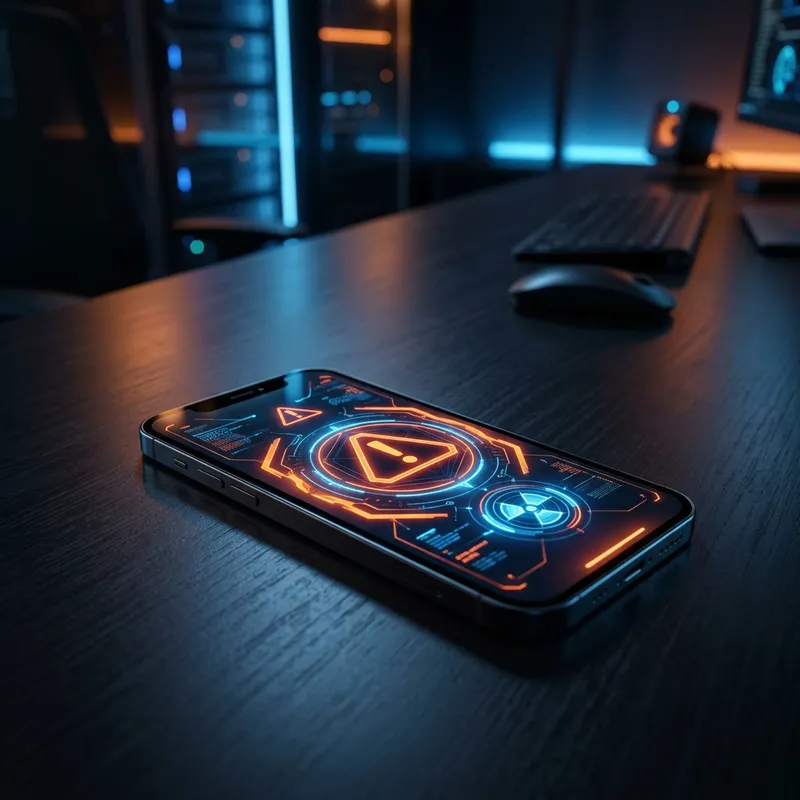
If you woke up startled in the early hours of Saturday, June 20, 2026, with your phone blaring a loud, high-pitched extreme emergency alarm containing the bizarre word "misanthropy," you are not alone.
Millions of Brazilians in states like São Paulo, Rio de Janeiro, Paraná, Bahia, Mato Grosso do Sul, and the Federal District experienced the exact same terrifying event.
Faced with an notification classified as an "Extreme Alert," almost everyone's immediate reaction was the fear of an imminent disaster or the suspicion that their own mobile device had been hacked by cybercriminals.
First of all, let's deliver the answer that matters most for your peace of mind: your phone has not been hacked, it is not infected with malware, and your personal data security has not been compromised.
Your smartphone (whether Android or iPhone) simply obeyed a perfectly legitimate and official network command sent by cellular towers.
The real vulnerability was not in your device, but in the Brazilian government's digital infrastructure.
The central interface that controls emergency broadcasts was breached, allowing cybercriminals to trigger fake national security alerts on a massive scale.
Our team conducted direct and exhaustive tests on the official communication channels of the gov.br portal during Saturday afternoon (06/20/2026).
The tests confirmed severe instability across multiple federal government subdomains, including the portal of the Ministry of Integration and Regional Development (MIDR).
Access to official notes is unavailable to thousands of citizens, returning frequent connection timeout errors (TLS Handshake Timeout).
This demonstrates that the cyber incident triggered a chain reaction, forcing the government's IT team to isolate servers or suffer a massive overload of access due to the public panic generated.
Disclaimer Note: DomineTec is an independent technology portal and does not hold any affiliation with government entities, the National Civil Defense, or the Ministry of Integration. The content of this article is strictly of a journalistic and educational nature, based on official public authority statements and cybersecurity technical analyses.
To help you understand the magnitude and technical and national security implications of this unprecedented event, we have prepared this deep and detailed analysis of what happened.
1. What was the "Misanthropy" Alert Received on Phones?
The incident began late Friday night (June 19) and extended into the early hours of Saturday (June 20, 2026).
Between 11:41 PM and 1:23 AM, the system triggered a total of 10 unauthorized notifications.
Nine of these broadcasts were sent using a direct cellular transmission technology called Cell Broadcast, classified with the highest level of severity ("Extreme Alert"), and one broadcast occurred via traditional SMS.
The element that caused the greatest perplexity and panic was the textual content of the alert.
Instead of providing evacuation instructions for real disasters like floods, dam collapses, or landslides, smartphone screens displayed bizarre terms like "misanthropy" or "misantropi4" (replacing the letter 'a' with the number '4', a common spelling in hacker culture known as *leet speak*).
The geographical distribution of the alert was broad, covering major urban centers and populous residential areas in several states:
- São Paulo (SP): Reports in the state capital and metropolitan region.
- Rio de Janeiro (RJ): Broadcasts recorded in several areas of the capital.
- Federal District (DF): Notifications received in Brasília and satellite cities.
- Paraná (PR): Curitiba and its region recorded high alarm activity.
- Bahia (BA): Reception confirmed in Salvador and coastal areas.
- Mato Grosso do Sul (MS): Alerts startled residents in Campo Grande.
Since the technology used is designed to save lives in cases of immediate threat to survival, the triggered alarm has properties that bypass the normal behavior of the smartphone's operating system.
This explains why so many people were frightened: the loud sound and continuous vibration occurred even on phones set to silent, vibrate, or "Do Not Disturb" profiles.
2. What Does the Word "Misanthropy" Mean and Why Was It Chosen?
The use of the word "misanthropy" in the alert text generated an explosion of Google searches during the night, becoming the most talked-about topic on social media within hours.
But what does this term actually mean and what does it reveal about the motivation behind the attack?
The etymological and philosophical definition of the term
From the Greek misanthropía, the term is the combination of the words mīsos (hatred, aversion) and *ánthrōpos* (human being, humanity).
It defines the feeling of aversion, contempt, distrust, or generalized hatred toward humanity.
In the history of philosophy, misanthropy is often associated with thinkers who viewed human society as essentially corrupt, hypocritical, or self-destructive.
Digital trolling or silent manifesto: The psychology behind the attack
In the context of cybercrime, the choice of such an unusual word with dark semantic weight serves multiple purposes for the attackers:
- Provocation and Trolling: The primary objective of many attacks on government systems is not immediate financial gain, but the search for notoriety or the mocking of public authority (trolling). Using an exotic term like "misanthropy" ensures that the attack is not mistaken for a common technical error in the Civil Defense system.
- Psychological Impact: By triggering an extreme disaster alarm associated with a word that refers to the "hatred of humanity," the attackers generate a sense of psychological discomfort and conspiracy theories, magnifying the organic reach of the news.
- Ideological Signature: The expression functions as a digital signature of the group or individual. It is a silent manifesto about contempt for social structures and state organization, reflecting the very meaning of the word.
3. The Technical Anatomy of the "Defesa Civil Alerta" System
To understand how the intrusion occurred and why your smartphone reacted the way it did, we need to analyze the technological infrastructure of the Defesa Civil Alerta, a system recently implemented in Brazil to modernize crisis communication.
Cell Broadcast Technology vs. Traditional SMS
Unlike standard SMS messages, which are sent individually to each phone number on the network (creating processing queues and bottlenecks), the alert system uses the **Cell Broadcast** protocol.
The technical operation is structured as follows:
- Antenna Transmission: The message is sent from the central unit directly to specific cellular transmission towers (BTS - Base Transceiver Stations).
- Geographical Broadcast: All towers in the designated area transmit the message simultaneously over the air.
- Anonymous Reception: Any phone within range of the signal from that tower receives the alert instantly. The system does not need to know the chip number, identity, or data plan of the user. It is a radio signal broadcast to everyone.
The table below compares the two main technologies for mass message delivery:
| Feature | Traditional SMS | Cell Broadcast (Extreme Alert) |
|---|---|---|
| Delivery Speed | Slow (individual delivery queues) | Instantaneous (milliseconds) |
| Geographical Accuracy | Low (based on chip registration) | Extremely high (delimitation by tower) |
| Bandwidth Consumption | High (network congestion) | Zero (dedicated radio channel) |
| Silence Bypass | No (respects app settings) | Yes (forced emergency sound) |
| Data Dependency | No (uses basic cellular network) | No (uses basic cellular network) |
How the Extreme Alert Bypasses Silent Mode and "Do Not Disturb"
Modern operating systems, such as Android (from Google) and iOS (from Apple), have emergency reception modules integrated directly into the system kernel.
When the phone's radio modem detects a Cell Broadcast transmission flagged with the highest severity ("Extreme Alert"), it ignores all software volume control rules, including the restrictions of "Do Not Disturb" mode and the device's physical mute switch.
This aggressive behavior is a requirement of international telecommunications standards.
In real catastrophe scenarios (such as a tsunami or imminent dam collapse), an alert that did not sound on silent would be useless if the user were asleep.
The Role of IDAP (Interface de Divulgação de Alertas Públicos)
To operationalize these radio broadcasts, the National Civil Defense uses a central integration software known as **IDAP (Interface de Divulgação de Alertas Públicos)**.
It is in this graphical and API interface that government operators type the emergency text, draw the geographical polygon on the map corresponding to the risk areas, and send the command to the telecom operators (Vivo, Claro, TIM) to forward to the cell towers.
4. The Failure in National Security: How the Central System Was Bypassed
The unauthorized sending of "misanthropy" messages highlighted a critical vulnerability in Brazilian digital infrastructure.
The big question mobilizing cybersecurity experts and federal agents is: how did the hackers manage to penetrate this system?
The Attack Vector: What We Know About the Breach at MIDR
Preliminary investigations point out that the attack did not occur directly on the telecom operators' networks, but rather on the IDAP servers administered by the Ministry of Integration and Regional Development (MIDR).
The attack vectors under investigation include:
- Leak of Operator Credentials: The use of login credentials of Civil Defense employees obtained through targeted phishing attacks or infection by infostealers (malware that steals passwords stored in the browser).
- API Exposed Without Strong Authentication: Potential vulnerabilities in the integration APIs linking IDAP to the telecom servers, allowing forged HTTP requests to be processed as if they came from authorized terminals.
- Absence of MFA (Multi-Factor Authentication): The lack of physical security keys or dynamic tokens for approving critical national security broadcasts, facilitating access with only traditional username and password.
DomineTec Tip: In government infrastructure environments, the absence of robust multi-factor authentication (MFA) on national broadcast control panels is considered a severe failure of compliance with international cybersecurity standards. If you work online and need to safeguard your traffic, check out our guide on finding the best VPN for remote work.
Lateral Movement: The Greatest Risk to Digital Public Safety
The main reason that led the federal government to quickly shut down several services associated with the `gov.br` portal during the night was the fear of so-called **lateral movement**.
In network security engineering, lateral movement occurs when an attacker uses the initial access of a secondary system (such as the alert platform) to exploit vulnerabilities and jump to more restricted internal networks, such as civil identification databases, tax records, or public security databases.
By shutting down external access and isolating the affected MIDR servers, the government's cybersecurity incident response team (CTIR Gov) limited the scope of the attack, containing the malicious action only to the broadcasting of messages.
Who is Responsible? The Federal Police (PF) Line of Investigation
The Federal Police opened a special inquiry to investigate the case from the perspective of sabotage and crime against national security.
The lines of investigation analyze:
- Hacktivism Group Attack: National or international groups known for attacking government infrastructures to expose public vulnerabilities.
- Insider Action (Internal Attack): The possibility of private access keys or credentials being leaked by employees or IT service providers with legitimate access to the system's code.
5. The Google Maps Error: How the SOS Alert Replicated the Panic
In addition to sound notifications on phones, many users noticed that red dots indicating "extreme flood alert" and other disasters began to appear in the **Google Maps** app.
This led many to believe that the attack had been carried out directly on Google's servers.

API Integration Between Civil Defense and Google
The truth behind this phenomenon is strictly about software architecture and automated integrations.
Google developed a global platform called **SOS Alerts** to assist the population in times of crisis.
For this tool to display accurate risk zones on the city traffic map, Google's algorithm continuously consumes public data from government APIs (such as Civil Defense).
The technical workflow occurred as follows:
[Hacker Intrusion on IDAP/MIDR]
        ↓
[Dispatch of Fake Alert with 'Misanthropy' text]
        ↓
[Government API publishes the Official Emergency Alert]
        ↓
[Google Algorithm automatically consumes the Civil Defense API]
        ↓
[Google Maps plots risk nodes with the 'Misanthropy' message on the map]
Why Did Maps Point to False Flood and Disaster Areas?
Since the hacker alert was issued through the official channel and digitally signed by the authorized keys of the Brazilian system, Google's servers interpreted the notice as 100% true.
Google Maps then automatically plotted alert polygons over the map of the affected cities and applied the text that accompanied the transmission.
As soon as the Civil Defense took the API offline for emergency maintenance, Google Maps stopped receiving official updates and cleared the false markers from users' maps in the subsequent hours.
6. Has My Phone Been Hacked? Explaining User-Side Security
The biggest concern for those who received the loud alarm in the middle of the night is the safety of their smartphone.
Many people fear that receiving the "misanthropy" alert might have opened backdoors for the theft of bank data, photos, or contacts.
Why Your Smartphone Was Not Infected with Malware
The technical answer is reassuring: **receiving a Cell Broadcast signal is a passive radio hardware operation.** There is no way for the signal to inject malicious code into your phone.
The reception process works as follows:
- Your phone's radio modem chip monitors a specific frequency reserved for broadcast announcements.
- When an emergency message arrives, the modem decodes the raw text into a character string.
- The operating system displays this text string on the screen and plays the pre-recorded emergency alarm sound from the system's own memory.
There is no file download, no malicious links installed automatically, and the attacker did not establish a two-way connection with your smartphone.
Your device simply functioned exactly as it was designed to function in the presence of an emergency alert signal.
To understand how to protect your personal data online, please refer to our recommendations on how to prevent data leaks.
7. Sabotage vs. Pentest: What is at Stake?
In today's geopolitical and technological landscape, an attack that compromises a nation's crisis communication channel with such ease raises a red flag about the security of our critical infrastructures.
Implications for the Country's Critical Infrastructure
The Cell Broadcast system is considered a strategic asset of National Civil Defense.
If hackers can send unauthorized "misanthropy" messages to cause panic, they could theoretically use the same vulnerability to sabotage real evacuation processes or send instructions of mass panic during a real disaster.
This type of attack is classified as **sabotage of critical information infrastructure**.
It affects the population's trust in the State's alert system: if people start believing that all emergency sound warnings are fake hacker alarms, they will ignore legitimate alerts when a real disaster actually occurs.
Previous Cases of Intrusion in Alert Systems Worldwide
The Brazilian incident is not an isolated case in global cyber history.
Other countries have faced similar problems that revealed flaws in their central defenses:
- Hawaii Missile Alert (2018): Although caused by an internal operational human error and not by hackers, the triggering of an imminent ballistic missile attack alert in Hawaii caused panic for 38 minutes before being denied. The case showed how centralized broadcast systems are vulnerable to process failures.
- Dallas Siren Hack (2017): Hackers breached the radio transmission systems of the city of Dallas, USA, and simultaneously activated all 156 tornado emergency sirens in the middle of the night, keeping them sounding for over an hour. The attack exposed the use of radio frequencies without strong encryption.
8. Official Position of the Authorities (Anatel, MIDR, and Operators)
Following the incident and the block of external connections to the platform, public agencies spoke out to clarify the measures underway.
The Ministry of Integration and Regional Development Press Conference
The National Secretariat for Protection and Civil Defense (SEDEC) issued a note confirming that the message dispatch platform was temporarily deactivated.
External access keys to IDAP were revoked, and the system is undergoing a comprehensive digital forensic audit conducted in cooperation with federal government experts.
The National Telecommunications Agency (Anatel) also spoke out, reiterating that mobile operators act strictly as neutral retransmitters of the signal sent by the government's central system and that there are no signs of data leaks or vulnerabilities in the telecom operators' internal networks (Vivo, Claro, and TIM).
Why Taking the System Offline Was the Only Emergency Alternative
Since the attack vector compromised the legitimate credentials of the administrative dispatch panel, the national broadcast security system could not differentiate fake commands from true ones automatically.
Taking down the IDAP system and suspending the transmission channel of the towers was the only immediate effective measure to prevent new unwanted dispatches in the subsequent hours, protecting the sleep and mental health of citizens in the affected regions while the criminal investigations proceed.
9. Step-by-Step Tutorial: How to Manage Emergency Alerts on Your Phone
Although disaster alerts are vital for public safety, many users want to know how to manage notifications on their phones to avoid unauthorized dispatches during periods of instability.
How to Configure or Disable Emergency Alerts on Android
If your device uses the Google operating system, follow the procedure below to manage alerts:
- Open the **Settings** on your smartphone.
- Navigate to the **Safety & Emergency** section (or search for "Wireless Emergency Alerts" in the settings search bar).
- Tap **Wireless emergency alerts**.
- On this screen, you will see individual control switches for the different levels of alerts. You can enable or disable the options according to your notification preferences.
How to Configure or Disable Emergency Alerts on iPhone (iOS)
If you use an Apple device, the control is located in the notification settings:
- Open the **Settings** app on your iPhone.
- Select the **Notifications** option.
- Scroll down to the very bottom, past all of your installed apps.
- In the **Government Alerts** section, you will find the control switches for the Civil Defense system alerts.
[Important] Why You Should NOT Leave These Alerts Permanently Disabled
Despite the inconvenience and scare caused by the fake "misanthropy" alarm, **DomineTec strongly advises that you keep these government alerts enabled on your phone.**
The Cell Broadcast system is the most effective way for the State to warn about extreme dangers in real time.
If you live in areas prone to floods, landslides, or near dams, disabling these alerts could mean missing a vital warning that would make all the difference in your safety during a real catastrophe scenario.
10. Frequently Asked Questions (FAQ)
Does the 'Misanthropy' alert represent any real weather danger?
No. The alert was a false dispatch resulting from a cyber intrusion in the administrative system of the National Civil Defense. There is no relationship with weather events, storms, floods, or any physical danger to your life in the affected areas.
Has Google Maps already cleared the false markings from the map?
Yes. Since Google Maps alerts are synchronized in real-time with the official government database, the deactivation of the Civil Defense platform caused Maps to automatically clear the false flood markers within a few hours.
When is the Defesa Civil Alerta system expected to work again?
The system will remain temporarily offline until the Federal Police concludes the preliminary investigations of the attack and the SEDEC and MIDR IT security teams implement new layers of protection, such as physical access keys and mandatory multi-factor authentication (MFA) for all broadcast system operators.
Did the message consume credits or mobile data from my plan?
No. Cell Broadcast technology operates through a dedicated cellular modem radio frequency. It works completely passively on the device, not depending on data plans, credits, or an active internet connection to be displayed on the screen.
11. Conclusion: The Challenge of Protecting Critical Infrastructure
The bizarre "misanthropy" hacker attack left a clear lesson: in an increasingly digitized and integrated world, a nation's physical security systems depend entirely on its cyber defenses.
The fact that hackers could trigger emergency alerts on the phones of millions of people in an unauthorized manner shows that our national cybersecurity is vulnerable and in urgent need of modernization.
While the national platform remains under audit and with restricted access, continue to follow official news through established local press channels, independent state and municipal portals, and traditional emergency numbers (199 for Civil Defense and 193 for the Fire Department).