How to Enable and Configure Guest Network Isolation on Router

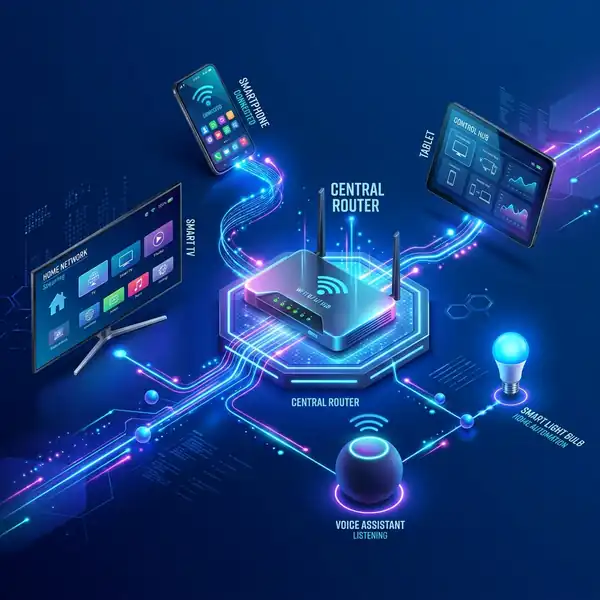
With the exponential rise in residential cyberattacks and the proliferation of vulnerable Smart Home and Internet of Things (IoT) devices, securing home and business local networks has become a critical technical priority. Leaving visitors and clients connected to the same local area network that stores your personal computers, NAS storage servers, and private financial records represents a severe security risk. To enable and configure guest network isolation on a router, you must access the router's web administration panel using its default gateway IP address (such as 192.168.0.1 or 192.168.1.1), enable the "Guest Network" option, ensure the setting to "Allow guests to access local network resources" is unchecked (or enable "AP Isolation / Client Isolation" on advanced firmwares), and save the settings. This procedure establishes a logical firewall barrier at Layer 2 and Layer 3, allowing guests to access the public internet while blocking them from communicating with your private devices or accessing the router's admin portal.
Wireless client isolation is one of the most effective security configurations recommended by network engineers to mitigate lateral movement attacks and packet sniffing. If you want to configure your wireless security and improve your overall home network architecture, feel free to read our detailed guide on setting up the TP-Link Deco M4 with a Vivo modem or learn what to do when your internet is slow on Wi-Fi but fast on Ethernet cable connections.
1. What Is Wireless Client Isolation (AP Isolation) and How Does It Work?
Wireless client isolation — also referred to as AP Isolation, Wireless Isolation, SSID Isolation, or Client Isolation — is a security feature built into router and Access Point (AP) firmwares. When enabled, it changes the default Layer 2 packet forwarding rules on your wireless network.
On a standard wireless network with isolation disabled, the router acts as a Layer 2 switch for wireless clients. If Device A (e.g., a visitor's smartphone) needs to send packets to Device B (e.g., your personal laptop), the router receives the Ethernet frames from Device A and forwards them directly to Device B. While this default behavior allows for easy file sharing and printer discoverability, it also exposes your local devices to unauthorized network scans and attacks.
When you enable client isolation, the router applies the following logical networking rules:
- Intra-BSS Traffic Blocking: The router blocks any wireless traffic originating from a client on a specific SSID from being forwarded to another client on the same SSID or associated local subnets. Each wireless client can communicate only with the default gateway (the router) to reach the internet, making clients invisible to one another.
- Broadcast and Multicast Filtering: Broadcast and multicast frames (such as ARP requests and mDNS device discovery announcements) sent by guest devices are not forwarded to other isolated ports. This prevents network scanning tools like Nmap or Advanced IP Scanner from discovering your primary network devices.
- Firewall Filtering Rules (eBTables & IPTables): Internally, the router's embedded Linux-based operating system uses
ebtables(a Layer 2 firewall) andiptables(a Layer 3 firewall) to drop any data frame whose destination MAC address belongs to another local device, forwarding only packets destined for the router's WAN port.
2. Why Isolating Guests and IoT Devices Is Vital for Home Security
Leaving your local network unsegmented exposes your private data to security threats. Enabling logical isolation helps mitigate these key risk factors:
- Preventing Malware Dissemination: If a visitor connects a smartphone infected with self-replicating malware (like network worms) to your Wi-Fi, the malware will scan the subnet for open ports (such as SMB port 445 or RDP port 3389). If it finds unpatched computers on your network, it will infect them. Client isolation prevents this scanning and containing the infection.
- Mitigating Man-in-the-Middle (MitM) Attacks: On an open network without isolation, a malicious user can execute ARP Cache Poisoning. By tricking local devices into sending data to their computer instead of the router, they can sniff passwords and sensitive data. Isolation stops ARP spoofing between clients.
- Securing Vulnerable IoT Devices: Smart home devices (like smart bulbs, plugs, and cameras) often lack regular security updates and contain known vulnerabilities. If an attacker gains control of an IoT device over the web, they can use it to launch attacks against other devices on the same network. Placing IoT devices on an isolated guest network protects your primary computers from compromise.
3. Step-by-Step Guide: How to Enable Client Isolation on Major Router Brands
The steps to configure wireless client isolation depend on your router's brand. Here is how to enable this feature on three popular router brands:
Configuring Isolation on TP-Link Routers (Archer & Deco)
TP-Link makes it easy to set up guest isolation using either their web interface or the Deco mobile app:
- Open a browser, enter your router's IP address (typically
192.168.0.1orhttp://tplinkwifi.net), and log in. - Click on the "Advanced" tab at the top of the screen.
- In the left menu, expand "Wireless" and click on "Guest Network".
- Enable the guest network for the 2.4 GHz and 5 GHz bands, choose an SSID (e.g., "Secure_Guest"), and set a strong WPA2-PSK password.
- Find the setting labeled "Allow guests to access my local network". Ensure this checkbox is **unchecked**. Click "Save" to apply the settings.
Configuring Isolation on ASUS Routers (ASUSWRT)
ASUS provides advanced options to control intranet access on guest networks:
- Log into your ASUS admin page at
192.168.50.1. - In the left sidebar under the "General" section, select "Guest Network".
- Choose a guest SSID slot and click "Enable".
- Find the setting labeled "Access Intranet" and set it to "Disable".
- To isolate all clients on your primary network without a separate guest SSID, go to the "Wireless" menu, click the "Professional" tab, select your frequency band, and set "Set AP Isolation" to **Yes**. Click "Apply."
Configuring Isolation on Intelbras Routers (Wi-Force Series)
For Intelbras routers, the settings are located in the Wi-Fi configuration menu:
- Open your browser and navigate to
192.168.1.1orMeuIntelbras.localto log in. - Go to the main menu and select "Rede Wi-Fi" (Wi-Fi Network).
- Select the "Wi-Fi de Visitas" (Guest Wi-Fi) option.
- Enable the guest network. Find the setting labeled "Permitir acesso à rede local" (Allow access to local network) and ensure it is **unchecked**. Save your settings.
4. Troubleshooting Guest Network Isolation Issues
If you experience connectivity issues or device communication problems after enabling guest network isolation, use this table to find a solution:
| Symptom | Likely Cause | Recommended Solution |
|---|---|---|
| Chromecast or Apple TV does not show up for casting on the guest network | Client isolation blocks the mDNS multicast discovery frames required to locate casting devices. | This is expected behavior. To cast, connect your smartphone to your primary private network where isolation is disabled. |
| Guests can still load the router's login page | The router's firewall does not block HTTP/HTTPS requests to the gateway's IP from the guest subnet. | Look for an option to "Block Web Access to Gateway" for guest clients, and ensure your router admin password is secure. |
| Guest Wi-Fi signal drops in distant rooms | The guest network is only enabled on the 5 GHz band, which has shorter range and less wall penetration. | Configure your guest network to run in dual-band mode (both 2.4 GHz and 5 GHz) to improve coverage in areas with physical obstacles. |
| Guests cannot connect to the internet (no IP assigned) | The router's DHCP pool for the guest VLAN has run out of IP addresses. | Log into the router, go to DHCP settings, and expand the IP address range or reduce the DHCP lease time (e.g., to 2 hours). |
5. VLAN-Based Isolation vs. SSID-Based Isolation
In mid-sized to large business environments, simple SSID-based isolation may not meet security standards. It is important to understand the technical difference between SSID-based isolation and VLAN-based segmentation:
On standard consumer routers, SSID-based isolation runs on a single logical interface. The router uses software rules to block Layer 2 client-to-client traffic on the same SSID. However, the devices still share the same physical radio resources and IP range. If an attacker manages to bypass the router's firmware rules, they might access other subnets. In contrast, VLAN-based isolation (IEEE 802.1Q) assigns a unique numerical tag to all packets from the guest network at the hardware level. Managed switches and firewalls read these tags and route the traffic to an isolated gateway, creating an impenetrable security boundary between guest devices and internal servers.
6. Configuring VLANs on Managed Switches for Enterprise Isolation
For enterprise-grade security, you should configure VLANs on your managed switches to isolate guest traffic across your physical cabling. Here is a step-by-step technical guide to setting this up:
- Access the Switch Admin Interface: Open a browser, enter the IP address of your managed switch (e.g.,
192.168.1.2), and log in to the management dashboard. - Create the Guest VLAN: Navigate to the "VLAN" or "802.1Q VLAN" menu. Click "Add VLAN," assign a VLAN ID (e.g., VLAN 10), and give it a name like "Guest_Traffic."
- Configure Port Tagging (Trunk Ports): Locate the port connected to your firewall or router (usually the uplink port). Set this port as a **Tagged (T)** member of VLAN 10. This allows the switch to pass the VLAN 10 tag to the router.
- Configure Access Ports (Untagged Ports): Locate the ports connected to your guest wireless access points or wired public jacks. Set these ports as **Untagged (U)** members of VLAN 10. Additionally, change the Port VLAN ID (PVID) for these ports to **10**. This ensures any incoming traffic from these ports is tagged with VLAN 10.
- Configure the Gateway/Firewall: Log into your router or firewall (e.g., pfSense or Cisco ASA). Create a sub-interface on the corresponding physical port with tag 10, configure a separate DHCP range (e.g., 10.10.10.1/24), and create firewall rules to block traffic from VLAN 10 to your primary VLAN (VLAN 1).
7. Understanding the Security Risks of Intra-BSS Communication
When client isolation is disabled, devices on the same SSID can communicate using Intra-BSS (Basic Service Set) transmission. Under standard IEEE 802.11 rules, when Device A wants to send data to Device B on the same Wi-Fi network, the packets are sent to the Access Point, which immediately redirects them back to Device B without routing them to the wired network. Because this traffic never reaches the router's Layer 3 firewall, any security rules you have configured on your router are bypassed. This makes Intra-BSS communication a major security loophole if you have guests or untrusted devices on your network. Enabling AP Isolation forces the Access Point to drop these local frames, protecting your devices from direct attacks.
Frequently Asked Questions
Can I use my Wi-Fi printer if client isolation is enabled?
If your device is connected to a guest network with client isolation enabled, you will not be able to connect to or print from a local Wi-Fi printer. To print, you must connect your device to the primary private Wi-Fi network where local client communication is permitted.
Does enabling client isolation slow down Wi-Fi speeds?
No. Client isolation is a logical filtering rule executed by the router's processor. It does not affect the physical radio transmission speeds or latency. In fact, by filtering out unnecessary broadcast and multicast traffic, it can slightly improve wireless efficiency.
Does client isolation block Windows folder sharing?
Yes. Client isolation blocks NetBIOS and mDNS protocols, which Windows uses to discover shared folders and devices on the local subnet. When connected to an isolated guest network, your Windows Explorer "Network" tab will appear empty.
Can I enable isolation only on the 2.4 GHz frequency band?
Yes. Most modern routers allow you to customize settings for each band. You can set up an isolated guest network on the 2.4 GHz band for smart home (IoT) devices, while keeping the 5 GHz band on the primary network unisolated for local file sharing and media streaming.




