How to Watch Recorded Intelbras Videos on Phone (Step-by-Step)
How to Watch Recorded Intelbras Videos on Phone: Step-by-Step Technical Guide
Learning how to watch recorded Intelbras videos on a phone remotely requires identifying the specific application compatible with your hardware—either Intelbras Mibo Cam (for the Mibo standalone smart camera line, including iM3, iM4, iM5) or Intelbras iSIC Lite / iSIC 6 (for professional CCTV systems connected to Multi-HD or VIP series DVRs/NVRs)—along with configuring NTP (Network Time Protocol) time synchronization and enabling remote viewing through the P2P Intelbras Cloud service. This process lets you access security footage saved on local Class 10 MicroSD cards, NVR/DVR hard drives, or Mibo Cloud subscription servers. To ensure seamless playback without buffer delays or connection drops, users must verify local upload speeds and clear the app cache periodically.
1. Identifying Your Hardware: Mibo Cam App vs. iSIC Lite App
Intelbras distributes its home and commercial security products across two distinct categories, each requiring a different mobile app and network configuration architecture for playing back recorded files on a smartphone:
Standalone Smart Wi-Fi Cameras (Intelbras Mibo Cam)
This product category includes consumer cameras like the iM3, iM4, iM5, and iM7 series. These cameras operate independently of a central recorder, connecting directly to your home's 2.4 GHz Wi-Fi router. They store video clips locally on a MicroSD card inserted into their built-in card slot or upload footage to the proprietary Intelbras cloud service (Mibo Cloud). The correct mobile app to set up, view, and replay video from these models is **Intelbras Mibo Cam**.
Professional CCTV Systems with DVR/NVR Recorders (iSIC Lite)
If your property is secured by a multi-camera wired setup (using coaxial or UTP Ethernet cabling) connected to a centralized digital video recorder (DVR or NVR), your surveillance footage is saved onto SATA hard drives installed inside the recording unit. For these systems, individual cameras do not have internal memory card slots. To watch recorded videos remotely on your phone, download the **Intelbras iSIC Lite** app. It connects to the DVR or NVR using the free Intelbras Cloud P2P network service.
2. How to Replay Footages in the Mibo Cam Mobile App
If you own a standalone smart Wi-Fi camera (like the Mibo iM3 or iM5), use this step-by-step process to review historical recordings:
- Open the Mibo Cam App on your Android or iOS smartphone and log in to the account registered to your security system;
- From the home dashboard, tap the live preview window of the camera you wish to inspect to launch its controls;
- Below the live stream interface, tap the **Playback** button (represented by a play symbol or timeline ruler);
- Select your preferred storage media for retrieval:
- Memory Card: Displays recordings saved on the local MicroSD card. Red or orange markers on the timeline represent motion alerts, while green or blue bars indicate continuous recording periods;
- Cloud (Mibo Cloud): Accesses video clips uploaded to Intelbras cloud servers (requires an active subscription). This option allows you to retrieve evidence even if the physical camera is stolen or damaged;
| Software Feature | Mibo Cam Application | iSIC Lite Application |
|---|---|---|
| Target Audience | Residential Wi-Fi Cameras (iM3, iM5, etc.) | Professional DVR / NVR Systems |
| Storage Type | Local MicroSD Card / Mibo Cloud | Internal SATA Hard Drives (HDD) |
| Connection Method | Automated P2P Cloud Setup | Intelbras P2P Cloud / DDNS / IP Port |
| Local Screen Recording | Yes (Integrated in-app gallery) | Yes (Saves direct to camera roll) |
| Cloud Backup Storage | Native Mibo Cloud Subscription | Requires NVR or External FTP Server |
3. DVR/NVR Settings: Port Forwarding, UPnP, and DMZ Setup
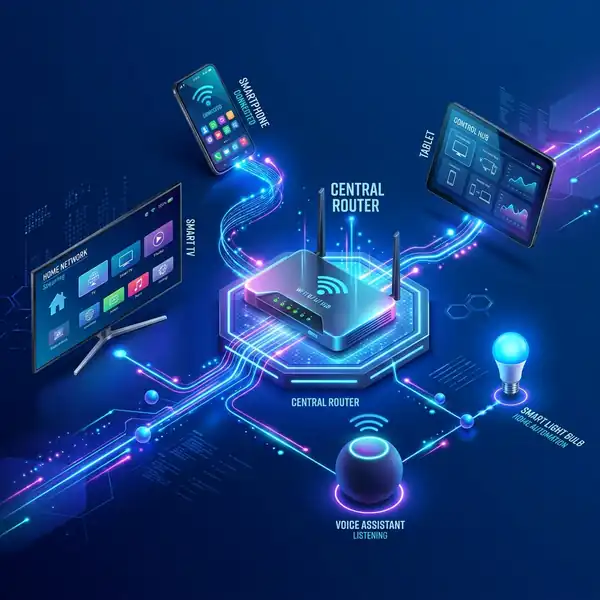
If you are utilizing the professional iSIC Lite system to playback recorded videos stored in a physical DVR unit, P2P Intelbras Cloud remains the easiest bridge method. However, if your home internet is deployed behind a Double NAT topology or CGNAT (Carrier-Grade NAT) environment common with regional ISPs, P2P lookups will constantly time out due to restricted incoming ports.
To bypass CGNAT limits, manual network configuration inside your fiber gateway is necessary. Navigate to the port forwarding or NAT section of your router dashboard and create rules pointing to your DVR's static local IP. Open the **Service Port (default 37777 TCP)** and **HTTP Port (default 80 TCP)**. Alternatively, setting the DVR's IP as a **DMZ (Demilitarized Zone)** client will expose its inbound interfaces directly to public requests, bypassing strict firewall locks.
For custom video integrations, enabling the RTSP (Real-Time Streaming Protocol) on your DVR allows you to verify and download recordings using third-party software (such as VLC). You can test the video stream via the RTSP path format: rtsp://username:password@LOCAL_IP:554/cam/realmonitor?channel=1&subtype=0.
4. Decoding H.265 Streams on Entry-Level Smartphones
The H.265 (HEVC) compression codec is standard on modern security cameras to minimize local storage footprints. However, desaturating and decoding H.265 video packets requires substantial graphics rendering power from your smartphone. When attempting to watch recorded security videos from an Intelbras system using H.265, entry-level or older smartphones can experience extreme frame drop, UI lag, or app crashes in Mibo Cam due to CPU overhead.
To resolve this without sacrificing local hard drive efficiency, configure your security cameras to record on **Dual Stream**. The primary channel (Main Stream) should continue recording in H.265 and high definition for security audits. The secondary channel (Sub-Stream) should be adjusted to a lower resolution (such as CIF or D1) using standard H.264 compression. In the Mibo Cam or iSIC Lite app, set the remote playback setting to "SD" to load this Sub-Stream, reducing mobile CPU loads by up to 80%.
5. Permissions and Push Notifications in Android and iOS
When seeking remote access, permissions within the mobile operating system (OS) dictate performance. If the Mibo Cam or iSIC Lite app is restricted from executing background processes, you will fail to receive real-time push alerts when motion is logged on the playback timeline. For both Android and iOS devices, verify that background app refresh is enabled under the application settings.
On Android, locate the app options, open the "Battery Optimization" panel, and set the status to "Not Optimized" or "Allow Unrestricted Background Data Access." This prevents the OS kernel from killing the socket connections maintained by the Intelbras Cloud daemon. On Apple iOS, toggle the "Background App Refresh" switch to active, which allows Mibo Cam to update local timelines and download short playback buffers dynamically in the background, providing faster loading speeds when you launch the main screen.
Configure custom alarms by setting up push alert schedules in the app dashboard. Instead of receiving persistent alerts for trivial events, adjust notification profiles to filter for specific hours (such as late night or working hours), keeping your notification feed clean and focused on critical events.
6. Troubleshooting Connection Timeouts and Missing Playback Data
A common issue users face when trying to watch recorded security footage remotely is slow loading, freezing video feeds, or receiving "Device Offline" or "Connection Failed" error messages. These issues are typically caused by network bandwidth bottlenecks or storage card errors.
To stream recorded high-definition videos to your phone, the camera requires a stable network **upload** speed at its physical location. If the Wi-Fi signal is weak (RSSI below -70 dBm), playback requests will fail due to connection timeouts. For standalone Mibo cameras, also verify that the storage media is mounted and working correctly. If your camera is not recording at all, refer to our step-by-step instructions on how to insert an SD card into the Intelbras iM3 camera to ensure the memory card is locked in place and formatted in FAT32.
Additionally, pay attention to device sharing and user access control. If you have already configured the camera on your phone and want to grant family members access to the playback controls without sharing your main administrative password, read our guide on how to share Mibo Smart camera access to configure secure viewer profiles.
7. Optimizing Your System to Prevent Playback Lag and Stuttering
To ensure smooth playback when reviewing recorded video clips on your phone, configure your Intelbras security system settings using these steps:
- Synchronize Device Clocks (NTP Server): Ensure that the time displayed on your DVR, NVR, or Mibo camera is accurate. Go to the date and time settings menu and enable NTP synchronization, pointing to standard time servers like
pool.ntp.orgortime.google.com. If the device clock is off by even a few minutes, the app timeline will show gaps and misalign recorded events; - Switch Playback to Sub-Stream (SD Mode): When watching recorded video on cellular networks (3G/4G/5G) or slower Wi-Fi connections, change the video quality in the playback menu from "HD" (High Definition) to "SD" (Standard Definition). The sub-stream uses about one-quarter of the bandwidth of HD video, allowing the timeline to load quickly and scrub smoothly;
- Clear the Mobile App Cache: If the Mibo Cam or iSIC Lite app is slow or lagging, go to your phone's system settings, select Apps, find the security app, and clear the cache. This deletes temporary files that can cause playback errors.
Frequently Asked Questions (FAQ)
What happens to recordings on the MicroSD card when it fills up?
By default, Intelbras cameras use circular overwriting. When the MicroSD card reaches its capacity, the camera automatically deletes the oldest recordings to make room for new video files, ensuring continuous operation without manual intervention.
Why are there no recording bars showing on my Mibo Cam timeline?
This usually means the camera does not detect the MicroSD card, or recording has been disabled in the app settings. Check the storage health menu in the app, format the card if it shows an error, and confirm that continuous or motion-based recording is enabled.
Can I view recordings on my phone if the home internet connection drops?
No. If the internet connection at the camera's location drops, you cannot access its recordings remotely, because the device cannot communicate with Intelbras P2P servers. However, the camera will continue to save recordings locally to its MicroSD card as long as it has power.
Can I retrieve footage from the Mibo Cloud if my camera is stolen?
Yes. This is the main benefit of cloud storage. Since the camera uploads motion clips to secure remote servers in real-time, any footage recorded up until the device was stolen remains accessible through the app on your phone.
Does iSIC Lite support audio playback alongside the recorded video?
Yes. If the connected camera has a built-in microphone or a physical audio line connected to the DVR, and audio streaming is enabled in the recording settings, you can hear audio by tapping the speaker icon on the playback interface.
How can I export recordings in their native format from the app?
To export video from the DVR via iSIC Lite, locate the playback, tap the crop tool, and save. The clip will be saved as a standard MP4 file on your smartphone, avoiding the need for old PC file converters.
Ensuring Continuous Operation for Your Home Surveillance System
Knowing how to access and manage your Intelbras camera recordings is essential for getting the most out of your security system. Sinking device clocks and choosing reliable storage options prevents data loss during security incidents. Keep your camera firmware and mobile apps updated to ensure compatibility, stability, and access to new playback features.