Recommended Reading: See also our guide on adding the Midjourney bot to your Discord server.
Recommended Reading: See also our guide on how to use Leonardo AI for free.
How to Use Midjourney for Free: Alternatives and Trial Guide
Learn how to use Midjourney for free with trial options and explore free alternatives for creating stunning AI art.
Introduction to Midjourney
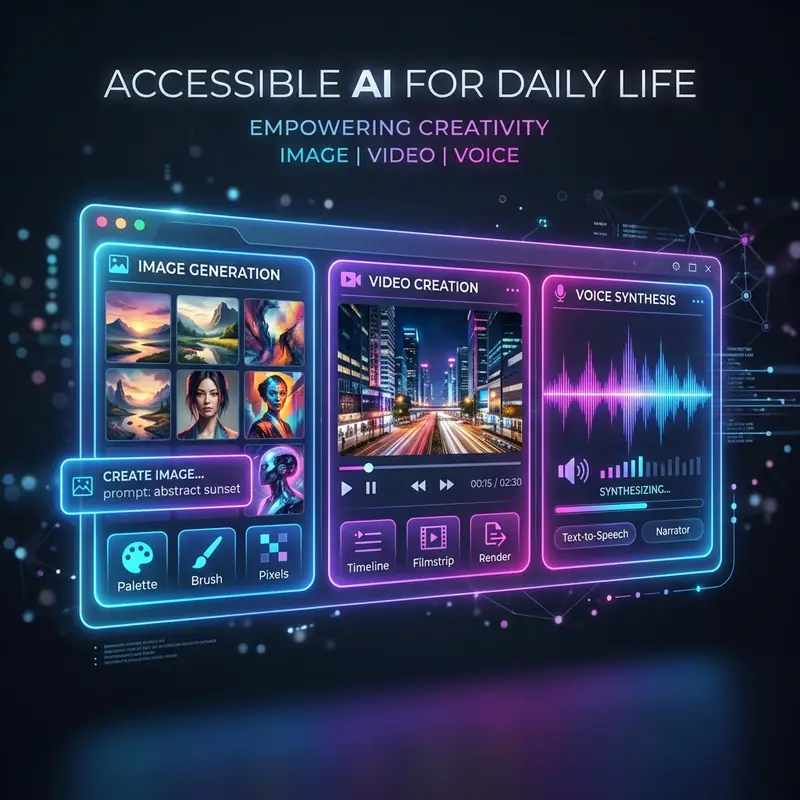
Midjourney is a cutting-edge AI tool that generates high-quality images from textual prompts. It operates primarily through the Discord platform, allowing users to create stunning visuals by simply typing in descriptive phrases. The service is subscription-based, but many designers, digital artists, and AI prompt engineers seek ways to explore its capabilities without committing to a paid plan. This guide provides an in-depth analysis of how to use Midjourney for free, including information on trial options, free alternatives, and practical usage tips.
Understanding Midjourney Pricing and Models
| Plan | Features | Price | Trial Availability |
|---|---|---|---|
| Free Trial | Limited usage, access to basic features, 25 image generations | $0 | Yes |
| Basic Plan | Unlimited image generations, faster processing | $10/month | No |
| Standard Plan | Priority access, 15 hours of GPU time | $30/month | No |
| Pro Plan | All features included, unlimited GPU time | $60/month | No |
How to Sign Up for Midjourney Free Trial
- Visit the official Midjourney website.
- Click on the "Join the Beta" button to link to the Discord server.
- Log in to your Discord account or create a new account if you don’t have one.
- Once in the Midjourney Discord server, locate the “#newbies” channel.
- Type the command
/imaginefollowed by your prompt to generate images. - Review the images generated and save those you like. You can generate up to 25 images during your trial period.
DomineTec Tip: To maximize your image generation, consider crafting more detailed prompts that specify style, color, and mood.
Using Midjourney Commands Effectively
Understanding the various commands and parameters in Midjourney can significantly enhance your image generation process. The following commands are essential for advanced users looking to optimize their prompts:
/imagine: This command is the primary way to create images. It requires a descriptive prompt.--ar: This parameter adjusts the aspect ratio of the generated image. For example,--ar 16:9for a widescreen format.--v: This sets the version of the Midjourney model you wish to use. For instance,--v 5utilizes the latest model.--q: Adjusts the quality of the image. A higher quality setting like--q 2may yield better results but takes longer to process.--style: This allows you to specify different artistic styles, such as--style 4afor a particular aesthetic.
Exploring Free Alternatives to Midjourney
While Midjourney offers a robust image generation experience, several free alternatives can also assist designers and artists in creating AI-generated art. Here are some noteworthy options:
- DALL-E Mini: A simplified version of OpenAI's DALL-E that allows users to generate images from text prompts without cost.
- Craiyon: Formerly known as DALL-E Mini, Craiyon is a free tool that produces images based on user prompts, though with lower fidelity compared to Midjourney.
- DeepAI: This platform offers various AI tools, including an image generator that creates visuals based on text input.
- Artbreeder: A collaborative tool that allows users to blend images and create unique artworks using AI.
- Dream by Wombo: An easy-to-use mobile app for generating artwork from textual descriptions, focusing on vibrant styles.
Optimizing Your Workflow with Midjourney
To leverage Midjourney effectively, it’s important to establish a systematic workflow that maximizes productivity and creativity. Follow these steps to streamline your process:
- Define Objectives: Begin by determining your goals for using Midjourney, such as specific artistic styles or projects.
- Research Prompts: Review other users’ prompts in the Midjourney community for inspiration.
- Draft Detailed Prompts: Create prompts that are rich in detail, specifying elements like color schemes, subjects, and artistic styles.
- Test Variations: Experiment with different parameters and prompts to see how small changes can yield vastly different results.
- Review and Curate: Save the images that resonate with your vision, and categorize them for future reference.
- Iterate: Use the feedback from your generated images to refine your prompts for subsequent attempts.
Conclusion
Using Midjourney for free is an excellent way for advanced designers, digital artists, and AI prompt engineers to explore the capabilities of AI image generation. By taking advantage of the free trial, understanding the commands and parameters, and exploring free alternatives, you can create stunning visuals without a financial commitment. Whether you are crafting intricate prompts or experimenting with various tools, the world of AI-generated art is at your fingertips. Always remember to respect the platform's guidelines and policies, and enjoy the creative process.
Advanced Techniques for Optimizing Midjourney Outputs
To maximize the potential of Midjourney, users can employ several advanced techniques that enhance the quality and relevance of the generated images. Understanding the intricacies of prompt engineering is important. This involves not just crafting a basic prompt but also utilizing specific keywords, modifiers, and parameters that can significantly influence the output. For instance, incorporating adjectives that describe the desired style or mood can guide the AI in producing images that align closely with the user's vision. Additionally, specifying the aspect ratio or resolution can help in achieving the desired composition, especially for projects requiring particular dimensions.
Another powerful technique is the use of reference images. Midjourney allows users to input URLs of images that can serve as inspiration or a baseline for the generated content. By providing a reference image, users can direct the AI to emulate certain styles, colors, or compositions present in the reference. This method is particularly useful for artists and designers who want to maintain a specific aesthetic or thematic consistency across their work. To implement this, users should ensure that the reference image is hosted on a reliable platform and is accessible to the Midjourney bot. The command syntax typically includes the URL followed by the prompt, allowing for a seamless integration of the reference into the creative process.
Moreover, users can experiment with different model versions and settings available within Midjourney. Each model iteration may have unique characteristics that affect the output. For example, some models may excel in generating highly detailed textures, while others might be better suited for abstract concepts. By switching between models, users can discover which one aligns best with their artistic goals. Additionally, utilizing parameters such as "chaos" can introduce variability in the outputs, allowing for a broader range of creative possibilities. Setting the chaos level higher can yield more unexpected and diverse results, which can be particularly beneficial for brainstorming sessions or when seeking inspiration for new projects.
Finally, leveraging community insights and resources can greatly enhance the Midjourney experience. Engaging with forums, social media groups, and online communities dedicated to Midjourney can provide users with valuable tips, prompt examples, and feedback on their work. Many experienced users share their successful prompts and configurations, which can serve as a learning tool for newcomers. Additionally, participating in challenges or collaborative projects can inspire users to push their creative boundaries and explore new techniques. By combining these advanced strategies with the foundational knowledge of Midjourney, users can unlock a higher level of creativity and efficiency in their digital art endeavors.
Advanced Techniques for Optimizing Midjourney Outputs
To maximize the potential of Midjourney, users can implement several advanced techniques that enhance the quality and relevance of generated images. One of the most effective methods is the use of prompt engineering. This involves crafting specific and detailed prompts that guide the AI in producing outputs that align closely with the user's vision. Instead of generic prompts, users should incorporate descriptive adjectives, specific styles, and even reference existing artworks or artists to influence the aesthetic of the generated images. For instance, instead of simply asking for "a landscape," a more effective prompt might be "a serene mountain landscape at sunset, in the style of Claude Monet." This level of detail helps the AI understand the desired outcome more clearly.
Another important aspect is the configuration of parameters within Midjourney. Users can adjust settings such as aspect ratio, quality, and stylization to tailor the outputs to their needs. The aspect ratio can be modified to fit specific formats, such as 16:9 for widescreen or 1:1 for social media posts. Additionally, the quality parameter can be increased to enhance the resolution of the images, which is particularly useful for print media or high-resolution displays. The stylization parameter allows users to dictate how closely the AI should adhere to the prompt versus its inherent artistic style. Experimenting with these settings can yield significantly different results, providing users with a broader range of creative options.
Incorporating iterative feedback into the creative process is another advanced technique that can lead to improved results. After generating an initial image, users should evaluate the output critically and identify areas for enhancement. This could involve rephrasing the prompt, adjusting parameters, or even combining elements from multiple outputs to create a composite image. Midjourney allows for variations on a theme, so users can generate multiple iterations based on a single prompt, each with slight modifications. By systematically refining the prompts and parameters based on the feedback from previous outputs, users can hone in on the desired aesthetic more effectively.
Lastly, leveraging community resources and collaborative platforms can significantly enhance the Midjourney experience. Engaging with forums, social media groups, and online communities dedicated to AI art can provide valuable insights and inspiration. Users can share their prompts, discuss techniques, and showcase their creations, which can lead to new ideas and approaches. Additionally, many users document their workflows and share successful prompt configurations, which can serve as a starting point for others looking to experiment with Midjourney. By tapping into the collective knowledge of the community, users can accelerate their learning curve and discover innovative ways to utilize Midjourney's capabilities.
Frequently Asked Questions
1. How long does the Midjourney free trial last?
The Midjourney free trial allows users to generate up to 25 images. Once this limit is reached, users will need to subscribe to a paid plan to continue using the service.
2. Can I use Midjourney without a Discord account?
No, you must have a Discord account to access Midjourney. The service operates exclusively through Discord, where users interact with the bot to generate images.
3. Are there any limitations to the free alternatives to Midjourney?
Yes, free alternatives typically have limitations regarding image quality, generation speed, and the range of styles available compared to Midjourney. They may also not offer the same level of customization.
Advanced Workflow Optimization and Prompt Structuring in Midjourney
To efficiently leverage Midjourney for free, understanding the intricacies of prompt structures and optimization techniques is paramount. Midjourney employs a unique set of parameters that allow users to tailor their image generation process according to specific needs. One effective way to enhance your results is by utilizing the prompt syntax to dictate the style, aspect ratio, and quality of the outputs. For instance, when constructing a prompt, you might use a structure like: /imagine prompt: a serene landscape, --ar 16:9 --q 2 --v 5. Here, --ar specifies the aspect ratio (16:9), --q adjusts the quality (higher values yielding better results), and --v sets the version of the model used. This level of precision ensures that the generated images align closely with your creative vision.
Moreover, prompt engineering is not merely about the technical parameters; it also involves the choice of descriptive language and context. For example, instead of a generic prompt like /imagine prompt: a cat, enhancing it to /imagine prompt: a fluffy Persian cat lounging on a vintage armchair in a sunlit room can yield vastly different results. The key here is to provide sufficient detail that guides the AI in understanding the scene's nuances, including textures, colors, and ambient light. This practice, known as 'contextual prompting', can significantly elevate the quality of your outputs, making them more aligned with your artistic intentions.
In addition to structuring your prompts effectively, incorporating variations and iterations can lead to more satisfying results. Midjourney allows users to create variations of a generated image through commands such as /variations or by utilizing the --v parameter to specify different artistic styles. For instance, if your initial output is /imagine prompt: a futuristic cityscape, --v 5, you could follow up with /imagine prompt: a futuristic cityscape, --v 4 to explore an alternative stylistic approach. Iterative prompting not only helps refine your vision but also provides an opportunity to experiment with different elements, leading to a more diverse portfolio of images.
Finally, to streamline your workflow and maximize efficiency, consider employing batch processing techniques. If you're working on a series of related images, such as character designs for a game, you can combine multiple prompts in a single command. This can be achieved through chaining commands or using a text file that contains pre-defined prompts, which can be executed in succession. For example, creating a text file named prompts.txt with entries like /imagine prompt: a warrior in armor, --ar 9:16 followed by /imagine prompt: a mage casting spells, --ar 9:16 can save time while maintaining consistency across your designs.
Expert Configurations and Workflow Optimization for Midjourney
To fully leverage the capabilities of Midjourney, it is important to understand the various configurations available for optimizing your workflow, especially when using it for free or exploring alternatives. One of the primary methods to enhance your experience is through efficient prompt structuring. When entering prompts, utilize specific keywords that guide the AI toward your desired output. For instance, the inclusion of terms such as "high-resolution," "cinematic lighting," or "vivid colors" can significantly alter the final image quality. Additionally, you can employ the --ar parameter to specify the aspect ratio of the generated images, using values like "16:9" for widescreen formats or "1:1" for square images, which can be critical depending on your intended use case.
Moreover, mastering the use of the available commands can offer advanced functionalities that enhance your creative process. For instance, when operating within the Midjourney interface, you can initiate image generation with specific parameters that tailor its performance. Using commands such as /imagine followed by your prompt can streamline the process and save time, especially during a creative sprint.
Another critical aspect of optimizing your workflow is the use of batch processing. When working on a series of related prompts, consider using a text file to store your prompts and invoke them in sequence. This is particularly useful for designers working on large projects that require consistency across multiple outputs. By utilizing the Midjourney interface effectively, you can set parameters globally, specify output directories, and even manage your usage quotas efficiently. Overall, mastering these advanced techniques will not only improve your experience with Midjourney but also enhance the quality and relevance of the generated images.