How to Turn Off Intelbras iM3 LED Status Light: Complete Guide

How to Turn Off Intelbras iM3 LED Status Light: Step-by-Step Configuration
To turn off the front LED status indicator on the Intelbras iM3 smart security camera, you must open the Mibo Cam application on your smartphone, select your camera's live view pane, tap the gear icon in the top right corner to access Device Settings, scroll down to find the "Camera Settings" (or Additional Settings) menu, and toggle off the "Status LED" (or Indicator Light) switch. This electrical instruction immediately disables the power going to the light-emitting diode on the front of the camera body without stopping the device's video recording, motion sensors, or sound alerts.
1. Electronic System Architecture of the Intelbras iM3 Status LED
The front LED indicator on the Intelbras iM3 is a low-power semiconductor diode connected to a specific GPIO (General Purpose Input/Output) pin on the camera's system board microcontroller. The system uses this indicator light to display different operation modes and network statuses using different colors and blinking patterns:
- Flashing Red: The camera is booting up or initializing the built-in operating system;
- Fast Flashing Red: The camera has lost connection to the local Wi-Fi router or is experiencing an SD card read-write error;
- Flashing Green: The device is in wireless pairing mode (Smart Config) and is ready to connect to the network;
- Solid Green: The camera is operating normally and has established a secure connection to the Intelbras cloud servers.
When you disable the status light in the Mibo Cam app, the firmware shuts off the voltage supplied to the GPIO pin connected to the LED, turning it off completely. This logical command does not alter the power supplied to the image processing unit or the optical CMOS sensor.
Under the hood, the IoT communications architecture for the Mibo Cam ecosystem uses cloud API endpoints and lightweight MQTT/WebSocket signaling to pass configuration commands. When you flip the toggle in your mobile app, a JSON command payload travels from your phone to the Intelbras cloud servers, which is then routed down to the camera's active TCP connection. The local daemon on the camera parses the command and instructs the kernel to drop the voltage state on the target GPIO pin, turning off the physical LED.
This command propagation requires stable Wi-Fi performance. If your wireless network has a poor Signal-to-Noise Ratio (SNR) or experiences high packet transmission delays, the MQTT connection keep-alive timeout will occur. When this happens, the Mibo Cam app will display a synchronization timeout error, and the software toggle will slide back to the enabled state automatically. Ensuring clean wireless transmission is critical for setting retention.
Additionally, make sure your camera is powered using the original 5V/1A USB power adapter. If you use a long extension cable, the copper conductor resistance will cause a voltage drop. If the input voltage drops below 4.7V, the CPU will fail to power the Wi-Fi module properly, causing the camera's LED to flash red continuously and ignore configuration sync requests.
2. The Physics of Reflections: Why You Should Turn Off the LED Behind Glass
Many homeowners position their Intelbras iM3 indoors on a windowsill, pointing through a glass pane to monitor outdoor entryways. If the green status LED remains active, its light will reflect off the surface of the glass. In optical physics, this is described as Fresnel reflection, where a portion of light is reflected back into the lens instead of passing through the glass. This reflection overexposes the image sensor, creating a green haze that makes nighttime footage unusable.
Additionally, the camera features infrared (IR) illuminators (operating at an invisible 850nm wavelength) for night vision. If the camera is placed directly behind glass, these IR beams will bounce off the pane, causing a bright white glare. To monitor through glass, you must disable both the status LED and the infrared LEDs (switching the camera to color night mode with external streetlights providing illumination). Turning off the status LED removes Fresnel glare on the window surface, allowing the CMOS optical sensor to record clean, unobstructed frames.
To optimize this window surveillance setup, construct a custom shroud. Using matte black paper, create a cone around the lens of the iM3 and push the camera body flush against the window glass. This prevents internal ambient room light from leaking into the lens, ensuring clear night recordings free of light pollution and internal reflections.
| LED Color & Pattern | Visual Behavior | Technical Meaning | Recommended Action |
|---|---|---|---|
| Flashing Red | Slow rhythmic pulse | Device is booting or disconnected from the network | Check your Wi-Fi signal and wait for initialization |
| Fast Flashing Red | Rapid blink alert | MicroSD card error or critical IP address conflict | Reformat the local storage card using the mobile app |
| Flashing Green | Fast rhythmic pulse | Ready for wireless network configuration | Open Mibo Cam app and pair the camera |
| Solid Green | Steady continuous light | Online, connected, and operating normally | Turn off in settings if you require discretion |
| LED Off | No light emitted | Light disabled in app, or device has no power | Verify camera operation via the mobile app |
3. Step-by-Step Settings Guide to Disabling the LED
Follow these configuration steps on your smartphone to turn off the status light on your Intelbras iM3 camera:
- Open the Mibo Cam application on your Android or iOS device and log in to your account;
- Select your installed Intelbras iM3 camera to open the live stream window;
- Tap the Gear Icon in the top right corner to open the Device Settings menu;
- Scroll down the settings list and select the Camera Settings (or Advanced Hardware Settings) option;
- Locate the option labeled Status LED or Indicator Light;
- Tap the toggle switch to turn it from blue (enabled) to gray (disabled);
- Return to the main screen. The status LED on the front of your iM3 will turn off immediately.
4. Understanding the Difference: Status LED vs. Infrared Night Vision LEDs
It is important not to confuse the system status LED with the infrared night vision illuminators. The status LED provides visual feedback on system operations and network connectivity. The infrared LEDs, however, emit invisible light in the 850nm spectrum to illuminate dark areas for the CMOS sensor.
Turning off the status LED does not disable the camera's ability to see in the dark. The infrared night vision will continue to function normally, activating the camera's mechanical IR-Cut filter (which produces a soft red glow around the lens) unless you manually disable night vision in the image settings menu.
The IR-Cut filter is a mechanical shutter controlled by a tiny solenoide coil. During the day, it covers the CMOS sensor to block infrared light and ensure accurate colors. At night, the camera pulls this filter aside with an audible click, allowing infrared light to hit the sensor so it can display high-definition black-and-white images. This physical switching process works independently from the status LED settings.
5. Troubleshooting: LED Stays On or Connection Fails
If you disable the status LED in the Mibo Cam app but the light remains on, the camera may be experiencing a synchronization error with the cloud servers. This typically happens due to local DNS errors on the router, which prevent the camera from resolving the control server addresses. Follow these troubleshooting steps to resolve the issue:
- Reboot the Camera: Unplug the camera from its power supply for 30 seconds, then plug it back in. This forces the device to pull its updated configuration from the server;
- Configure Router DNS: Access your router's administration page and replace the ISP's default DNS servers with stable public DNS, such as Cloudflare's primary (1.1.1.1) and Google's secondary (8.8.8.8). This ensures commands from your phone are resolved quickly by the camera;
- Update Device Firmware: Navigate to the settings page in the Mibo Cam app, select "Device Version," and check for pending firmware updates. Outdated firmware can cause bugs in the LED control subsystem;
- Perform a Factory Reset: Press and hold the physical Reset button on the back of the iM3 for 10 seconds while the camera is powered. Release the button when you hear the voice prompt. Re-pair the camera in the app and turn off the LED again.
If Wi-Fi drops prevent the camera from syncing commands with the app, ensure your wireless network is stable. For tips on diagnosing wireless issues, refer to our troubleshooting guide for when Alexa won't connect to Wi-Fi. A stable wireless connection ensures settings are synced successfully.
6. Optimizing Your Home Security Network and Storage
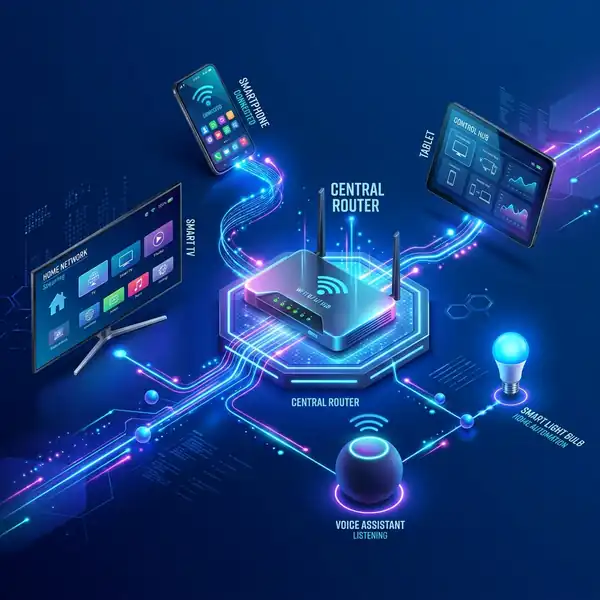
To get the best performance from your Intelbras iM3 camera, ensure your home wireless network is configured correctly. Installing the best Wi-Fi router for security cameras prevents streaming latency and ensures you receive instant motion alerts, even when the status LED is turned off.
Additionally, use high-quality SD cards to prevent local storage failures. If your camera experiences issues writing files to its storage card, check out our troubleshooting steps for when a Tapo C200 camera does not recognize the SD card, as these formatting and repair methods are compatible with many smart cameras.
7. Advanced Integration: RTSP Video Streaming and NVR Connectivity
For smart home enthusiasts and advanced network administrators, the Intelbras iM3 provides native support for **RTSP (Real Time Streaming Protocol)** over standard network port 554, as well as basic compatibility with the **ONVIF Profile S** standard. This allows you to stream your real-time video feeds directly into third-party Network Video Recorders (NVRs) or local home automation platforms like Home Assistant, Blue Iris, or Agent DVR.
The standard network path syntax for the Intelbras Mibo iM3 RTSP stream is structured as follows: rtsp://admin:SECURITY_CODE@CAMERA_IP_ADDRESS:554/cam/realmonitor?channel=1&subtype=0 (where the security code is the alphanumeric key printed on the silver specification sticker located on the back or bottom of the physical camera body). Operating your camera via a local RTSP feed keeps your video transmission completely within your local area network (LAN), bypassing external cloud storage latency. In these configurations, turning off the physical green LED is highly recommended to preserve the covert nature of your security camera installation and blend it into the room aesthetics. Ensure your local NVR firmware supports digest authentication protocols for RTSP feeds to establish a secure link.
Frequently Asked Questions (FAQ)
Does turning off the status LED disable the camera's night vision?
No. Deactivating the status LED only turns off the indicator light. The infrared night vision illuminators will continue to turn on automatically in dark environments.
Why is my Intelbras iM3 camera flashing a red light?
A flashing red light indicates that the camera has lost its Wi-Fi connection to the router or that the MicroSD card is corrupt and cannot be read.
How can I disable the red night vision lights when pointing the camera through a window?
Open the Mibo Cam app settings, locate the night vision options, and set the mode to "Off" or "Always Color." Note that you will need external lighting (such as streetlights) for the camera to record clear footage in the dark.
Can I cover the LED light with tape if the app setting fails?
Yes. If a firmware issue prevents you from turning off the LED in the app, you can cover the indicator light with a small piece of black electrical tape without affecting the camera lens.
Achieving Covert and Reliable Security
Deactivating the status LED on your iM3 camera is an effective way to keep your security hardware discreet. To optimize your home audio security as well, check out our guide on how to fix Yoosee camera audio noise and static to ensure your audio recordings are as clear as your video feeds.