How to Stop Robot Mop Pads Smelling: Technical Prevention Guide
How to Stop Robot Mop Pads Smelling: Technical Prevention Guide
If you use the mopping feature on your robotic cleaner and have noticed a sour or musty smell, here is the technical diagnosis: to stop robot mop pads from smelling, you must remove the microfiber pad immediately after every cleaning run, wash it using hot water (above 60°C or 140°F) and mild disinfecting detergent, dry it completely in direct sunlight or a dryer before reuse, and never leave standing water in the tank for more than 24 hours. The combination of residual moisture and organic dust trapped within the synthetic microfibers creates the perfect breeding ground for rapid bacterial growth and mold, which are directly responsible for the foul odor.
1. The Microbiology of Mop Odors: Bacteria, Fungi, and Stagnant Water
The development of foul odors on robot mop pads is a natural biological process. The pads are woven from synthetic microfibers (polyester and polyamide) designed to trap microscopic dirt. During a cleaning run, these fibers absorb organic dust, including human skin cells, pet dander, food residues, and airborne spores.
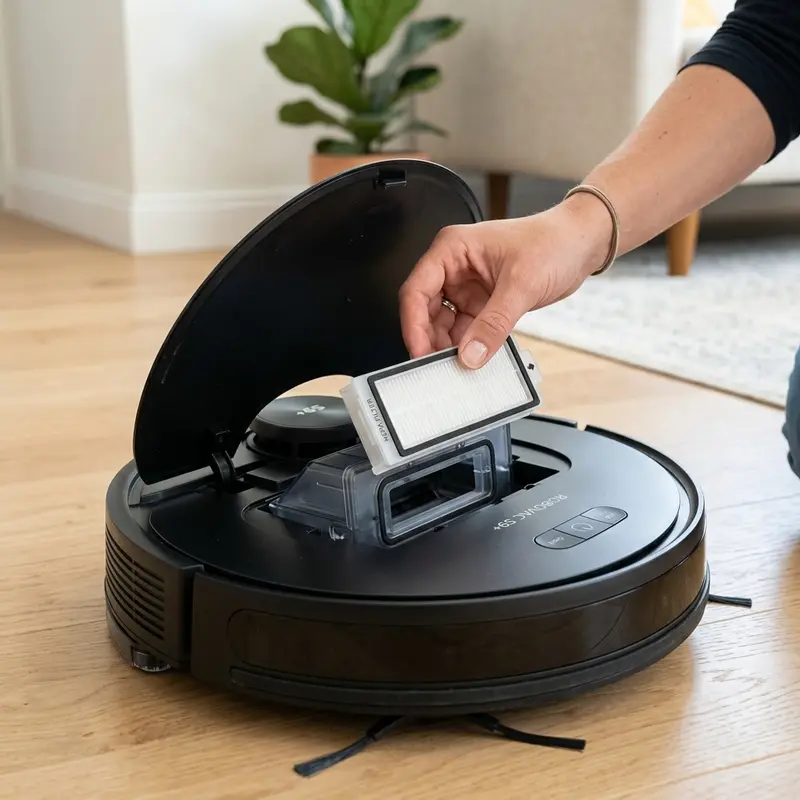
When the robot finishes its run and docks with a wet pad installed, the combination of stagnant water, battery heat, and organic matter creates an ideal environment for anaerobic bacteria and mold. Within 12 hours of constant moisture, these microorganisms multiply, breaking down the organic debris and releasing volatile organic compounds (VOCs) that cause the musty smell. If your vacuum's air filter is also dusty, read our guide on how to clean KaBuM! Smart 500 filter to maintain proper airflow and suction efficiency.
The most common bacteria associated with these musty odors are Pseudomonas aeruginosa and species of Bacillus. They thrive on the starches and fats harvested from your floors. When water evaporates slowly, the bacterial respiration produces sulfur compounds and volatile amines, creating the sour smell of rotting organic matter. These biological colonies anchor themselves to the plastic backing of the mop pad, creating a defensive layer known as biofilm that is highly resistant to casual rinsing.
2. Step-by-Step Microfiber Pad Sanitation Protocol
Rinsing the mop pad under cold tap water is not enough to kill the bacteria embedded deep within the microfibers. You must implement a regular chemical and thermal disinfection protocol:
- Immediate Removal: Never let the robot sit on its charging dock with a wet mop pad. Remove the mop frame as soon as the cleaning cycle ends;
- Thermal Disinfection: Wash the microfiber pad in hot water at a temperature of at least 60°C (140°F). Heat breaks down the cell walls of bacteria and releases trapped grease from the polyester fibers;
- Antibacterial Wash: Use a concentrated laundry detergent mixed with a tablespoon of white vinegar (acetic acid) or a fabric sanitizer. Acetic acid acts as a natural disinfectant and neutralizes organic odors without damaging the synthetic fibers;
- Complete Drying: Hang the pad in a well-ventilated area under direct sunlight. UV radiation from the sun kills remaining spores. Do not reuse the pad if it is still damp.
Avoid using fabric softeners during the wash cycle. Fabric softeners leave a thin layer of wax on the synthetic polyester and polyamide fibers, turning the microfiber hydrophobic. This drastically reduces the pad's capacity to absorb water and pick up dust during subsequent cleaning tasks. Sodium percarbonate (oxygen-based bleach) is also recommended during the hot wash to deep-clean the fibers without degrading the structural backing adhesive of the pad.
3. Cleaning and Disinfecting the Water Reservoirs
The robot's water tank can develop bacterial biofilms on its inner surfaces, especially in models without automatic water draining. A biofilm is a slimy layer of microorganisms that sticks to the tank walls, contaminating clean water immediately and causing odors.
To sanitize the internal tank, empty any remaining water and fill it with a solution of 90% distilled water and 10% white vinegar or isopropyl alcohol. Shake the tank thoroughly and let it sit for 15 minutes before rinsing it with clean water. Warning: do not use chlorine bleach or strong chemical solvents inside the tank. These chemicals damage the rubber seals and clog the electronic solenoid valves and water nozzles. If your robot's water nozzles become blocked by scale or residue, consult our technical article on how to unclog robot vacuum water jets to restore normal water flow.
Calcium and magnesium minerals from tap water (hard water) will also precipitate inside the fine electronic water valves, reducing the water flow to the mop pad and resulting in uneven floor cleaning and dirty spots on the cloth. Using silver-ion blocks inside the water tanks is another advanced method to limit bacterial growth on contact.
4. The Role of Active Hot Air Drying and Auto-Clean Docks
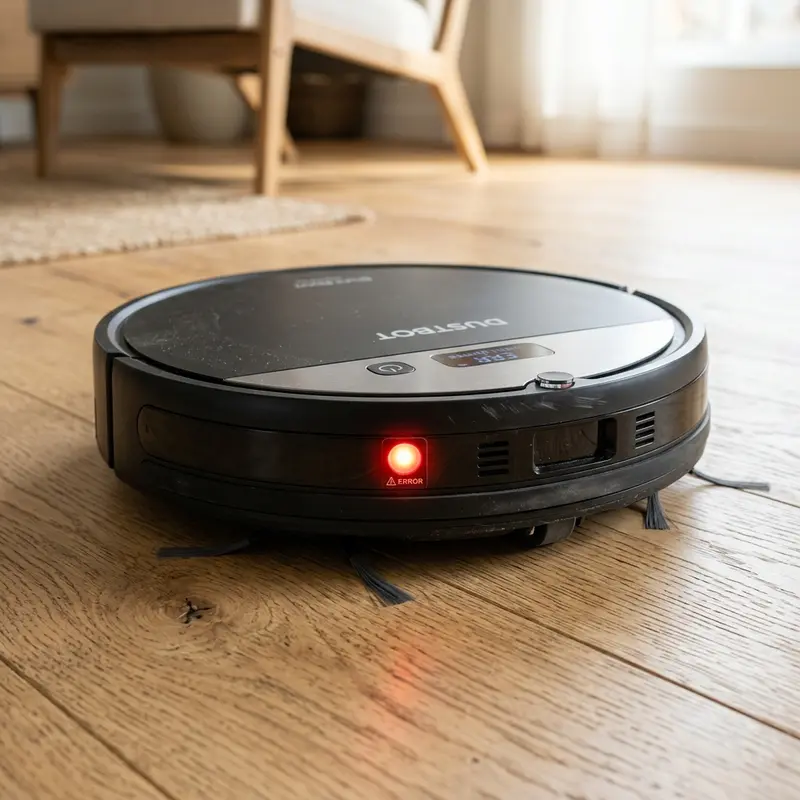
The speed at which the mop pad dries determines whether bacteria will grow. If a wet pad remains damp for more than 24 hours in a humid, unventilated room, bacterial colonies will quickly return.
For a hands-off solution, the latest robot vacuums feature automated self-cleaning docks. These stations include separate clean and dirty water tanks and a mechanical wash plate that cleans the mop pad with clean water under high pressure. After washing, the dock activates a hot air blower (between 40°C and 50°C) that runs for 2 to 4 hours. This active thermal drying removes all moisture from the pad, stopping bacterial growth and preventing musty odors automatically.
This steady flow of dry, warm air is powered by a low-draw, high-durability internal fan engineered to run quietly. It guarantees that the microfiber mop cloth dries completely even on cold or rainy days when natural ventilation is low. The moisture level in the dock is actively monitored by digital humidity sensors in premium units, adjusting fan runtime dynamically.
5. Approved Cleaning Solutions vs. Chemical Agents to Avoid
The chemicals you put into your robot's water reservoir affect both the durability of the valves and the generation of odors. Not all floor cleaners are safe for the internal plumbing of a robotic mop.
Use specialized low-viscosity detergents formulated for robot vacuums or mild, fully water-soluble cleaners. Avoid thick detergents, liquid waxes, pine oil sanitizers, or pure essential oils. These substances clog the electronic water pump and leave oily residues on the microfiber pads that attract organic dirt, accelerating the production of sour smells.
Using demineralized or distilled water in the tank also prevents calcium deposits from clogging the internal water system, ensuring even water distribution and making the mop pads easier to wash. Foaming detergents must also be avoided, as foam can bypass seals, enter the suction motor, and damage the main circuitry. Refrain from using quaternary ammonium compounds (like benzalkonium chloride) in high concentrations, as they can cause micro-cracks in polycarbonate reservoirs.
6. Storing Mopping Accessories During Long Periods of Inactivity
If you plan to leave your robot vacuum unused for a week or more, taking proper storage precautions is vital to prevent bacterial growth inside the mop system.
Empty the clean water tank completely and run the mopping program for a couple of minutes on a dry surface to flush out any water remaining in the internal lines and electronic valves. Remove the microfiber mop pad, wash it thoroughly according to the technical sanitation protocol, and let it dry completely under the sun.
Store the water tank with its fill cap left open to allow fresh air to circulate inside. This prevents anaerobic mildew from growing. Storing a sealed tank with water droplets inside is the most common cause of the strong musty smell that occurs when re-commissioning the vacuum. Keep all spare mop pads in dry, plastic containers with ventilation holes to prevent humidity accumulation.
7. Technical Comparison of Different Mopping Technologies
Different robotic mop configurations behave differently regarding soil retention and odor generation. Understanding these physical variations is key to proper maintenance.
- Static Mop Pads: These pads are dragged behind the direct suction port. Soil is compressed into the center fibers under static pressure. Because dirt is concentrated in a tight area without agitation, bacteria multiply rapidly if not washed immediately;
- Sonic Vibrating Mop Plates: These plates vibrate at high speeds (up to 3,000 oscillations per minute) to lift dried dirt. The rapid movement distributes moisture and dirt evenly across the pad. While this improves cleaning performance, the fine pores of the microfibers require deeper hot-water washes to release embedded dirt;
- Dual Rotating Spin Mops: These circular pads spin at 180 RPM under downward pressure. The spinning motion flings large particles to the outer edge of the pad. The constant rotation prevents thick dirt layers from building up in one spot, but the round seams can trap hair and fibers around the plastic backings, which must be cleared to prevent musty smells.
8. Long-Term Maintenance Schedule for Odor-Free Mopping
To prevent musty odors from returning, establish a regular maintenance schedule for your robot vacuum's mopping components. Following a routine ensures hygiene and extends the life of your consumables.
| Maintenance Interval | Recommended Action | Technical Purpose |
|---|---|---|
| After every run | Remove mop pad, wash with disinfecting soap, and dry in the sun | Prevents bacterial growth and removes residual dampness |
| After every run | Empty and air-dry the robot's water reservoir | Prevents biofilm formation and stagnant water odors |
| Weekly | Sanitize the tank using a diluted white vinegar solution | Kills bacterial colonies on tank walls and clears internal lines |
| Every 3 to 6 months | Replace the microfiber mop pads with new ones | Restores absorption efficiency and microfiber hygiene |
Following this simple schedule prevents odor issues and ensures your robot vacuum leaves your home smelling fresh and clean after every run.
Chemical Disinfectants and Solenoid Valve Corrosion Risks
To eliminate bacterial odors, users often put chemical cleaners directly into the robot's water tank. However, adding harsh disinfectants (like chlorine-based bleach, multi-purpose cleaners, or pine oils) poses a severe threat to the vacuum's internal components. These corrosive agents degrade the silicone tubes, rubber gaskets, and the micro-solenoid valves responsible for active water dripping, leading to internal leaks that can damage the main motherboard. Additionally, oily residues clog the microscopic metal nozzles of the water tank. To sanitize safely, use only distilled water mixed with isopropyl alcohol diluted to a maximum of 10%, or specialized cleaning solutions recommended by the manufacturer to preserve the life of the pump.
Active Hot Air Drying Cycles vs. Passive Air Drying
Allowing a damp microfiber pad to dry passively while still attached to the robot's base plate is a primary cause of bad odors. In humid climates or poorly ventilated rooms, passive drying takes several hours, providing an ideal window for mildew and bacterial colonies to grow inside the fiber weaves. Modern premium robot vacuums feature active hot air drying systems built directly into the charging dock. These systems blow constant warm air at approximately 45°C (113°F) through the pads for 2 to 4 hours. This active evaporation cycle completely dries the microfiber, neutralizing potential odor sources before they can develop. If your vacuum lacks this feature, detach the pad immediately after cleaning and air-dry it in the sun.
Frequently Asked Questions (FAQ)
Can I use fabric softener when washing the robot mop pads?
No. Fabric softener leaves a waxy coating on the synthetic polyester and polyamide fibers of the microfiber pad, blocking the tiny pores that absorb dirt. This reduces mopping performance and makes it easier for odor-causing organic matter to stick to the pad.
How long does a robot vacuum microfiber mop pad last?
We recommend replacing the mop pad every 3 to 6 months of regular use. Over time, the synthetic fibers wear down from heat and friction, losing their dirt-trapping capacity and retaining stubborn bacteria despite washing.
Can I add standard scented floor cleaner directly to the water tank?
No. Most standard grocery store floor cleaners contain thickeners and oils that clog the electronic water valves of the robot, leaving residues that encourage mold growth.
Why does my robot mop pad smell like rotten eggs or sulfur?
This odor is caused by sulfur-reducing bacteria that grow in stagnant water and on damp, unventilated mop pads. Wash the pad in hot water and sanitize the reservoir immediately to eliminate these bacteria.
Conclusion
Keeping your robot vacuum's mopping system clean prevents bad odors and improves indoor air quality. By washing the microfiber pads in hot water and disinfecting the water tank regularly, your robot mop will continue to provide clean, fresh-smelling floors for your home.




