How to Sideload a VPN APK on Fire TV Stick Using Downloader App
Learn to sideload a VPN APK on Fire TV Stick using the Downloader app for enhanced security and streaming flexibility.
In the realm of streaming, privacy, and content accessibility, using a Virtual Private Network (VPN) has become a necessity for many users. The Amazon Fire TV Stick offers a convenient platform for streaming, but it does not natively support all VPN services. Consequently, sideloading a VPN APK allows users to enhance their streaming experiences, access geo-restricted content, and secure their internet connections. This comprehensive guide will walk you through the necessary steps to sideload a VPN APK on your Fire TV Stick using the Downloader app, enabling you to enjoy custom streaming setups seamlessly.
Why Sideloading a VPN APK is Necessary for Custom Streaming Setups
DomineTec Tip: Downloader provides direct repository access. For regular Amazon Appstore installations, read our general guide on how to install a VPN on Fire TV Stick.
VPNs serve multiple functions for streamers, including privacy protection, access to geo-restricted content, and enhanced security on public networks. Sideloading a VPN APK on your Fire TV Stick offers several advantages:
- Access to Geo-Restricted Content: Many streaming services restrict content based on geographical locations. A VPN allows users to bypass these limitations by masking their IP addresses.
- Improved Security: A VPN encrypts your internet traffic, safeguarding your data from prying eyes, especially on unsecured networks.
- Customizable Streaming Experience: Some VPNs come with features tailored for streaming, such as dedicated servers for popular streaming services.
- Bypassing ISP Throttling: ISPs sometimes throttle bandwidth for streaming services. A VPN can help mitigate this issue.

Unlocking Developer Mode and Allowing Unknown Sources on Fire OS
| Installation Route | Pros | Cons |
|---|---|---|
| Amazon Appstore | One-click updates, official build | Limited regions, restricted clients |
| Downloader Sideload (APK) | Full version variety, bypasses store | Manual APK updates required |
Before sideloading any APK, you must first enable Developer Options on your Fire TV Stick to allow the installation of third-party applications. Follow these steps:
- From the home screen of your Fire TV Stick, navigate to Settings in the top menu.
- Select My Fire TV or Device, depending on your Fire OS version.
- Scroll down and select About.
- Highlight Fire TV Stick and click it repeatedly (around seven times) until you see the message stating that you are now a developer.
- Go back to the My Fire TV or Device menu and select Developer options.
- Toggle on Apps from Unknown Sources to enable the installation of third-party apps.
- Optionally, enable ADB Debugging if you plan to use ADB commands for further configurations.
By completing these steps, you have successfully unlocked developer mode on your Fire TV Stick, allowing you to sideload applications that are not available in the Amazon App Store.
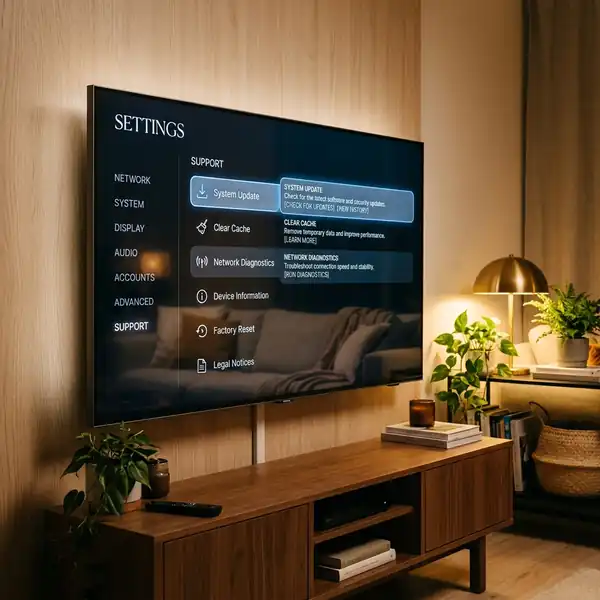
Step-by-Step: Sideloading the VPN APK Using the Downloader App
To sideload a VPN APK, you will need to install the Downloader app from the Amazon App Store. Follow these instructions:
- From the Fire TV Stick home screen, navigate to the Find section.
- Search for Downloader using the search bar.
- Select the Downloader app from the search results and click on Get or Download to install it.
- Once the installation is complete, open the Downloader app.
Now that you have the Downloader app installed, here are the steps to download the VPN APK file:
- In the Downloader app, you will see a URL input field. Enter the direct URL of the VPN APK you wish to download. Ensure this is a legitimate source to avoid malware. Press Go.
- The app will start downloading the APK file. Depending on your internet speed, this may take a few minutes.
- Once the download is complete, a prompt will appear asking if you want to install the APK. Click Install.
- After the installation is complete, you can either click Open to launch the VPN app or Done to return to the Downloader app.
Installing and Launching the Custom VPN Client on Your Fire Stick
After successfully sideloading the VPN APK, the next step is to launch and configure the VPN client:
- Return to the Fire TV Stick home screen and navigate to Your Apps & Channels.
- Scroll down to find the VPN app you installed, which may require you to click See All to reveal all installed apps.
- Click on the VPN app to launch it. The app will prompt you to log in with your credentials.
To set up your VPN credentials:
- Enter your username and password associated with your VPN account. If you don’t have an account, you will need to sign up on the VPN provider's website.
- Once logged in, you may need to select a server location based on your streaming needs. For example, select a server from the USA to access American content.
- After selecting a server, click on the Connect button to establish a VPN connection.
- Once connected, the app will confirm the connection status, and you can now enjoy secure streaming.

Troubleshooting and Connection Optimization for Uninterrupted Streams
While using a VPN on your Fire TV Stick, you may encounter some common issues. Here are troubleshooting tips and optimization techniques:
Connection Issues
- VPN Not Connecting: Ensure your internet connection is stable. Restart your Fire TV Stick and try reconnecting to the VPN.
- Slow Streaming Speeds: Switch to a different server location. Some servers may be congested, affecting your streaming experience.
- App Crashes: Clear the cache of the VPN app. Go to Settings > Applications > Manage Installed Applications, select your VPN app, and choose Clear Cache.
Optimizing Your VPN Connection
- Choose a High-Speed Server: Select servers that are optimized for streaming to ensure better speeds and lower latency.
- Use Split Tunneling: If your VPN offers split tunneling, enable it to allow certain traffic to bypass the VPN, thereby improving speeds.
- Regularly Update the App: Ensure that your VPN app is always updated to the latest version for optimal performance and security.
By following these steps, you can sideload a VPN APK on your Fire TV Stick using the Downloader app. This not only enhances your streaming experience but also provides an added layer of security and privacy. Enjoy uninterrupted access to your favorite content while protecting your online identity.
Understanding VPN Protocols for Fire TV
When sideloading a VPN on your Fire TV using the Downloader app, it's essential to understand the various VPN protocols available. VPN protocols dictate how data is transmitted over the internet and ensure secure connections. The most commonly used protocols are OpenVPN, L2TP/IPsec, IKEv2/IPsec, and PPTP. Each has its advantages and trade-offs in terms of security, speed, and compatibility.
OpenVPN is widely regarded as the most secure and versatile option. It uses SSL/TLS for key exchange and supports various encryption algorithms, including AES-256, which is considered military-grade. OpenVPN operates over both TCP and UDP, allowing for flexible configurations based on network conditions. However, to use OpenVPN, you will need to install an additional app on your Fire TV, as it is not natively supported.
L2TP/IPsec is a combination of two protocols that offer a higher level of security than PPTP. L2TP itself does not provide encryption; therefore, it is coupled with IPsec to secure the data. This protocol may be slower than OpenVPN due to double encapsulation, making it less ideal for streaming services that require high bandwidth.
IKEv2/IPsec is known for its speed and stability, especially on mobile devices. It automatically reconnects when switching networks, which is a significant advantage for users frequently changing connections. However, it is less compatible with Fire TV as it typically requires specific configurations on the router level.
PPTP is an older protocol that is fast and easy to set up but offers the least security. It uses a simple encryption method that can be compromised relatively easily, making it unsuitable for users concerned with data privacy. While it may provide better speeds, the risk of data exposure is considerably higher.
When configuring your VPN on Fire TV, ensure to choose a protocol that balances your need for speed with your security requirements, particularly if you're using it for activities like streaming or online gaming.
Configuring DNS Settings for Enhanced Security and Performance
DNS settings play a crucial role in the overall performance and security of your VPN connection. By default, your ISP's DNS servers may log your browsing activities and could potentially expose you to various online threats. Therefore, it is advisable to configure your Fire TV to use a secure DNS service.
One popular choice is Cloudflare's DNS (1.1.1.1), which emphasizes privacy and speed. Another option is Google Public DNS (8.8.8.8), which is widely used but may not offer the same level of privacy as Cloudflare. To configure DNS settings on your Fire TV, follow these steps:
- Open the Settings menu on your Fire TV.
- Navigate to Network and select your Wi-Fi network.
- Scroll down to the Advanced settings section.
- Manually enter your chosen DNS address in the designated field.
By changing the DNS settings, you not only enhance your privacy but also facilitate faster resolution of web domains, which can improve streaming performance. Additionally, some VPN providers offer their own DNS servers, which may provide an extra layer of security by preventing DNS leaks — an occurrence where your DNS queries are exposed to your ISP despite being connected to a VPN.
To check for DNS leaks, you can use websites like dnsleaktest.com to verify that your DNS queries are routed through the VPN's DNS servers. If a leak is detected, revisit your VPN settings and ensure that the DNS configurations are correctly applied.
Network Ports and Their Role in VPN Connection Stability
The stability of your VPN connection on Fire TV can be significantly affected by the network ports used during the connection process. Different VPN protocols utilize specific ports, and understanding these ports can help you troubleshoot connectivity issues or configure your router more effectively.
For example, OpenVPN typically uses UDP port 1194 or TCP port 443. The choice between UDP and TCP protocols can impact performance; UDP is generally faster and more efficient for streaming, while TCP provides a more reliable connection but can be slower due to its error-checking mechanisms.
L2TP/IPsec commonly uses UDP port 500 for establishing the connection and UDP port 4500 for NAT traversal. If your router is configured to block these ports, you may experience connection issues. Many routers have an option for port forwarding, which allows you to direct traffic from specified ports to your Fire TV device, enhancing connectivity.
IKEv2 typically operates over UDP port 500 and UDP port 4500 as well, similar to L2TP/IPsec. If you encounter difficulties with IKEv2 connections, ensure that your router allows traffic over these ports.
PPTP uses TCP port 1723, and it is essential to ensure that this port is not blocked by your firewall or ISP. Additionally, PPTP requires a GRE (Generic Routing Encapsulation) protocol, which may need to be enabled on your router.
By understanding and managing the network ports associated with your VPN, you can enhance the stability and performance of your connection, especially when streaming high-definition content on your Fire TV. Additionally, proper port configuration can help mitigate issues such as buffering or connection drops due to firewall restrictions.
Understanding VPN Protocols for Fire TV
When configuring a VPN on your Fire TV via the Downloader app, it's essential to understand the various VPN protocols available, as they can significantly affect your online experience. The most common protocols include OpenVPN, L2TP/IPSec, and PPTP. Each protocol has its advantages and disadvantages concerning security, speed, and compatibility.
OpenVPN is widely regarded as the most secure option, using robust encryption methods (AES-256) and providing excellent performance and flexibility. It's an open-source protocol that can be configured for both TCP and UDP, allowing users to choose between reliability and speed. For Fire TV users, OpenVPN is often the best choice due to its high-security standards and adaptability.
L2TP/IPSec combines the Layer 2 Tunneling Protocol with Internet Protocol Security for enhanced security. While it offers better security than PPTP, it is generally slower than OpenVPN due to the double encapsulation of data. Users may find it suitable for specific network configurations but need to be aware of potential speed limitations.
PPTP is one of the oldest VPN protocols available and is known for its speed. However, it has significant security vulnerabilities and is not recommended for users concerned about security and privacy. When setting up a VPN on Fire TV, prioritize protocols that offer a balance between security and performance, such as OpenVPN.
Configuring Network Ports for Optimal VPN Performance
Each VPN protocol utilizes specific network ports, which must be configured correctly to ensure seamless operation on your Fire TV. For instance, OpenVPN typically operates on UDP port 1194 or TCP port 443. If you are behind a strict firewall, using TCP port 443 can help circumvent restrictions, as it mimics standard HTTPS traffic.
When setting up your VPN, make sure to allow these ports through your router's firewall. For L2TP/IPSec, the default ports are UDP 500 for IKEv1 and UDP 4500 for NAT-T. If you're using this protocol, check that these ports are open to facilitate a successful connection.
For PPTP, the required port is TCP 1723, along with GRE (protocol 47). Ensure that your router supports and allows GRE traffic, as some routers may block it by default. Regularly check for firmware updates on your router, as this can enhance compatibility with various VPN protocols and improve overall performance.
Security Considerations and Best Practices for VPN Use
When using a VPN on your Fire TV, understanding security features and implementing best practices is crucial to safeguard your data. One of the primary considerations is the encryption strength. Opt for a VPN service that employs AES-256 encryption, which is currently the industry standard for secure data transmission.
Additionally, consider the VPN's logging policy. A no-logs policy indicates that the VPN provider does not keep records of your online activities, which is vital for maintaining your privacy. Always review the service's privacy policy to ensure that it aligns with your expectations.
Another key aspect is the use of a kill switch, which automatically disconnects your internet connection if the VPN drops. This feature prevents your data from being exposed unintentionally. Lastly, regularly update your VPN application and Fire TV firmware to protect against vulnerabilities and leverage improvements in security protocols.
Implementing these security measures not only enhances your online privacy but also ensures a consistent and secure streaming experience on your Fire TV while using a VPN.
Additional Resources and Recommended Links
For more networking and security guides, check out our step-by-step tutorials on install a VPN on Fire TV Stick and use VPN on Fire TV Stick Lite. For official hardware troubleshooting, visit the Amazon Fire TV Official Support Desk.