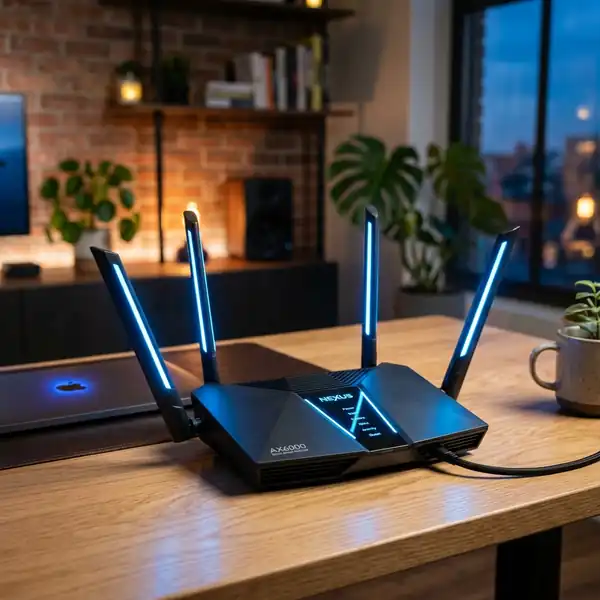
Direct Answer: You can set up your corporate VPN directly on your home router for seamless remote work by configuring VPN client settings in your router's dashboard.
Why Set Up Your Corporate Work VPN Directly on the Home Router Instead of Local Machines?
DomineTec Tip: Split-tunneling stops your personal data streams from logging to company servers. If you need powerful hardware, read about our best VPN client routers for home.
Setting up your corporate VPN on your home router provides several advantages over individual device configurations. First and foremost, it ensures that all devices connected to your home network automatically route their traffic through the VPN. This is particularly beneficial for remote work environments where multiple devices, such as laptops, smartphones, tablets, and smart TVs, may require secure access to your corporate resources without needing to configure each device individually.
Moreover, implementing the VPN at the router level can enhance security. With a router-based VPN, your IP address remains hidden from external observers, and the encryption protects all data moving between your home network and the corporate network. Additionally, it allows easier management of network-wide settings and reduces the load on individual devices, which may improve performance and ensure that all devices adhere to company security policies.

Gathering Necessary Connection Parameters and Profile Keys from Your Company IT Team
| Network Variable | Corporate Tunnel Role | Collision Prevention Example |
|---|---|---|
| Office IP Subnet | IP scope allocated to your company servers | 192.168.10.0/24 |
| Home IP Subnet | IP range allocated to your home Wi-Fi (Avoid using default 192.168.1.1) | Modify LAN IP to 10.0.0.1/24 |
Before configuring your home router for VPN access, you will need to gather essential information from your company's IT department. This typically includes:
- VPN Server Address: The public IP address or hostname of the VPN server.
- VPN Protocol: The specific protocol your company uses (e.g., IPSec, OpenVPN).
- Authentication Credentials: Username and password or certificate files, depending on the authentication method.
- Encryption Settings: Any specific encryption settings required for the VPN connection.
- Subnet Information: Details about the IP address range used by the corporate network.
Once you have collected this information, you can proceed to configure your home router.

Step-by-Step: Inputting Credentials into Your Home Router's VPN Client Dashboard
The procedure for setting up a VPN on your home router may vary depending on the router brand and model. However, the general steps typically remain consistent. Here, we will discuss the setup process using a common router interface, such as those provided by Asus, Linksys, or Netgear.
1. Access the Router's Admin Interface
To begin, connect your computer to the home router via Wi-Fi or an Ethernet cable. Open a web browser and enter the router's IP address in the address bar. This is usually something like 192.168.1.1 or 192.168.0.1. Log in using the admin credentials. If you have never changed them, consult the router's manual for default credentials.2. Navigate to the VPN Client Section
Once logged in, look for a section labeled "VPN," "VPN Client," or "Advanced Settings." Each router may have a different layout, but you should find a dedicated area for setting up a VPN client.3. Enable the VPN Client
In the VPN client section, enable the VPN client feature. This option may be a simple toggle switch.4. Configure the VPN Connection
In the configuration panel for the VPN client, you will need to input the connection parameters you gathered earlier:- Connection Name: Assign a recognizable name for your VPN connection.
- VPN Type: Select the appropriate VPN protocol (e.g., IPSec, OpenVPN).
- Server Address: Enter the public IP address or hostname of the VPN server.
- Username and Password: Fill in your authentication credentials.
- Encryption Settings: If needed, configure any specific encryption settings as directed by your IT department.
If you are using OpenVPN, you may need to upload a configuration file provided by your IT team. This file typically contains the necessary settings, certificates, and keys for establishing a secure connection.
5. Save and Apply Settings
After entering all necessary information, save your settings. You may need to click an "Apply" button to ensure the configurations take effect.6. Connect to the VPN
Back in the VPN client section, you should see the newly created VPN connection. Click on the "Connect" button to initiate the VPN connection. Depending on the router and VPN configuration, this may take a few moments.
Configuring Split-Tunneling to Isolate Your Personal Wi-Fi Traffic from the Office Network
Split-tunneling is a valuable feature that allows you to configure your home router to route specific traffic through the VPN while other traffic goes through your regular internet connection. This approach can enhance performance and reduce bandwidth usage for non-business activities.
1. Understanding Split-Tunneling
Split-tunneling works by allowing users to choose which applications or devices should use the VPN for secure access to corporate resources. For example, you may wish to route your work email and company applications through the VPN while allowing streaming services and personal browsing to utilize your standard internet connection.2. Configuring Split-Tunneling on Your Router
To configure split-tunneling, follow these steps:- Navigate to the VPN Client Settings: Access your router’s VPN client settings where you initially configured the VPN connection.
- Locate Split-Tunneling Options: Look for an option labeled "Split Tunneling," "Route Policy," or similar terminology.
- Add Route Entries: You will need to add route entries specifying which IP addresses or subnets should utilize the VPN. This can typically be done by entering the IP addresses of the services or applications you wish to route through the VPN.
For example, if your company uses an internal web application hosted at 10.0.0.50, you would add that IP address to your split-tunneling configuration.
3. Testing Split-Tunneling
After configuring split-tunneling, it's crucial to test the setup to ensure that the specified traffic is routed correctly. Use a device connected to your home network to access corporate resources and verify that the connection is established through the VPN. Simultaneously, check personal browsing activities to confirm they are not routed through the VPN.
Resolving IP Address Subnet Collisions
One of the challenges you may face when connecting to a corporate VPN through a home router is IP address subnet collisions. This occurs when both your home network and the corporate network use the same IP address range, which can lead to connectivity issues.
1. Identifying Subnet Collisions
To determine if there is a subnet collision, you need to check the IP address range used by both networks. Your home network typically uses IP addresses such as 192.168.1.x or 192.168.0.x. Your corporate network may use a similar range. If both networks are set to 192.168.1.x, for example, you will encounter issues when connecting to the VPN.2. Changing Your Home Network Subnet
- Access Router Admin Interface: Login to your home router as you did previously.
- Navigate to LAN Settings: Look for a section labeled "LAN" or "Local Network."
- Change IP Address Range: Update the router’s IP address to a different range, such as 192.168.2.x. Make sure to apply and save the changes.
- Reconnect Devices: After changing the IP range, devices connected to your home network will need to reconnect to obtain new IP addresses.
3. Verifying the Configuration
To verify that the changes have resolved the subnet collision, reconnect your router to the corporate VPN and access corporate resources. Additionally, check that your home devices are functioning correctly on the new subnet.Conclusion
Setting up your corporate work VPN on your home router can significantly streamline your remote work experience, providing secure access to corporate resources without the hassle of configuring each device individually. By understanding and implementing the necessary configurations—including gathering connection details, entering credentials, and managing split-tunneling and subnet collisions—you can ensure a seamless and efficient remote working environment.
With the right setup, you can enjoy the benefits of enhanced security and improved network performance, allowing you to focus on your work without the distractions of managing multiple VPN connections on separate devices. Always consult your company's IT department for specific configurations and best practices, and regularly update your router's firmware to maintain security and functionality.
Understanding VPN Protocols and Their Configuration
When setting up a VPN on your home router, one of the most critical decisions revolves around the choice of VPN protocol. The protocol you choose will have a significant impact on the speed, security, and reliability of your VPN connection. The most commonly used VPN protocols include PPTP, L2TP/IPsec, OpenVPN, and IKEv2/IPsec. Each protocol has its unique configuration settings and security features.
PPTP (Point-to-Point Tunneling Protocol) is one of the oldest VPN protocols, offering fast speeds but weaker security. To configure PPTP on your router, you need to enable the PPTP server in your router's VPN settings, specify a range of IP addresses for clients, and create user accounts with usernames and passwords. However, due to its vulnerabilities, it is generally not recommended for secure communications.
L2TP/IPsec (Layer 2 Tunneling Protocol with IPsec) combines the tunneling capabilities of L2TP with the encryption of IPsec, providing a more secure option than PPTP. To set up L2TP/IPsec, you must first enable the L2TP server on your router and configure the IPsec settings. This includes specifying the pre-shared key (PSK), enabling the IPsec encryption settings, and defining the user credentials. L2TP typically operates over UDP port 1701, while IPsec uses UDP ports 500 and 4500 for NAT traversal.
OpenVPN is an open-source protocol known for its strong security and flexibility. Configuring OpenVPN requires downloading and installing the OpenVPN software on your router (if supported) or setting it up with a compatible firmware like DD-WRT or Tomato. You will need to generate server and client certificates, configure the server settings (including port number, protocol—TCP or UDP, and encryption settings), and set up firewall rules to allow traffic through the specified ports (default is UDP port 1194). OpenVPN also supports advanced features such as split tunneling, which allows you to route only specific traffic through the VPN while keeping other traffic on your local internet connection.
IKEv2/IPsec is another robust option, particularly favored for mobile devices due to its ability to quickly reconnect during network changes. To configure IKEv2, you must set up the IKEv2 server settings on your router, including defining the PSK and enabling the IPsec settings. IKEv2 typically utilizes UDP ports 500 and 4500 for communication. This protocol is particularly beneficial for users who frequently switch between Wi-Fi and mobile networks, as it maintains a stable connection.
In summary, your choice of VPN protocol will greatly influence your network's security and performance. It is essential to evaluate the level of security you require against the potential impact on speed and convenience. After selecting a protocol, ensure that you have properly configured the corresponding settings and opened the necessary ports on your router to facilitate seamless communication.
Implementing Firewall Rules and Network Policies for VPN Security
Once your VPN is configured on your home router, it is crucial to implement the appropriate firewall rules and network policies to enhance security and control over your network traffic. Firewalls act as a barrier between your internal network and external threats, and properly configured rules can prevent unauthorized access while maintaining functionality.
The first step in establishing firewall rules is to determine which ports need to be open for your VPN protocol. For instance, if you are using OpenVPN, ensure that UDP port 1194 is open; for L2TP/IPsec, you will need to open UDP ports 500, 4500, and 1701. Additionally, you may want to restrict access to the VPN server to only specific IP addresses or ranges, which adds an extra layer of security. This can be configured via the router's firewall settings by creating allow rules based on the source IPs that are permitted to connect to the VPN server.
Next, consider implementing Network Address Translation (NAT) rules. NAT allows multiple devices on your local network to share a single public IP address. When using a VPN, it is vital to ensure that NAT is configured correctly so that your VPN clients can communicate with the VPN server without issues. This often requires creating specific NAT rules within your router's settings to facilitate proper routing of traffic.
In addition to basic firewall rules, establishing Access Control Lists (ACLs) can help manage which devices can access specific network resources. For example, if you want only certain devices connected to the VPN to access your home network or specific servers, you can create ACLs that limit access based on IP addresses or MAC addresses. This is particularly useful for preventing unauthorized access to sensitive resources on your network.
Furthermore, consider enabling logging features on your firewall to monitor VPN connections and detect any suspicious activity. Most routers offer logging capabilities that can track connection attempts, successful logins, and failed login attempts, providing insight into potential security threats.
Lastly, regularly updating your router's firmware is essential for maintaining security. Firmware updates often include patches for security vulnerabilities and improvements in performance. Set a schedule to check for updates, or enable automatic updates if your router supports this feature.
By carefully implementing firewall rules and network policies, you can significantly enhance the security of your VPN setup on your home router. These measures not only protect your data but also ensure that your VPN serves its purpose effectively without compromising your network's integrity.
Additional Resources and Recommended Links
For more networking and security guides, check out our step-by-step tutorials on best VPN client routers and setup VPN on TP-Link. For official hardware troubleshooting, visit the MikroTik Global Support Portal.