How to Factory Reset Yoosee 3-Antenna Smart IP Camera
The classic Yoosee 3-antenna smart camera is a popular choice for indoor home surveillance, offering pan-tilt rotation and strong signal reception due to its triple antenna array. If you need to reconfigure the camera on a new Wi-Fi network or prepare the hardware for resale, follow our guide on how to reset Yoosee 3-antenna camera to original factory defaults.
The Hardware Architecture of Yoosee 3-Antenna Wireless Cameras
To fully understand the troubleshooting and reconfiguration process of this domestic security camera, it is vital to analyze its internal engineering. The consumer security cameras sold globally as "Yoosee 3-antenna cameras" or "robot dome cameras" are built around low-cost, highly integrated System-on-Chips (SoCs), typically manufactured by Grain Media (such as the GM8135S) or Xiongmai (XM series). These chipsets process the raw analog signals from the CMOS image sensor, encode the video streams into H.264 or H.265 compression profiles, and handle the local TCP/IP networking stack within a single integrated package.
Additionally, the wireless module typically utilizes the MediaTek MT7601UN or Realtek RTL8188FTV chipset, designed to operate exclusively on the 2.4 GHz radio frequency band under the IEEE 802.11b/g/n wireless standards. An interesting piece of hardware design that confuses many homeowners and technicians is the triple external antenna configuration. In most budget-friendly models, only the center antenna or one of the side antennas is physically connected and soldered to the main printed circuit board (PCB) using a shielded miniature coaxial cable. The remaining two antennas act primarily as structural symmetry pieces or passive resonators that aid in heat dissipation or diffuse signal reception without a direct copper trace connection. Consequently, while the positioning and angle of all three antennas can alter electromagnetic propagation, the primary receiver relies on a single internal RF transmission line.
How to Find and Press the Hardware Reset Button on 3-Antenna Cameras
The physical reset button is a surface-mount tactile micro-switch soldered directly onto the auxiliary circuit board of the camera. Depending on the manufacturing batch and the specific layout of the three-antenna chassis, the activation switch can be located in two main hardware areas on the device:
1. On the underside or back of the stationary base: Directly adjacent to the Micro-USB power input port and the RJ45 Ethernet socket. This is marked by a small hole labeled "RESET". The micro-switch sits inside this opening, requiring you to insert a thin metal tool, such as a smartphone SIM ejector pin or a straightened paperclip, to press it.
2. Near the MicroSD card slot on the moving globe: On newer camera iterations, you must manually tilt the motorized spherical lens assembly upward. Doing so reveals the MicroSD card storage bay and a small physical plastic button or an adjacent pinhole containing the tactile reset switch. This position is highly convenient because it allows homeowners to reach the reset button without demounting the base bracket from the wall or ceiling.
When executing the factory reset, it is critical to apply pressure perpendicularly and gently. Because these low-cost micro-switches have delicate surface-mount pads on the PCB, pushing the tool with extreme force or using sharp knives can shear the solder joints or deform the internal metallic contact dome, permanently disabling physical reset capabilities. You should gently press until you feel a soft tactile click, holding the button down continuously for 10 to 15 seconds.
Decodificando os Avisos Sonoros (Voice Prompts) do Sistema de Áudio
During the hardware reset routine and subsequent boot sequence, the embedded operating system (typically a stripped-down embedded Linux kernel) broadcasts voice prompts through the rear 8-Ohm speaker to communicate the hardware status. The audio feedback sequence follows a strict logical state machine:
1. The IR-Cut filter click and initial beep: When you press and hold the reset switch for the correct duration, the camera halts its software loops, plays a high-pitched beep tone, and cuts power to the image sensor. You will hear a distinct mechanical click as the internal IR-Cut filter (infrared cut-off filter located over the lens) toggles off and on.
2. "System is starting up": After the automated electrical reboot completes, the system loads the audio drivers and plays this English voice prompt. This signifies that the CPU has completed its RAM check and is mounting the basic system partitions from the onboard SPI Flash ROM.
3. "Restore factory settings": This confirmation voice clip indicates that the camera has successfully cleared the config partitions (/configs or /setting), deleting old encryption tokens, stored Wi-Fi credentials, and custom administrator passwords.
4. "Waiting for configuration" or rhythmic "Du-Du-Du" tones: The camera transitions into active listening mode. The wireless module initiates an ad-hoc Access Point (AP) broadcasting a local SSID (e.g., "GW_AP_XXXXXX"), signaling that the device is ready to receive network configuration data from the mobile app.
PTZ Motor Stepper Loops and Mechanical Gear Alignment
Following a factory reset and successful initialization, the Yoosee camera executes a mechanical self-test routine designed to calibrate the Pan-Tilt-Zoom (PTZ) hardware. This motor assembly features two high-torque DC stepper motors (often the common 28BYJ-48 model) connected to a series of reduction gears molded from durable POM (Polyoxymethylene) plastic.
During this calibration loop, the motor driver integrated circuit on the main PCB sends electrical pulses to rotate the camera head 355 degrees horizontally (Pan) and 120 degrees vertically (Tilt) until the assembly hits physical mechanical stops. Once the camera head reaches these travel limits, the stepper motor stalls, causing a sharp spike in current draw. The microcontroller senses this current threshold spike, defining it as the absolute limit of travel (home position). This home position serves as the zero coordinate reference point for all future rotation commands sent from the smartphone app.
If your 3-antenna camera produces clicking or grinding noises, stutters, or stops moving entirely during its startup sequence, the internal POM gears have slipped out of alignment, or the external power cable is too tight, blocking free movement. In this state, the stepper motor will continue to push against the obstacle because it cannot reach the calibrated electrical current limit, potentially stripping the plastic gear teeth or overheating the motor coils. To resolve this, ensure the camera is placed on a flat, level surface with plenty of cable slack, and gently guide the head rotation by hand during the boot-up cycle to realign the gears on their mechanical tracks.
Embedded Cache Memory Management in Smart IoT Cameras
Operating systems in IP security cameras write temporary log files, video frame buffers, and cloud connection cookies onto small flash memory sections. When these directories get overloaded, the file system can freeze or drop frames, causing lag in the live view app. Power cycling the camera regularly or performing a clean system reset clears this logic cache, maintaining optimal streaming latency.
Furthermore, using counterfeit or low-class MicroSD cards (below Class 10 UHS-I ratings) severely bottleneck the system's input/output (I/O) bus. Because video writing is continuous and loop-based, corrupted memory blocks force the camera CPU to wait indefinitely for write acknowledgments, causing the entire operating system to freeze. Performing a factory reset forces a clean dismount and mount of the storage file system (FAT32 or exFAT) and flushes the temporary log data, restoring network speed and video transmission stability.
Optimizing Router Wireless Channels for 2.4 GHz Devices
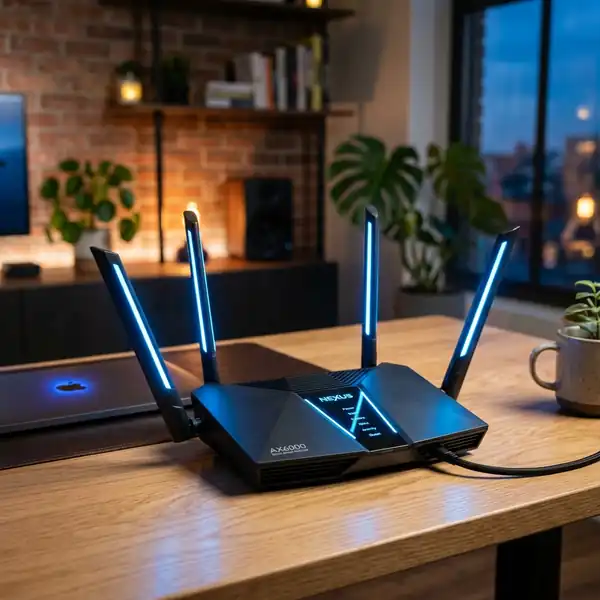
The 2.4 GHz wireless band is highly suitable for security cameras because it penetrates thick building walls and structural obstacles. However, it is also highly prone to radio interference from household appliances and neighboring routers. Changing your router's default wireless channel to non-overlapping channels (1, 6, or 11) and restricting the bandwidth to 20 MHz ensures stable connections.
Physical barriers also cause signal attenuation. Reinforced concrete, mirrors, water pipes, and metal studs in drywall drop the amplitude of 2.4 GHz radio signals. If your Yoosee camera shows frequent "Offline" or "Connection timeout" errors, it is likely experiencing a degraded Signal-to-Noise Ratio (SNR). Placing your wireless router in a central elevated location and keeping it away from baby monitors or microwave ovens will prevent wireless drops.
Thermal Dissipation Limits of Outdoor IP Camera Housings
Outdoor security cameras must withstand constant heat radiation from sunlight, rain, and rapid temperature changes. The camera casing must dissipate heat generated by the image processor and infrared LED arrays. Persistent high temperatures degrade the pixels of the CMOS image sensor, leading to color distortion or blurry feeds. Mounting cameras under eaves protects them from thermal stress.
Additionally, rapid temperature changes can cause internal moisture condensation under the glass lens cover, particularly if the rubber sealing ring (O-ring) has aged. Internal moisture leads to corrosion on the PCB copper traces. If you plan to install a camera in an open area exposed to weather, verify it has a minimum rating of IP66, and keep the indoor-grade 3-antenna robot camera under physical overhead structures.
The Impact of Voltage Fluctuation on Smart Camera Hard Drive Cards
Voltage drops and electrical noise from uncertified power supplies lead to system boot loops and storage read errors. A poor adapter will drop current delivery when the camera switches to night mode, causing the processor to restart or fail to write metadata onto the MicroSD card. Always use high-quality power bricks that deliver stable 5V or 12V direct current.
Many system issues attributed to bad firmware are actually caused by voltage drops over thin power extension cables (Joule heating). Running thin USB cables over long distances causes resistance, dropping the 5V output down to unstable levels (like 4.5V). When the night-vision infrared LEDs activate, the current demand spikes, dropping the voltage below the SoC minimum threshold and forcing the camera into a reboot loop. Replacing generic cables with copper conductors of the correct gauge resolves this issue.
Next-Generation Smart Edge Computing for Cloud CCTV Storage
Edge computing is changing how security cameras upload video feeds. Modern chipsets process motion detection and AI object classification locally inside the device, uploading only key event clips instead of raw video streams. This reduces bandwidth requirements and keeps your private home network running fast without lagging other internet devices.
When you reset and re-pair your Yoosee camera, plan your storage configuration. Storing footage on a secure cloud server provides an extra layer of property security. If an intruder steals or damages the physical camera and its internal MicroSD card, your recorded event history remains safe and accessible online, protected by end-to-end encryption protocols.
Frequently Asked Questions (FAQ)
How do I know if the camera is compatible with my home wireless router?
Check the technical specifications. Almost all smart home security cameras operate on standard 2.4 GHz Wi-Fi bands, which are supported by all consumer routers.
How many mobile devices can access a single shared camera feed?
You can share camera access with multiple users through the app. However, simultaneous HD video playback requires a fast internet upload bandwidth at the camera location.
Will the camera continue to record if the Wi-Fi connection drops?
Yes. If a compatible MicroSD card is installed and the device remains powered, the camera records video files onto its local storage block without internet.
What is the best way to clean a dirty or blurry security camera lens?
Power off the camera and use a clean microfiber cloth slightly dampened with isopropyl alcohol to remove smudges, grease, and dust from the lens glass surface.
Why does my Yoosee camera repeat the voice prompt "System is starting up" continuously?
This boot loop indicates insufficient power delivery from the USB adapter, a broken cable, or a corrupted firmware partition on the internal memory. Swap the power supply and attempt a factory reset.
Does the Yoosee 3-antenna camera support 5 GHz Wi-Fi?
No. The built-in wireless transceiver modules on classic 3-antenna Yoosee cameras are strictly limited to the 2.4 GHz frequency. Attempting to connect to a 5 GHz network will result in setup failures.
Final Security Thoughts
Maintaining a reliable home video surveillance system requires attention to infrastructure setup. From choosing the correct class of MicroSD card for continuous loop writes, configuring your Wi-Fi router's wireless channels, and setting guest access tiers on the smartphone app, these steps keep your home video recorder online when it matters most. Implement these practices and enjoy a secure, automated household.