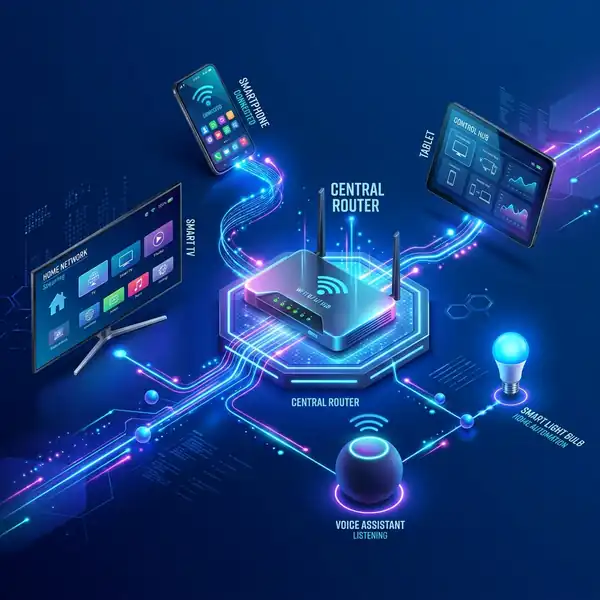
Isolating VLANs on a Ubiquiti UniFi network enhances security by restricting traffic between VLANs.
Understanding VLAN Isolation
VLAN isolation is a method to prevent devices on different VLANs from communicating directly. This can be achieved through proper configuration of firewalls and switch settings.
Configuring VLANs in UniFi Controller
Access the UniFi Controller and navigate to the "Settings" section. Create new VLANs under "Networks" and assign them unique IDs.
Enabling Inter-VLAN Routing
To isolate VLANs, inter-VLAN routing must be disabled. This can be done by configuring firewall rules that block traffic between VLANs.
Firewall Configuration
Implement firewall rules using the following CLI commands:
configure
set firewall name VLAN_ISOLATION rule 10 action drop
set firewall name VLAN_ISOLATION rule 10 source address 192.168.1.0/24
set firewall name VLAN_ISOLATION rule 10 destination address 192.168.2.0/24
commit
save
Testing VLAN Isolation
After configuration, test the VLAN isolation by attempting to ping devices across VLANs. A successful ping indicates misconfiguration.
| Feature | UniFi Switch | RouterOS |
|---|---|---|
| VLAN Support | Yes | Yes |
| Inter-VLAN Routing | Configurable | Fully supported |
| Firewall Rules | Yes | Yes |
| CLI Access | No | Yes |
| Web Interface | Yes | Limited |
DomineTec Tip: Regularly audit firewall rules to ensure unnecessary access between VLANs is not granted.
- Log in to the UniFi Controller.
- Create VLANs under the "Networks" section.
- Set up the required firewall rules.
- Test connectivity between VLANs.
- Adjust configurations based on testing results.

Best Practices for VLAN Design
Effective VLAN design is crucial for achieving optimal network performance and security. Begin by categorizing devices into functional groups, such as servers, employee workstations, and IoT devices, to enhance manageability.
Avoid creating excessive VLANs to prevent unnecessary complexity; a well-structured hierarchy can simplify both configuration and troubleshooting. Consider utilizing a flat hierarchy with clear naming conventions for easier identification and maintenance.
Document your VLAN assignments meticulously to ensure transparency and aid future modifications or audits. Regularly review and update your VLAN design to accommodate changing network requirements and security policies.
Utilize VLAN tagging to streamline traffic management and enhance security. This practice ensures that only the designated traffic is allowed on specific VLANs, further isolating sensitive data from unauthorized access.
Monitoring VLAN Traffic
Monitoring VLAN traffic is essential for maintaining network performance and security. Implementing traffic analysis tools provides insight into data flows and helps identify anomalies or unauthorized access attempts.
Utilize SNMP (Simple Network Management Protocol) to collect data from network devices, enabling real-time monitoring of VLAN performance metrics. This allows for proactive adjustments to bandwidth allocation and device configurations.
Consider integrating a Network Performance Monitoring (NPM) solution to gain visibility into inter-VLAN communications. These tools can help pinpoint bottlenecks and provide alerts for any abnormal traffic patterns.
Regularly review logs from firewalls and switches to detect potential security threats targeting specific VLANs. Analyzing these logs can help refine VLAN security policies and enhance overall network integrity.
Implementing VLAN Access Control Lists (ACLs)
VLAN Access Control Lists (ACLs) are vital for enforcing security policies within a network. By implementing ACLs, administrators can explicitly define the types of traffic allowed to traverse VLAN boundaries.
To configure ACLs, access the UniFi Controller and navigate to the settings for the relevant VLAN. Create rules that specify source and destination IP addresses, as well as the allowed protocols.
Regularly audit ACLs to ensure they align with your organization’s security policies. An outdated ACL can inadvertently expose sensitive data or allow unauthorized access to critical resources.
Consider employing dynamic ACLs for environments that require frequent changes. This approach allows for easier updates and adaptations to the security policies as the network evolves.
Integrating VLANs with DHCP Services
Integrating VLANs with DHCP services enhances network efficiency by automating IP address assignments. Configure separate DHCP scopes for each VLAN to ensure devices receive appropriate network configurations.
In the UniFi Controller, set up VLAN-specific DHCP options to provide the necessary details, such as default gateways and DNS servers. This ensures devices can communicate effectively within their designated VLANs.
Regularly monitor DHCP leases to identify any unusual patterns, which may indicate unauthorized devices attempting to connect to the network. Implementing MAC address filtering can further bolster security in conjunction with DHCP.
Consider using DHCP relay if DHCP servers are located on a different VLAN. This approach allows clients to receive IP configurations without compromising the security of the overall network architecture.
Securing Management Interfaces
Securing management interfaces is critical for protecting your network infrastructure. Ensure that management VLANs are separate from user VLANs to minimize exposure to potential attacks.
Utilize strong authentication methods, such as RADIUS or TACACS+, for accessing management interfaces. This adds an additional layer of security beyond standard username and password combinations.
Implement role-based access control (RBAC) to limit administrative privileges based on user responsibilities. This practice helps prevent unauthorized access to sensitive configuration settings.
Regularly review access logs for any changes made to management interfaces. This vigilance can help identify any unauthorized configuration attempts or potential breaches.
Utilizing Spanning Tree Protocol (STP) with VLANs
Spanning Tree Protocol (STP) is essential for preventing loops in a network with multiple VLANs. Properly configuring STP ensures that redundant paths do not create broadcast storms that can disrupt network performance.
In the UniFi Controller, enable Rapid Spanning Tree Protocol (RSTP) for faster convergence times. This allows the network to quickly adapt to topology changes while maintaining VLAN integrity.
Regularly monitor STP status to ensure that the protocol is functioning correctly. Any misconfigurations can lead to network outages or degraded performance across VLANs.
Consider implementing spanning-tree portfast on access ports to eliminate the waiting period for STP convergence. This can significantly improve connectivity for devices that connect and disconnect frequently.
Advanced Security Measures for VLANs
Implementing advanced security measures is crucial for protecting VLANs from emerging threats. Consider deploying network segmentation to isolate sensitive data and applications from the rest of the network.
Utilize intrusion detection and prevention systems (IDPS) to monitor traffic patterns and detect anomalies that may indicate security breaches. These systems can automatically block malicious traffic targeting VLANs.
Regularly conduct vulnerability assessments on VLAN configurations to identify potential weaknesses. This proactive approach can prevent unauthorized access and ensure compliance with security standards.
Consider utilizing encryption for sensitive data transmitted across VLANs. This adds an additional layer of security and helps protect against data interception during transmission.
Implementing Private VLANs for Enhanced Security
Private VLANs (PVLANs) offer an additional layer of security within a VLAN by allowing you to segment traffic among devices on the same VLAN.
In a typical PVLAN setup, primary VLANs are divided into secondary VLANs: isolated and community VLANs, enabling finer control over inter-device communication.
To configure PVLANs in UniFi, navigate to the settings for your desired VLAN and define the port types for each device connected, specifying whether they are isolated or part of a community.
This configuration limits communication between devices while still allowing them to access shared resources, such as gateways and servers.
Leveraging VLANs for IoT Device Segmentation
The proliferation of IoT devices poses unique security challenges, making proper segmentation through VLANs essential for network protection.
Creating dedicated VLANs for IoT devices ensures that they operate in a controlled environment, reducing the risk of vulnerability exploitation from the broader network.
In the UniFi Controller, you can create a specific VLAN for IoT devices and apply appropriate firewall rules to restrict their access to critical network resources.
This segmentation approach not only improves security but also simplifies the management of IoT devices by isolating them from sensitive data traffic.
VLAN Tagging for Traffic Management
VLAN tagging is crucial for ensuring that data packets are correctly identified and routed through the network, facilitating efficient traffic management.
To implement VLAN tagging, ensure that your switches and access points support IEEE 802.1Q tagging standards, which allow multiple VLANs to exist on the same physical link.
In the UniFi Controller, configure the ports to use VLAN tagging by specifying the VLAN ID for each associated device, ensuring seamless integration across the network.
Proper VLAN tagging not only optimizes bandwidth usage but also enhances security by keeping traffic types segregated based on their designated VLANs.
Audit and Compliance for VLAN Configuration
Regular audits of VLAN configurations are essential for maintaining compliance with security standards and organizational policies.
Utilize network monitoring tools to review VLAN setup, ensuring that only authorized devices are connected and that access controls are enforced effectively.
Document all VLAN configurations, including purpose, IP schemes, and access rights, to maintain an accurate record that can be referenced during compliance checks.
Establish a routine for audits and updates to VLAN configurations to adapt to changing security requirements and to mitigate potential vulnerabilities.
Implementing Quality of Service (QoS) for VLANs
Quality of Service (QoS) is essential for managing bandwidth and ensuring that critical applications receive the necessary resources. By configuring QoS on VLANs, network administrators can prioritize traffic based on the VLAN assignments, enhancing overall performance.
To implement QoS in UniFi, navigate to the “Settings” section in the UniFi Controller. Under the “Traffic Management” tab, you can create rules that prioritize specific VLAN traffic. This allows for adjusting bandwidth allocation and latency factors for different VLANs, ultimately improving user experience.
It is crucial to identify which VLANs require higher priority, such as those used for VoIP or video conferencing. By allocating more bandwidth to these VLANs, you can mitigate the impact of congestion and ensure high-quality service delivery.
Regular monitoring of QoS settings and VLAN traffic can help identify areas for adjustment. Utilize the traffic statistics in the UniFi Controller to analyze performance and make necessary changes to QoS policies for optimal results.
Utilizing VLANs for Network Redundancy
Network redundancy is vital for maintaining uninterrupted service and minimizing downtime. VLANs can play a significant role in creating redundant network paths by segmenting traffic and providing alternative routes for data packets.
To implement redundancy with VLANs, consider using Link Aggregation Control Protocol (LACP) to combine multiple physical links into a single logical link. This configuration distributes traffic across several links, enhancing throughput and providing a backup in case one link fails.
Additionally, configure Spanning Tree Protocol (STP) to prevent loops and ensure that a redundant link becomes active only when the primary link fails. Properly configuring STP alongside VLANs can significantly increase network reliability and performance.
Regularly test the redundancy setup to ensure it functions as intended. Simulating link failures can help identify potential issues and allow for adjustments to be made before an actual failure occurs.
Advanced VLAN Analytics and Reporting
Advanced analytics and reporting capabilities can provide deeper insights into VLAN performance and security. Utilizing tools integrated with UniFi can help administrators identify traffic patterns and potential vulnerabilities within each VLAN.
By enabling detailed logging and reporting features in the UniFi Controller, you can gather metrics on bandwidth usage, user activity, and device connections. This data can be invaluable for troubleshooting and optimizing network performance.
Additionally, consider integrating third-party network monitoring solutions that support SNMP or Syslog. These tools can provide more advanced analytics capabilities, helping to visualize traffic flows across VLANs and identify anomalies.
Regularly reviewing analytics reports can aid in making informed decisions regarding VLAN configuration and adjustments, ultimately enhancing both security and performance across the network.
Integrating VLANs with Network Access Control (NAC)
Network Access Control (NAC) is a critical component for enhancing security when using VLANs. NAC solutions can enforce policies that determine which devices can access specific VLANs based on their authentication status and compliance with security policies.
To integrate NAC with VLANs in a UniFi environment, configure the NAC system to recognize VLAN tagging. This allows the NAC to assign devices to the appropriate VLAN based on their security posture, ensuring that only compliant devices gain access to sensitive network segments.
Implementing NAC involves setting up RADIUS servers that the UniFi Controller can communicate with. This setup facilitates dynamic VLAN assignment, where devices are placed into specific VLANs automatically based on user credentials or device type during authentication.
Regular audits and updates of NAC policies are essential. This ensures that the VLANs remain secure by adapting to new threats and changes in device compliance requirements, thereby maintaining an effective security posture across the network.
Utilizing VLANs for Secure Remote Access
Secure remote access is vital in modern networks, especially with the rise of remote work. VLANs can be effectively deployed to segment remote users from internal resources, providing an additional layer of security.
To implement secure remote access using VLANs, configure a Virtual Private Network (VPN) that connects remote users to a specific VLAN. This segmentation ensures that remote users only access resources designated for their VLAN, minimizing exposure to sensitive network segments.
By using VLANs in conjunction with VPN solutions, it is possible to enforce strict access controls. Each remote user can be assigned to a VLAN that corresponds to their role or function within the organization, ensuring that sensitive data remains protected from unauthorized access.
Monitoring and logging remote access activities is crucial. It allows for real-time insights into user behavior and potential security incidents, further enhancing the security framework of the network by identifying anomalies associated with remote access to VLANs.
Frequently Asked Questions
What is VLAN isolation?
VLAN isolation is the practice of preventing devices on different VLANs from communicating directly, enhancing network security.
How do I create a VLAN in UniFi?
Create VLANs in the UniFi Controller by navigating to "Settings" > "Networks," and then selecting "Create New Network."
Can firewall rules block VLAN traffic?
Yes, firewall rules can be configured to block traffic between VLANs, thus enforcing isolation.
What is the difference between UniFi and RouterOS?
UniFi provides a more user-friendly interface, while RouterOS offers extensive CLI capabilities for advanced configurations.
How often should VLAN configurations be audited?
VLAN configurations should be audited regularly, ideally every few months, to ensure security policies are enforced correctly.