Best Smart Robot Vacuums for High-Pile and Thick Shag Carpets
Best Smart Robot Vacuums for High-Pile and Thick Shag Carpets
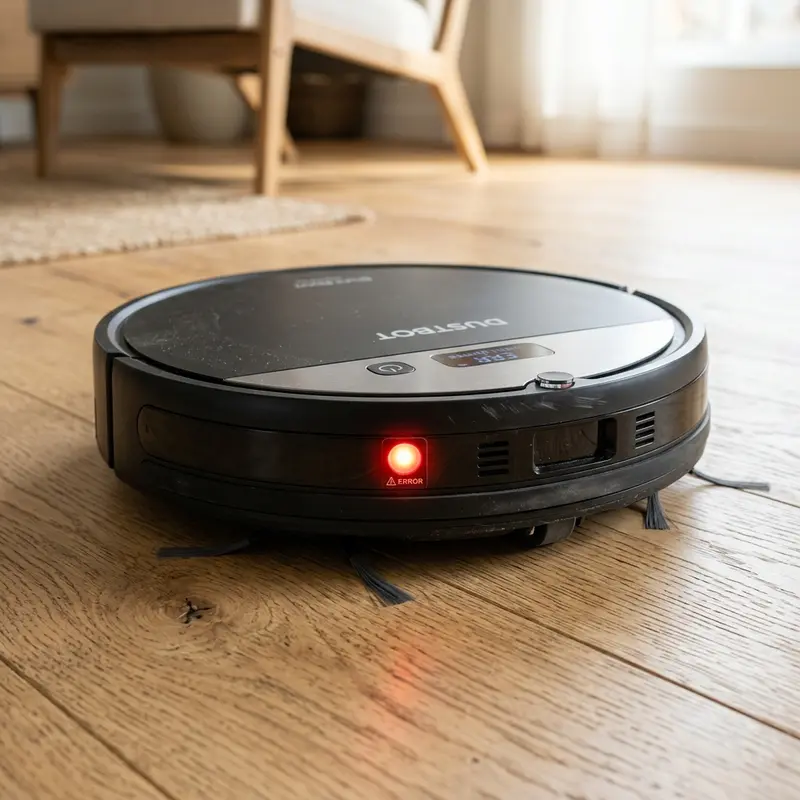
When searching for the best robot vacuum for thick shag carpets, you must evaluate the ground clearance, driving wheel diameter, and suction motor torque. Most entry-level, random-bounce robot vacuums will immediately bog down on high-pile fibers because their small wheels lose traction and the direct suction inlet gets blocked by the carpet threads. Choosing a model with proper suspension travel and brushroll mechanics is crucial for a smooth clean.
1. Ground Clearance, Suspension Travel, and Approach Angle
The first physical hurdle for any robot vacuum on thick carpets is the level change. Shag and high-pile carpets typically range from 0.6 inches to 1.0 inch in thickness. Budget robot vacuums feature a low ground clearance of under 0.4 inches, causing the front bumper to crash into the carpet edge. The robot's motherboard registers this collision as a wall and turns away, or the chassis high-centers on the fibers, lifting the driving wheels and causing a wheel-spin error.
Vacuums engineered to handle high-pile carpets successfully have three essential design features:
- Large diameter wheels: Drive wheels over 2.7 inches (70 mm) in diameter provide the required climb angle and leverage.
- Long-travel suspension arms: Spring-loaded articulation allows the wheels to drop up to 1.0 inch below the chassis, maintaining constant traction on irregular surfaces.
- Under-chassis deflector ramps: Angled plastic plates guide the vacuum over carpet edges, preventing carpet threads from catching on the bottom casing.
2. Suction Power Dynamics and Ultrasonic Carpet Sensors
Cleaning high-pile shag carpets requires far higher static pressure than hard tile floors. Dust, pet dander, and hair sink deep into the carpet base. Vacuums with under 2,000 Pa of suction will only clear surface dust, leaving deep allergens behind.
The best vacuums for thick carpets feature underside ultrasonic sensors that detect floor density. When the acoustic wave is absorbed by fabric, the controller increases the suction motor to maximum power (Turbo Boost, from 3,000 Pa to 6,000 Pa). This optimizes airflow through the carpet threads while saving battery charge when returning to hard floors.
If your main roller brush stops spinning during carpet climbs, read our troubleshooting guide on how to remove main brush from robot vacuum.
3. Floating Brushrolls vs. Direct Suction Inlets
Many cheap robot vacuums use direct suction inlets with no rotating main brush to prevent long hair tangles. While this works on hardwood, it is ineffective on high-pile carpets. Direct suction cannot separate carpet fibers to release dirt trapped at the backing layer.
For high-pile carpets, the vacuum must have a floating main brushroll. The brush module is suspended by independent helper springs, allowing the roller housing to move vertically over carpet variations. A mix of rubber blades and nylon bristles combs the carpet fibers to pull out trapped pet hair. Dual rubber rollers are even better, as they prevent long shag fibers from wrapping around the rotating steel axle.
4. Shag Carpet Navigation and Performance Metrics
The table below summarizes the technical specifications required for robot vacuums operating on thick carpets:
| Model Name | Climbing Limit | Max Suction (Pa) | Brushroll Type | Carpet Boost Sensor |
|---|---|---|---|---|
| Roborock S7 / S8 | 0.8 inches (2.0 cm) | 2500 / 6000 Pa | Dual Floating Rubber | Yes (Ultrasonic) |
| KaBuM! Smart 700 | 0.6 inches (1.5 cm) | 2200 Pa | Floating Bristle/Rubber | No (Manual app zoning) |
| Liectroux C30B | 0.5 inches (1.2 cm) | 3000 Pa | Fixed Bristle/Rubber | No |
| Mondial Fast Clean | 0.3 inches (0.8 cm) | 1200 Pa | Direct Suction Only | No |
5. Intelligent Mapping and No-Mop Boundaries
One major issue with hybrid robot vacuums (mop and sweep models) is wetting shag carpets during cleaning runs. Dragging a damp mop pad over carpet fibers ruins the microfibers and can stain the carpet fabric.
Modern hybrid models solve this in two ways:
- Automatic Mop Lifting: The vacuum raises the mop plate by up to 0.5 inches (12 mm) when the ultrasonic sensor detects carpet, allowing it to vacuum carpets and mop hard floors in one run.
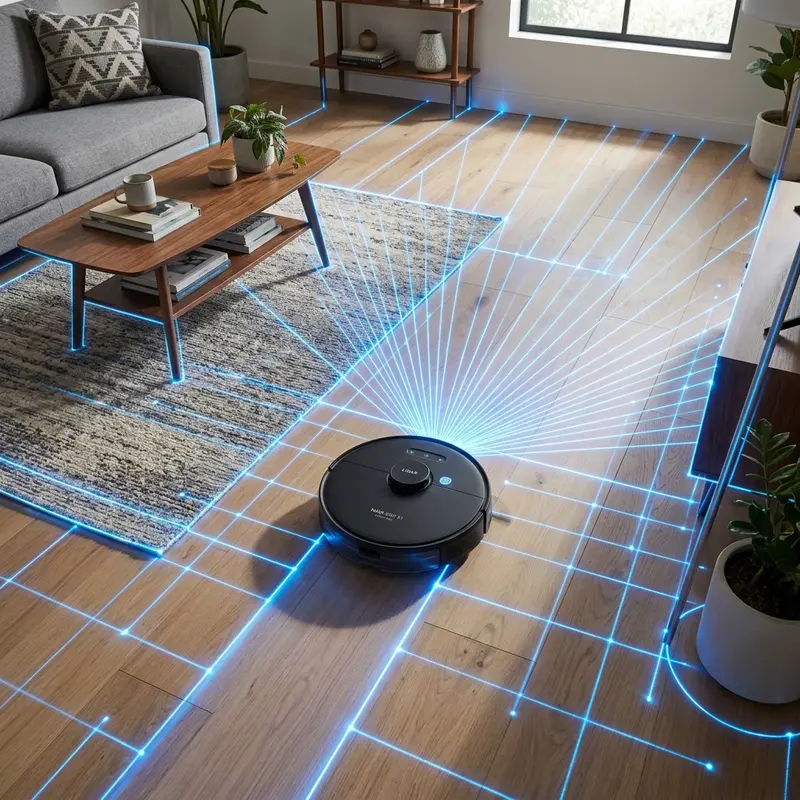
- No-Mop Zones: In the smartphone app's LiDAR map, the user draws boundaries around the shag rugs. The vacuum will avoid these areas while the mop bracket is attached.
If your unit drags or has wheel issues, read our detailed guide on how to clean robot vacuum caster wheel.
Preventing Electrical Overload in Driving Motors
When driving on thick shag carpets, the wheel motors experience increased resistance, drawing more current from the power supply. The control board monitors driver temperatures. If the robot gets stuck and the wheels spin in place for over 10 seconds, the firmware cuts power to the motors to prevent coil burnout, triggering an app error.
To reduce electrical load, schedule carpet cleans in the direction of the shortest weave and clean the wheel hubs monthly to remove wound hair and threads.
Central Brushroll Gearbox and Axle Maintenance
Friction from shag fibers forces fine dust into the brass bushings and plastic gearboxes of the main roller. This dust dries out the lubrication, causing heat build-up that can melt the plastic roller mount.
Remove the main brushroll weekly. Use the cleaning tool to slice away wound threads and hair. Wipe the metal axle tips and apply a drop of dry Teflon lubricant to keep the brush gearbox spinning smoothly.
HEPA Filtration Standards and Allergy Containment
Thick carpets store large amounts of allergens. Vacuuming must be backed by high-efficiency filtration. Suitable robot vacuums use true H13-class HEPA filters, capturing 99.97% of particles down to 0.3 microns, preventing fine dust from returning to the room air.
Replace the HEPA filter every 3 months and tap out dry dust after cleaning shag rugs. Never wash paper HEPA filters with water, as moisture collapses the microfiber pores.
Cliff Sensor False Positives on Dark Carpet Patterns
Many shag rugs feature dark geometric patterns. Underside cliff sensors use infrared light reflections. When passing over black rug stripes, the IR light is absorbed, causing the robot to mistake the dark pattern for a ledge and halt with an error code.
In homes without stairs, you can configure no-go zones over the dark carpet patterns in the smart app to prevent false cliff stops.
Acoustic Wave Absorption and Carpet Density Detection
To detect carpet transitions, advanced robot vacuums feature downward-facing ultrasonic transceivers mounted near the front bumper. These sensors emit acoustic signals at a frequency of approximately 40 kHz. When traveling over hard tile or wood flooring, the sound wave bounces back with high amplitude, signaling a flat surface to the microchip.
However, when the vacuum rolls over high-pile shag carpets, the soft, porous fibers absorb the acoustic pulses, returning a highly attenuated echo. The control board processes this drop in echo strength in milliseconds and switches the suction motor to its highest Pa capacity, helping pull dust out of the carpet weave without wasting battery power on hard floors.
Drive Motor Torque Parameters and Current Limiting Safety Loops
Driving through high-pile shag carpets requires significant torque from the drive wheels. This increased resistance forces the wheel motors to draw higher current from the battery pack. The motherboard features current sensing circuits that monitor the heat and amperage across the motor drivers.
If the electrical current stays above 1.8A for more than 8 consecutive seconds, indicating the wheels are stuck or tangled in shag threads, the vacuum's safety firmware shuts down power to the drive wheels. This protective shutdown prevents the motor windings from overheating and melting, triggering a stall error in the smart app.
Dual Rubber Rollers vs. Bristle Brushes on Shag Rugs
The design of the main brushroll is critical for preventing carpet fiber jams. Traditional bristle brushes catch on long carpet threads, wrapping shag fibers around the core and jamming the drive motor. This requires users to manually cut fibers out of the brush assembly.
In contrast, dual counter-rotating rubber rollers squeeze and vibrate the carpet fibers to release dust without catching. The smooth silicone paddles direct hairs and lint straight into the suction path, preventing long carpet threads from wrapping around the brush axle and maintaining deep cleaning performance.
Infrared Signal Absorption on Dark and High-Contrast Rug Patterns
A common issue when robot vacuums clean thick shag carpets with dark or black geometric patterns is that the vacuum halts and goes backward. Cliff sensors use active infrared beams to determine floor height. Dark materials absorb the light spectrum rather than reflecting it back to the receiving photodiode.
The control firmware registers this missing signal as a step (cliff), prompting a retreat. In single-level homes without staircases, users can bypass this false positive by covering the cliff sensor lenses with white paper templates, creating a constant reflection and letting the vacuum sweep dark rugs normally.
Side Sweeper Brush Maintenance and Prevention of Jam Loops
The rotating side brushes sweep edges and push dust toward the main roller. When operating on high-pile shag carpets, the long nylon bristles can tangle in the carpet fibers, putting physical strain on the side brush motors.
This friction wraps pet hair and fiber lint around the brass axle bearings, leading to brush jams. Remove the side brushes weekly by unscrewing them, clear the axle shafts of any wound hair, and apply a drop of silicone spray to maintain smooth rotations.
Ultrasonic Transceiver Signal Tuning and Echo Amplitude Calculations
In high-pile vacuum engineering, the ultrasonic sensor must remain calibrated to prevent false surface readings. The transceivers operate by converting electrical pulses into high-frequency sound waves. When the sound waves reflect off a loose, wool-based high-pile carpet, the signal disperses, reducing the echo amplitude returned to the control chip.
The firmware filters this low amplitude return and cross-references it with wheel torque metrics. If the signal is too low, the vacuum knows it is on carpet and increases the suction motor speed to Max Turbo. Cleaning the sensor casing and clearing hair wraps from the nearby side sweepers ensures reliable surface transitions.
Mechanical Friction Loss on Long Fibers
When sweeping Shag rugs, the carpet pile fibers create significant physical drag against the underside of the vacuum. This friction slows down the rotation of the driving wheels and increases current demand. Motherboard software compensates for this drag by dynamically adjusting the power output to the wheel motors.
Ensure the wheel treads are clean. Dusty or smooth rubber treads will slip on the rug backing, reducing traction and causing navigation drift errors during cleaning cycles.
Navigating Obstacles on High-Pile Carpets
Because high-pile carpets create a non-uniform surface height, robot vacuums must adjust their pathing algorithms. A sudden tilt or change in chassis level can cause the onboard IMU to register a collision, halting the run. Advanced vacuums use software filters that ignore minor tilt fluctuations, ensuring the robot drives in straight cleaning rows.
Frequently Asked Questions (FAQ)
How do I know if a robot vacuum can climb my thick rug?
Check the manufacturer's climbing height specifications. For thick shag carpets, the robot vacuum must be rated to climb obstacles of at least 0.7 to 0.8 inches.
Do side brushes get stuck in high-pile shag carpets?
Yes. Long side brushes with nylon bristles can tangle in shag fibers. We recommend setting no-go zones in the app or removing the side brushes for carpet cleaning runs.
Why does the battery drain faster when vacuuming carpets?
On carpets, the vacuum activates its high-power Turbo Boost mode, and the wheel motors exert higher torque to drive through the fibers, drawing more current.
Which brushroll type is best for pet hair on thick carpets?
Dual floating rubber rollers are the best option. They provide deep vibration to lift hair and resist tangles better than traditional bristle brushrolls.
Conclusion
Cleaning thick shag and high-pile carpets requires a robot vacuum with large drive wheels, a long-travel suspension, at least 2,500 Pa of suction with ultrasonic carpet detection, and a floating brushroll. Selecting these features keeps your vacuum running smoothly and your carpets free of deep allergens.




