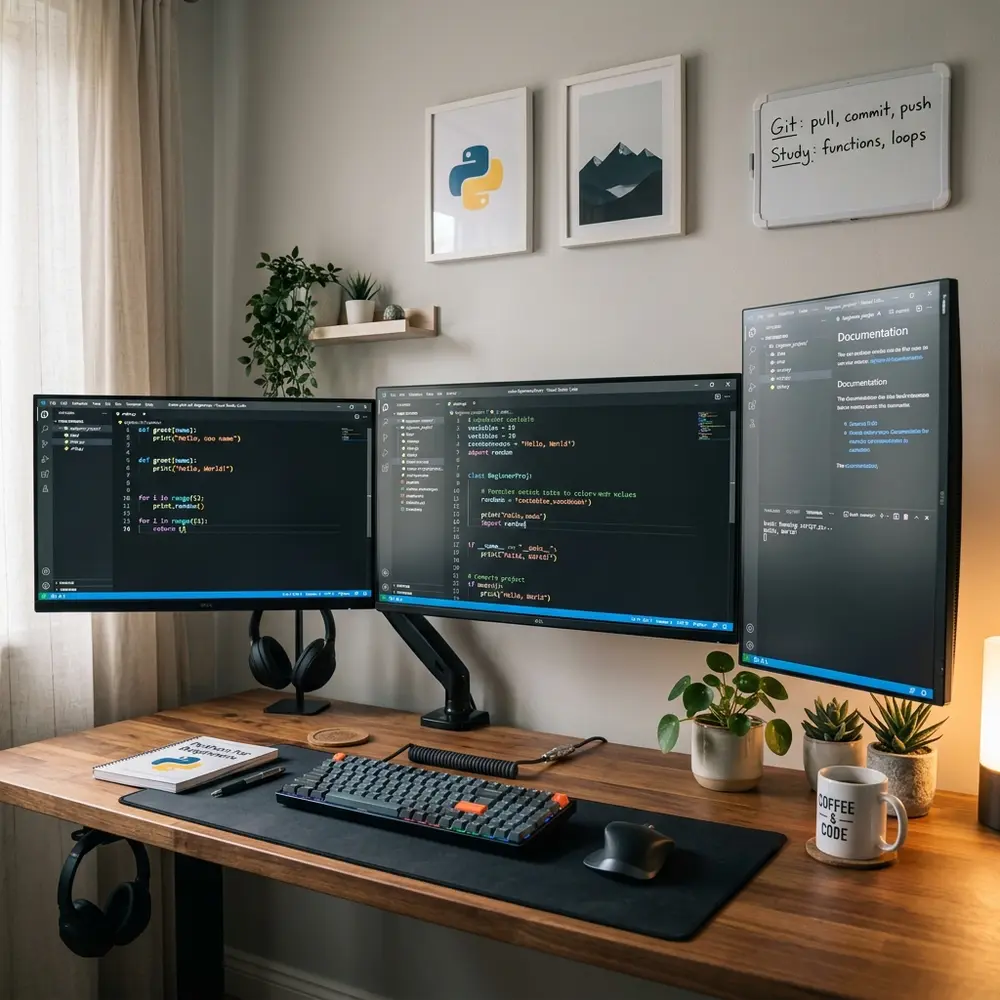
12 Best AI Tools for Programmers and Developers [2026]
![12 Best AI Tools for Programmers and Developers [2026]](https://umoaupsqhrhivceztycp.supabase.co/storage/v1/object/public/media/wp-uploads/2025/05/best-code-editors-for-beginners.webp)
Explore the 12 best AI tools for programmers and developers in 2026 to enhance coding efficiency and productivity.
Programming and software development have undergone significant transformations, especially with the advent of artificial intelligence (AI). The integration of AI tools into the development workflow has opened up new avenues for enhancing productivity, improving code quality, and streamlining development processes.
The demand for proficient programmers who can harness these technologies is on the rise, prompting a thorough examination of the best AI tools currently available to developers. In 2026, a range of solutions have emerged that cater to various needs within the programming community, from code generation to debugging and beyond.
As the landscape of software development continues to evolve, understanding the core strengths of these AI tools becomes fundamental for developers aiming to stay ahead. Each tool offers unique features that can significantly impact workflow and project outcomes.
The following sections will delve into a detailed review of twelve prominent AI tools tailored for programmers and developers, evaluating their functionalities, pricing models, and integration capabilities with popular Integrated Development Environments (IDEs). This comprehensive analysis will provide insights into how these tools can be leveraged to optimize coding practices and enhance overall development efficiency.
Detailed Introduction, Core Definitions, and Industry Relevance
Artificial intelligence has established itself as a cornerstone of modern programming and software development. At its core, AI encompasses a variety of technologies that enable machines to simulate human intelligence processes, such as learning, reasoning, and self-correction.
In the context of programming, AI tools assist developers in automating mundane tasks, providing code suggestions, and enhancing overall productivity. The relevance of these tools in the industry cannot be overstated, as they not only facilitate faster project completion but also contribute to reducing human error in coding.
The rise of remote work and the need for rapid software development cycles have further amplified the importance of AI tools in programming. With organizations striving for agility and efficiency, AI-powered solutions have emerged as necessary assets for developers.
Tools like code completion, automated testing, and intelligent code review systems are now commonplace in many development environments. These advancements not only streamline workflows but also empower developers to focus on more complex tasks, thereby fostering innovation within teams.
In examining the landscape of AI tools for programmers, IT is highly important to identify the specific functionalities that differentiate these tools. Some tools excel in code generation, while others focus on enhancing collaboration or providing advanced debugging capabilities.
As the programming community continues to adopt these technologies, understanding the specific strengths of each tool will enable developers to make informed decisions on which solutions best fit their needs. This understanding is fundamental for maximizing productivity and maintaining a competitive edge in an ever-evolving technological landscape.
Career Paths, Education Resources, and Core Skills Breakdown
In the rapidly changing field of software development, career paths have diversified significantly, with numerous opportunities arising from the integration of AI technologies. Developers can choose to specialize in various domains, such as machine learning, web development, or mobile app development, each requiring a distinct set of skills.
The incorporation of AI tools into these fields has added a layer of complexity and potential, prompting developers to acquire both foundational programming skills and a deep understanding of AI principles.
Education resources have expanded to accommodate this shift, with an increasing number of online courses, workshops, and certification programs focusing on AI in programming. Platforms like Coursera, Udacity, and edX offer specialized courses that cover a range of topics, from basic programming concepts to advanced AI algorithms.
Additionally, many universities have begun integrating AI and machine learning into their computer science curricula, ensuring that the next generation of developers is well-equipped to navigate the complexities of modern programming.
The core skills required to thrive in this environment extend beyond traditional programming languages. Proficiency in data structures, algorithms, and software engineering principles remains vital, but developers must also familiarize themselves with AI concepts, such as natural language processing, neural networks, and machine learning frameworks.
Moreover, collaboration and communication skills are increasingly important, as developers often work in cross-functional teams where AI tools are utilized to enhance collective productivity. This multifaceted skill set not only prepares developers for various career opportunities but also positions them to leverage AI tools effectively, ultimately driving innovation in their respective fields.

A Comparison Table
To facilitate a clearer understanding of the various AI tools available for programmers, a comparison table has been compiled. This table outlines the core strengths, pricing, and IDE integrations for each tool, providing a comprehensive overview that aids developers in selecting the most suitable options for their specific needs.
Below is a summary of the twelve best AI tools for programmers in 2026, highlighting their unique offerings and relevant details.
| AI Tool | Core Strengths | Pricing Model | IDE Integrations |
|---|---|---|---|
| GitHub Copilot | Contextual code suggestions | $10/month or $100/year | Visual Studio Code, JetBrains, etc. |
| Cursor AI | Code completion and documentation | $15/month | VS Code, Sublime Text, Atom |
| Tabnine | AI-powered auto-completion | Free tier; Pro version at $12/month | All major IDEs |
| Amazon Q Developer | AI-driven code generation | Pay-as-you-go pricing | AWS Cloud9, various IDEs |
| Codeium | Multilingual code suggestions | Free with premium features | VS Code, JetBrains, etc. |
| ChatGPT Plus | Conversational AI for coding assistance | $20/month | Web-based, integrates with IDEs |
| Claude 3.5 Sonnet | Natural language code explanation | $15/month | Web-based |
| Replit Agent | Collaborative coding environment | Free with premium features | Replit platform |
| Gemini Advanced | AI-driven debugging | $30/month | Multiple IDEs |
| Cody by Sourcegraph | Intelligent code navigation | $10/month | VS Code, JetBrains, etc. |
| Continue.dev | AI-driven coding tutorials | $25/month | Web-based |
| Phind | AI-enhanced search for coding resources | Free; subscription optional | Web-based |
The table above illustrates the diverse range of AI tools available, emphasizing their distinct functionalities and pricing structures. Each tool offers unique advantages that cater to different aspects of the programming process, allowing developers to choose the one that aligns best with their workflow.
By leveraging these tools, programmers can enhance their productivity and streamline their coding practices, ultimately leading to improved project outcomes.

Additional Resources and Recommended Links
For those seeking to delve deeper into the world of AI tools for programmers, a wealth of resources is available. Comprehensive reviews of specific tools can provide further insights and help in making informed decisions.
For instance, a detailed exploration of Cursor AI offers an in-depth look at its functionalities and performance. Additionally, understanding whether GitHub Copilot is worth IT can guide developers in leveraging its capabilities effectively.
These resources, alongside external authoritative sources, contribute to a well-rounded understanding of AI tools in programming.
Advanced Configuration and Troubleshooting for AI Development Tools

In addition to proper installation, configuration of the AI tools often requires fine-tuning parameters to optimize performance for specific tasks. This can involve adjusting settings related to model architecture, hyperparameters, and training data preprocessing.
For example, when working with natural language processing (NLP) tools, IT is highly important to preprocess text data to remove noise, such as punctuation and stop words, which can significantly affect model accuracy. Moreover, developers should leverage built-in debugging and logging features within these tools to trace issues effectively.
Understanding the error messages generated by AI tools can provide insights into where a problem may lie, whether IT is in the code logic or the model’s configuration.
Another vital aspect of troubleshooting is the ability to simulate various environments. This is particularly important for developers working in teams where different team members may be using different setups.
Utilizing containerization technologies such as Docker allows developers to create uniform environments that can be replicated across machines. This not only facilitates smoother collaboration but also minimizes the risk of encountering environment-specific issues.
Testing the AI tools in isolated environments can help identify compatibility issues early on, thereby streamlining the development process.
Furthermore, developers should engage in continuous learning to keep pace with the rapidly evolving landscape of AI technologies. This can involve participating in online forums, attending webinars, or enrolling in advanced courses.
Keeping abreast of the latest updates and best practices ensures that developers can leverage the latest features and optimizations available in AI tools. For instance, recent advancements in transfer learning and model distillation can significantly enhance the efficiency of developing complex applications.
By remaining informed, developers can troubleshoot issues more effectively and adopt new methodologies that improve overall productivity.
Lastly, collaboration within the developer community can provide invaluable insights into common challenges faced when using AI tools. Participating in hackathons, coding boot camps, or local meetups can foster connections that lead to shared solutions for troubleshooting.
Developers can exchange knowledge on how they have resolved similar issues, providing practical strategies that may not be documented in official resources. This community engagement not only enhances technical skills but also builds a support network that can prove fundamental in navigating the complexities of AI development.
Navigating the Job Market and Portfolio Development in 2026

Furthermore, developers should focus on building projects that address real-world problems. This could involve collaborating with non-profits or local businesses to create AI-driven solutions that improve efficiency or solve specific challenges.
Such projects not only enhance the portfolio but also provide practical experience in project management and client interaction. When documenting these projects, IT is highly important to include detailed descriptions of the problem, the approach taken, the technologies used, and the outcome achieved.
This level of detail not only illustrates technical capabilities but also demonstrates a problem-solving mindset, which is highly valued by employers.
Networking will play a pivotal role in job searches in 2026. Engaging with professional communities on platforms like LinkedIn or GitHub can open doors to job opportunities that may not be widely advertised.
Participating in discussions, sharing insights, and contributing to open-source projects can enhance visibility within the industry. Additionally, attending industry conferences and workshops provides opportunities to meet potential employers and learn about the latest trends in AI development.
Establishing a personal brand as a knowledgeable and engaged member of the AI community can significantly impact job prospects.
In addition, leveraging job boards that focus specifically on tech and AI roles can streamline the job search process. Websites tailored to tech hiring often feature openings that require niche skills that are increasingly in demand.
Developers should also consider the importance of tailoring resumes and cover letters to highlight relevant experience and skills, aligning them with the specific requirements of each job application. This targeted approach can significantly improve chances of securing interviews.
Finally, as the industry evolves, IT is highly important to remain adaptable and open to learning new skills. The AI landscape is constantly changing, with new tools and frameworks emerging regularly.
Developers must be proactive in seeking out training opportunities, whether through formal education or self-directed learning. Engaging in continuous professional development ensures that skill sets remain relevant and competitive within the job market.
Long-Term Expectations and Community Engagement in the AI Job Market
In the context of long-term expectations within the AI job market, it is fundamental to recognize the ongoing evolution of the industry and the implications for job security and career advancement. As AI technologies become more integral to various sectors, the demand for skilled professionals is projected to remain robust. This demand is expected to grow as organizations increasingly adopt AI-driven solutions to enhance efficiency, drive innovation, and maintain competitive advantage. However, along with opportunities, there may also be challenges, including market saturation in certain regions and the constant need for skills upgrading.Community networking is pivotal in ensuring long-term career stability. Engaging with peers, mentors, and industry leaders can provide insights into emerging trends, potential job openings, and best practices.
This networking can take many forms, from participating in online forums and social media groups to attending industry conferences and local meetups. Building a strong professional network can lead to collaboration opportunities and referrals, which are often key to landing desirable positions.
Furthermore, contributing to community-driven projects or open-source initiatives can enhance visibility and credibility within the field.
In addition to networking, developers should consider the importance of diversification in skill sets. Specializing in AI is beneficial, but having a broad understanding of related fields such as data science, software engineering, and cloud computing can provide a competitive edge.
This multi-disciplinary approach allows professionals to adapt to changing market demands and explore various career pathways within the technology sector. For instance, developers who can bridge the gap between AI and data engineering are increasingly sought after as organizations strive to implement comprehensive data strategies.
Moreover, as the landscape of AI continues to evolve, professionals should be proactive in seeking feedback and mentorship. Engaging with more experienced colleagues or industry veterans can provide valuable perspectives on career progression and skill development.
Regularly seeking feedback on work and professional conduct can facilitate growth and improvement, positioning individuals favorably for advancement opportunities. This ongoing dialogue fosters a culture of learning and adaptability that is fundamental in a rapidly changing environment.
Lastly, maintaining a long-term view of career aspirations is highly important. Setting clear goals and regularly assessing progress can help professionals stay focused amid the dynamic nature of the AI job market.
Whether aiming for leadership roles, specialized technical positions, or entrepreneurial ventures, having a roadmap can guide decision-making and skill acquisition. By remaining adaptable, continuously learning, and engaging with the community, professionals can navigate the complexities of the AI job market and secure a stable and rewarding career.