Network Switch vs Router: Differences and When to Use Which
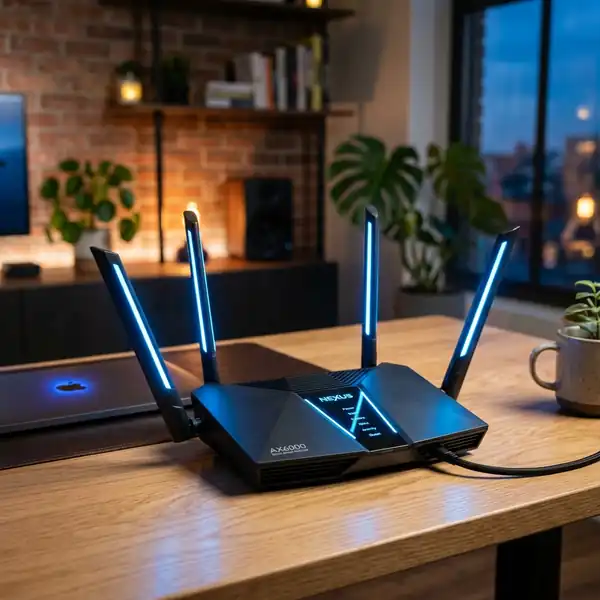
In the domain of local network infrastructure and enterprise connectivity, selecting the right hardware components defines the overall performance, security, and scalability of data transmission. The critical difference between a network switch and a router lies in the specific OSI layer at which they operate and the scope of their communications: a network switch operates at Layer 2 (Data Link Layer) to interconnect multiple devices within the same local area network (LAN) using physical MAC addresses, while a router operates at Layer 3 (Network Layer) to connect entirely different networks (such as bridging your local LAN to the external Internet WAN) by evaluating logical IP addresses and managing routing tables. In simple terms, a switch builds the internal network connections, whereas a router serves as the gatekeeper linking that internal network to the outside world.
For IT professionals and network administrators, understanding this architectural separation prevents common topology design mistakes. For instance, using the wrong device to expand a home or enterprise network can lead to structural bottlenecks, packet loss, or security vulnerabilities. If you are looking to optimize your local connection, you might also find it helpful to read our detailed guide on setting up a Mercusys 300Mbps router on mobile or check out our analysis on diagnosing a blinking orange light on an internet router.
1. What Is a Network Switch and How Does It Operate at Layer 2?
A network switch, or comutator, is the hardware component responsible for linking end-user devices — including desktop PCs, laptops, network printers, storage servers, IP cameras, and Wi-Fi Access Points — within a single physical location, creating a Local Area Network (LAN). It executes packet switching at the Data Link Layer (Layer 2) of the international ISO/OSI reference model.
The core functionality of a modern switch depends on analyzing incoming Ethernet frame headers in real-time. When a device transmits data across the local network, the switch examines the source Media Access Control (MAC) address and the destination MAC address embedded within the incoming frame. The switch retains a high-speed memory table known as the MAC Address Table or CAM (Content Addressable Memory) table, mapping which MAC address belongs to which physical port on the switch chassis.
Here are the fundamental technical characteristics of switch operations:
- Dedicated Unicast Commutation: Unlike legacy network hubs (which worked by broadcasting any incoming electrical signal to every active port simultaneously, causing collisions and security risks), a switch performs targeted unicast delivery. When the destination MAC address is present in the CAM table, the switch establishes a temporary, dedicated micro-connection between the sending and receiving ports. This prevents other devices on the LAN from sniffing the packets, increasing data privacy.
- Collision Domain Isolation: Every single port on a modern switch represents an isolated collision domain. Because switches run in Full Duplex mode (enabling devices to transmit and receive data simultaneously over separate twisted pairs without signal overlap), data collisions do not occur. The backplane bandwidth of the switch determines its total switching capacity, providing dedicated speed (e.g., 1 Gbps on Gigabit ports) to each line rather than sharing a single pipe.
- Broadcast Traffic Handling: If a device needs to locate another device but lacks its MAC address (common in Address Resolution Protocol / ARP queries), it sends a broadcast frame (destined for FF:FF:FF:FF:FF:FF). The switch replicates this broadcast frame to all connected ports on the same subnet (except the originating port). An excessive amount of broadcast traffic can cause broadcast storms, consuming the switch's processing power and causing latency spikes.
2. What Is a Router and How Does It Operate at Layer 3?
While a switch consolidates local device communications, a router is an intelligent networking appliance designed to bridge separate logical networks. Working at the Network Layer (Layer 3) of the OSI model, a router manages data delivery using logical IP addresses (IPv4 and IPv6) rather than hardware MAC addresses.
The primary technical duty of a router is to read the destination IP address in the header of each incoming packet and determine the best route to send it to its next destination. To do this efficiently, the router maintains a Routing Table in its operational memory. This table holds static routes configured manually by network administrators and dynamic routes calculated automatically by protocols like OSPF, BGP, and RIP.
The specialized hardware and software components of a router include:
- NAT (Network Address Translation): To conserve IPv4 addresses, routers use NAT to map all local private IP addresses (such as 192.168.1.0/24) to a single public IP address assigned by the Internet Service Provider (ISP). This translation hides internal network structures from the public web, acting as a basic layer of protection.
- DHCP Server: The router automatically manages and allocates IP configurations to all clients on the LAN. It provides the IP address, subnet mask, default gateway (the router's own LAN IP), and DNS server addresses.
- Border Control and Security: Sitting at the edge of the LAN, the router runs active security features, including stateful packet inspection (SPI) firewalls and port forwarding rules, protecting the network from unauthorized traffic.

3. Deep Technical Comparison: Switch vs Router
To design resilient network architectures, we must directly compare the hardware and software engineering details of switches and routers. Though they may look similar on a server rack, their internal processing systems are built for different tasks.
Layer 2 switches route frames using hardware-integrated circuits called ASICs (Application-Specific Integrated Circuits). ASICs process millions of frames per second with minimal delay (measured in microseconds) without using the switch's main CPU. Routers, however, perform complex tasks like NAT, firewall filtering, cryptographic VPN tunnels, and route calculations. This requires powerful CPUs and RAM, which can introduce slightly more packet processing delay compared to a hardware switch.
The table below summarizes these key operational differences:
| Technical Parameter | Network Switch (Layer 2) | Network Router (Layer 3) |
|---|---|---|
| OSI Layer | Layer 2 (Data Link - Ethernet Frames) | Layer 3 (Network - IP Packets) |
| Addressing Mechanism | Physical MAC Address (Hexadecimal) | Logical IP Address (IPv4 / IPv6) |
| Core Memory Table | CAM Table (MAC-to-port mapping) | Routing Table (Subnet-to-interface mapping) |
| Broadcast Domain Scope | Forwards broadcasts to all local ports | Blocks and isolates broadcast domains |
| Services & Utilities | None (Except in high-end Layer 3 switches) | DHCP Server, NAT, Firewall, VPN, QoS |
| Typical Port Count | High (8, 16, 24, 48+ ports) | Low (typically 2 to 5 ports WAN/LAN) |
4. Step-by-Step: Connecting and Configuring a Switch to a Router
In practice, you do not have to choose between a switch and a router; they work together to scale your network. The router connects to the internet modem and handles routing, while the switch expands the number of physical Ethernet ports available for wired devices.
Follow these steps to connect and configure a switch with your router:
- Power down the devices: Turn off both the router and the switch before connecting cables to prevent loop issues or packet conflicts during bootup.
- Select the right Ethernet Cable: Use Cat5e, Cat6, or higher copper cables. Modern hardware supports Auto-MDIX, which automatically adjusts for straight-through or crossover connections, but using a standard straight-through Cat6 cable is recommended.
- Connect to a LAN port: Plug one end of the Ethernet cable into a LAN port on the back of your router (e.g., LAN 1, with gateway IP 192.168.1.1). Plug the other end into any available port on the switch. Modern unmanaged switches do not require a specific "Uplink" port; any port can serve as the bridge to the router.
- Power on in order: Plug in the router first. Wait for its WAN/internet light to stabilize. Then, plug in the switch. The Link/Activity LEDs on both connected ports should light up green or orange, indicating a successful link negotiation (10/100/1000 Mbps).
- Connect your clients: Connect your computers, printers, and gaming consoles directly to the switch ports. The switch will pass DHCP requests from these devices to the router, which will assign them IP addresses and connect them to the network.
5. Practical Scenarios: When to Choose Which?
To help you choose the right device, consider these common network setups:
Buy a ROUTER if:
- You need to share a single internet connection with multiple devices at home or in an office.
- You need to set up a wireless (Wi-Fi) network with WPA2 or WPA3 security.
- You want to set up parental controls, block specific websites, or manage guest access.
- You need to configure VPN connections or forward ports for online gaming.
Buy a SWITCH if:
- Your router is already set up, but you have run out of Ethernet ports on the back of it.
- You need to transfer large files quickly between local devices (like a NAS backup) without overloading the router.
- You need to power devices like security cameras or VoIP phones over the network cable using Power over Ethernet (PoE).
6. Managed vs Unmanaged Switches: What Is the Difference?
Beyond the switch-vs-router comparison, switches are divided into managed and unmanaged categories. This choice affects both installation costs and how much control you have over local data flows.
An unmanaged switch is a simple plug-and-play device. It has no web interface or settings. It comes pre-configured to handle traffic automatically. Unmanaged switches are cost-effective and ideal for homes or small offices where network segmentation is not required.
A managed switch includes its own operating system. It allows network administrators to log in via SSH or a web browser to configure port settings. Key features of managed switches include setting up Virtual LANs (VLANs) to segment traffic, prioritizing traffic with QoS, port mirroring for monitoring, and access controls.
7. Spanning Tree Protocol (STP) and the Risk of Network Loops
In large business networks, administrators often connect switches in loops to provide redundant data paths. However, this setup can cause a serious issue known as a network loop.
Since Layer 2 switches do not modify Ethernet frame headers and lack a Time-to-Live (TTL) counter, broadcast frames can circulate endlessly between connected switches. This creates a broadcast storm that can saturate network bandwidth and freeze connected devices.
To prevent this, managed switches use the Spanning Tree Protocol (STP). STP monitors the network topology and disables redundant paths. If a primary cable fails, STP automatically enables the backup path within milliseconds, keeping the network online without manual intervention.
Frequently Asked Questions
Can I use a switch instead of a router to connect to the internet?
No. A switch cannot authenticate with your ISP, handle NAT, or assign IP addresses via DHCP. You must connect a router to your modem first, then connect the switch to one of the router's LAN ports to share the connection.
Does a switch slow down internet speeds?
No. Modern switches process traffic using hardware ASICs, adding negligible latency (less than 5 microseconds). Using a high-quality Gigabit switch and Cat6 cables will not slow down your connection.
Do home Wi-Fi routers have built-in switches?
Yes. Most home Wi-Fi routers are hybrid devices. They combine a Layer 3 router, a wireless access point, and a 4-port Layer 2 switch into a single unit.
What happens if I connect both ends of an Ethernet cable to the same switch?
On an unmanaged switch, this will create a network loop, causing a broadcast storm that will likely freeze the switch and disrupt the network. On a managed switch with STP enabled, the loop will be detected and the port will be disabled automatically.




