How to Share Mobile Phone Internet to PC using USB Tethering
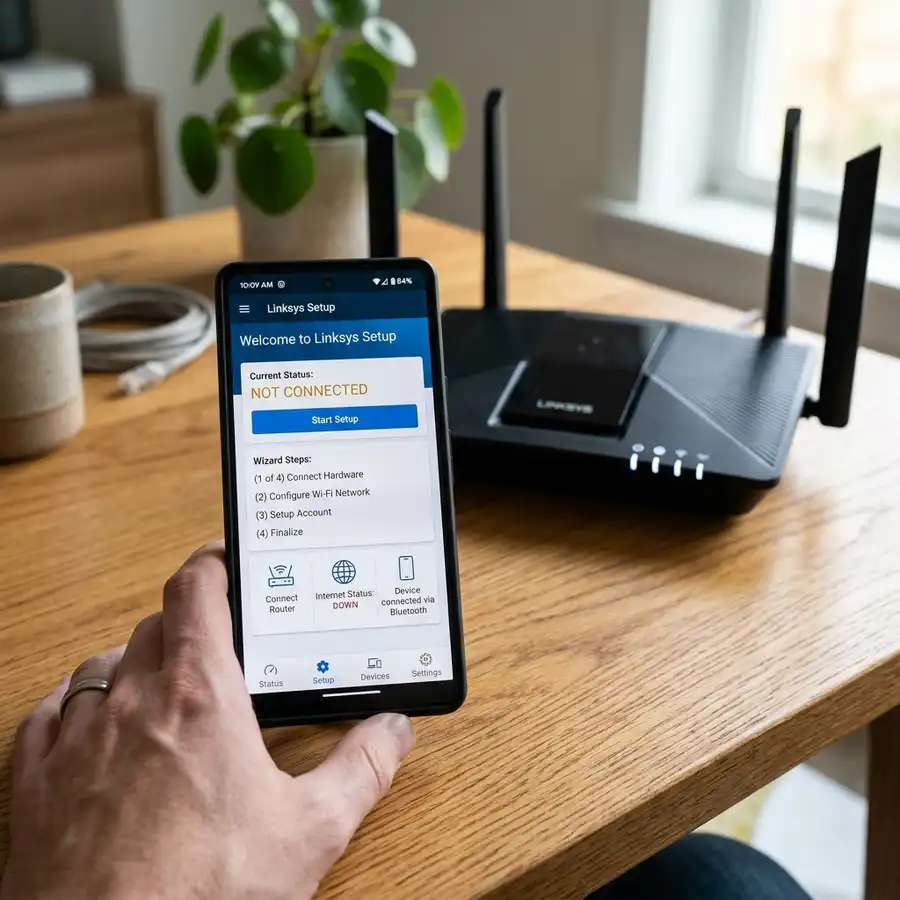
Running out of broadband internet on your desktop computer or laptop during a trip or local operator technical failure is an extremely stressful situation. However, it is perfectly possible to use your smartphone's 4G or 5G mobile data plan to re-establish connectivity in a stable manner. To share your phone's internet connection to your PC via a USB cable, connect the cable to the phone and to a USB port on the computer, access the phone settings under Connections or Access Point, and activate the USB Tethering option for the operating system to recognize the connection immediately.
This physical cable tethering methodology presents a series of technical advantages when compared to the conventional portable Wi-Fi hotspot. It eliminates radiofrequency spectrum interference, consumes significantly less smartphone battery charge, and provides more consistent transfer speeds with lower latency (ping). In the course of this step-by-step tutorial, we detail the configuration for Android and iOS operating systems on Windows and Linux, in addition to addressing the main troubleshooting solutions for drivers and data sharing.
1. Technical Advantages of USB Tethering Over Wi-Fi Hotspots
Although creating a wireless access point from your smartphone is a very convenient option because it does not require cables, it has serious structural disadvantages. Radio waves operating in the 2.4 GHz and 5 GHz frequencies are subject to constant electromagnetic interference from other nearby residential networks, which generates data packet loss and unstable latency. This makes browsing heavy and prevents real-time activities like video calls or online games.
By opting for a USB cable connection, you establish a direct hardware communication channel, whose benefits include:
- Absence of radio interference: Data travels through a shielded physical medium, immune to external noise caused by neighboring routers, microwave ovens, or Bluetooth peripherals.
- Latency stability: Ping fluctuation (jitter) is drastically reduced, ensuring fast responses in server requests and file transfers.
- Lower battery consumption: Transmitting high-power radio signals quickly drains the phone's battery, causing overheating. The USB cable, besides not using power to emit Wi-Fi, still provides a continuous electrical current that keeps the device charging or reduces battery drain.
- Greater data security: As the signal is not radiated through the air, there is no risk of neighbors or third parties intercepting the data transmission or trying to break into the local network.
2. Complete Step-by-Step for Android (Windows and Linux)
The Android operating system has native support for USB tethering, which facilitates the configuration procedure on modern computers with Windows and Linux distributions.
Follow these detailed steps to perform the connection on Android devices:
- Connect the smartphone to the PC: Use a high-quality USB cable (preferably the original cable that comes with the device's charger). Connect one end to the phone's charging port and the other to a functional USB port on the computer (prioritize USB 3.0 ports, usually identified by the internal blue color).
- Access the phone's settings menu: Unlock the phone screen and open the Settings app (gear icon).
- Navigate to the connections section: Tap the Connections, "Network & Internet", or "More" option.
- Access the Hotspot menu: Select the option labeled Mobile Hotspot and Tethering (or "Access Point and Sharing").
- Activate USB Tethering: Activate the toggle switch next to USB Tethering. This option will only be available to click if the USB cable is physically connected to an active computer that is turned on.
- Confirm on the computer: Windows or Linux will identify the phone as a wired Ethernet network card called "NDIS". A notification asking if you want to allow the PC to be discovered on the network will be displayed. Click "Yes" and start browsing the internet immediately.
3. Step-by-Step for iOS / iPhone on Windows
In the case of Apple's iOS operating system, the data sharing process (known as Personal Hotspot) requires an additional software requirement in the Windows ecosystem due to security policies and specific manufacturer drivers.
Follow these guidelines to share your iPhone's internet connection via USB cable:
- Install the iPhone driver on the PC: Windows needs Apple mobile device support services to recognize the iPhone as a network card. The simplest and safest way to install these official drivers is by downloading and installing the iTunes application directly from the Microsoft Store or the Apple website.
- Connect the iPhone to the PC: Connect the Lightning or USB-C cable to the iPhone port and to a USB port on the computer.
- Trust the computer: When connecting the cable, the iPhone will display a pop-up window on the screen with the message "Trust this computer?". Tap Trust and enter your device lock code to authorize data communication.
- Activate Personal Hotspot: Access iOS Settings, select the Personal Hotspot option, and activate the "Allow Others to Join" switch.
- Select connection via USB: If iPhone Wi-Fi or Bluetooth are turned off, the system will ask if you want to turn them on or use USB only. Select the USB Only option. Windows will start managing the wired connection automatically.
4. Highlight Box for Troubleshooting Common Issues
Troubleshooting Tip (Tethering not working): If after activating USB tethering the internet does not work on the computer, perform the following check: first, make sure that the USB cable used is not a charging-only model (low-cost third-party cables usually do not have internal data wires, only power wires). Then, open Device Manager in Windows and look for yellow exclamation marks under "Network Adapters". If there is a missing driver warning, right-click it and select "Update Driver", allowing Windows to search for the compatible NDIS driver automatically in the system library.
5. Comparison of Mobile Internet Sharing Methods
The following informative table highlights the strengths and limitations of each method of routing mobile data from the phone to other electronic devices:
| Comparison Criteria | USB Cable Tethering | Wi-Fi Hotspot | Bluetooth Sharing |
|---|---|---|---|
| Transmission Speed | Maximum (Limited only by cellular network) | High (But subject to wireless packet losses) | Very Low (Limited to a few Mbps) |
| Phone Battery Consumption | Very Low (The PC recharges the phone simultaneously) | Extremely High (Generates excessive heat in the device) | Low (Bluetooth consumes low physical energy) |
| Latency Stability (Ping) | Excellent (Without fluctuations or electromagnetic noise) | Unstable (Vulnerable to physical barriers and neighbors) | Terrible (Natural processing delay of Bluetooth) |
| Quantity of Connected Devices | Only 1 device per connected USB cable | Multiple (Several phones and computers at the same time) | Generally only 1 active device at a time |
| Initial Configuration Ease | Medium (Requires drivers in the case of older computers) | Easy (Simply activate and connect with network password) | Medium (Requires prior pairing of devices) |
6. Impact on Mobile Data Consumption and Operator Limits
When connecting your phone's internet to your computer via a USB cable, it is very important to remember that the PC treats this connection as a standard wired local area network. This means that your computer's operating system (especially Windows Update) and background applications can start downloading large system updates or heavy file synchronizations in the cloud (such as OneDrive or Google Drive), quickly depleting your entire 4G or 5G mobile data allowance.
To avoid unpleasant surprises on your phone bill, you should set the connection as a metered network on the computer:
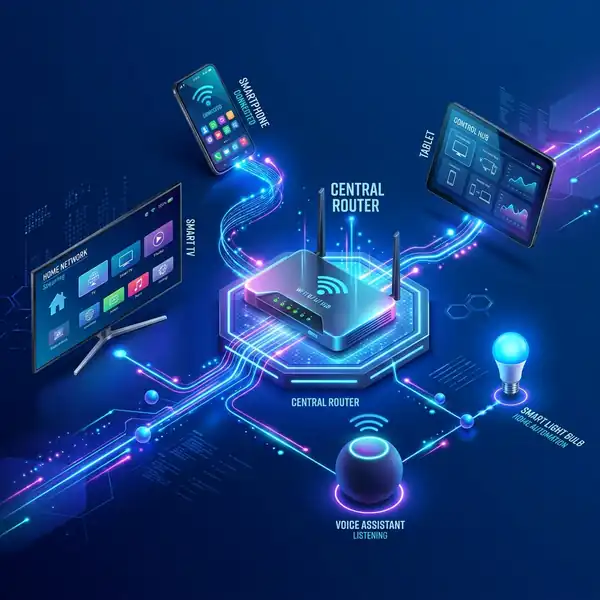
- Set as Metered Connection in Windows: Click the network icon in the Windows taskbar, access the network settings corresponding to the cell phone, and activate the toggle "Set as Metered Connection". This prevents Windows from downloading automatic system updates.
- Disable automatic app updates: Close game distribution programs (such as Steam or Epic Games Launcher) and pause cloud synchronizers that might start heavy downloads without your explicit consent.
- Monitor consumption on the phone: Use the built-in usage limit tools in Android or iOS network settings to receive visual warnings when reaching a certain number of megabytes consumed.
7. Smartphone Battery Care when using USB Tethering
A very important technical aspect when using USB cable tethering for long periods is the thermal heating of the smartphone. At the same time that the phone's mobile data modem is operating at maximum power exchanging information with the cellular operator's antenna, the USB port is receiving electrical energy from the computer to keep the phone on and charge the internal battery. This combination of factors generates considerable heat inside the device.
To mitigate the premature physical degradation of your smartphone's lithium-ion battery cells during tethering, try to position the mobile device on flat, cool surfaces that facilitate passive thermal dissipation, avoiding leaving it on insulating fabrics (like blankets, pillows, or sofas). Keep the phone out of direct sunlight and, if possible, connect the phone to USB ports that deliver lower currents just to maintain energy, avoiding the use of ultra-fast charging ports that raise the temperature in an accelerated manner.
8. Secure Selection and Physical Performance of Connected Cable
The success and stability of USB tethering depends directly on the physical quality of the cable used to link the two devices. Worn cables or loose connectors cause intermittent disconnections, disrupting downloads or dropping ongoing virtual meetings. Make sure to use shielded cables with speed certification to prevent dropouts. Cleaning the phone's connection port also prevents dust accumulation that impairs electrical transmission.
USB tethering serves as a robust networking alternative when broadband internet goes down. Connecting a physical cable allows users to bypass unstable wireless networks entirely. This setup ensures a direct, driver-level routing between mobile OS and desktop environments. It is always a good idea to keep a high-quality data cable nearby for connection sharing. High-speed 5G cellular bands can easily match residential copper connections. USB tethering establishes itself as a fundamental technological contingency tool both for professionals working under a home office regime and for students who depend on an uninterrupted connection to the world wide web. In emergency situations, learning how to share mobile data through a physical cable prevents missing important deadlines and ensures the continuity of daily activities without surprises. In addition, knowledge of the configuration details of Android and iOS operating systems allows resolving problems quickly without the need for specialized technical support. Therefore, keeping a USB cable always available in your backpack or desk is an excellent preventive practice. With the constant evolution of mobile networks, this alternative becomes increasingly efficient. USB tethering establishes itself as a fundamental technological contingency tool both for professionals working under a home office regime and for students who depend on an uninterrupted connection to the world wide web. In emergency situations, learning how to share
To guarantee peak performance across your home or office infrastructure, it is essential to master the core wireless engineering principles governing electromagnetic radio wave propagation and logical baseband transceiver adjustments. When analyzing wireless RF signals operating across the standard 2.4 GHz and 5 GHz bands, we observe that free-space path loss and attenuation are caused not only by linear physical distance but also by the dielectric absorption coefficients of structural building barriers such as reinforced concrete slabs, brick walls, metallic structures, and glass panels.
Unlike standard Wi-Fi transmissions that rely on CSMA/CA protocols to negotiate airtime, USB interfaces communicate using dedicated point-to-point signaling. This removes packet collisions and contention delays, making USB anchoring the most reliable backup choice for desktop environments.
When configured correctly, the local host machine handles the smartphone interface as a standard wired connection. Administrators can check connection status using command line tools like `ipconfig` or `ifconfig` to inspect current IP allocations, subnet masks, and default gateways assigned by the carrier DHCP server.
USB tethering utilizes the Remote Network Driver Interface Specification (RNDIS) protocol to establish a point-to-point hardware connection between the phone and host machine. This system allows the desktop operating system to route TCP/IP traffic directly over the physical USB serial bus, bypassing standard wireless interference.
This dedicated hardware link significantly lowers processing overhead on the smartphone transceiver, keeping connection jitter and packet loss to a absolute minimum. This makes physical USB tethering the most reliable backup choice for remote professionals and systems administrators alike.
Frequently Asked Questions
How can I share my phone's internet connection to my PC using a USB cable?
To share your phone's internet connection to your PC via a USB cable, simply connect the smartphone to the computer with the physical cable, go to the phone's network settings (under Hotspot & Tethering) and activate the USB Tethering option.
Why is the USB tethering option disabled in my phone settings?
The USB tethering option is only available for activation when the phone detects that the USB cable is physically connected to an active USB port on a computer that is turned on. Make sure the cable supports both charge and data syncing. Test different USB ports directly on the computer motherboard.
Does USB tethering on my phone consume my mobile operator's data plan?
Yes. Yes, all local PC traffic will count against your mobile plan. We recommend pausing background sync tasks to preserve your mobile carrier limits.
Does the iPhone support USB tethering for computers running the Windows system?
Yes, the iPhone supports mobile internet sharing via a USB cable. Yes. Windows requires the specific networking drivers contained within the official iTunes desktop application to communicate with iOS devices.




