Router Keeps Disconnecting From Internet: How to Fix It Step-by-Step
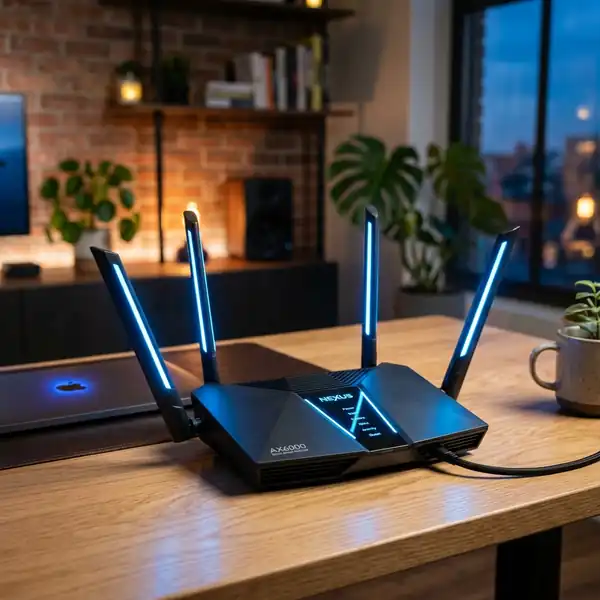
A stable home or office wireless network relies on a balanced interaction between hardware components, radio signal propagation, and administrative software settings. When this balance is disrupted, one of the most frustrating network issues can occur: the internet connection drops repeatedly, forcing you to reboot your router, only for the connection to fail again a few hours later. A router that keeps disconnecting from the internet is typically caused by hardware processor overheating, NAT (Network Address Translation) table saturation from too many active connections, a deteriorating power adapter that cannot supply stable voltage, or IP address conflicts caused by a short DHCP lease time.
Finding the root cause of these drops requires a systematic approach, as a drop in your local Wi-Fi signal is technically different from a drop in the external internet connection provided by your ISP. In this guide, we will walk you through a technical diagnostic process to determine if your network drops are physical (thermal or electrical) or logical (IP routing, DNS, or MTU size issues). We will explain how to reduce resource usage on your router, how to configure stable wireless channels, and how to perform system updates to prevent recurring software crashes on your network equipment.
1. Distinguishing Between Wi-Fi Drops and WAN Drops
Before changing settings on your router, you must identify whether the drop is occurring on the local wireless connection (between your devices and the router) or on the external connection (between your router and the modem/ISP).
You can run this simple test to determine where the failure is occurring:
- Wi-Fi Signal Drops: This occurs when the Wi-Fi icon on your phone or laptop disappears or displays a warning symbol. Your device has lost its physical connection to the router's radio antennas. This is typically caused by high local radio frequency interference or a crash in the router's CPU that shuts down the wireless transmitter.
- WAN (Internet) Drops: This occurs when your devices remain connected to the Wi-Fi network with full signal strength, but your browser displays a "Connected, no internet" error. If you look at the LEDs on your router, the globe or internet indicator light will be red or orange. This means the local wireless link is working, but the connection between your router and the ISP's modem has dropped.
Identifying the type of drop helps you focus on the correct solution. Wi-Fi drops are resolved by adjusting channel settings and router placement, while WAN drops require inspecting Ethernet cables, checking PPPoE settings, or contacting your ISP.
2. Thermal Issues and Deteriorating Power Supplies
Wireless routers are small computers containing a Central Processing Unit (CPU), RAM, and dedicated radio chips on a printed circuit board. Like any computer, these components generate heat and require a stable power supply to process network packets without crashing.
Over time, two physical hardware issues can cause frequent disconnects:
Router Overheating: Many users place their routers in enclosed areas, such as TV cabinets, crowded shelves, or near windows in direct sunlight. Without proper airflow, the internal temperature of the CPU can exceed safe operating limits. To prevent permanent hardware damage, the system will trigger a thermal safety shutdown, restarting the wireless radios or freezing the CPU, which causes the internet connection to drop. Place the router in an open, well-ventilated area.
Power Adapter Failure: The external power adapter converts AC wall power into stable DC current (usually 9V or 12V). As adapters age or suffer from power surges, they lose the ability to supply consistent voltage under load. When network traffic increases (such as during large downloads or video calls), the router demands more power. If the adapter cannot supply it, the router's radio chips will drop voltage for a millisecond, resetting the Wi-Fi connection even if the status lights on the device remain on. Replacing the power adapter with one of identical voltage and equal or higher amperage can resolve this issue.
3. NAT Table Saturation and RAM Exhaustion
The NAT (Network Address Translation) table is a database within the router's memory that tracks and translates connection requests from local devices to your single public IP address on the internet. Every website you load, video stream you start, or background application that connects to the internet requires an active entry in the NAT table.
Entry-level routers provided by ISPs often have limited RAM (typically between 64 MB and 128 MB). If you connect many devices (such as smart TVs, phones, tablets, smart plugs, and computers) or run P2P file-sharing programs (like BitTorrent) that open hundreds of simultaneous connections, the NAT table can consume all of the router's available RAM.
When the RAM usage reaches 100%, the router's operating system (typically based on Linux) can no longer assign IP addresses to new connections, resulting in a system crash. To recover from this state, the router will automatically reboot to clear its memory cache, disconnecting all users on the network until the boot cycle is complete.

4. Wi-Fi Channel Overlap and DHCP Lease Time Settings
Two common logical causes for sudden wireless drops are interference from neighboring networks and issues with IP address renewal from your router's DHCP server.
You can adjust these settings to stabilize your connection:
- Set a Static Wi-Fi Channel: If your router is configured to select channels automatically, it may change channels when it detects interference from neighboring networks. Devices can experience a brief disconnect during this channel transition. Log in to the router's admin panel, turn off automatic channel selection, and choose a fixed channel (1, 6, or 11 on the 2.4 GHz band; 36, 40, 44, or 48 on the 5 GHz band).
- Adjust the DHCP Lease Time: The DHCP server on your router assigns temporary IP addresses to connected devices for a set duration, known as the lease time. By default, many routers set this lease to 1 or 2 hours. When the lease expires, the device must request a renewal. If the router's CPU is busy when this request occurs, the renewal can fail, causing the device to lose its internet connection. Increase the lease time in your router's LAN settings to 1440 minutes (24 hours) or 2880 minutes (48 hours) to reduce the frequency of these requests.
- Disable Unstable IPv6 WAN Tunnels: Some ISPs distribute IPv6 addresses inconsistently. When the IPv6 path fails, the router may delay transitioning to IPv4, causing a temporary loss of internet. If your network does not require IPv6, log in to your router's settings and disable IPv6 on the WAN interface, leaving only the stable IPv4 protocol active.
5. Configuring MTU Size and MSS Clamping
The MTU (Maximum Transmission Unit) determines the maximum size, in bytes, of a single packet of data that can be sent across your network. If the MTU size configured on your router is larger than the limit supported by your ISP's network, packets must be split into smaller fragments to be transmitted.
Constant packet fragmentation increases CPU usage on your router and causes packet loss, which can drop your connection during bandwidth-heavy tasks like gaming or video conferencing.
To optimize MTU settings, navigate to your router's WAN settings and apply these guidelines:
- For connections that use the PPPoE protocol (common on fiber networks), set the MTU size to 1492 or 1480 bytes.
- For connections using Dynamic IP (DHCP) (common on cable networks), use the standard MTU size of 1500 bytes.
- Enable MSS Clamping if the setting is available. This allows the router to automatically adjust the maximum segment size of TCP packets, reducing packet overhead and improving stability.
These adjustments reduce packet fragmentation and lower the processing load on your router's memory, helping prevent unexpected disconnects.
6. Troubleshooting Matrix for Router Disconnections
Use the diagnostic table below to match your router's symptoms with the most likely cause of disconnections and apply the recommended solution.
| Root Cause | Symptom | How to Verify | Recommended Solution |
|---|---|---|---|
| CPU Overheating | The router's casing is hot to the touch, and the device reboots randomly. | Check if the router is placed in an enclosed cabinet or direct sunlight. | Move the router to an open, elevated location with good airflow. Clear dust from vents. |
| Failing Power Adapter | Wi-Fi drops for a few seconds during high traffic, but LEDs remain on. | Check if the power adapter makes a high-pitched noise or is excessively hot. | Replace the power adapter with a new one matching the original voltage and amperage. |
| NAT Table Saturation | Internet drops and the admin panel is unresponsive for a few minutes. | Check memory usage in the admin panel during heavy downloads or torrenting. | Limit the maximum number of connections in your torrent client and disconnect idle devices. |
| DHCP Lease Issues | Devices lose connection temporarily and display an IP address acquisition error. | Verify the lease time settings in your router's DHCP configuration menu. | Increase the DHCP lease time to 24 or 48 hours in the LAN settings. |
| Incorrect MTU Size | Packet loss and slow speeds occur during gaming or video streams. | Perform a fragmented ping test from a computer command prompt. | Change the MTU size to 1492 for PPPoE connections or 1500 for Dynamic IP. |
7. Updating Router Firmware and Performing a Clean Reconfiguration
If you have adjusted your settings but continue to experience frequent drops, the router's operating system may have corrupted configuration files or be running outdated firmware that is incompatible with your ISP's network updates.
To perform a clean update and reconfiguration, follow these steps:
- Log in to your router's admin panel, navigate to the system settings, and create a backup of your configuration file if you want to save your current Wi-Fi names and passwords.
- Perform a Factory Reset by pressing the physical reset button on the back of the router with a paperclip for 15 seconds until the status lights flash.
- Go to the official website of your router manufacturer (e.g., TP-Link, ASUS), search for your exact router model, and download the latest firmware update file to your computer.
- Connect your computer to the router using an Ethernet cable, go to the firmware update menu in the admin panel, upload the downloaded file, and start the update. Do not disconnect the power during this process.
- After the router reboots, reconfigure the network settings manually. Avoid uploading your old backup configuration file, as it may reintroduce the configuration bugs that caused the disconnects in the first place.
Checking DHCP Lease Time and IP Conflicts
Another common cause for a router disconnecting constantly is a configuration conflict related to the DHCP (Dynamic Host Configuration Protocol) lease time. The lease time determines how long a device can keep an assigned IP address before requesting a renewal from the router. If the lease time is set too short (such as 1 hour or less) and your router has dozens of connected IoT devices, the constant IP renewal requests can overload the router's memory, leading to brief disconnects. Log into your router, navigate to the LAN/DHCP settings, and verify the DHCP Lease Time. Setting it to 86400 seconds (24 hours) or 172800 seconds (48 hours) will reduce network overhead. Additionally, ensure that no device on the network has been manually assigned a static IP that conflicts with the router's DHCP pool range.
Frequently Asked Questions
Why does my router restart itself automatically?
This is usually caused by CPU overheating or NAT table saturation. When the processor gets too hot or the RAM is fully consumed by active network connections, the router reboots to prevent hardware damage and clear its memory cache.
What is the NAT table and how does it affect stability?
The NAT table maps local IP addresses to your public internet IP address. If multiple devices or torrent downloads open thousands of connections simultaneously, the NAT table can consume all the router's RAM, causing the device to crash and reboot.
How do I know if my internet disconnects are caused by the router or the ISP?
When the connection drops, connect a computer directly to your ISP modem using an Ethernet cable (bypassing the router). If the internet continues to drop while connected directly to the modem, the issue lies with your ISP's line. If the connection remains stable, the issue is with your router.
What is the recommended DHCP lease time?
The recommended DHCP lease time for most home networks is 1440 minutes (24 hours). This prevents devices from frequently requesting IP renewals, which can reduce temporary connection drops.




