Liectroux XR500 Robot Vacuum Review: Is It Worth It?
If you are looking for a high-performance smart vacuum cleaner with precise navigation and want to know if this model justifies the investment, here is the technical analysis: the Liectroux XR500 robot vacuum is highly worth buying if you require a high-precision laser LiDAR navigation system, multi-floor mapping management, electronically controlled water dripping, and strong 3000 Pa suction power at an entry-level mid-range price. It is a robust unit that competes directly with premium brands at half the market cost, making it ideal for multi-room homes with pets.
1. The Engineering Behind Laser LiDAR Navigation
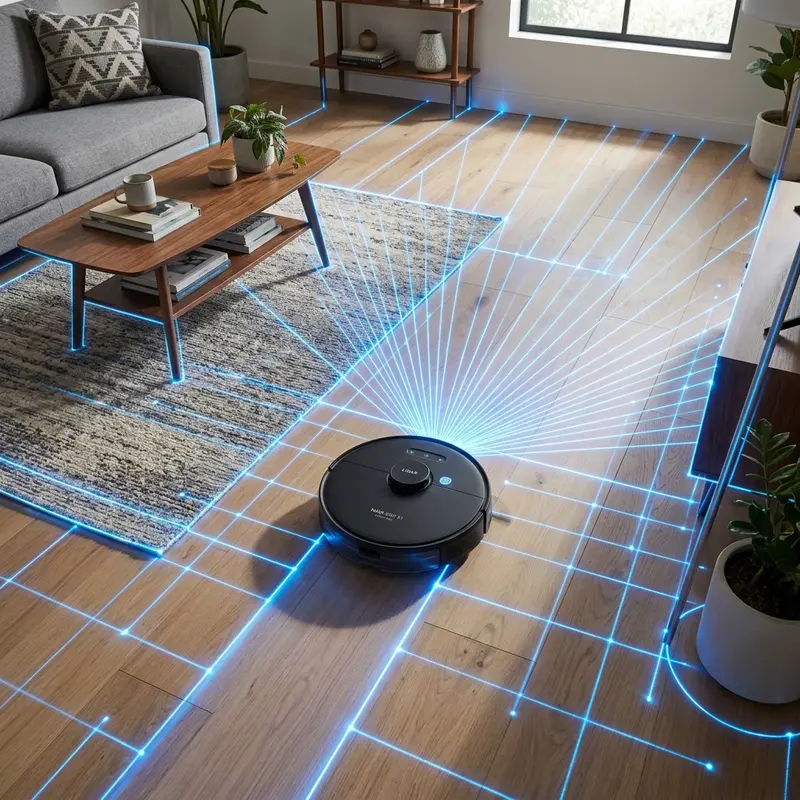
The primary technical differentiator of the Liectroux XR500 compared to entry-level robot vacuums is the rotating laser turret mounted on top of the chassis. This turret houses an active LiDAR (Light Detection and Ranging) sensor, which projects infrared laser beams 360 degrees and measures the return reflection time to map walls and furniture. The quad-core CPU runs a SLAM (Simultaneous Localization and Mapping) algorithm to process these distances in real-time.
This optical system allows the XR500 to draw a high-definition vector map of your home during its first cleaning cycle. From the mobile app, you can use this map to set up virtual walls, define restricted areas (like pet feeding zones or cable clutter), and assign specific rooms for spot cleaning. Because it relies on active laser reflections rather than ambient contrast, the XR500 operates perfectly in total darkness, a scenario where camera-guided vacuums get lost.
2. Suction Performance and Dual Brush Management
A robot vacuum's cleaning efficiency is defined by its static suction pressure measured in Pascal (Pa). The Liectroux XR500 features a brushless motor capable of generating up to 3000 Pa of suction. You can adjust the suction output through the app across three levels:
- Eco Mode (1200 Pa): Best for quiet daily cleaning and fine dust maintenance, maximizing battery run-time;
- Normal Mode (2000 Pa): Recommended for hard floors with pet hair or light debris;
- Max Mode (3000 Pa): Provides maximum power to lift heavy dirt, kibble, cat litter, or embedded dust from carpets.
The cleaning path is swept by dual side brushes that draw dirt from corners and walls into the main path, where a hybrid roller brush (combining soft nylon bristles and rubber blades) scrubs the floor surface and lifts dirt into the suction channel. The air passes through a HEPA H13 filter trapping fine dust.
3. Electronic Water Flow Control for Mopping
Unlike basic robot vacuums that rely on gravity-fed water tanks that can oversaturate floors, the Liectroux XR500 features a 350 ml smart water tank with an integrated electric micro-pump. You can adjust the water flow speed through the mobile app, choosing between low, medium, or high saturation levels. This electronic flow control protects hardwood and laminate floors from water damage. When the vacuum stops moving or returns to its charging base, the micro-pump cuts off power immediately, stopping the water flow to prevent pooling under the dock.
4. Optical Wave Mechanics and Structural LiDAR Hardware
The active sensor of the XR500 is a laser diode operating in the near-infrared spectrum at 785nm to 905nm. The signal returns to a high-speed CMOS sensor array which gauges distances via Time of Flight (ToF). The laser scanner assembly spins at 5 to 8 revolutions per second using a low-noise DC motor. The wheel motors are designed with high-torque gearboxes. The chassis is suspended on independent coils to absorb height shocks. To keep the interior components cool, heat pipe conduits connect the main SoC to the exhaust air channels, protecting the CPU from overheating during max suction runs.
If you run into issues with other home automation hardware, check our guide on what to do if the Tapo C200 is not detecting the SD card to resolve local hardware faults.
Additionally, to ensure strong Wi-Fi signals reach the low floors where the vacuum works, see our advice on choosing the best Wi-Fi router for security cameras, which helps configure stable 2.4 GHz networks.
| Specification | Liectroux XR500 | Liectroux C30B | WAP Robot W100 |
|---|---|---|---|
| Navigation Type | Laser LiDAR + SLAM (3D mapping) | Gyroscope + map tracking (2D) | Random bump patterns |
| Suction Power | 3000 Pa (Adjustable) | 3000 Pa (Adjustable) | 250 Pa (Fixed) |
| Battery Capacity | 3000 mAh (Li-ion) | 2500 mAh (Li-ion) | 1500 mAh (Li-ion) |
| Multi-Floor Maps | Yes (Up to 5 maps saved) | No (Temporary map cache) | No mapping support |
| Water Tank | 350 ml Electronic micro-pump | 350 ml Gravity-fed flow | No mopping support |
Deep Dive into the 360-Degree LiDAR Laser Sensor Module
The primary hardware upgrade of the Liectroux XR500 over basic gyroscopic models is its LiDAR (Light Detection and Ranging) navigation tower. Mounted in a raised dome housing on the top panel, the module features a 785nm infrared laser diode and a high-speed CMOS optical sensor array. An internal stepper motor drives a belt pulley to spin the laser turret at 5 to 8 rotations per second.
By measuring the time-of-flight (ToF) of emitted laser pulses reflecting off walls, the vacuum's system-on-chip calculates real-time distances with an accuracy of up to 2000 samples per second. This 360-degree telemetry enables the XR500 to construct digital floor plans, calculate linear cleaning patterns, and navigate complex furniture layouts without bumping into walls or repeating paths, conserving battery capacity.
Nidec Brushless DC Suction Motor Specifications
Suction force in the Liectroux XR500 is generated by a brushless DC motor supplied by Japanese manufacturer Nidec. Running on a three-stage electronic speed controller, this brushless motor spins at up to 15,000 RPM, generating a static vacuum pressure of up to 3000 Pa when operating in max mode.
Because there are no carbon brushes, the motor generates minimal friction and low electromagnetic interference. This reduces operating noise to less than 65 dB in standard mode while doubling the lifespan of the suction assembly. To protect the motor, inspect the physical filters regularly to prevent fine dust from bypassing the gaskets and entering the fan impellers.
Feature Comparison: Liectroux XR500 versus Roborock S7
Comparing the Liectroux XR500 to the premium Roborock S7 highlights distinct differences in hardware and software value. The Roborock S7 includes advanced features such as sonic mopping vibration, automatic mop lifting over carpets, and a highly polished app interface. However, the Roborock S7 commands a premium price tag that may exceed casual home budgets.
The Liectroux XR500 delivers similar core specifications, offering a robust LiDAR navigation tower, 3000 Pa suction force, and electronic water flow control at a lower price point. While the Roborock S7 is suitable for multi-floor homes with plush carpeting, the XR500 is an excellent budget-friendly choice for apartments and homes with tile or hardwood floors.
LiDAR Laser Optics Calibration and Maintenance Guidelines
To preserve the navigation accuracy of the Liectroux XR500, the LiDAR module requires physical inspection and cleaning every month. The rotating laser turret operates by emitting and receiving infrared light beams. Over time, household dust can accumulate on the optical silica glass lens window, scattering the laser and causing map distortion or navigation errors in the application. Wipe the lens window gently using a dry microfiber cloth to keep the optical path clear.
Additionally, check the small rubber drive belt that rotates the LiDAR assembly. If the belt loses tension or accumulates dust on its pulleys, the turret's rotation speed will fluctuate, throwing off the SLAM algorithm's coordinate calculations. Replacing the belt with a compatible silicone drive loop when it dries out prevents navigation timeout alerts, ensuring the vacuum tracks its position relative to home walls correctly.
Managing the Electronic Water Flow Control Solenoid Valves
The Liectroux XR500 features an electronically controlled water tank that regulates damp mopping via an internal solenoid valve. A common hardware failure is nozzle clogging caused by calcium and mineral deposits from tap water. To prevent water blockages, use distilled or filtered water in the reservoir. Always empty any leftover water after cleaning, and rinse the microfiber mop cloth by hand to prevent fabric mold from blocking the gravity-fed drainage holes.
Understanding Optical Reflection Issues on Shiny and Reflective Floors
The LiDAR sensor and underside cliff sensors of the Liectroux XR500 rely on active light reflection to compute spatial coordinate grids. On highly polished floors, such as glazed porcelain tiles or glossy laminates, the infrared beams can experience specular reflection, creating a mirror effect that scatters the light. This scattering confuses the cliff sensors, leading the vacuum's system-on-chip to register a false drop-off warning, which halts the cleaning cycle in the middle of a room.
To prevent these false alerts on reflective surfaces, make sure the cliff sensor housings are clean. Avoid using high-gloss waxes or polishes on the floor, and wipe the sensor windows regularly using a dry cloth to prevent wax accumulation from scattering the emitted light waves.
Evaluating LiDAR Motor Belt Wear and Easy Replacements
The rotating laser module on the top panel of the Liectroux XR500 relies on a small rubber drive belt to spin the sensor turret. Over extended usage cycles, especially in dry and hot conditions, this rubber belt can stretch, crack, or slip off the motor pulley. When this happens, the LiDAR turret stops spinning, and the vacuum shuts down immediately while emitting a navigation sensor error.
To inspect or replace the belt, unscrew the small protective cover of the LiDAR housing on the top panel. You can replace a worn-out drive loop with a standard high-durability rubber gasket or a silicone O-ring of matching diameter. This easy DIY repair restores rotation speed and saves you the cost of replacing the entire optical laser assembly.
Thermal Safety Thresholds for Brushless Turbines
To prevent motor burnout, the Nidec brushless motor inside the Liectroux XR500 features an automatic thermal cutoff system. If you run the vacuum continuously on high-suction mode in warm environments, the internal sensor will monitor the heat dissipation on the coils. If the temperature crosses the critical safety threshold, the system temporarily throttles the suction power to protect the motor insulation from melting. This safety cutoff preserves the vacuum's hardware longevity.
Final Verdict: High Performance at a Fair Price
If you want to automate your home cleaning routine without spending a premium, the Liectroux XR500 is a highly practical choice. It offers real-time LiDAR navigation, customizable zone settings, and adjustable suction modes for hard floors and short carpets. Regular maintenance of the sensor lenses and drive belts ensures the vacuum remains a reliable cleaning helper for years.
Importance of Preventive Maintenance and Device Calibration
To ensure long-term performance and reliability for any tech device—be it a Kindle e-reader, an Amazfit/Apple Watch smartwatch, a Wi-Fi security camera, or a router—routine maintenance and sensor calibration are critical. Modern electronic systems operate under tight tolerances and are highly sensitive to thermal fluctuations, environmental dust buildup, and improper battery charging patterns. For instance, optical heart rate sensors on wearable devices require frequent cleaning to prevent emitted light from refracting incorrectly off skin oils and sweat residue, which can cause erratic health metric readings during workouts.
Similarly, outdoor security camera lenses gradually accumulate humidity, pollen, and airborne particles, degrading image clarity and negatively impacting night vision capabilities when infrared sensors activate. Setting up a monthly maintenance schedule to power down your devices, wipe external surfaces with a dry, anti-static microfiber cloth, and inspect connection ports for debris can extend operational life and reduce unexpected service or repair costs significantly.
Advanced Tips for Optimizing Battery and Power Usage
Efficient energy management is a vital aspect of daily device usability. Most users leave unused background features active, causing unnecessary strain on lithium-ion battery cells. Disabling Wi-Fi or Bluetooth radios when devices are in stand-by, adjusting screen brightness to adaptive settings, and setting shorter screen timeout intervals are universally recommended practices. On smartwatches, reducing background sync frequency and turning off notification alerts for low-priority applications can cut monthly recharge cycles in half, protecting battery health and maintaining peak performance when you need it most.
Frequently Asked Questions (FAQ)
Can the Liectroux XR500 climb thick rugs?
Yes. The vacuum features high-torque drive wheels and active suspension, allowing it to climb over thresholds and carpets up to 2 cm high.
How many maps can the XR500 save?
The vacuum's firmware supports saving and managing up to 5 distinct floor maps, making it ideal for multi-story homes.
Does the vacuum support voice alerts?
Yes, the Liectroux XR500 has an integrated speaker to output real-time voice alerts regarding its operational status and error reports.
Conclusion
If you need a robot vacuum with precise laser mapping, custom virtual boundaries, and smart mopping without breaking the bank, the Liectroux XR500 is a highly recommended choice. The hardware is solid, replacement parts are easy to source, and app integration works reliably.




