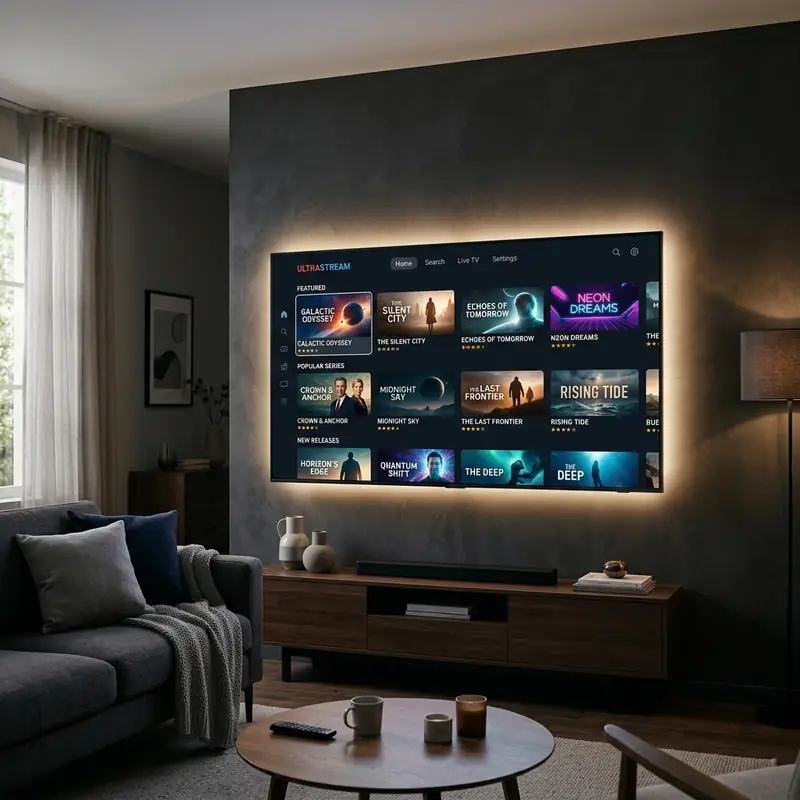
1. Direct Introduction
The contemporary digital landscape has undergone a monumental paradigm shift, transitioning from traditional terrestrial broadcast and rudimentary cable paradigms to the highly sophisticated, geographically distributed, and mathematically complex universe of internet-based video delivery. As the global appetite for ultra-high-definition content—ranging from pristine 4K High Dynamic Range (HDR) cinematography to the emerging frontier of 8K spatial rendering—surges relentlessly, the imperative to optimize and profoundly improve streaming quality on television sets has never been more scientifically critical. This intricate ecosystem goes far beyond the simplistic notion of merely possessing a high-speed internet connection. Instead, it represents a highly complex interplay of multifaceted technological components, cryptographic handshakes, dynamic routing algorithms, and localized hardware decoding operating in seamless, microsecond-level synchronicity. The primary objective of this comprehensive discourse is to systematically dissect the intricate layers of modern streaming infrastructure, elucidating the highly nuanced methodologies through which end-users, network architects, and system administrators alike can achieve an unparalleled, flawless cinematic viewing experience within the domestic networking environment.
Understanding how to improve streaming quality on TV requires a fundamental deconstruction of the data lifecycle. When a user requests a video stream, they are essentially initiating a cascade of complex computational requests that traverse the global internet backbone. The video is not a monolithic file, but rather a sequence of cryptographically secure, fragmented data packets encapsulated within advanced transmission protocols. The journey of these packets from a remote, hyperscale data center to the specific luminescence of a microscopic pixel on a living room television encapsulates the zenith of modern telecommunications. In an era where visual fidelity is synonymous with artistic intent, any degradation in streaming quality—manifesting as macroblocking, chromatic aberration, or buffering-induced latency—constitutes a profound failure of the technological pipeline. Consequently, resolving these issues mandates a deeply technical, highly analytical approach that transcends rudimentary troubleshooting, delving into the realms of network topology, protocol optimization, hardware capabilities, and algorithmic efficiency.
As we navigate through the subsequent sections, it is crucial to recognize that the television has evolved from a passive display monitor into an advanced computational terminal, a sophisticated network node characterized by intricate system-on-a-chip (SoC) architectures, dedicated video decoders, and highly specialized operating environments. Improving streaming quality is intrinsically linked to maximizing the operational efficiency of this terminal while simultaneously establishing an uncompromised, frictionless data conduit connecting it to the broader internet. The principles delineated herein will serve as the definitive architectural blueprint for transforming any localized viewing environment into an optimal, high-fidelity theater of digital consumption.
2. Basic Architecture
To fundamentally grasp how to improve streaming quality on TV, one must first possess a granular understanding of the foundational architecture underpinning modern video delivery networks. At the macro level, the architecture is dominated by Content Delivery Networks (CDNs). A CDN is a geographically distributed topology of proxy servers and massive data storage nodes explicitly engineered to minimize latency by caching high-demand media assets proximally to the end-user. When a streaming application on a television initiates a playback request, sophisticated DNS (Domain Name System) routing algorithms and Anycast IP configurations immediately intercept this request, dynamically directing it to the most optimal edge server based on topological proximity, real-time server load, and network congestion metrics. This dynamic edge-routing is the cornerstone of scalable video delivery, ensuring that the heavy lifting of continuous data transmission occurs as close to the recipient's local network gateway as theoretically possible.
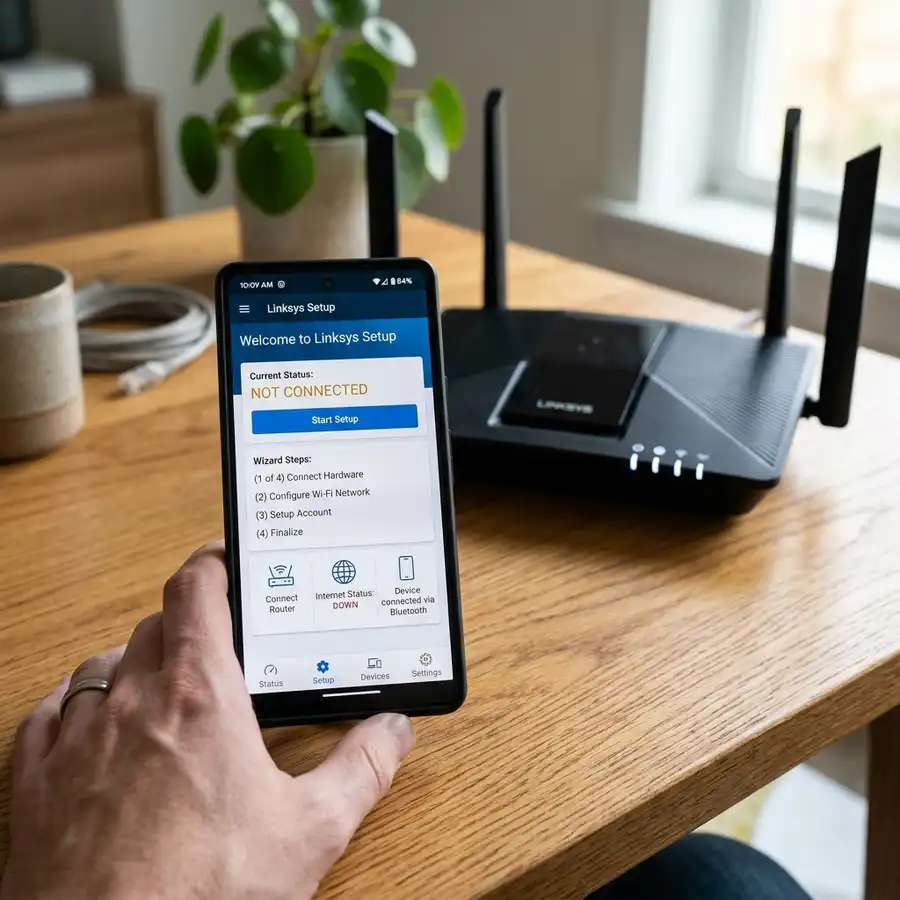
Moving inward to the micro architecture—the Local Area Network (LAN) residing within the domestic environment—the complexity continues. The demarcation point is typically the modem or Optical Network Terminal (ONT), which translates the wide-area transmission medium (be it coaxial cable, twisted pair copper, or fiber optic light pulses) into standard Ethernet frames. From here, the router assumes the role of the primary traffic director. Modern routers operate utilizing complex Quality of Service (QoS) algorithms, packet queuing disciplines (such as FQ_CoDel or Cake), and sophisticated wireless modulation schemes (like Orthogonal Frequency-Division Multiple Access or OFDMA) to orchestrate the internal flow of data. The router is tasked with prioritizing the substantial, continuous, and latency-sensitive influx of video packets destined for the television over other, less critical network traffic, a process essential to preventing catastrophic buffer starvation.
Finally, we arrive at the internal architecture of the television itself. Modern Smart TVs are essentially specialized Linux or Android-based computing platforms. The incoming encrypted data stream is ingested by the network interface controller (NIC) and passed to the central processing unit (CPU). However, the critical task of video decoding is offloaded to a dedicated piece of silicon known as a hardware decoder or VPU (Video Processing Unit). This hardware is explicitly designed to rapidly decrypt and decompress complex mathematical algorithms used in modern video codecs, such as High Efficiency Video Coding (HEVC/H.265) or AOMedia Video 1 (AV1). The efficiency, thermal management, and clock speed of this VPU directly dictate the television's ability to maintain a steady framerate and output pristine visuals without introducing stuttering or dropping frames. Understanding this tripartite architecture—the macro CDN, the localized LAN, and the internal TV hardware—is completely non-negotiable for anyone seeking to meaningfully improve their television streaming quality.
3. Challenges and Bottlenecks
The quest to definitively improve streaming quality on TV is perpetually hindered by a vast array of technical challenges and pervasive network bottlenecks that can severely degrade the data transmission pipeline. The most ubiquitous adversary is network congestion, which can manifest externally at the Internet Service Provider (ISP) level or internally within the home network. Externally, during peak utilization hours, local ISP nodes can become saturated, leading to phenomena such as packet loss, increased ping times, and severe jitter. Streaming video relies heavily on continuous, sequential packet delivery; when packets are dropped in transit, the receiving television must either wait for retransmission—causing buffering—or attempt to conceal the missing data, which results in visual artifacts, macroblocking, and a drastic reduction in image resolution as adaptive bitrate (ABR) algorithms aggressively downgrade the stream to maintain continuity.
Internally, the most prominent bottleneck is overwhelmingly associated with wireless networking implementations. Wi-Fi operates in shared, unlicensed radio frequency spectrums (primarily 2.4 GHz and 5 GHz, and more recently 6 GHz). These spectrums are highly susceptible to interference from neighboring networks, structural impediments like concrete walls or metallic appliances, and competing devices within the same household. Furthermore, legacy Wi-Fi protocols operate in a half-duplex manner, meaning devices cannot transmit and receive simultaneously. In a dense environment, a television attempting to sustain a high-bandwidth 4K stream over a congested 2.4 GHz band will inevitably experience debilitating transmission delays, catastrophic throughput drops, and high latency variations. This wireless volatility is the primary reason why high-fidelity video streams often inexplicably degrade in visual quality despite the presence of a nominally fast internet connection.
Another significant, yet frequently overlooked, challenge resides within the television's hardware and its integration with the broader multimedia setup. Many otherwise sophisticated Smart TVs are severely constrained by their internal network interface controllers. Shockingly, a vast majority of premium televisions are equipped with Fast Ethernet (10/100 Mbps) ports rather than Gigabit Ethernet (10/100/1000 Mbps) ports. While 100 Mbps is theoretically sufficient for heavily compressed 4K streams, it provides virtually zero overhead for high-bitrate scenarios, such as uncompressed local media streaming or sudden network bursts. Additionally, the complex HDCP (High-bandwidth Digital Content Protection) handshake between the television, an AV receiver, and a soundbar can introduce latency or force a resolution downgrade if any single component in the HDMI chain does not support the latest security protocols. Overcoming these deeply entrenched bottlenecks requires a methodical, diagnostic approach to network isolation and hardware verification.
4. Scalability Benefits
Implementing a highly scalable network infrastructure is not merely a theoretical exercise for enterprise environments; it yields immediate, profound benefits for those seeking to sustainably improve streaming quality on TV. A scalable architecture is one that can effortlessly dynamically adapt to increased data payloads, accommodate a growing proliferation of concurrent devices, and seamlessly integrate forthcoming technological advancements without requiring a complete systemic overhaul. The primary benefit of scaling a home network specifically for media consumption is the establishment of massive, highly robust bandwidth overhead. By transitioning from legacy connectivity protocols to advanced topologies—such as deploying a dedicated, multi-node Gigabit mesh system utilizing dedicated wireless backhauls, or implementing a fully wired Cat6a Ethernet backbone—the local network transforms from a narrow, easily congested pathway into a massive, multi-lane digital superhighway.
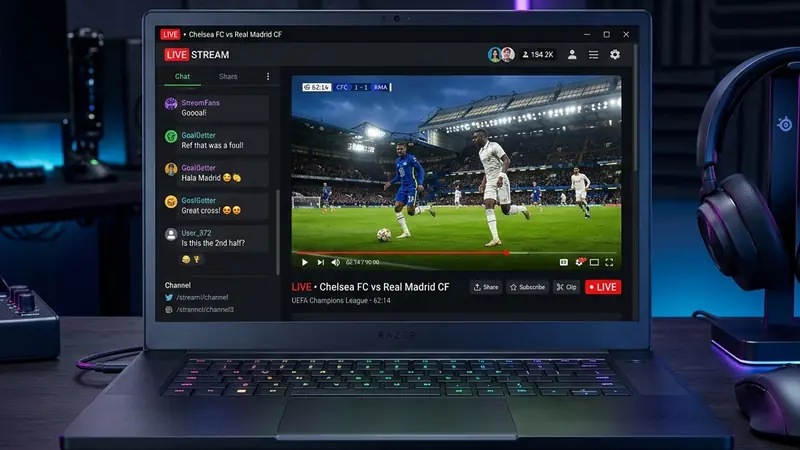
This immense scalability provides the critical foundation required to reliably support the demanding requirements of multiple, simultaneous high-definition streams. In a modern household, it is not uncommon for one television to be pulling a 4K HDR stream, while another displays live sports, and several mobile devices consume auxiliary video content. A scalable network, fortified by advanced Multi-User Multiple-Input Multiple-Output (MU-MIMO) technology and robust routing processors, can efficiently multiplex this immense volume of traffic, ensuring that the primary television receives unyielding, uninterrupted data priority. The adaptive bitrate algorithms employed by streaming services recognize this robust throughput, locking the television into the highest possible resolution tier and preventing the jarring, immersion-breaking drops in quality that plague under-provisioned networks.
Furthermore, scaling the physical and wireless infrastructure inherently prepares the environment for the next generation of visual fidelity. While 4K is currently the standard, the transition to 8K resolution involves exponentially larger data footprints. By over-provisioning network capacity today, utilizing standard-defining technologies like Wi-Fi 6E or Wi-Fi 7, users are essentially future-proofing their entertainment ecosystems. A highly scalable setup inherently mitigates the impact of localized network bursts, dramatically reduces protocol-induced latency, and provides a stable, unfluctuating environment that allows the television's internal video processing unit to operate at maximum efficiency, ultimately ensuring that efforts to improve streaming quality on TV yield long-term, resilient dividends rather than transient, temporary fixes.
5. Practical Integration
The theoretical knowledge of network mechanics must be aggressively translated into highly specific, actionable methodologies in order to practically improve streaming quality on TV. The absolute foremost recommendation, possessing the highest probabilistic chance of eliminating buffering and resolution degradation, is the hardwiring of the television to the primary routing node. This process completely bypasses the unpredictable volatility of wireless frequency spectrums. By utilizing a high-quality Cat5e, Cat6, or Cat6a Ethernet cable to establish a direct, full-duplex connection between the router and the TV, latency is reduced to near-zero levels, packet loss becomes virtually nonexistent, and the physical transmission medium is entirely shielded from electromagnetic interference. For televisions cursed with limited 100 Mbps ethernet ports, utilizing a compatible Gigabit USB-to-Ethernet adapter can frequently bypass this arbitrary hardware limitation, unlocking massively superior throughput for high-bitrate applications.
If hardwiring is geographically impossible due to structural constraints, optimizing the wireless environment becomes a critical, surgical operation. Users must access their router's administrative firmware interface and conduct a comprehensive site survey to identify the least congested wireless channels in their immediate vicinity. The television should be strictly segregated onto the 5 GHz or 6 GHz frequency band, which offers significantly higher bandwidth capacity over shorter distances compared to the highly congested 2.4 GHz band. Furthermore, implementing specific Quality of Service (QoS) rules within the router's configuration is paramount. By assigning the television's specific Media Access Control (MAC) address the highest possible priority classification, the router will mathematically guarantee that video packets are aggressively processed and transmitted ahead of all other network traffic, safeguarding the stream from bandwidth monopolization by background downloads or other devices.
Beyond the network layer, practical integration involves rigorous optimization of the television's internal software and interconnected hardware. This includes ensuring that the television's firmware is perpetually updated to leverage the latest decoder optimizations and bug fixes. The HDMI chain must be meticulously vetted; ensuring that ultra-high-speed HDMI 2.1 cables are utilized for any external streaming boxes (such as an Apple TV 4K or NVIDIA Shield) connected to the television, guaranteeing sufficient bandwidth for uncompressed 4K, 120Hz, and dynamic HDR metadata transmission. Additionally, users should carefully audit the television's display settings, actively disabling artificial, post-processing features such as motion interpolation (often pejoratively referred to as the 'soap opera effect') and aggressive noise reduction algorithms. These features not only introduce input lag but can severely distort the intended visual presentation, negating the very purpose of striving to improve streaming quality on TV.
6. Security and Compliance
While often completely overlooked in consumer discussions, the stringent security protocols and compliance standards deeply embedded within digital media ecosystems play a surprisingly profound role in dictating overall performance, significantly impacting any endeavor to improve streaming quality on TV. The most prominent of these systems is Digital Rights Management (DRM), a highly complex suite of cryptographic technologies designed to prevent the unauthorized duplication of copyrighted content. When a streaming application initiates playback, a highly secure, mathematically intensive cryptographic handshake occurs between the streaming provider's servers and the television's secure hardware enclave (such as a Trusted Execution Environment). Popular DRM architectures, like Google's Widevine, Microsoft's PlayReady, or Apple's FairPlay, require the television to constantly decrypt the incoming data stream in real-time. If the television's processor lacks the specific cryptographic accelerators required, this decryption process can introduce microscopic processing delays, potentially leading to dropped frames or micro-stuttering during highly demanding, high-bitrate scenes.
Furthermore, the physical connection between devices is governed by High-bandwidth Digital Content Protection (HDCP). This protocol ensures that the digital signal traveling over an HDMI cable is completely encrypted, preventing interception by external recording devices. Modern 4K and HDR content strictly requires HDCP 2.2 or the newer HDCP 2.3 compliance across the entire hardware chain. If a user connects a premium 4K streaming device to a television or AV receiver that only supports older HDCP versions, the compliance check will instantly fail. The streaming service will automatically and aggressively downgrade the video resolution to 1080p or even lower, severely compromising the visual experience. Ensuring uniform, end-to-end HDCP compliance is a strict, non-negotiable requirement for unlocking maximum streaming fidelity.
Network security configurations also possess the inherent potential to introduce substantial bottlenecks. Many users, seeking to enhance their digital privacy or access geographically restricted content, implement Virtual Private Networks (VPNs) directly on their routers or via applications installed on the television. The process of encrypting and encapsulating all video traffic through a VPN tunnel introduces massive computational overhead and significantly increases the physical distance the data packets must travel. This cryptographic routing inevitably increases latency and drastically reduces overall available throughput. To definitively improve streaming quality on TV, it is often technically necessary to utilize split-tunneling configurations, allowing the high-bandwidth, latency-sensitive video stream to completely bypass the VPN encryption tunnel, thereby interacting directly with the provider's highly optimized Content Delivery Networks without artificial impediment.
7. Costs and Optimization
Achieving the pinnacle of visual fidelity is inextricably linked to strategic financial investments and meticulous resource optimization. When attempting to profoundly improve streaming quality on TV, the foundational cost is invariably the Internet Service Provider (ISP) subscription tier. While gigabit fiber-optic connections represent the gold standard, providing massive, symmetric bandwidth capabilities, they command premium monthly fees. However, raw speed is often overemphasized at the expense of network stability. A highly stable, low-jitter 100 Mbps connection is vastly superior for streaming a single 4K HDR source than a highly volatile, highly congested 500 Mbps connection that suffers from massive packet loss. Consumers must aggressively audit their localized data consumption patterns, ensuring they are paying for a bandwidth tier that provides sufficient overhead for their specific multi-device requirements, without falling victim to the diminishing returns of hyper-expensive, unnecessary gigabit plans.
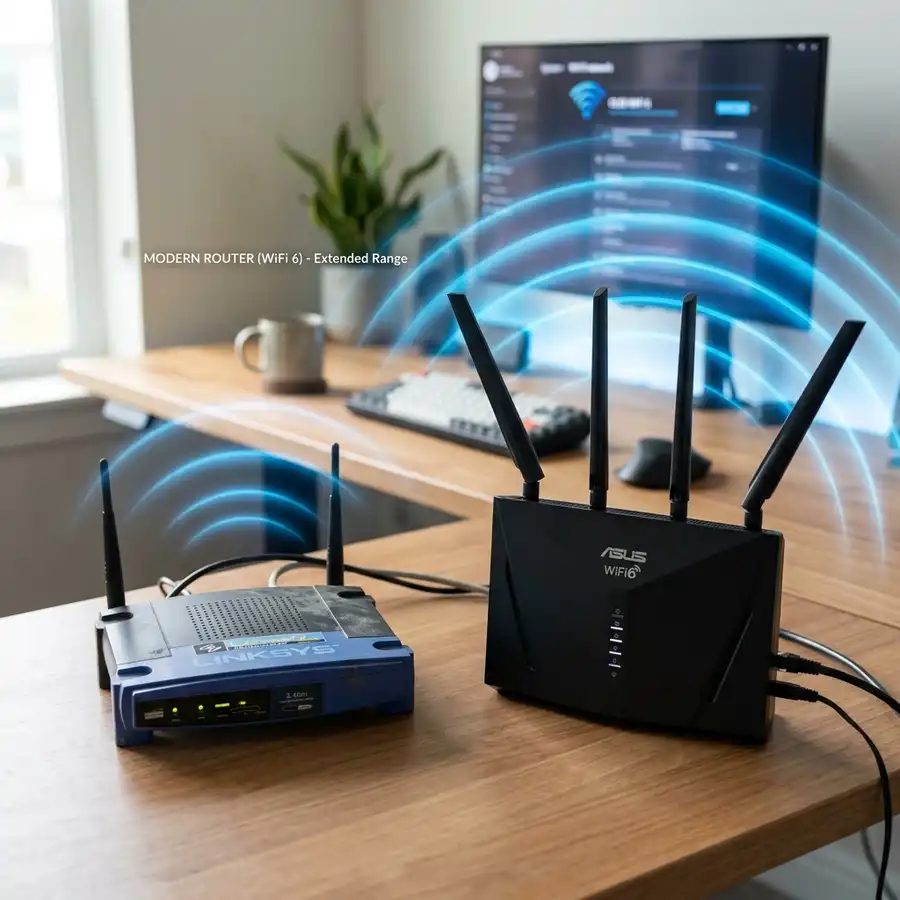
The subsequent critical financial variable involves the acquisition of advanced routing hardware. ISPs notoriously provide subscribers with deeply inferior, cost-optimized modem/router combination units. These generic devices frequently utilize subpar internal antennas, lack advanced processing capabilities, and utilize heavily restricted, unoptimized firmware. Investing capital in a high-performance, dedicated enterprise-grade router or a sophisticated multi-node mesh wireless system represents one of the most effective, highest-yielding financial decisions for network optimization. These advanced devices offer complex QoS management, highly directional beamforming, and powerful multi-core processors capable of effortlessly managing thousands of concurrent connections, systematically eliminating the localized bottlenecks that degrade video transmission.
Beyond initial hardware expenditures, optimization strategies must also encompass the nuanced management of data bandwidth and computational resources. Many internet plans still operate under strict data caps. 4K streaming is immensely data-intensive, capable of consuming upwards of 7 to 10 gigabytes per hour. To improve streaming quality on TV without incurring exorbitant overage fees, users must optimize their streaming platform settings, perhaps strategically limiting resolution to 1080p for casual viewing while exclusively reserving ultra-high-definition data for cinematic presentations. Furthermore, energy costs should be factored into the equation. High-end televisions and advanced networking gear can consume significant electrical power. Optimizing sleep schedules, disabling unnecessary background network scanning features on the TV, and utilizing energy-efficient Ethernet switches ensures that the pursuit of technological perfection remains economically sustainable and efficient.
8. Future of the Tool
The technological horizon concerning digital video delivery is currently undergoing a period of explosive, unprecedented innovation. The future landscape, fundamentally altering how we will improve streaming quality on TV, is highly reliant on the widespread adoption of next-generation, hyper-efficient video compression algorithms. Currently, High Efficiency Video Coding (HEVC/H.265) dominates the 4K ecosystem. However, the industry is aggressively pivoting towards AOMedia Video 1 (AV1), an open, royalty-free codec that offers astonishing improvements in compression efficiency. AV1 is capable of delivering equivalent visual fidelity to HEVC at approximately 30% lower bitrates. As television manufacturers integrate dedicated hardware decoding support for AV1 into their next-generation system-on-a-chip architectures, users will experience drastically reduced buffering and pristine video quality even over highly constrained, low-bandwidth internet connections. Following AV1, the monumental Versatile Video Coding (VVC/H.266) standard promises to further halve the bitrate requirements, paving the critical pathway for the mainstream viability of immense 8K video streams.
Simultaneously, the physical mechanisms of data transmission are experiencing a quantum leap forward. The imminent, widespread deployment of the Wi-Fi 7 (802.11be) standard will completely revolutionize wireless home networking. Wi-Fi 7 introduces ultra-wide 320 MHz channels, advanced 4K-QAM (Quadrature Amplitude Modulation), and a profoundly transformative feature known as Multi-Link Operation (MLO). MLO allows a television to simultaneously transmit and receive data across multiple frequency bands (e.g., 5 GHz and 6 GHz) concurrently, creating an unbelievably robust, ultra-low-latency connection that effectively mirrors the absolute stability of a physical, hardwired Ethernet cable. This wireless evolution will virtually eliminate the pervasive congestion issues that currently plague dense residential environments.
Finally, the most profound advancements will be driven by the integration of sophisticated Artificial Intelligence (AI) and complex neural network processing directly into the television's hardware. Future televisions will feature highly advanced AI upscaling algorithms powered by dedicated Tensor Processing Units (TPUs). These algorithms will abandon rudimentary interpolation, instead utilizing deep learning models trained on millions of high-resolution images to dynamically predict, reconstruct, and inject missing microscopic details into highly compressed or lower-resolution video streams in real-time. This means that even if network conditions temporarily degrade and the streaming service lowers the bitrate, the television's internal AI will instantly reconstruct the image, maintaining perceived ultra-high-definition quality without requiring additional network bandwidth. This convergence of advanced codecs, revolutionary wireless protocols, and AI-driven image synthesis represents the ultimate, scientifically profound future for television streaming technology.
9. Final Conclusion
In summation, the persistent endeavor to successfully and comprehensively improve streaming quality on TV transcends the simplistic act of merely upgrading an internet subscription. It is, fundamentally, a highly intricate, multi-disciplinary exercise in advanced systems optimization, network engineering, and hardware configuration. The modern television is a sophisticated endpoint in a globally distributed, mathematically complex data delivery network. From the initial geographic routing algorithms executed by massive Content Delivery Networks to the highly localized, micro-second packet prioritization performed by advanced home routers, every single node in the transmission chain must be meticulously calibrated to ensure unyielding, uninterrupted data flow. We have explored the critical necessity of understanding the foundational network architecture, identifying pervasive bottlenecks such as Wi-Fi congestion and hardware limitations, and systematically implementing robust, highly scalable infrastructure solutions.
The practical application of these technical principles—whether through the strategic deployment of direct Ethernet connections, the aggressive optimization of wireless frequency bands, or the strict enforcement of comprehensive Quality of Service protocols—yields immediate, measurable, and highly profound improvements in the visual and auditory experience. Furthermore, recognizing the often-invisible influence of complex digital rights management protocols and network security layers is absolutely critical for maintaining peak, uncompromised performance. By navigating these highly technical parameters with precision and intent, consumers can definitively eliminate the catastrophic frustrations of buffering, micro-stuttering, and aggressive resolution degradation.
As we look toward an immediate future defined by revolutionary codecs like AV1, transformative wireless standards like Wi-Fi 7, and the astounding capabilities of localized, AI-driven neural upscaling, the potential for achieving truly flawless, cinematic fidelity within the domestic environment has never been greater. The pursuit of perfect streaming quality is a continuous, evolving journey—a technical symphony demanding the seamless orchestration of global internet infrastructure and hyper-optimized local hardware. By mastering the intricate, profound concepts detailed throughout this extensive technical discourse, any user can transform their television into an unparalleled, flawless portal to the highest echelons of digital entertainment, fully realizing the breathtaking potential of modern digital cinematography.