What is the Ideal Distance to Place Mesh Wi-Fi Nodes Apart?
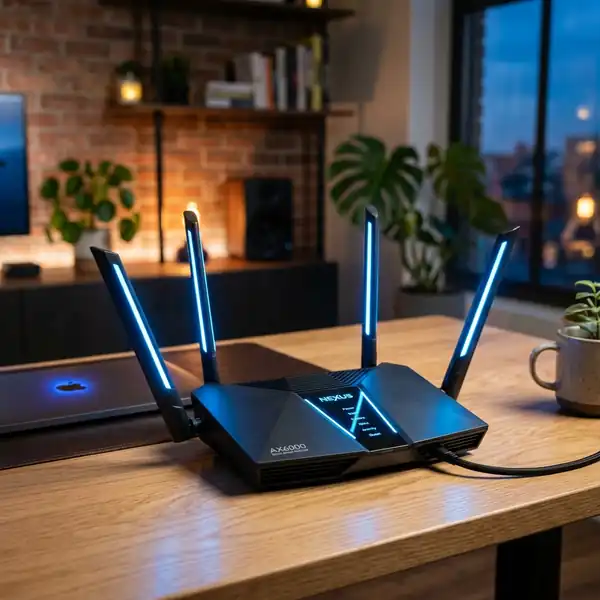
With the widespread replacement of traditional Wi-Fi routers and range extenders by modern Mesh Wi-Fi systems, homeowners and business managers seek to permanently eliminate dead zones. However, the most frequent mistake during installation is improper physical node placement. The ideal distance to place Mesh Wi-Fi nodes apart ranges from 6 to 10 meters (approximately 20 to 30 feet) in standard layouts with drywall or common brick walls, ensuring the signal received by the secondary node (the backhaul link) stays within a healthy RSSI range between -60 dBm and -67 dBm. Setting the nodes too far apart results in connection drops and high latency due to signal attenuation, while positioning them too close reduces the effective coverage area and causes unnecessary channel overlap.
Planning the three-dimensional placement of your mesh points is key to enabling fast, seamless roaming across your home. To maximize your home network's capabilities, you can read our technical guide comparing standard routers against Mesh networks or explore our tips on fixing 5GHz Wi-Fi network invisibility on smartphones.
1. The Logical Architecture of Mesh Wi-Fi and Backhaul Operations
Unlike traditional range extenders — which receive a degraded signal from a router and repeat it under a new network name (SSID), immediately losing 50% of the transmission bandwidth due to half-duplex operation —, a Mesh system works as a unified multi-node network. All nodes communicate with one another using a single network name and password, coordinating clients automatically.
To connect these nodes without slowing down the network for connected client devices, Mesh systems use a dedicated communication path called the Backhaul Link. The backhaul operates in two primary ways:
- Wireless Backhaul: The nodes exchange data over wireless bands. In dual-band mesh systems, the 5 GHz band is shared between node-to-node communication and client traffic. In advanced tri-band models, a third radio band (5 GHz or 6 GHz on Wi-Fi 6E/7) is dedicated exclusively to inter-node communication, preserving full speed for client devices.
- Wired Backhaul (Ethernet Backhaul): The nodes are physically connected using Cat6 RJ-45 Ethernet cables plugged into the devices' Gigabit ports. This is the optimal configuration, as it eliminates physical obstacles and leaves the wireless spectrum free for client connections.
2. Signal Attenuation and the Impact of Common Construction Materials
Linear distance in meters between nodes is only one factor. The main cause of Wi-Fi signal degradation is physical obstacles, which block radio waves (especially 5 GHz signals, which have shorter wavelengths and less penetration power compared to 2.4 GHz).
Different building materials cause specific levels of signal loss, measured in decibels (dB):
- Drywall and Gypsum Boards: These present low attenuation, causing a loss of about 2 dB to 4 dB. Nodes can be placed closer to the maximum recommended limit of 10 meters.
- Standard Brick and Masonry Walls: These cause a moderate loss of 8 dB to 12 dB. The distance between nodes should be reduced to 7 or 8 meters.
- Reinforced Concrete Floors and Beams: These are severe obstacles, causing 15 dB to 25 dB of loss due to concrete density and internal metal rebar. For multi-story setups, nodes should be aligned vertically or connected via Ethernet cables.
- Mirrors and Glass Panels: Large mirrors reflect radio waves, causing up to 15 dB of attenuation. Avoid placing nodes where the direct path passes through bathrooms or closets with mirrors.
- Metal Doors and Cabinets: Metal blocks wireless signals almost completely. Avoid placing nodes inside metal media cabinets or behind metal security doors.

3. Measuring Inter-Node Signal Quality Using RSSI (dBm) Values
For a reliable installation, use the Received Signal Strength Indicator (RSSI) to verify node placement. RSSI is measured on a negative scale of decibels relative to one milliwatt (dBm), ranging from -30 dBm (excellent signal) down to -90 dBm (no connection).
During setup, check the signal strength of the satellite node in your router's companion app (such as the TP-Link Deco, ASUS Router, or D-Link Eagle Pro AI app):
- -30 dBm to -55 dBm (Too Close / Excellent): The nodes are too close. This creates unnecessary overlap and can cause co-channel interference. Move the satellite node further away.
- -56 dBm to -67 dBm (Ideal Range): This is the optimal range for a wireless backhaul link. The signal is strong enough to maintain fast speeds and low latency.
- -68 dBm to -75 dBm (Acceptable / Fair): The node will stay connected, but high-bandwidth tasks like 4K streaming or large downloads may experience speed drops or latency spikes. Try moving the node slightly closer.
- Below -76 dBm (Poor / Disconnected): The link is unstable, and you will likely experience frequent disconnects. The node's indicator LED will turn red or orange to signal a poor connection.
4. LED Indicator Troubleshooting Guide for Mesh Nodes
Most Mesh manufacturers include an LED status light on the hardware to provide a quick visual check of the connection quality between nodes. Use this table to diagnose your node status:
| LED Color | Technical Meaning | Connection Quality | Recommended Action |
|---|---|---|---|
| Solid Green / Solid Blue | The node has established a strong, stable backhaul connection with the primary router (RSSI stronger than -67 dBm). | Excellent | No action needed. The node is positioned correctly. |
| Solid Yellow / Solid Orange | The backhaul signal is weak, and the connection may be unstable (RSSI between -68 dBm and -75 dBm). | Fair / Weak | Move the satellite node slightly closer to the primary router to improve stability. |
| Flashing Red / Solid Red | The node has lost its connection to the primary router (RSSI weaker than -80 dBm). | No Signal | Move the node closer to the main router or remove obstacles like large metal objects. |
| Flashing Purple / Violet | The device is ready for initial setup or is waiting for WPS pairing. | Setup Mode | Open the mobile app on your smartphone to complete the configuration steps. |
5. Step-by-Step Guide: How to Position Your Mesh Nodes
To configure your Mesh network for stable coverage and seamless roaming, follow these placement steps:
- Position the Primary Node: Connect the first node to your internet modem and place it in a central, elevated location (like on a shelf 1.5 meters high) away from obstructions.
- Find the Midpoint: Do not place your satellite node directly in a Wi-Fi dead zone. Instead, position it halfway between the primary node and the area with poor signal. The satellite node must receive a strong signal itself to repeat it effectively.
- Clear the Path: Ensure the path between nodes is as clear as possible. Avoid placing nodes behind large appliances like refrigerators, microwave ovens, or metal cabinets.
- Check the LED Indicator: Turn on the satellite node. Once it boots, check the LED color. A solid green or blue light means a good connection. If the LED is orange or red, move the node a few feet closer to the main unit.
- Verify in the App: Open the companion app on your phone, navigate to your network map, and check the signal health of the satellite node. Ensure it shows a "Strong" status.
6. Seamless Roaming Protocols: 802.11k, 802.11v, and 802.11r Explained
The primary advantage of a Mesh network over a traditional range extender is its ability to handle client roaming seamlessly. As you move around your home during a video call, your device switches to the node with the strongest signal without dropping the connection.
This seamless handoff is managed by three industry-standard protocols:
- IEEE 802.11k (Radio Resource Management): This protocol helps devices scan for nearby nodes quickly. Instead of checking every channel, the device requests a list of nearby nodes from the active router, saving battery power and time.
- IEEE 802.11v (Wireless Network Management): This protocol allows the Mesh system to suggest migrations to client devices. If the system detects a device moving away from its connected node, it prompts the device to switch to a closer node.
- IEEE 802.11r (Fast Transition Roaming): This protocol speeds up security handshakes as a device moves between nodes. By caching encryption keys, the handshake time is reduced to under 50 milliseconds, preventing audio or video dropouts.
7. Understanding the Hidden Node Problem in Mesh Networks
When positioning mesh nodes, you must also watch out for the "Hidden Node Problem." This occurs when client devices connect to two different nodes on the same channel, but the nodes are separated by an obstacle (like a thick brick wall) that prevents them from hearing each other. Under the CSMA/CA protocol, both nodes might try to transmit data at the same time, thinking the airwaves are clear. This leads to packet collisions at the client device, causing dropped connections and slow speeds. Maintaining the recommended distance of 6 to 10 meters and ensuring the backhaul link has a strong RSSI (-60 to -67 dBm) helps prevent this issue, keeping your network running smoothly.
8. Multi-Story Building Configuration (ASUS ZenWiFi & Netgear Orbi Settings)
Configuring a Mesh network in a multi-story home (such as a townhouse or a two-story house) introduces three-dimensional design challenges. Because wireless signals propagate outward and downward from antennas, placing nodes directly on top of each other on different floors creates signal overlap and poor performance. Instead, you should stagger the nodes across floors in a zig-zag pattern. For instance, if the primary node on the first floor is located on the far left, the node on the second floor should be positioned towards the center or the right side of the building.
In addition, different brands have specific settings that you should adjust for multi-story buildings:
- ASUS ZenWiFi Settings: Access the ASUSWRT interface, go to "Advanced Settings," and select "Wireless." Navigate to the "Professional" tab. Here, you will find a setting called "Roaming Assistant." By default, this is set to disconnect clients when the signal drops below -70 dBm. In multi-story buildings, you may want to increase this threshold to -65 dBm to force client devices to switch to the closer floor's node faster. You should also ensure that "Tx Power Adjustment" is set to "Maximum."
- Netgear Orbi Settings: Log into the Orbi admin page, click on "Advanced," go to "Setup," and select "Wireless Settings." Locate the "Transmit Power Control" option. If your floors are separated by thin wood, the signals may overlap too much. If you experience roaming issues where your phone stays connected to the downstairs node, try reducing the 2.4 GHz transmit power to 50% while keeping the 5 GHz transmit power at 100%. This reduces the range of the slower 2.4 GHz band and encourages devices to connect to the faster 5 GHz band of the closest node.
9. Technical Specifications of Wi-Fi 6 (802.11ax) vs Wi-Fi 7 (802.11be) Backhaul
The wireless backhaul link has evolved significantly with recent wireless standards. Understanding these technologies helps explain how modern mesh systems maintain high speeds across distances:
In a Wi-Fi 6 (802.11ax) Mesh system, the backhaul link uses Orthogonal Frequency-Division Multiple Access (OFDMA) and 1024-QAM modulation. OFDMA splits the wireless channel into smaller sub-channels, allowing the nodes to transmit data to multiple client devices and maintain the backhaul connection simultaneously. However, Wi-Fi 6 systems still operate on a single frequency band at a time for backhaul communications, meaning they must switch between bands if interference occurs.
With the introduction of Wi-Fi 7 (802.11be) Mesh networks, the backhaul link is upgraded with Multi-Link Operation (MLO) and 4096-QAM modulation. MLO allows the nodes to connect using multiple frequency bands (such as 5 GHz and 6 GHz) simultaneously. Instead of choosing one band, a Wi-Fi 7 backhaul link combines the bandwidth of both bands to transfer data. If one band experiences interference from a microwave or a neighbor's router, the system instantly routes the backhaul traffic through the other band without packet loss or latency spikes. This makes Wi-Fi 7 systems much more resilient, maintaining stable gigabit speeds even at the maximum recommended distance of 10 meters.
Frequently Asked Questions
How many walls can a Mesh Wi-Fi signal cross?
Typically, a 5 GHz Mesh signal can pass through two standard brick or drywall walls before experiencing significant speed loss. If your network needs to cross more than two walls, you should place a node closer to the obstacle or connect the units using an Ethernet cable (Wired Backhaul).
What happens if I place Mesh nodes too close to each other?
Placing nodes closer than 3 to 4 meters can cause excessive signal overlap. Your devices may have trouble switching nodes (roaming) because the signal from the distant node remains strong. This can cause devices to stay connected to a sub-optimal node, and it creates unnecessary wireless noise.
What are the benefits of using an Ethernet cable to connect Mesh nodes?
Connecting nodes with an Ethernet cable (Wired Backhaul) eliminates the need to use wireless bandwidth for inter-node communication. This dedicates 100% of the wireless spectrum to your client devices. It also allows you to place nodes up to 100 meters apart, bypassing walls and floors.
Do additional Mesh nodes need to be the same brand as the main router?
Yes. Most home systems (like TP-Link Deco, Google Nest, or Asus ZenWiFi) use proprietary sync protocols and require units from the same manufacturer. While the Wi-Fi EasyMesh standard was designed to allow mixing brands, it is not yet widely supported across all consumer models.




