Screen Time is one of the most powerful parental control tools Apple has ever built into iOS — and most parents still aren't using even a fraction of its capabilities. Introduced with iOS 12 in 2018, Screen Time was designed to help any user understand and manage their screen habits. For parents of children and teenagers with iPhones, it functions as a full-featured parental control center — free of charge, with nothing to install.
In this comprehensive and up-to-date guide for 2026, you'll learn how to activate, configure, and use Screen Time strategically: set app time limits by category, block inappropriate content, manage your child's iPhone remotely from your own device, and deal with the most common ways kids try to bypass restrictions.
What Is Screen Time and How Does It Work on iPhone?
Screen Time operates as an integrated telemetry system within iOS. It records — down to the minute — how much time the user spends in each app, each app category (Social Networking, Games, Productivity), and even which web domains they visit while browsing Safari or in-app browsers. This data is stored locally on the device and presented in weekly reports.
For parents, Screen Time goes far beyond passive monitoring. It allows you to:
- Set schedules when specific apps are blocked (e.g., no games after 9 PM)
- Limit the daily hours your child can spend on social media
- Completely block new app installations without parental approval
- Filter adult websites and create allowed-only site lists
- Approve or deny extra time requests directly from your own iPhone
Here's how Screen Time compares to popular third-party parental control solutions:
| Tool | Price | iOS Compatible | Remote Control | Web Filter | Setup Ease |
|---|---|---|---|---|---|
| Screen Time (Apple) | Free | Native | Yes (Family Sharing) | Yes (native) | High |
| Google Family Link | Free | Limited | Yes | Yes | Medium |
| Qustodio | From $5/month | App-based | Yes | Advanced | Medium |
| Bark | $14/month | App-based | Yes | Yes (AI-powered) | Medium |
For the vast majority of families, Apple's built-in Screen Time offers everything you need — at zero monthly cost.
How to Set Up Screen Time on Your Child's iPhone (Step by Step)
Setting up Screen Time on your child's device is straightforward, but a few critical details ensure your child can't simply disable it. Follow this process with your child's iPhone in hand:
- Open the Settings app on your child's iPhone.
- Scroll down and tap Screen Time.
- Tap Turn On Screen Time.
- On the next screen, select This is My Child's iPhone. This automatically enables additional protections designed for minors.
- You'll be prompted to set up Downtime — the period when only selected apps are available (e.g., 9 PM to 7 AM).
- Next, set initial App Limits by category.
- Finally, create a 4-digit Screen Time passcode. This passcode is different from the device unlock passcode and protects all Screen Time settings from being changed.
DomineTec Tip: Never use birthdays, birth years, or obvious sequences like 1234 as your Screen Time passcode. Older children — especially teenagers — will try every obvious combination. Use a sequence only you know, and store it somewhere safe. Recovering a forgotten Screen Time passcode requires erasing the iPhone entirely.
Setting App Limits by Category
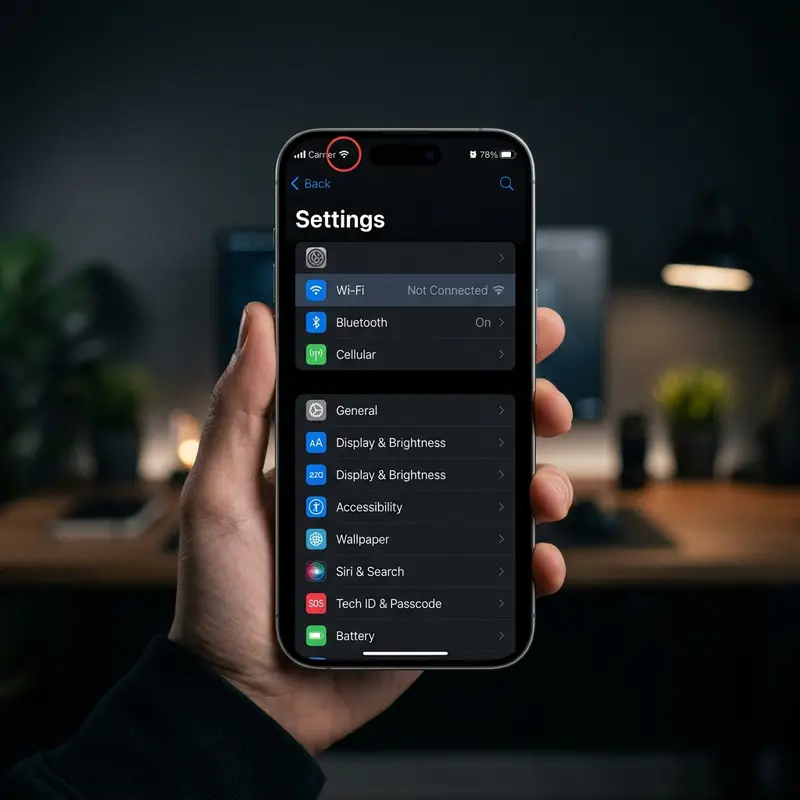
App Limits are the core of Screen Time's parental controls. They let you define exactly how many hours per day your child can spend in each app category — and when the time runs out, the app is locked until the next day (or until you approve more time).
How to configure:
- In Screen Time, tap App Limits.
- Tap Add Limit.
- Select the desired categories: Social Networking, Games, Entertainment, etc.
- Set the daily time allowance (e.g., 1 hour for Social Networking).
- Enable Block at End of Limit so the restriction is enforced rather than just a suggestion.
You can also set limits for individual apps. This is useful for whitelisting educational apps like Duolingo or Khan Academy with no limit while keeping Instagram restricted to 30 minutes. When adding a limit, search for the app by name instead of selecting a whole category.
When an app's time runs out, your child sees a lock screen with the app icon grayed out. They can tap Ask For More Time, which sends a notification to your iPhone — and you decide in seconds whether to approve or deny, without being in the same room.
DomineTec Tip: Instead of imposing limits without discussion, involve your child in setting them. Research in digital psychology shows that teenagers who participate in creating screen time rules follow them far more consistently than rules imposed unilaterally. Show the weekly report together and ask: "What do you think is reasonable?"
Content Restrictions: Blocking Inappropriate Content

Beyond time management, Screen Time offers a robust content filtering system. Access it in Settings > Screen Time > Content & Privacy Restrictions and toggle the switch at the top.
Key options include:
- Content Ratings: Set the maximum age rating for movies (e.g., PG-13 only), music (clean only), and apps (e.g., ages 9+ only).
- App Installation: Require parental approval to install any new app. Your child sees an "Ask" button instead of "Get" in the App Store, and approval arrives as a notification on your iPhone.
- In-App Purchases: Block in-app purchases entirely to prevent unauthorized spending in games and apps.
- Web Content: Enable Limit Adult Websites for Apple's automatic adult content filter. For stricter control, select Allowed Websites Only and manually add the domains your child can access.
If you ever forget the Screen Time passcode and need to regain access to settings, check our guide on how to unlock a locked iPhone — the process requires a full device reset and restore from backup.
Family Screen Time — Remote Parental Management
One of Screen Time's most powerful features is managing your child's iPhone entirely from your own device, without ever needing to pick up their phone. This is done through Apple's Family Sharing.
To set up:
- On your iPhone (parent's device), go to Settings > [your name] > Family Sharing.
- Add your child's Apple ID to the family group. If they don't have one yet, you can create a child account directly through Family Sharing — no credit card required for the child's account.
- Once your child joins the group, go to Settings > Screen Time on your iPhone. You'll see your child's name listed.
- Tap their name to access and modify all Screen Time settings remotely.
From that point on, every extra time request your child makes appears as a notification on your iPhone. You tap Approve or Don't Approve — done in under 5 seconds, without interrupting what you're doing.
Weekly reports show exactly how much time was spent in each app, during which hours usage peaked, and how many notifications were received. Use this data as a starting point for constructive conversations — not as evidence of wrongdoing. Share the report with your teen: older children who understand their own usage patterns tend to self-regulate more effectively than those who feel surveilled.
When Kids Try to Beat Screen Time — What to Do
No technology solution is bulletproof against a motivated child's creativity. Here are the most common techniques children and teenagers use to circumvent Screen Time — and how to block them:
- Changing the date and time: Previously, advancing the clock would reset time-limit counters. Apple patched this in iOS 16.4 — manual date and time changes are now blocked when Screen Time is active with a passcode.
- Deleting and reinstalling apps: Some teens delete a limited app and reinstall it from the App Store to reset its counter. Block this by going to Content & Privacy Restrictions > iTunes & App Store Purchases and requiring approval for installations.
- Using a VPN to bypass web filters: Block VPN app installation using the App Store category filter. Alternatively, use the Allowed Websites Only option so the web filter doesn't depend on the absence of a VPN.
- Using someone else's device: This is Screen Time's real limit — it only controls the device where it's configured.
If the Screen Time passcode is forgotten, the only way to reset it is to erase the iPhone completely and set it up as new (restoring from backup preserves the old passcode). For general iPhone maintenance, check our guide on how to clear iPhone cache to keep the device running smoothly while you manage parental controls.
Above all, remember: Screen Time is a tool, not a complete solution. The most effective approach to managing your child's screen time is still a combination of clear rules, open conversations, and leading by example.
Establishing Clear Guidelines: Communicating with Your Kids
While Screen Time is an incredibly robust administrative tool, technology alone cannot replace communication. Before enforcing limits, sit down with your child to discuss why these restrictions are being put in place. Digital safety experts suggest framing Screen Time not as a punishment, but as a healthy boundaries system similar to bedtime or diet rules.
Consider implementing the following guidelines to build a cooperative digital environment:
- Create screen-free zones: Establish areas in the home, such as the dining table or bedrooms at night, where devices are completely prohibited for both children and parents.
- Lead by example: Children copy parental behavior. If parents are constantly glued to their phones, kids will perceive screen time rules as hypocritical and unfair.
- Offer screen-free alternatives: Encourage offline hobbies, board games, sports, and outdoor activities to replace digital stimulation.
- Discuss online safety: Explain the real dangers of the internet, including privacy issues, cyberbullying, and inappropriate interactions, so they understand the protection settings.
Combining the technological security of iOS Screen Time with consistent, open dialogue creates the best foundation for a balanced relationship with technology as your children grow.
Frequently Asked Questions (FAQ)
Can my child see that Screen Time is enabled on their iPhone?
Not entirely. iOS does show a notice when App Limits are active (the app icon grays out with a limit message). However, your child cannot access the detailed settings or change anything without the Screen Time passcode. The monitoring itself (usage reports) is invisible in day-to-day use — your child receives no notification that data is being collected.
Can I set up Screen Time remotely without holding my child's phone?
Yes — that's precisely the purpose of Family Screen Time via Family Sharing. After the initial one-time setup (which does require physical access to the child's device), you can adjust limits, approve time requests, and view full reports entirely from your own iPhone.
Does Screen Time work on iPad too?
Yes. Screen Time works on any Apple device — iPhone, iPad, and iPod touch — running iOS 12 or later. If your child uses both an iPhone and an iPad linked to the same Apple ID, app time limits are shared across both devices automatically. For example, if the gaming limit is 1 hour, 30 minutes on the iPhone and 30 minutes on the iPad add up to the total.
What if my child factory resets the iPhone to bypass Screen Time?
Factory resetting an iPhone requires confirming with the device owner's Apple ID. If your child's iPhone is linked to their Apple ID, which in turn is part of your Family Sharing group, you can configure iCloud so that any reset requires your approval. Additionally, enable Activation Lock (Find My iPhone) — without the correct Apple ID credentials, the iPhone becomes completely unusable after a reset, making this bypass attempt impractical.