How to Make 3D Printed Parts Stronger: Wall Count and Infill Guide
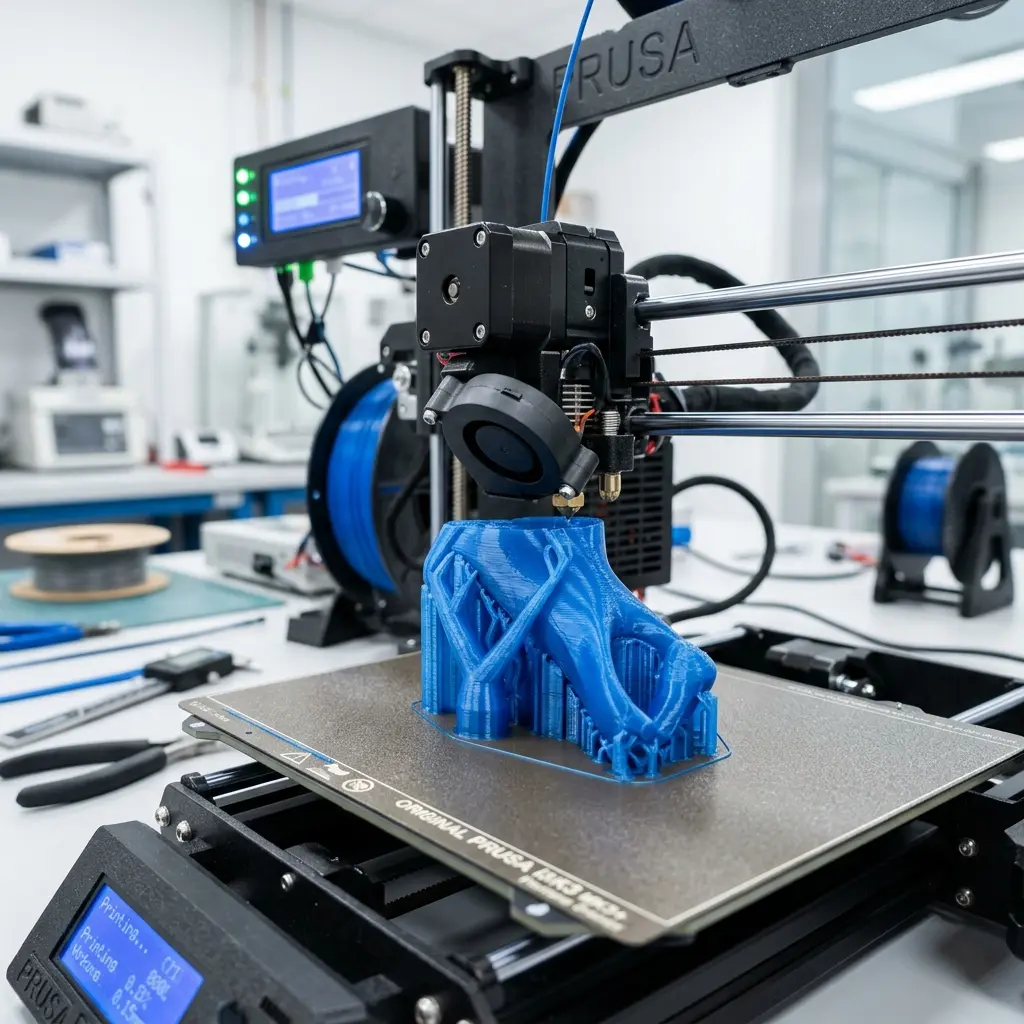
How to Make 3D Printed Parts Stronger: Wall Count and Infill Guide
3D printing technology has advanced significantly, allowing users to create complex and durable parts. However, the strength of a printed part can vary widely based on several factors, including wall count and infill settings. This guide provides insights into how these parameters influence the strength of 3D printed parts.
Understanding Wall Count
Wall count, or the number of perimeter walls, plays a crucial role in determining the strength of a 3D printed part. Increasing the wall count enhances the part's outer structure, improving its resistance to external forces.
Recommended Wall Counts for Various Applications
| Application | Recommended Wall Count | Notes |
|---|---|---|
| Functional Prototypes | 2-3 | Good balance between strength and material usage. |
| Mechanical Parts | 4-6 | Increased strength for load-bearing applications. |
| Cosmetic Models | 1-2 | Less emphasis on strength; surface finish is more important. |
| Heavy-Duty Components | 6-8 | Optimal for performance in demanding environments. |
Impact of Wall Count on Strength
- Higher wall counts lead to thicker outer layers, providing better impact resistance.
- Increased wall count can reduce the likelihood of warping and layer separation.
- Thicker walls contribute to better heat resistance in high-temperature applications.
Understanding Infill
Infill refers to the internal structure of a 3D printed part. It affects the weight, strength, and material efficiency of the print. Choosing the right infill percentage can drastically impact the performance of the part.
Infill Types and Their Strength Characteristics
| Infill Type | Strength Characteristics | Common Uses |
|---|---|---|
| Grid | Good strength-to-weight ratio; evenly distributes stress. | General-purpose prints |
| Honeycomb | Excellent strength and lightweight; high resistance to bending. | Structural components |
| Triangles | Very strong; ideal for parts that require rigidity. | Load-bearing applications |
| Concentric | Good for cylindrical shapes; optimal for even stress distribution. | Pipes and cylindrical parts |
Infill Density Recommendations
The infill density is expressed as a percentage, indicating how much of the internal volume will be filled with material. The following table outlines suitable infill densities for different applications:
| Application | Recommended Infill Density (%) | Notes |
|---|---|---|
| Non-Functional Models | 10-20 | Minimal strength required; focus on aesthetics. |
| Prototyping | 20-40 | Balance between strength and material efficiency. |
| Functional Parts | 40-60 | Increased durability for parts under load. |
| Heavy-Duty Applications | 60-100 | Maximized strength for critical components. |
Factors Influencing Strength in 3D Printing
In addition to wall count and infill, several other factors can influence the strength of 3D printed parts:
- Material Selection: Different materials offer varying mechanical properties. For example, PLA is easy to print but less durable than ABS or PETG.
- Layer Height: Thinner layers can improve adhesion between layers, enhancing strength.
- Print Speed: Slower print speeds can improve the quality of the print and layer adhesion.
- Temperature Settings: Proper nozzle and bed temperatures can prevent issues like warping or layer separation.
Conclusion
Making 3D printed parts stronger involves careful consideration of wall count and infill settings, along with other influencing factors. By following this guide and experimenting with different configurations, users can produce robust and reliable 3D printed components tailored to their specific needs.
Frequently Asked Questions
How can wall count be adjusted?
Wall count can be adjusted in the slicer settings before starting a print. Increasing the number of outer walls enhances strength.
What is the best infill percentage for strength?
An infill percentage of 30% to 50% is often recommended for parts that will endure stress. Higher percentages may be needed depending on the application.
Does temperature affect strength?
Yes, printing at the optimal temperature for the chosen filament improves layer adhesion, contributing to the overall strength of the part.
What are the advantages of using PETG over PLA and ABS?
PETG offers a balance of strength and flexibility, making it suitable for functional parts. It also has better impact resistance compared to PLA.
Can post-processing improve strength?
Yes, techniques such as acetone vapor smoothing for ABS or annealing can enhance the strength of 3D printed parts after printing.




