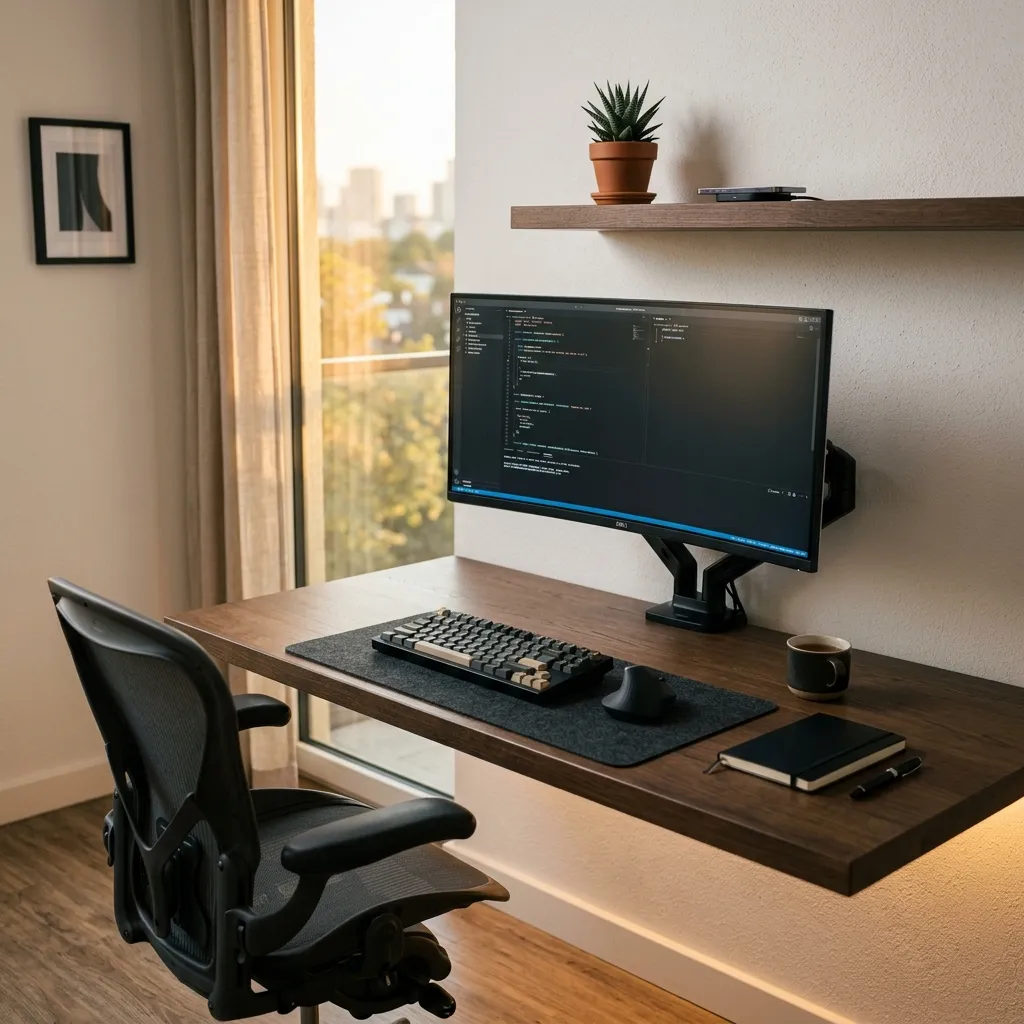
Gas springs generally outperform mechanical monitor arms in terms of flexibility and ease of use.
Ergonomics: Enhancing Comfort and Flexibility
Gas spring arms provide seamless adjustments, allowing users to set their monitors at optimal heights effortlessly.
Mechanical arms, while adjustable, often require manual effort and may lack the fluidity that gas springs offer.
Performance: Stability and Range of Motion
Gas springs deliver consistent performance across a wider range of motion, accommodating various viewing angles.
Mechanical arms can exhibit stability issues, especially when fully extended, affecting user experience.
Materials: Durability and Aesthetics
Gas spring arms often incorporate high-quality materials such as aluminum and steel, ensuring longevity and sleek aesthetics.
Mechanical arms might use less durable materials, which can compromise both performance and visual appeal over time.
Design: Space Efficiency and Modernity
Gas springs typically feature a minimalist design that complements modern workspace aesthetics.
Mechanical arms can be bulkier, potentially cluttering the workspace and detracting from a clean look.
Cost Considerations: Budget and Value
Gas spring models generally come at a higher price point, reflecting their advanced functionality and materials.
Mechanical options are often more budget-friendly, but their performance and longevity may not match that of gas springs.
| Feature | Gas Spring Arms | Mechanical Arms |
|---|---|---|
| Adjustability | High | Moderate |
| Material Quality | Aluminum & Steel | Plastic & Steel |
| Weight Capacity | Up to 20 kg | Up to 10 kg |
| Price Range | Higher | Lower |
| Installation Difficulty | Easy | Moderate |
DomineTec Tip: Regularly adjust monitor height to maintain ergonomic alignment and reduce strain.
- Determine the weight of the monitor to choose the appropriate arm.
- Evaluate workspace size to ensure compatibility with the chosen arm.
- Consider the range of motion needed for optimal visibility.
- Research brands known for durability and user satisfaction.
- Review customer feedback for real-world performance insights.
For guidance on achieving the correct monitor height, visit our page on correct monitor height.
For tips on creating an efficient workspace, check our article on clean productivity desk setup.
Installation Process: Ease and Complexity
The installation process for gas spring and mechanical monitor arms varies significantly, impacting user choice. Gas spring monitor arms typically feature a more straightforward installation process due to their fewer mechanical components.
Mechanical monitor arms often require more intricate setups, with multiple screws and adjustments needed to achieve optimal positioning. This complexity can deter users who prefer a quick and hassle-free installation experience.
Understanding the tools required for installation is crucial. Gas spring models may need only basic tools, while mechanical arms often demand more specialized equipment.
Moreover, the time taken for installation can also be a deciding factor for many. Gas spring arms can usually be installed within a short period, while mechanical arms may take longer due to the need for precise adjustments.
Adjustability: Customizing Your Setup
Adjustability is a critical factor when comparing gas spring and mechanical monitor arms. Gas spring arms offer a dynamic range of motion, allowing for quick and effortless height and angle adjustments.
In contrast, mechanical arms tend to have fixed adjustment points, which may restrict users looking for a highly personalized setup. This limitation can be a drawback for individuals who frequently switch between sitting and standing positions.
Gas spring models often incorporate tension adjustment features, enabling users to customize the resistance level based on the weight of their monitors. This adaptability ensures optimal performance across different monitor sizes and weights.
Weight Capacity: Supporting Your Equipment
Weight capacity is a vital consideration when selecting between gas spring and mechanical monitor arms. Gas spring arms generally support a range of monitor weights, but their effectiveness can vary based on the specific model.
Mechanical monitor arms often provide a more robust weight capacity, making them suitable for larger and heavier monitors. Users with multiple screens or heavier setups may find mechanical options more reliable in maintaining stability.
Understanding the weight limits and distribution capabilities is crucial for users to avoid potential damage to their equipment and ensure safe usage over time.
Compatibility: Fitting Your Workspace
Compatibility with various monitor sizes and types is an essential aspect of choosing between gas spring and mechanical monitor arms. Gas spring arms are often designed to accommodate a wide range of monitor sizes, making them versatile for different setups.
Mechanical arms may have more stringent compatibility requirements, limiting their use with certain monitor types or sizes. Users should carefully evaluate the specifications before making a purchase to ensure a proper fit.
Moreover, the mounting options available with each type also play a significant role in compatibility. Gas spring arms typically offer multiple mounting options, such as clamp, grommet, or wall-mounted solutions.
Maintenance: Long-Term Care and Upkeep
Maintenance requirements differ significantly between gas spring and mechanical monitor arms, influencing long-term user satisfaction. Gas spring arms generally require less maintenance due to their simpler design and fewer moving parts.
Mechanical arms may need regular adjustments and checks to ensure that all components are functioning correctly. This ongoing maintenance can be a consideration for users who prefer a low-maintenance solution.
Understanding the maintenance requirements is essential for users to choose a monitor arm that aligns with their lifestyle and willingness to invest in upkeep.
Portability: Moving Your Setup
Portability is another important factor when comparing gas spring and mechanical monitor arms, especially for users who frequently change their work environment. Gas spring arms are typically lighter and easier to disassemble, making them more suitable for on-the-go setups.
In contrast, mechanical monitor arms often have a more substantial build, which can complicate transportation. Users who need to relocate their workstations may find gas spring models more convenient.
Ultimately, portability factors can significantly influence the choice of monitor arm, particularly for users with dynamic work habits or those in shared office spaces.
Environmental Impact: Sustainability Considerations
As environmental awareness grows, the sustainability of gas spring versus mechanical monitor arms has become a relevant consideration for consumers. Gas spring arms often utilize fewer materials and simpler manufacturing processes, potentially resulting in a lower environmental footprint.
Mechanical monitor arms, while sometimes more durable, may involve more complex production techniques that could contribute to higher resource usage. Evaluating the environmental impact of the materials and manufacturing processes is essential for eco-conscious consumers.
Choosing a monitor arm that aligns with personal values regarding sustainability can contribute to a more environmentally friendly workspace and encourage responsible consumer behavior.
Technology Integration: Smart Features and Connectivity
Modern monitor arms are increasingly incorporating smart technology to enhance user experience. Gas spring and mechanical models may both offer basic functionalities, but the addition of smart features can significantly alter their appeal.
Some gas spring monitor arms come equipped with built-in USB ports or wireless charging capabilities, allowing users to seamlessly connect their devices. This integration enhances workspace efficiency by reducing cable clutter and streamlining device management.
As technology continues to advance, users should consider how these smart features can be integrated into their existing setups for improved functionality and convenience.
User Experience: Feedback and Satisfaction
User experience plays a crucial role in determining the effectiveness of monitor arms, affecting both productivity and overall satisfaction. Feedback from users can provide valuable insights into the practical applications of gas spring versus mechanical monitor arms.
Users often report that gas spring monitor arms offer smoother adjustments, providing a more fluid experience when repositioning the screen. This ease of use is particularly beneficial during long work hours, as it encourages frequent adjustments for optimal ergonomics.
Ultimately, user satisfaction is influenced by personal preferences and usage patterns. Evaluating user reviews and testimonials can help potential buyers make informed decisions that align with their needs and work habits.
Future Trends: Innovations and Advancements in Monitor Arm Technology
The monitor arm market is evolving, with innovations aimed at improving functionality and user experience. Future trends indicate a growing emphasis on adaptive design and smart technology integration.
One significant trend is the development of modular monitor arms that can be customized based on individual requirements. These systems allow users to configure their setups according to specific needs, accommodating multiple monitors or varying screen sizes.
As remote work becomes more prevalent, the demand for versatile and adaptable monitor arms is likely to increase. Keeping an eye on these trends can help consumers make proactive choices that align with evolving technology and workplace practices.
Safety Features: Ensuring Secure and Reliable Operation
Both gas springs and mechanical monitor arms are designed with safety in mind, but they approach it in different ways. Gas springs often incorporate features such as pressure relief valves that prevent over-compression, while mechanical arms might utilize locking mechanisms to prevent sudden drops.
Users must consider the potential for wear and tear over time. Gas springs can lose pressure, which may affect their performance, while mechanical arms can develop slack that compromises stability. Regular inspections can help mitigate these risks.
Ultimately, the choice between gas spring and mechanical arms should factor in the safety features that best match the user's environment, especially for workplaces handling heavy equipment or in high-traffic areas.
User Demographics: Suitability for Different User Needs
Understanding the demographics of users can significantly influence the choice between gas spring and mechanical monitor arms. For instance, individuals who frequently adjust their monitor height may prefer gas springs for their ease of use and smooth operation.
Conversely, users who prioritize a fixed setup and require robust support for heavier monitors might find mechanical arms more suitable. These users often include professionals in graphic design or engineering, where screen stability is paramount.
Ultimately, assessing the target user base is crucial in determining which monitor arm type will serve best. Understanding specific needs can lead to improved workstation ergonomics and user satisfaction in the long run.
Customization Options: Tailoring to Individual Preferences
Customization is a crucial factor when choosing between gas springs and mechanical monitor arms, as users often have unique preferences regarding their workspace layout and functionality.
Gas spring arms typically offer greater adjustability with features such as height, tilt, and swivel adjustments that can be modified with ease, catering to a variety of user heights and sitting preferences.
Ultimately, the choice between gas spring and mechanical options may depend on how important customization is to the user, considering factors like specific tasks, personal comfort, and workspace constraints.
Stability During Movement: Performance Under Stress
Stability during movement is a vital aspect to consider, especially for users who frequently adjust their monitor positions throughout the day.
Gas spring monitor arms generally provide a smoother and more stable movement due to their damping mechanisms, which help absorb sudden shifts and ensure that the monitor remains in the desired position.
Therefore, users should evaluate how often they adjust their monitors and choose a solution that offers the right balance of stability and ease of use for their specific workload and movement patterns.
Troubleshooting Common Issues with Gas Springs and Mechanical Monitor Arms
Troubleshooting issues with gas spring and mechanical monitor arms can significantly enhance user experience and prolong the lifespan of the equipment. Common problems include difficulty in adjusting the height, unexpected drooping of the monitor, and resistance during movement.
For gas springs, the first step in troubleshooting is to check for any visible damage to the gas cylinder. Inspecting the gas spring for leaks is essential; a hissing sound or visible fluid is indicative of a failure. If leakage is present, the gas spring will likely need replacement.
Another common issue with gas springs is the inability to hold the desired height. This can often be remedied by adjusting the tension settings. Most gas spring systems feature an adjustment mechanism, usually a knob or a thumb screw, which can be turned to increase or decrease the spring tension.
Mechanical monitor arms may also present unique challenges, such as stiffness in movement or inadequate support for the monitor's weight. This can often be resolved by lubricating the joints with a suitable grease or silicone spray. Regular maintenance prevents stiffness from becoming a persistent issue.
Best Practices for Maximizing the Lifespan of Monitor Arms
Implementing best practices can greatly extend the lifespan of both gas spring and mechanical monitor arms. Regular inspections and maintenance are crucial in identifying wear and tear before they lead to failures.
For gas springs, ensuring that they are not subjected to excessive weight beyond their specified capacity is vital. Overloading can result in premature failure. Additionally, maintaining a clean environment around the monitor arm and avoiding exposure to extreme temperatures can prevent damage to the gas spring mechanism.
Mechanical monitor arms benefit from periodic tightening of screws and bolts to maintain structural integrity. Inspecting the mounting points and ensuring that all connections are secure can prevent wobbling and improve stability.
Finally, utilizing the monitor arm within its recommended range of motion is essential. Avoiding excessive force during adjustments can prevent mechanical failures and ensure that the arm operates smoothly for an extended period.
Frequently Asked Questions
What is a gas spring monitor arm?
A gas spring monitor arm utilizes gas pressure to allow smooth height adjustments effortlessly.
Are mechanical monitor arms adjustable?
Yes, mechanical monitor arms can be adjusted, but often require more effort compared to gas spring models.
Which type of monitor arm is better for heavy monitors?
Gas spring monitor arms are typically better suited for heavy monitors due to their higher weight capacity.
Do gas spring arms require maintenance?
Gas spring arms generally require minimal maintenance, but checking for wear and tear periodically is advisable.
Can mechanical arms cause strain during adjustments?
Yes, mechanical arms may cause strain during adjustments, especially if the user has to apply significant force.




