Correct Monitor Height and Angle for an Ergonomic Desk Setup
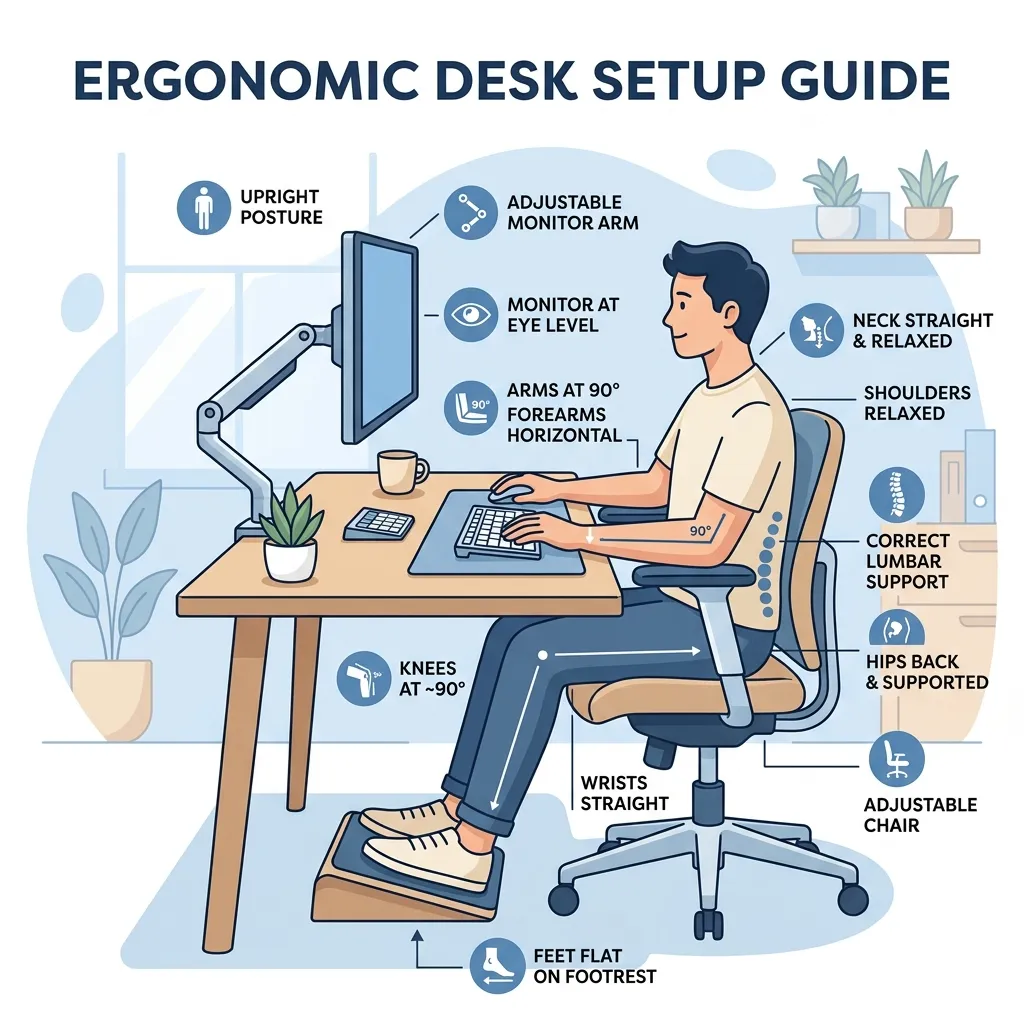
The ideal monitor height and angle promote comfort, reduce strain, and enhance productivity.
Understanding Monitor Height
The optimal monitor height should align with the user's eyes, typically 20 to 30 inches away, with the top of the screen at or just below eye level.
This positioning minimizes neck strain and encourages a neutral head position, crucial for long hours of use.
Monitor Angle and Viewing Distance
An angle of 10 to 20 degrees backward from vertical is recommended, allowing for better visibility and reducing glare.
The distance should be adjusted based on screen size, with larger screens requiring slightly greater distances to maintain comfort.
Materials and Build Quality
Monitors are typically constructed from materials like IPS and VA panels, offering different benefits in color accuracy and viewing angles.
Consider brands like Dell, LG, and ASUS for their robust ergonomic designs and durable materials that withstand prolonged use.
Comparative Table of Monitor Brands and Ergonomics
| Brand | Model | Height Adjustment Range (inches) | Angle Adjustment (degrees) | Panel Type |
|---|---|---|---|---|
| Dell | UltraSharp U2720Q | 5.1 | ±90 | IPS |
| LG | 27UK850-W | 4.5 | ±45 | IPS |
| ASUS | ProArt PA32UCX | 5.2 | ±60 | IPS |
DomineTec Tip: Regularly adjust the monitor position and take breaks to maintain optimal ergonomics and prevent fatigue.
- Set the monitor height so that the eyes are level with the top edge.
- Adjust the monitor tilt to reduce glare and enhance visibility.
- Ensure the monitor is at arm's length, with the screen occupying a comfortable field of view.
- Use a monitor stand or adjustable arms to achieve the desired height and angle.
- Regularly check and adjust settings based on individual comfort and workspace changes.
Importance of Monitor Size in Ergonomics
The size of the monitor plays a crucial role in an ergonomic desk setup. A larger screen can reduce the need for excessive head and neck movement, allowing for a more comfortable viewing experience.
However, it is important to consider the distance at which the monitor is positioned relative to its size. Larger monitors should be placed further away to maintain optimal viewing angles and reduce eye strain.
Additionally, the resolution of the monitor is significant; a higher resolution allows for clearer images and text, which can enhance productivity and reduce fatigue. It is advisable to choose a monitor size that aligns with the user's workspace and viewing habits.
Ultimately, the balance between monitor size, resolution, and viewing distance can lead to improved posture and a decrease in discomfort during prolonged use.
Adjustable Monitor Stands and Mounts
Utilizing adjustable monitor stands or mounts can significantly enhance ergonomic practices. These solutions allow users to customize the height and angle of their monitors to suit their specific needs.
Adjustable stands can accommodate various monitor sizes and can be modified easily, promoting a dynamic workspace. This flexibility can help in maintaining a healthy posture and reducing strain on the neck and shoulders.
Wall mounts also offer a space-saving alternative while allowing for a wide range of height and angle adjustments. They can facilitate optimal positioning that standard desks may not provide.
Investing in these adjustable solutions not only improves comfort but also enhances overall workspace efficiency by promoting better alignment and reducing distractions caused by discomfort.
Impact of Ambient Lighting on Monitor Setup
Ambient lighting is a critical factor to consider in an ergonomic monitor setup. Proper lighting can help reduce glare on the screen, which can lead to eye strain and fatigue.
Natural light is often preferred, but it should be positioned to avoid direct reflection on the monitor. Adjustable blinds or curtains can help manage light levels effectively throughout the day.
In addition to natural light, task lighting can be beneficial. Desk lamps with adjustable brightness can provide additional illumination for reading documents without causing glare on the monitor.
Ultimately, a well-lit environment enhances visual comfort and can contribute to prolonged focus and productivity, making it an essential component of ergonomic design.
Ergonomic Accessories to Enhance Comfort
Incorporating ergonomic accessories can significantly improve the overall comfort of a desk setup. Items such as keyboard trays, wrist rests, and footrests can help promote better posture and reduce strain.
Keyboard trays allow for a lower positioning of the keyboard, which can minimize shoulder and wrist strain. Similarly, wrist rests provide additional support, reducing the risk of repetitive strain injuries.
Footrests can help in maintaining proper leg positioning, particularly for users who may be shorter than average. They encourage a stable base, which can assist in overall comfort during long periods of sitting.
Investing in these accessories creates a holistic ergonomic environment, ensuring that all aspects of the workstation are conducive to comfort and efficiency.
Adjusting Your Desk Height for Optimal Ergonomics
The height of the desk is equally important in achieving an ergonomic workspace. An adjustable desk can help users find their ideal working height, promoting better posture and reducing discomfort.
For those who prefer standing while working, desks that accommodate both sitting and standing positions can enhance circulation and reduce fatigue. Regularly alternating between positions can also improve focus and productivity.
It is essential that the desk height allows for the elbows to be at a 90-degree angle while typing and the feet to rest flat on the ground or on a footrest. This positioning encourages a neutral spine and minimizes strain on the back.
Adjusting desk height can significantly impact overall well-being, making it a vital consideration for anyone seeking to optimize their workstation ergonomics.
Regular Posture Checks and Exercises
Monitoring and adjusting posture throughout the workday is fundamental to maintaining ergonomic health. Regular posture checks can help individuals identify any uncomfortable positions they may adopt unconsciously.
Incorporating simple stretches and exercises into the daily routine can also help alleviate tension. Stretching the neck, shoulders, and back can counteract the effects of prolonged sitting and promote better circulation.
Setting reminders to take breaks and perform these exercises can encourage a more active approach to ergonomics. Short breaks are vital for preventing fatigue and maintaining focus during tasks.
Implementing these practices fosters a culture of self-care in the workspace, leading to improved overall health and productivity over time.
Evaluating Ergonomic Products and Certifications
When selecting ergonomic products, it is crucial to look for certifications that validate their ergonomic claims. Numerous organizations provide guidelines and standards for evaluating ergonomic designs.
Products that have been certified by recognized ergonomic organizations often meet specific criteria related to user comfort and health. This can give users confidence in their purchases and ensure a better ergonomic experience.
Additionally, researching user reviews and expert opinions can provide valuable insights into the effectiveness of specific ergonomic products. This information can aid in making informed decisions when selecting desk accessories or monitor setups.
Investing in certified ergonomic products can lead to significant benefits in comfort and productivity, reinforcing the importance of careful product evaluation.
Optimal Desk Configuration for Enhanced Ergonomics
Establishing an optimal desk configuration is critical for promoting ergonomic practices. The layout of the desk should facilitate comfortable access to all necessary tools and devices without straining the body.
Positioning the monitor, keyboard, and mouse within easy reach helps mitigate the risk of repetitive strain injuries. When arranging your workspace, ensure that frequently used items are within a 15- to 20-inch radius.
This minimizes excessive reaching and twisting, which can lead to discomfort over time. Additionally, consider the placement of your chair and any supporting equipment, as these factors contribute significantly to overall ergonomic comfort.
Utilizing a larger desk can also provide ample space for a monitor and accessories, allowing for better organization. A clutter-free desk reduces distractions and promotes focus, further enhancing the ergonomic environment.
Regularly reassessing the desk layout is advisable to accommodate any changes in workflow or personal preferences. Incorporating storage solutions, such as drawers or shelving, can help keep the workspace tidy.
A neat environment not only improves ergonomic safety but also boosts productivity and morale, contributing to a healthier work experience.
Importance of Monitor Resolution and Display Technology
Monitor resolution plays a crucial role in visual ergonomics, impacting how comfortably users can view content. Higher resolutions, such as 4K, provide sharper images, which can reduce eye strain during long periods of use.
Users should assess their work requirements to determine the appropriate resolution for their specific tasks. Furthermore, display technology, such as IPS (In-Plane Switching) vs. TN (Twisted Nematic), affects color accuracy and viewing angles.
IPS panels offer better color reproduction and wider viewing angles, which can enhance the overall visual experience and promote comfort. Choosing the right display technology can make a significant difference in reducing visual fatigue.
Additionally, modern monitors often come equipped with blue light filtering features, which help reduce the potential for eye strain. Users should take advantage of these settings, especially during extended work hours.
Proper calibration of brightness and contrast settings is also essential to create a comfortable viewing experience. Finally, it is important to regularly clean the monitor screen to maintain clarity.
Dust and smudges can obscure visibility and lead to squinting, which contributes to eye fatigue. A clean screen supports improved focus and overall ergonomic health.
Strategies for Managing Eye Fatigue in Digital Environments
Eye fatigue is a common issue in digital work environments, often resulting from prolonged screen time. Implementing the 20-20-20 rule is an effective strategy for mitigating this discomfort.
Every 20 minutes, users should look at something 20 feet away for at least 20 seconds to relax their eye muscles. In addition to the 20-20-20 rule, users should ensure proper lighting in their workspace.
Harsh overhead lighting or glare from windows can exacerbate eye strain. Utilizing adjustable blinds or anti-glare screen filters can help create a more comfortable visual environment.
Regular breaks are also essential for maintaining eye health. Incorporating short breaks every hour can help alleviate tension and prevent fatigue.
During these breaks, users should stand, stretch, and perform eye exercises to promote circulation and relaxation. Finally, consulting with an eye care professional for personalized recommendations can provide additional strategies for managing eye fatigue.
Regular eye examinations can ensure that vision problems are addressed promptly, further contributing to a comfortable working environment.
Long-Term Benefits of an Ergonomic Monitor Setup
Investing in an ergonomic monitor setup yields long-term benefits for both physical health and productivity. Well-aligned monitors can significantly reduce the risk of musculoskeletal disorders, which are common among individuals who spend extended periods at their desks.
Over time, proper ergonomics can result in fewer sick days and lower healthcare costs. Moreover, an ergonomic setup fosters improved focus and efficiency.
When users are comfortable and free from pain, they can concentrate more effectively on their tasks. This translates to higher quality work and greater job satisfaction, enhancing overall workplace morale.
Additionally, a dedicated ergonomic setup showcases a commitment to employee well-being, which can attract and retain talent. Organizations that prioritize ergonomics often see a positive impact on employee engagement and loyalty, leading to a more stable workforce.
Ultimately, the long-term advantages of investing in an ergonomic monitor setup extend beyond the individual. Companies that prioritize ergonomic practices can benefit from higher productivity levels and reduced turnover, creating a healthier and more dynamic work environment.
Factors Influencing Monitor Placement in Multi-Monitor Setups
In environments where multiple monitors are utilized, the placement of each screen becomes crucial for maintaining an ergonomic setup. The primary consideration should be the alignment of the monitors with the user’s line of sight to minimize neck strain.
For a dual-monitor configuration, it is generally recommended that the primary monitor be directly in front of the user, with the secondary monitor positioned at an angle that allows easy viewing without excessive head movement.
The angle of the secondary monitor should ideally be between 15 to 30 degrees from the centerline to maintain a natural neck posture. Additionally, the distance between monitors should be sufficient to avoid eye strain.
A distance of approximately an arm's length is advisable, helping to minimize the effort required to switch focus between screens. The use of monitor stands that allow for height adjustments can also facilitate a more customized setup.
Lastly, considering the size and resolution of each monitor is important. Larger screens may require a greater distance for optimal viewing, while high-resolution displays can reduce the strain associated with pixelation.
Proper planning of monitor placement can significantly enhance comfort and productivity in a multi-monitor environment.
Customization and Personalization of Monitor Ergonomics
Customization plays a vital role in achieving an ergonomic monitor setup that caters to individual needs. Users should take into account personal factors such as height, arm length, and visual acuity when determining the ideal monitor height and angle.
This personalized approach can lead to significant improvements in comfort and productivity. Moreover, it is essential to periodically reassess the setup as personal circumstances change, such as shifts in work habits or the introduction of new equipment.
Regular adjustments can help maintain an ergonomic posture and prevent discomfort or injury associated with prolonged computer use. In addition to standard height and angle adjustments, users can benefit from the incorporation of software that allows for screen splitting and organization.
This can minimize the need for excessive head and eye movement, as well as reduce cognitive load during multitasking. Lastly, engaging in open discussions with colleagues or ergonomic specialists can lead to new insights and ideas for enhancing individual setups.
Sharing experiences and strategies can foster a culture of ergonomics within a workplace, ultimately benefiting everyone involved.
Frequently Asked Questions
What is the best monitor height for ergonomic use?
The best monitor height is where the top of the screen is at or slightly below eye level, promoting a neutral neck position.
How do I adjust my monitor angle?
Angle the monitor back between 10 and 20 degrees to reduce glare and improve visibility without straining the neck.
What materials are best for ergonomic monitors?
Monitors made with IPS panels typically provide better color accuracy and viewing angles, essential for an ergonomic setup.
Which brands are recommended for ergonomic monitors?
Brands like Dell, LG, and ASUS are recognized for their ergonomic designs, durability, and adjustable features.
How often should I adjust my monitor?
Monitor adjustments should occur regularly, especially after prolonged use or when changing seating arrangements to maintain comfort.