Does Enabling UniFi Smart Queues Limit and Reduce Max Download Speed?

No, it does not necessarily limit max download speed.
Enabling UniFi Smart Queues is a feature designed to optimize network traffic and improve the overall quality of service, but its impact on download speeds depends on various factors.
Understanding UniFi Smart Queues
UniFi Smart Queues is a traffic management system that helps prioritize and manage network traffic, ensuring that critical applications receive sufficient bandwidth.
This feature is particularly useful in environments where multiple devices are connected to the same network, and bandwidth-intensive applications are used.
Key Features of UniFi Smart Queues
Some of the key features of UniFi Smart Queues include traffic prioritization, bandwidth allocation, and queue management.
These features work together to optimize network traffic and ensure that critical applications receive the necessary bandwidth.
Benefits of Using UniFi Smart Queues
The benefits of using UniFi Smart Queues include improved network performance, increased efficiency, and enhanced user experience.
By prioritizing critical applications and managing network traffic, UniFi Smart Queues helps to prevent network congestion and ensure that all devices on the network receive sufficient bandwidth.
How UniFi Smart Queues Work
UniFi Smart Queues work by categorizing network traffic into different queues based on factors such as application type, user group, and time of day.
Each queue is then assigned a specific priority level, ensuring that high-priority traffic is transmitted first, followed by lower-priority traffic.
Queue Categorization
Queue categorization is the process of grouping network traffic into different queues based on specific criteria.
This criteria can include application type, user group, time of day, and other factors that are relevant to the network environment.
Priority Assignment
Priority assignment is the process of assigning a specific priority level to each queue.
This ensures that high-priority traffic is transmitted first, followed by lower-priority traffic, and helps to prevent network congestion.

Configuring UniFi Smart Queues
To configure UniFi Smart Queues, you need to access the UniFi controller and navigate to the Settings section.
From there, you can create and manage queues, assign priorities, and set up rules for traffic management.
Accessing the UniFi Controller
To access the UniFi controller, you need to open a web browser and navigate to the IP address of the UniFi device.
Once you have logged in, you can navigate to the Settings section and begin configuring UniFi Smart Queues.
Creating and Managing Queues
Creating and managing queues is a critical step in configuring UniFi Smart Queues.
This involves creating new queues, assigning priorities, and setting up rules for traffic management.
DomineTec Tip: When configuring UniFi Smart Queues, it is essential to consider the specific needs of your network and the applications used.
Technical Specifications and Config Parameters
Understanding the technical specifications and config parameters of UniFi Smart Queues is essential for effective configuration.
This includes understanding queue types, priority levels, and bandwidth allocation.
| Parameter | Description |
|---|---|
| Queue Type | Determines the type of queue, such as high-priority or low-priority |
| Priority Level | Assigns a priority level to each queue, with higher levels receiving more bandwidth |
| Bandwidth Allocation | Specifies the amount of bandwidth allocated to each queue |
Queue Types
Queue types determine the type of queue, such as high-priority or low-priority.
High-priority queues are typically used for critical applications, while low-priority queues are used for less critical applications.
Priority Levels
Priority levels assign a specific priority level to each queue, with higher levels receiving more bandwidth.
This ensures that high-priority traffic is transmitted first, followed by lower-priority traffic.
Step-by-Step Configuration Guide
To configure UniFi Smart Queues, follow these steps:
- Access the UniFi controller and navigate to the Settings section
- Create a new queue and assign a priority level
- Configure the queue settings, including bandwidth allocation and traffic rules
- Apply the changes and test the configuration
Step 1: Accessing the UniFi Controller
To access the UniFi controller, open a web browser and navigate to the IP address of the UniFi device.
Once you have logged in, you can navigate to the Settings section and begin configuring UniFi Smart Queues.
Step 2: Creating a New Queue
Creating a new queue involves specifying the queue type, priority level, and bandwidth allocation.
This information is used to determine how network traffic is prioritized and managed.
For more information on optimizing your network setup, you can learn how to power WiFi router with a battery or explore the differences between a WiFi extender and an access point router in the roteador e rede article.
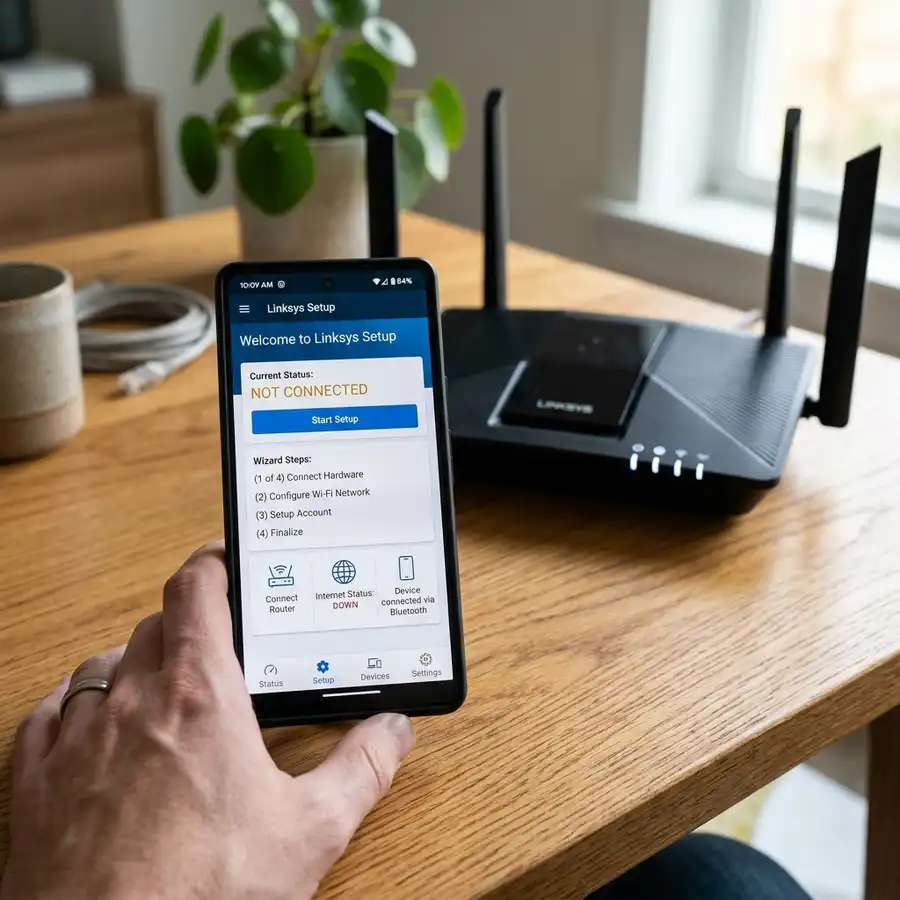
In addition to optimizing network traffic, it is also important to consider the role of smart home devices in your network, including whether smart home devices can work without internet.
Risks and Security Considerations
When configuring UniFi Smart Queues, it is essential to consider the potential risks and security implications.
This includes ensuring that the network is secure, and that only authorized devices have access to the network.
Best Practices for Configuration
Best practices for configuring UniFi Smart Queues include carefully planning and testing the configuration, as well as monitoring network performance.
This helps to ensure that the configuration is effective and that network performance is optimized.
CLI-Based Verification and Real-Time Queue Monitoring
Accessing the UniFi gateway command-line interface (CLI) via SSH provides direct visibility into active queue disciplines. You can inspect the underlying kernel queue structures to verify how traffic is being prioritized.
Execute the following command on UniFi Security Gateways (USG) or UniFi Dream Machines (UDM) to view active queuing disciplines:
tc -s qdisc show dev eth0This command outputs packet statistics, including dropped packets, overlimits, and requeues. Analyze the "dropped" counter to determine if the Smart Queues mechanism is actively discarding packets to prevent bufferbloat.
High drop rates on specific queues indicate that the configured bandwidth limit is lower than the actual traffic demand. If the "overlimits" counter increases rapidly, the traffic shaper is actively delaying packets to match your specified rate.
Hardware Offloading Bypass and CPU Architecture Bottlenecks
Enabling Smart Queues forces the gateway to process all packets through the CPU, bypassing the hardware offloading engine. This transition shifts packet forwarding from dedicated hardware ASICs to general-purpose CPU cycles.
For legacy hardware like the USG-3P, the dual-core 500 MHz MIPS64 processor caps Smart Queues performance at approximately 60-85 Mbps. Attempting to run Smart Queues on gigabit connections with this hardware will severely bottleneck throughput.
The table below outlines the maximum recommended throughput limits when Smart Queues are enabled across various UniFi gateway models.
| Model | CPU Architecture | Max Recommended Throughput with Smart Queues |
|---|---|---|
| USG-3P | MIPS64 Dual-Core 500 MHz | 85 Mbps |
| USG-Pro-4 | MIPS64 Dual-Core 1 GHz | 250 Mbps |
| UDM-Base / UDM-Pro | ARM Cortex-A57 Quad-Core 1.7 GHz | 850 Mbps - 1 Gbps |
| UXG-Pro / UDM-SE | ARM Cortex-A57 Quad-Core 1.7 GHz | 1 Gbps |
On modern UniFi OS Gateways, the multi-core ARM architecture handles higher throughput but still experiences elevated CPU utilization during peak traffic. Monitor CPU spikes using the top or htop commands via SSH while running a speed test to assess resource exhaustion.
Mathematical Calibration of Bandwidth Limits for Smart Queues
Setting Smart Queue limits to your exact ISP-provisioned bandwidth often results in suboptimal queue management and persistent bufferbloat. This discrepancy occurs because physical line overhead and ISP-side policing are not factored into raw speed test results.
To calculate the mathematically optimal bandwidth limit, you must account for layer 2 and layer 3 encapsulation overheads. These overheads include VLAN tags (802.1Q), PPPoE headers, and Ethernet framing.
Utilize the formula below to calculate your starting configuration values:
Configured Rate = Measured Baseline Speed * Provisioning Factor (0.85 to 0.90)For a nominal 100 Mbps connection, the initial Smart Queue upload and download limits should be set between 85 Mbps and 90 Mbps. This margin ensures that the UniFi gateway, rather than the ISP modem, remains the primary bottleneck and controls packet scheduling.
Advanced FQ-CoDel Parameter Tuning via Config.gateway.json
While the UniFi Controller GUI simplifies Smart Queues setup, legacy USG deployments allow deep customization of FQ-CoDel parameters via the config.gateway.json file. This file allows you to override default interval, target, and quantum parameters.
The target parameter defines the acceptable queue delay, which defaults to 5 milliseconds. The interval parameter, defaulting to 100 milliseconds, determines how long the queue must exceed the target delay before entering dropping state.
The following JSON snippet demonstrates how to customize these parameters for low-latency gaming environments:
{
  "traffic-control": {
    "smart-queue": {
      "WAN_shaper": {
        "download": {
          "rate": "90mbit",
          "fq-codel-parameters": "target 4ms interval 80ms quantum 1514"
        },
        "upload": {
          "rate": "20mbit",
          "fq-codel-parameters": "target 4ms interval 80ms quantum 1514"
        }
      }
    }
  }
}
Reducing the target to 4 milliseconds forces earlier packet drops, preventing latency spikes at the cost of slightly lower raw throughput. Setting the quantum parameter to 1514 bytes ensures MTU-sized packets are processed efficiently without unnecessary fragmentation.
Troubleshooting Bufferbloat and Packet Drop Anomalies
Persistent latency spikes under load indicate that your Smart Queues configuration requires immediate diagnostic isolation. You can run a continuous ping to a reliable external DNS server while initiating a high-throughput download to test queue efficiency.
Run the following command from a wired client to measure latency fluctuations during a local network stress test:
ping -t 8.8.8.8If the round-trip time increases by more than 15 milliseconds under load, Smart Queues are failing to control the buffer. This failure is typically caused by over-provisioned rate settings or interference from ISP-level traffic shaping.
To isolate the root cause, decrease the Smart Queues rate limits in decrements of 2% until the ping latency stabilizes during active downloads. If latency remains high despite low rate limits, check for hardware-level flow control conflicts or duplex mismatches on the WAN port.
Understanding Queue Management and Bandwidth Allocation
UniFi Smart Queues leverage a dynamic queue management system designed to optimize bandwidth usage across devices.
By prioritizing packets based on their type and origin, Smart Queues can effectively manage congestion, but this may lead to perceived limitations in maximum download speeds during high traffic periods.
Configuration Parameters for Optimal Performance
- Queue Type: Select between FIFO (First In, First Out) or Weighted Fair Queuing (WFQ) for different traffic management approaches.
- Bandwidth Limit: Specify maximum upload and download limits to prevent any single device from monopolizing bandwidth.
- Priority Settings: Assign higher priorities to critical applications, such as video conferencing or gaming, ensuring they receive bandwidth during peak usage times.
These parameters can be adjusted in the UniFi controller interface under the 'Traffic Management' section.
Troubleshooting Smart Queue Settings and Performance Issues
When experiencing unexpected slowdowns with Smart Queues enabled, several troubleshooting steps can be undertaken.
Firstly, verify the firmware of the UniFi devices to ensure they are up-to-date and optimized for Smart Queue functionality.
Common Issues and Solutions
| Issue | Potential Solution |
|---|---|
| Inconsistent download speeds | Adjust the bandwidth limit settings for individual devices. |
| High latency during video streaming | Increase priority for streaming applications in the Smart Queue settings. |
| Overall network congestion | Consider distributing load across multiple access points or upgrading to a higher bandwidth plan. |
Utilizing these troubleshooting techniques can help maintain optimal performance while using UniFi Smart Queues.
Understanding QoS Parameters in UniFi Smart Queues
Quality of Service (QoS) parameters play a significant role in determining how bandwidth is allocated across various devices in the network. UniFi Smart Queues utilize advanced algorithms to prioritize traffic, which can impact overall download speeds.
The key parameters to consider include:
- Bandwidth Limit: This sets the maximum allowable download and upload speeds for each device. Adjusting these limits can help in managing overall network performance.
- Queue Depth: This setting determines how many packets can be held in the queue before being processed. A deeper queue can allow for better handling of burst traffic but may introduce latency.
- Traffic Classification: Different types of traffic can be prioritized based on their importance. Configuring the right classifications ensures critical applications receive the necessary bandwidth.
Adjustments to these parameters can lead to improved performance, but careful monitoring is essential to avoid unintended consequences.
Troubleshooting Smart Queue Limitations
Identifying limitations in UniFi Smart Queues requires a systematic approach to troubleshooting. Common issues can often be traced back to misconfigurations or insufficient bandwidth allocation.
Key troubleshooting steps include:
- Monitor Bandwidth Usage: Use the UniFi dashboard to track real-time bandwidth consumption and identify devices that may be hogging resources.
- Review Queue Settings: Ensure that the Smart Queue settings are configured correctly and that they are aligned with the network’s performance goals.
- Run Speed Tests: Conduct scheduled speed tests during peak and off-peak hours to compare performance and identify any discrepancies.
Documentation of these tests can help in making informed decisions about further adjustments or the need for hardware upgrades.
Frequently Asked Questions
What is UniFi Smart Queues?
UniFi Smart Queues is a traffic management system designed to optimize network traffic and improve the overall quality of service.
It helps prioritize and manage network traffic, ensuring that critical applications receive sufficient bandwidth.
How do I configure UniFi Smart Queues?
To configure UniFi Smart Queues, access the UniFi controller and navigate to the Settings section.
From there, you can create and manage queues, assign priorities, and set up rules for traffic management.
Will enabling UniFi Smart Queues limit my max download speed?
Enabling UniFi Smart Queues does not necessarily limit max download speed.
However, the feature may prioritize certain types of traffic over others, potentially affecting download speeds for non-priority applications.
Can I use UniFi Smart Queues with other network optimization tools?
Yes, UniFi Smart Queues can be used in conjunction with other network optimization tools.
However, it is essential to carefully configure and test the setup to ensure optimal performance.
Is UniFi Smart Queues compatible with all network devices?
UniFi Smart Queues is designed to work with UniFi network devices.
However, compatibility with other devices may vary, and it is essential to check the specifications and compatibility before configuring the feature.
Troubleshooting Common Issues
Troubleshooting common issues with UniFi Smart Queues involves identifying the root cause of the problem and taking corrective action.
This may involve adjusting the configuration, updating the firmware, or replacing faulty hardware.




