1. Direct Introduction
The modern era of digital entertainment is heavily defined by high-definition streaming platforms, with Disney Plus standing at the forefront of this technological revolution. However, one of the most pervasive and frustrating anomalies encountered by end-users is the sudden freezing, stuttering, or complete stalling of the Disney Plus application on smart television sets. Addressing the Disney Plus freezing on TV fix requires a highly technical understanding of how streaming applications interact with television operating systems, network infrastructure, and digital rights management protocols. When a user experiences a frozen frame or an infinite buffering wheel, it is rarely a simple glitch; rather, it is typically the culmination of cascading failures across multiple layers of the application and hardware ecosystem. Smart televisions operate on heavily constrained hardware architectures, often utilizing low-power System on a Chip processors combined with minimal random access memory allocations. When the Disney Plus application requests high-bitrate video streams, it relies on a delicate balance of network stability, continuous buffer replenishment, and synchronized hardware decoding. If any single variable in this complex equation fluctuates beyond acceptable error margins, the playback pipeline collapses, resulting in the dreaded freezing phenomenon. This comprehensive guide will dissect the underlying mechanics of this issue, bypassing superficial troubleshooting steps to explore the profound technical origins of streaming interruptions. By analyzing the intersection of network latency, memory management, protocol overhead, and hardware decoding limitations, we can formulate a robust, scientifically sound methodology for eliminating application freezes and restoring a seamless cinematic experience. Users and technicians alike must abandon the misconception that the application itself is solely to blame, recognizing instead that the television environment is a highly integrated, resource-sensitive ecosystem where every background process and network packet plays a critical role in sustained video delivery.
Furthermore, the streaming landscape is complicated by the myriad of proprietary television operating systems currently in circulation, including Tizen, webOS, Android TV, and Roku OS. Each of these platforms handles process scheduling, garbage collection, and memory allocation in vastly different ways, directly impacting the stability of the Disney Plus application. A memory leak in a specific version of webOS, for instance, might slowly consume the television's available RAM over the course of a two-hour movie, inevitably leading to a hard freeze as the system struggles to allocate memory for the next incoming video segment. Simultaneously, the application must maintain a continuous, encrypted connection with geographically distributed content delivery networks, negotiating bitrates dynamically based on fluctuating network conditions. The Disney Plus freezing on TV fix is therefore not a monolithic solution, but rather a targeted diagnostic process that isolates the specific bottleneck—be it thermal throttling within the television's chassis, packet loss at the router level, or cryptographic handshake failures during the decryption of premium content. Understanding this multi-layered architecture is the first fundamental step in resolving playback interruptions and ensuring that high-fidelity streams are delivered without latency or interruption.
2. Basic Architecture
To fundamentally comprehend the mechanisms behind the Disney Plus freezing on TV fix, one must first analyze the basic architecture of the streaming pipeline. The Disney Plus application running on a smart television is rarely a native application in the traditional sense; rather, it is often a web-based container or a React Native framework executing within a lightweight embedded browser engine. This architectural choice allows developers to deploy updates rapidly across diverse television platforms, but it introduces significant overhead in terms of memory consumption and processing power. When a user selects a title for playback, the application initiates a series of complex handshakes. First, it authenticates the user's session with Disney's centralized identity servers. Next, it queries a content delivery network routing system to identify the optimal edge node—the server geographically closest to the user's physical location—to minimize latency. This routing process is highly dependent on the Domain Name System resolution speed and the accuracy of the user's IP geolocation data. Once the optimal edge node is identified, the application requests the media manifest file, typically utilizing protocols such as HTTP Live Streaming or Dynamic Adaptive Streaming over HTTP. These manifests dictate the available resolutions, bitrates, and audio tracks, allowing the application to dynamically shift quality based on real-time bandwidth availability.
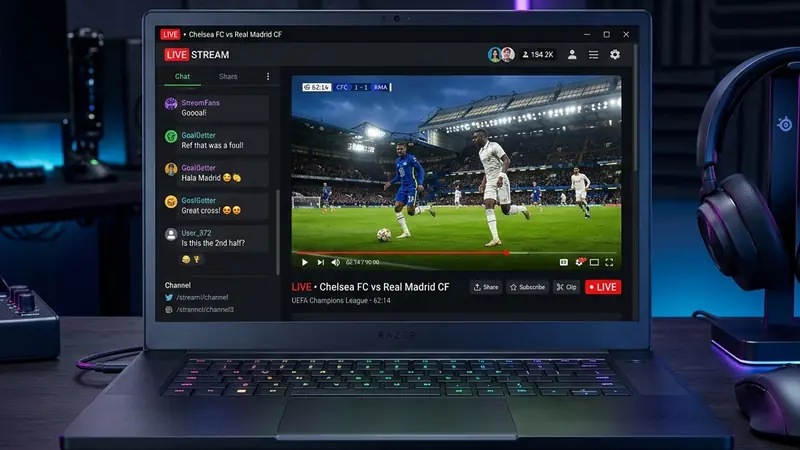
The core of the video delivery architecture relies on Adaptive Bitrate Streaming, a technology designed to prevent freezing by seamlessly switching between different quality tiers. However, the implementation of Adaptive Bitrate Streaming is incredibly sensitive to network jitter and latency spikes. The video itself is broken down into small, manageable chunks, usually ranging from two to ten seconds in duration. The television's processor must continuously download these chunks, store them in a localized memory buffer, and feed them into the hardware decoding pipeline. This decoding pipeline utilizes specialized silicon—such as High Efficiency Video Coding or AV1 hardware decoders—to decompress the massive amounts of visual data into raw pixels that the television panel can display. Simultaneously, the application must manage Digital Rights Management decryption. Disney Plus utilizes industry-standard DRM systems like Google Widevine, which require continuous cryptographic validation to ensure the content is not being pirated. If the television's secure execution environment fails to process these cryptographic keys within a strict timeframe, the video playback will immediately halt, presenting to the user as a severe freeze or a generic error code. Therefore, the basic architecture is a highly synchronized dance of network fetching, buffer management, cryptographic decryption, and hardware decoding, all operating on hardware with strictly limited computational margins.
Moreover, the television's network interface card acts as the crucial gateway for this massive influx of data. Many modern smart televisions, despite featuring high-resolution 4K or 8K displays, are equipped with surprisingly outdated network hardware. It is not uncommon to find premium television models utilizing standard 10/100 Fast Ethernet ports rather than Gigabit Ethernet, which physically limits wired connection speeds to one hundred megabits per second. While this is theoretically sufficient for a single 4K stream, it leaves very little overhead for background applications, firmware updates, or sudden drops in network efficiency. Consequently, the internal architecture of the television itself—specifically the bus speed between the network interface, the system memory, and the central processing unit—can become a severe bottleneck. The architecture dictates that data must flow uninterrupted from the external wide area network, through the local area network, into the television's buffer, and out through the display processor. Any disruption, microscopic delay, or component saturation within this tightly coupled chain will manifest as application instability, necessitating a deep architectural understanding to implement a permanent Disney Plus freezing on TV fix.
3. Challenges and Bottlenecks
The primary challenges and bottlenecks that necessitate a Disney Plus freezing on TV fix are deeply rooted in the inherent limitations of smart television hardware and the unpredictable nature of residential network topologies. Unlike a dedicated high-performance personal computer or a specialized gaming console, a smart television is designed with extreme cost constraints, resulting in the implementation of low-end System on a Chip processors and aggressively restricted random access memory. When the Disney Plus application is launched, it must load its complex user interface, image assets, and execution environment into this limited memory space. As the user browses the catalog, the application continues to cache metadata and imagery. If the television's operating system lacks efficient garbage collection—the process of automatically freeing up memory that is no longer in use—the available RAM is slowly depleted. This phenomenon, known as a memory leak, is one of the most common causes of application freezing. When the user finally initiates video playback, the system struggles to allocate a sufficiently large buffer to store the incoming video chunks. With an undersized buffer, any momentary fluctuation in network speed will cause a buffer underrun, meaning the hardware decoder runs out of data to process, resulting in an immediate freeze of the video output.
Another profound bottleneck lies in the local network environment and the handling of Transmission Control Protocol packets. Video streaming relies heavily on consistent packet delivery. In a typical residential setting, the local router is burdened with traffic from smartphones, laptops, smart home devices, and background updates. If the router lacks proper Quality of Service prioritization, the massive influx of video data required by Disney Plus may be delayed in favor of other network requests. This leads to packet loss and increased latency. When packets are lost, the Transmission Control Protocol requires them to be retransmitted, which takes time. If this retransmission delay exceeds the duration of the video stored in the television's local buffer, a freeze is inevitable. Bufferbloat is a related challenge, occurring when network equipment utilizes excessively large queues, causing massive latency spikes during periods of high bandwidth utilization. This completely disrupts the Adaptive Bitrate Streaming algorithms, confusing the application into thinking the connection is worse than it is, leading to erratic quality shifts and eventual application stalling.
Thermal throttling presents yet another highly technical challenge. Processing high-bitrate 4K HDR video, decrypting Widevine DRM, and managing network connections generates significant heat within the television's internal components. Because televisions are designed for aesthetic thinness, they often lack active cooling mechanisms, relying entirely on passive heat dissipation. During extended viewing sessions, the System on a Chip may reach critical temperature thresholds. To prevent hardware damage, the processor automatically reduces its clock speed—a process known as thermal throttling. As the computational power plummets, the hardware decoder can no longer process the HEVC or AV1 video frames quickly enough to maintain the standard frame rate. This manifests as severe stuttering, audio desynchronization, and eventual freezing of the Disney Plus application. Addressing this requires users to understand the environmental placement of their hardware, ensuring adequate ventilation, and occasionally necessitating a complete power cycle to clear the volatile memory and reset the thermal state of the processing units. Overcoming these hardware and network bottlenecks is absolutely essential for achieving a reliable streaming experience.
4. Scalability Benefits
Implementing a comprehensive Disney Plus freezing on TV fix through network optimization and hardware configuration yields profound scalability benefits that extend far beyond simply watching a single movie without interruption. Scalability in the context of home streaming refers to the network's ability to handle increasing loads—such as multiple concurrent 4K streams, expanding smart home ecosystems, and higher-bitrate video formats—without degrading the performance of the individual client devices. By addressing the root causes of application freezing, users inadvertently build a robust, highly scalable local infrastructure capable of meeting future digital demands. For instance, transitioning a smart television from a congested 2.4 Gigahertz wireless band to a dedicated, high-bandwidth 5 Gigahertz or 6 Gigahertz band significantly scales the available throughput. The 2.4 Gigahertz spectrum is notoriously saturated with interference from neighboring routers, Bluetooth devices, and even household appliances. By migrating the television to a wider frequency channel, the user effectively scales the bandwidth capacity, ensuring that the heavy data payload required by Disney Plus arrives with minimal jitter and zero packet collisions.
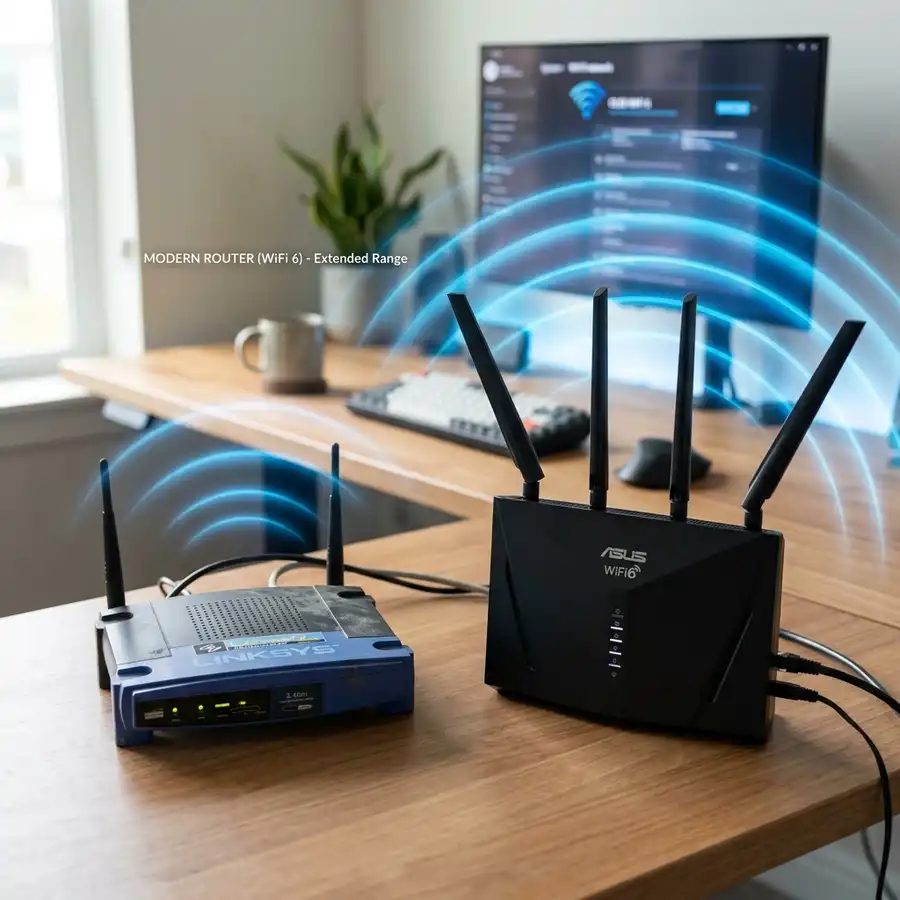
Furthermore, optimizing the routing infrastructure through the implementation of a mesh network topology provides exceptional scalability benefits for the entire household. Traditional single-node routers often struggle to push strong, coherent signals through physical obstructions, resulting in localized dead zones where the television might struggle to maintain a connection to the content delivery network. By deploying a multi-node mesh system utilizing dedicated wireless backhauls, the user ensures that the television receives a highly stable, low-latency connection regardless of its physical distance from the primary modem. This scalable architecture not only resolves the immediate Disney Plus freezing anomaly but also creates an environment where additional high-bandwidth devices can be added to the network without causing systemic degradation. The application's Adaptive Bitrate Streaming algorithm thrives in this optimized environment, seamlessly scaling the video quality to the maximum available bitrate—often delivering flawless 4K Dolby Vision and Dolby Atmos experiences—because it detects a continuously stable buffer replenishment rate.
At the software level, understanding the scalability of Content Delivery Networks is crucial. When a user modifies their local Domain Name System settings to utilize highly optimized enterprise-grade resolvers, such as those provided by Cloudflare or Google, they directly interact with the scalable nature of the global internet backbone. Traditional Internet Service Provider DNS servers are often slow to update and may route the television's Disney Plus traffic to an overcrowded, geographically distant edge server. By utilizing scalable, Anycast DNS services, the television can rapidly resolve the optimal, least-congested node within Disney's massive global server fleet. This dramatically reduces the initial time-to-first-byte and ensures that the stream can scale dynamically based on regional server loads. When the Disney Plus infrastructure detects high traffic during a major premiere, it scales its load balancing across thousands of servers. An optimized local DNS configuration ensures the television can fluidly adapt to these backend scalability measures, completely circumventing regional congestion and thereby preventing the infinite buffering and freezing issues that plague less optimized network configurations.
5. Practical Integration
Executing the Disney Plus freezing on TV fix requires the practical integration of several advanced troubleshooting protocols, moving systematically from volatile memory management to deep network configuration. The first and most critical practical step is the execution of a hard system reset, which goes far beyond simply turning the television off and on using the remote control. Smart televisions utilize highly aggressive standby modes to ensure rapid wake times; placing the television in standby merely suspends the operating system state, perfectly preserving any memory leaks, corrupted cache files, or crashed background threads that are causing the Disney Plus application to freeze. To properly clear the Non-Volatile Random Access Memory and flush the volatile state, the user must physically disconnect the television from the main power supply for a minimum of sixty seconds. This process forces the System on a Chip to initialize a complete cold boot sequence upon reconnection, loading a fresh instance of the operating system kernel, clearing out all residual application data, and providing the Disney Plus application with a clean, unfragmented memory space in which to operate.
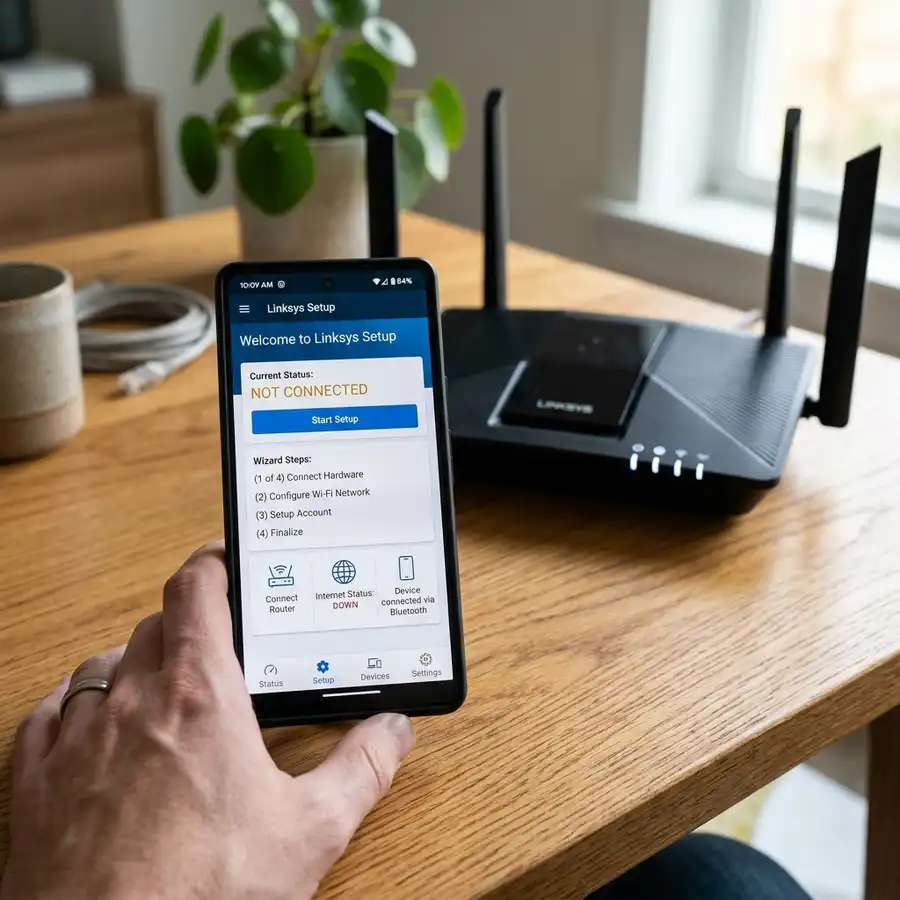
The second layer of practical integration involves rigorous network configuration and optimization. Because smart television network interface cards are often subpar, optimizing the router's settings is paramount to ensuring the application receives a continuous data stream. Users must access their router's administrative firmware and statically assign an IP address to the television's MAC address. This prevents the Dynamic Host Configuration Protocol from renewing the IP address during an active viewing session, which can cause momentary connection drops that lead to immediate application freezing. Following the static IP assignment, modifying the Maximum Transmission Unit size can resolve severe packet fragmentation issues. The default MTU size is typically 1500 bytes, but on certain internet service provider networks, this can lead to packet overhead that exceeds the transmission limits, causing fragmentation and latency. By practically determining the optimal MTU size through ping testing and adjusting the router accordingly, the user ensures that the Disney Plus video packets traverse the network entirely intact, eliminating the processing delay associated with reassembling fragmented data at the television level.
Finally, practical integration requires addressing application-level caching and operating system maintenance. The Disney Plus application continually writes temporary data to the television's internal solid-state storage. Over time, this cache can become corrupted or excessively large, slowing down the application's read/write speeds and causing catastrophic freezing when the app attempts to load new interface elements or manifest files. Users must navigate into the television's application management settings and manually force a cache clearance specifically for the Disney Plus module. If the cache clearance is insufficient, a complete uninstallation and reinstallation of the application is required to ensure the latest compiled binaries and optimized code libraries are applied. Furthermore, the television's firmware must be rigorously updated. Television manufacturers frequently release localized patches that update the hardware decoding microcode and improve memory management routines. Integrating these firmware updates ensures that the television's underlying framework is perfectly aligned with the latest encryption and streaming protocols utilized by the Disney Plus service, thereby providing a permanent, technically sound fix to the freezing anomalies.
6. Security and Compliance
The intersection of streaming technology and digital security is a massive, often overlooked component of the Disney Plus freezing on TV fix. High-definition content, particularly 4K resolution and High Dynamic Range formats, is heavily guarded by stringent copyright protection mechanisms. Disney Plus strictly enforces High-bandwidth Digital Content Protection, specifically the HDCP 2.2 standard, across its entire delivery pipeline. This protocol requires a continuous, secure cryptographic handshake between the television's internal processor, the application, and the display panel itself. If at any point during playback this secure handshake experiences a microsecond delay, fails to authenticate, or encounters a processing error, the application is legally and technologically mandated to immediately halt the video stream. This sudden halt is frequently misinterpreted by the user as a standard application freeze. Ensuring compliance with these security protocols requires maintaining pristine firmware states and ensuring that the television's secure execution environment is not compromised or overburdened by other background tasks attempting to access secure memory sectors.
Virtual Private Networks and custom routing solutions introduce immense complexity to security compliance and are a primary catalyst for application freezing. Many advanced users route their television traffic through network-level VPNs or utilize Smart DNS proxy services to bypass geo-blocking restrictions or mask their internet activity. However, Disney Plus employs highly aggressive, enterprise-grade IP reputation scanning and traffic analysis to detect and block these secure tunnels. When a VPN connection is detected, the application may not display a clear error message; instead, the connection to the content delivery network is silently throttled or dropped entirely, leading to a perpetual buffering state or a hard freeze. Furthermore, the cryptographic overhead required to encrypt the massive video stream via OpenVPN or WireGuard protocols at the router level often exceeds the processing capabilities of standard consumer networking hardware. This processing bottleneck introduces severe latency and packet jitter, destroying the Adaptive Bitrate Streaming synchronization. Bypassing these issues requires disabling network-level encryption for the television's specific IP address, routing the Disney Plus traffic securely and directly through the standard internet service provider pipeline.
Furthermore, local network security appliances, such as network-wide ad blockers, Pi-hole installations, and deep packet inspection firewalls, can inadvertently destroy application compliance. The Disney Plus application relies on continuous background telemetry and analytical pinging to monitor stream health and report back to centralized servers. If a strict firewall rule or a DNS sinkhole blocks these tracking and telemetry domains, the application may assume the connection has failed or that the execution environment is compromised. This failure in compliance often leads the application to time out, freezing the user interface and preventing any further media playback. Diagnosing this requires meticulously analyzing the logs of any local security appliances, identifying the specific Disney-related domains being blocked, and creating targeted whitelist exceptions. By harmonizing the stringent security and digital rights management compliance requirements of the Disney Plus platform with the local network's security posture, users can effectively eliminate a massive category of application freezing issues.
7. Costs and Optimization
Evaluating the costs and optimization strategies associated with the Disney Plus freezing on TV fix is crucial for achieving a permanent solution without incurring unnecessary financial expenditure. Often, users assume that a freezing application indicates that their television is obsolete or that their internet service plan is insufficient, leading them to purchase costly new hardware or upgrade to expensive gigabit internet tiers. However, from a technical perspective, a stable 4K HDR stream requires a surprisingly modest bandwidth of approximately twenty-five to thirty megabits per second. Therefore, the issue is rarely a lack of absolute bandwidth, but rather the inefficient optimization of existing resources. Before investing hundreds of dollars in a new smart television or a high-end router, users must perform deep network optimizations. By logging into the existing router and utilizing Quality of Service bandwidth allocation, users can explicitly dedicate a reserved bandwidth slice exclusively to the television's IP address. This optimization costs nothing but ensures that even if other devices on the network are downloading large files, the Disney Plus application maintains the continuous data flow necessary to prevent buffer exhaustion and freezing.
When financial investment is necessary, prioritizing the optimization of the physical network layer yields the highest return on investment. The wireless network interface cards within many smart televisions are highly susceptible to electromagnetic interference and signal degradation. Rather than purchasing a completely new television, a highly cost-effective optimization involves bypassing the television's internal Wi-Fi adapter entirely. Users can purchase an inexpensive Ethernet cable and hardwire the television directly to the router. If running a physical cable is logistically impossible, investing in a dedicated MoCA adapter (Multimedia over Coax Alliance) or a high-quality powerline ethernet adapter provides a wired-equivalent, zero-latency connection by utilizing the home's existing coaxial or electrical wiring. These optimization tools are drastically cheaper than a new display panel and resolve the core issue of wireless packet loss that directly causes the application to freeze. Optimizing the transport layer of the network provides absolute stability for the streaming application's fragile buffer architecture.
At the software level, optimizing the television's operating system involves aggressively minimizing background processes to free up crucial CPU cycles and RAM. Smart televisions often ship with dozens of pre-installed applications, interactive features, and background content recognition services that continuously consume processing power. Users should perform a rigorous audit of their television's settings, disabling automatic application updates, turning off voice recognition listening states, and uninstalling any unused applications. This optimization maximizes the amount of volatile memory available specifically for the Disney Plus web container, reducing the likelihood of a memory-out-of-bounds error or a critical system freeze. By carefully balancing the costs of minor physical network upgrades against the free optimization of software and router configurations, users can engineer an incredibly stable streaming environment, effectively solving the Disney Plus freezing issue through technical refinement rather than expensive hardware replacement.
8. Future of the Tool
The future of the tool, in the context of the Disney Plus application and its integration with television hardware, promises significant technical advancements designed to inherently eliminate the freezing issues currently experienced by users. One of the most critical paradigm shifts is the industry-wide transition toward highly advanced video compression codecs, specifically the AOMedia Video 1 (AV1) format. Current streaming infrastructure relies heavily on HEVC (H.265), which, while efficient, requires substantial bandwidth and decoding power. The AV1 codec offers vastly superior compression ratios, meaning that a high-definition video stream will require significantly less data to transmit. As Disney Plus and television manufacturers universally adopt hardware-level AV1 decoding, the sheer volume of network packets traversing the local network will decrease. This reduction in payload size will drastically lower the probability of buffer underruns and packet loss, meaning that even users with severely degraded network connections will experience flawless, freeze-free playback. The future architecture will dynamically adapt to network instability not by pausing the video, but by utilizing profound compression algorithms to maintain the stream.
Furthermore, the future architecture of smart television operating systems is rapidly evolving toward Edge Computing and predictive buffering technologies. Currently, the Disney Plus application operates re-actively; it requests data, waits for it to arrive, and freezes if the data is delayed. Future iterations of the application will leverage artificial intelligence and machine learning algorithms integrated directly into the application container. These algorithms will continuously analyze the user's historical network performance, local router latency patterns, and viewing habits. By employing predictive buffering, the application will intelligently pre-load critical video chunks during moments of high network stability, effectively building a massive, resilient buffer well in advance of any potential network disruption. Additionally, Content Delivery Networks are moving their edge nodes physically closer to residential neighborhoods, integrating mini-servers directly into local ISP substations. This architectural shift will reduce latency from dozens of milliseconds down to near-zero, ensuring that the application can fetch data instantaneously and rendering the concept of application freezing mathematically obsolete.
Another major advancement involves the decoupling of the application logic from the television's hardware limitations through cloud-native execution environments. Currently, the television's System on a Chip must handle user interface rendering, DRM decryption, and video decoding simultaneously. Future television applications may offload the heavy lifting of UI rendering and complex state management to cloud servers, utilizing the television strictly as a thin client meant only for video decoding and displaying pixels. By removing the massive processing overhead associated with the React Native or WebKit wrappers, the television's limited RAM and CPU will be entirely freed to focus on one singular task: maintaining the video stream. This architectural revolution will ensure that even low-end, budget televisions will operate the Disney Plus application with the fluidity and stability of a high-end enterprise device, permanently banishing the phenomenon of screen freezing, interface stuttering, and system crashes to the past.
9. Final Conclusion
In summation, achieving a definitive Disney Plus freezing on TV fix requires moving far beyond superficial troubleshooting and embracing a deeply technical understanding of the modern streaming ecosystem. The phenomenon of an application freezing is rarely a localized error; it is the physical manifestation of a systemic failure within the complex pipeline that connects global server infrastructure to the localized hardware of a smart television. By dissecting the basic architecture, we understand that streaming is a precarious synchronization of Adaptive Bitrate algorithms, cryptographic DRM handshakes, and hardware-accelerated video decoding. When the fragile memory limits of a television's System on a Chip are exhausted by memory leaks, or when the Transmission Control Protocol is interrupted by router bufferbloat and packet fragmentation, the inevitable result is a complete halt of the multimedia presentation. Diagnosing this requires a clinical, multi-layered approach to network and hardware engineering, isolating variables systematically until the exact bottleneck is identified and neutralized.
The scalability and integration strategies outlined in this guide provide a robust blueprint for engineering a permanent solution. By executing hard resets to clear corrupted volatile memory, strictly assigning IP addresses to bypass DHCP conflicts, and optimizing the Maximum Transmission Unit size, users can solidify the network transport layer. Furthermore, recognizing the immense impact of security compliance—specifically the rigorous demands of HDCP 2.2 and the disruptive nature of network-level Virtual Private Networks—allows users to clear the path for unhindered data flow. The optimization of these existing resources proves that solving this issue does not inherently require vast financial expenditure, but rather precise configuration and the strategic elimination of background processing bloat. A wired Ethernet connection, a properly configured Quality of Service protocol, and a meticulously managed application cache will almost universally conquer the latency and buffer underruns that cause the application to stall.
Ultimately, while the future of streaming technology promises incredible advancements in the form of AV1 compression, predictive artificial intelligence buffering, and cloud-native thin-client architectures, the responsibility currently lies with the user to optimize their local environment. The Disney Plus platform is an engineering marvel capable of delivering pristine, high-fidelity cinematic experiences across the globe. By applying the profound technical principles detailed in this comprehensive guide, users can effectively bridge the gap between their local hardware limitations and the massive scale of global content delivery networks. Eradicating the Disney Plus freezing anomaly is a highly achievable objective, resulting in a perfectly synchronized, highly scalable, and flawlessly stable digital entertainment experience that honors the technological complexity of modern media consumption.