Carbon Fiber Filaments: Extra Strength and Abrasive Nozzle Wear Guide
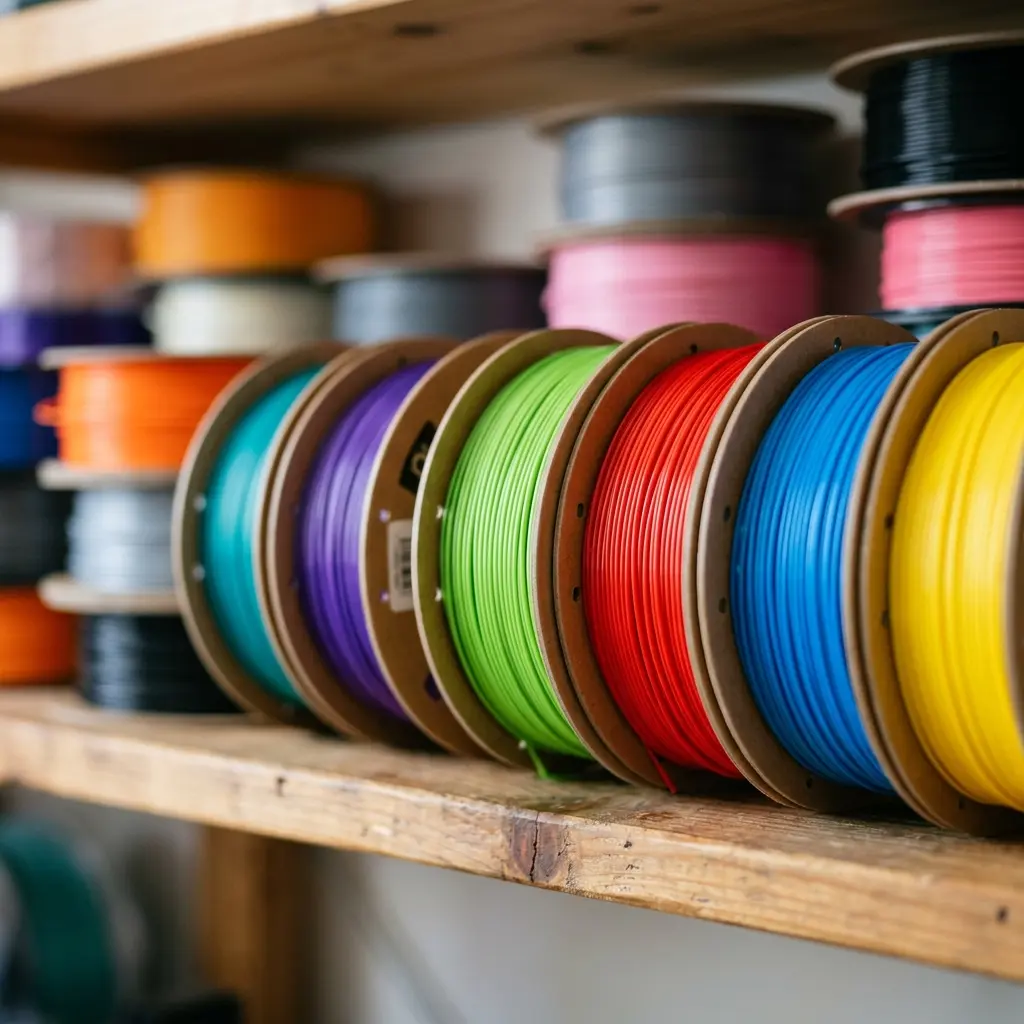
Carbon Fiber Filaments: Extra Strength and Abrasive Nozzle Wear Guide
Carbon fiber filaments have gained popularity in the 3D printing community due to their high strength-to-weight ratio and enhanced mechanical properties. These filaments incorporate carbon fiber strands into a polymer matrix, resulting in a composite material suitable for demanding applications.
Understanding Carbon Fiber Filaments
Carbon fiber filaments are composite materials made from thermoplastic polymers mixed with carbon fibers. This combination results in a lightweight yet incredibly strong material suitable for various applications, including engineering prototypes and end-use parts.
Composition of Carbon Fiber Filaments
Carbon fiber filaments generally consist of a thermoplastic polymer, such as PLA or Nylon, blended with short carbon fibers. This mixture enhances the mechanical characteristics of the filament, resulting in a robust final product.
- Base Polymers:
- PLA (Polylactic Acid)
- ABS (Acrylonitrile Butadiene Styrene)
- PETG (Polyethylene Terephthalate Glycol-Modified)
- Carbon Fibers:
- Short fibers (typically less than 1 mm)
- Long fibers (varies depending on the manufacturer)
Applications of Carbon Fiber Filaments
Carbon fiber filaments are widely used in industries requiring high-performance materials. Common applications include automotive components, aerospace parts, and specialized tools. They are also suitable for producing custom drone frames and lightweight fixtures that demand both strength and reduced weight.
Benefits of Using Carbon Fiber Filaments
One significant advantage of carbon fiber filaments is their superior strength-to-weight ratio. This property makes them ideal for applications where weight reduction is critical without sacrificing strength. Additionally, carbon fiber filaments provide excellent dimensional stability, allowing for high-precision parts.
Challenges and Considerations
While carbon fiber filaments offer many benefits, they also present challenges, particularly regarding 3D printer nozzle wear. The abrasive nature of carbon fibers can lead to faster wear on standard brass nozzles. Using hardened steel or ruby-tipped nozzles is recommended to mitigate this issue.
Printing Settings for Carbon Fiber Filaments
Proper printing settings are crucial when working with carbon fiber filaments to achieve optimal results. The following parameters should be adjusted:
- Temperature: Typical printing temperatures range from 220°C to 260°C.
- Bed Temperature: A heated bed at 60°C to 80°C helps with adhesion.
- Speed: Print speeds should be lower than standard filaments, typically around 30 to 50 mm/s.
- Layer Height: A layer height of 0.1 mm to 0.2 mm is advisable for finer detail.
Comparative Analysis of Carbon Fiber vs. Other Filaments
| Filament Type | Tensile Strength (MPa) | Flexural Modulus (GPa) | Abrasiveness |
|---|---|---|---|
| Carbon Fiber | 600+ | 30+ | High |
| PLA | 50-70 | 2.5-4 | Low |
| ABS | 40-50 | 2-3 | Medium |
| PETG | 50-70 | 2.5-4 | Medium |
Maintenance of 3D Printers Using Carbon Fiber Filaments
Regular maintenance of 3D printers is essential when using carbon fiber filaments to ensure longevity. Cleaning the nozzle frequently can prevent clogs and maintain print quality. Additionally, checking for wear on the nozzle and replacing it as necessary will help avoid issues during the printing process.
Best Practices for Using Carbon Fiber Filaments
- Use a 3D printer with a hardened nozzle.
- Calibrate the printer regularly to ensure optimal performance.
- Perform regular maintenance checks on the printer components.
- Adjust print speeds to accommodate the abrasive nature of the filament.
- Store carbon fiber filaments properly to avoid moisture absorption.
Frequently Asked Questions
What are the main advantages of carbon fiber filaments?
Carbon fiber filaments offer high strength-to-weight ratios and superior mechanical properties, making them ideal for demanding applications.
How do carbon fiber filaments compare to PLA and ABS?
Compared to PLA and ABS, carbon fiber filaments are significantly stronger and more durable but also more abrasive, requiring special nozzles.
What type of nozzle should be used with carbon fiber filaments?
Hardened steel or ruby-tipped nozzles are recommended to reduce wear and maintain print quality when using carbon fiber filaments.
Can carbon fiber filaments be used for all 3D printers?
Not all 3D printers are suitable for carbon fiber filaments. It is important to ensure the printer can handle abrasive materials before use.
What is the ideal printing temperature for carbon fiber filaments?
The ideal printing temperature for carbon fiber filaments typically ranges between 220°C and 260°C, depending on the specific material blend.




